



















The Anti-Halo Revolution: Player One Dual-Band Ha+OIII Filter
Jun 17, 2025
Soumyadeep Mukherjee
Soumyadeep Mukherjee is an award-winning astrophotographer from India. He has a doctorate degree in Linguistics. His work extends to the sub-genres of nightscape, deep sky, solar, lunar and optical phenomenon photography. He is also a photography educator and has conducted numerous workshops. His works have appeared in over 40 books & magazines including Astronomy, BBC Sky at Night, Sky & Telescope among others, and in various websites including National Geographic, NASA, Forbes. He was the first Indian to win “Astronomy Photographer of the Year” award in a major category.
Share:

Light pollution is a major problem for deep-sky astrophotography. Many city-based astrophotographers struggle to capture clear, contrast-rich images. But Player One Astronomy offers a promising solution: the Anti-Halo Pro Dual-Band 2″ Filter. This filter blocks unwanted wavelengths and isolates the two most important emission lines in nebulae: Hα and OIII. It also tackles an annoying problem: star halos.
What is the Anti-Halo Pro filter?
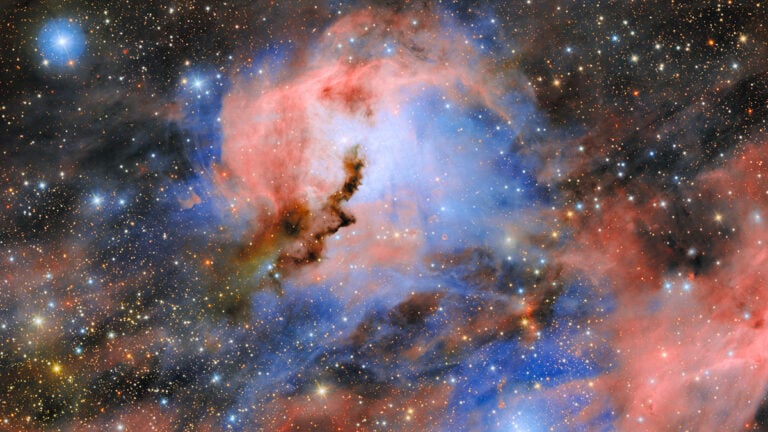
The Anti-Halo Pro is a dual-narrowband filter designed for one-shot color (OSC) cameras. It allows light from Hydrogen-alpha (Ha) at 656.3 nm and Oxygen-III (OIII) at 500.7 nm to pass through. These two wavelengths dominate in emission nebulae like the North America Nebula, the Veil Nebula, and the Rosette Nebula.
Some of its key features are:
- Dual Band: Passes only Ha and OIII.
- Narrow Bandwidth: 3.7 nm (Ha) and 3.2 nm (OIII) at full width half maximum (FWHM).
- High Transmission: Over 85% for both bands.
- Excellent Blocking: OD5 (optical density) from 200 nm to 1100 nm.
- Halo Reduction: Special coatings reduce reflections and eliminate halos around bright stars.
The halo problem in filters
Traditional narrowband filters often allow internal reflections. These reflections create halos, glowing circles around bright stars. Other dual narrowband filters perform well, but often produce halos around stars like Vega, Deneb, or Altair.
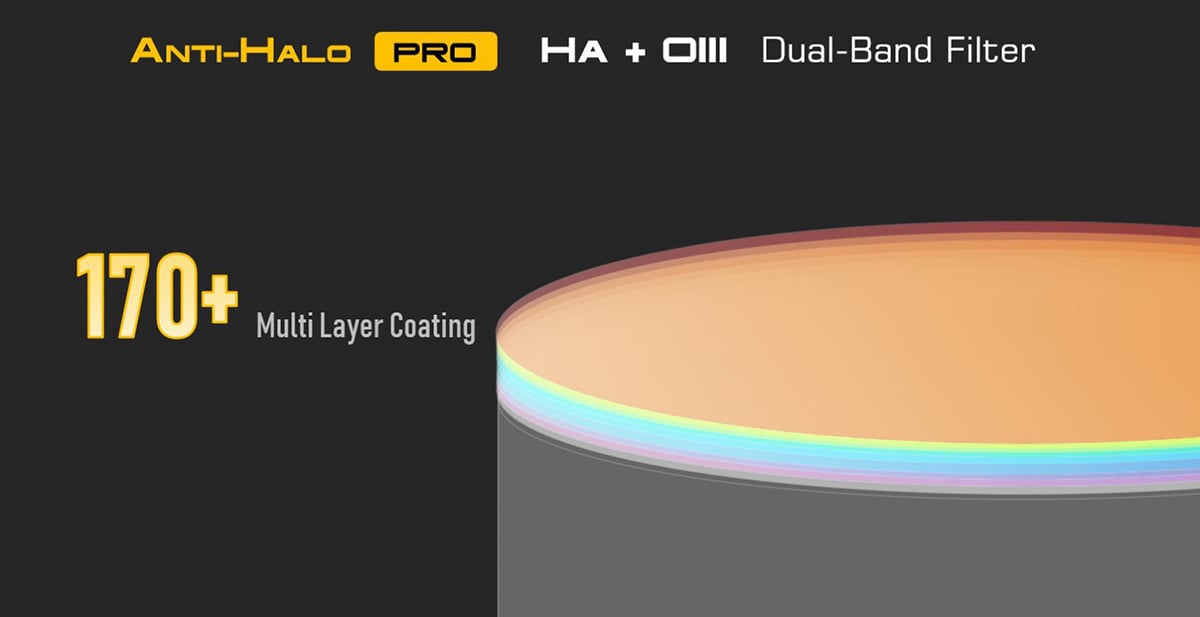
Player One solves this with its anti-reflective coating technology. Over 170 coating layers control light paths and minimize stray reflections. The result? Clean, crisp stars, even in long exposures.

Construction and coatings
The filter uses 1.85 mm-thick optical glass. With the frame and threading, the total thickness is 7.5 mm. The glass is housed in a 2″ anodized aluminum mount. It fits any standard M48 filter drawer or filter wheel. Its coatings are multi-layered dielectric coatings, tuned for maximum performance. These coatings are durable and resistant to moisture and scratches. They also provide the unique anti-halo capability that sets this filter apart.
Bandpass and performance
| Hydrogen-Alpha (Hα) | Oxygen-III (OIII) |
| Center Wavelength: 656.3 nm | Center Wavelength: 500.7 nm |
| Bandwidth: 3.7 ± 0.5 nm | Bandwidth: 3.2 ± 0.5 nm |
| Transmission: > 85% | Transmission: > 85% |
This tight bandpass helps the filter block most light pollution, especially from street lamps, LED sources, and moonlight.

Telescope and camera compatibility
The filter performs best with telescopes slower than f/3.6. For optics faster than that, like RASA or HyperStar systems, the bandpass can shift due to the angle of light entering the filter. That can reduce transmission and alter color balance.
Recommended Telescope Types:
- Apochromatic refractors
- Newtonian reflectors at f/4 or slower
- SCTs and RCs with reducers
- Telephoto lenses above 300 mm
It is compatible with most filter wheels, drawers, and OSC cameras using a 2″ filter thread.
As for cameras, the filter is ideal for:
- DSLRs and mirrorless cameras with modified sensors
- CMOS Color Cameras (like ZWO ASI2600MC, Player One Poseidon-C Pro)
Since it passes only two wavelengths, color cameras can effectively separate Hα and OIII channels using standard processing tools like PixInsight or AstroPixelProcessor.

Price and availability
The Player One Anti-Halo Pro filter is available for $499 via the Player One Store.
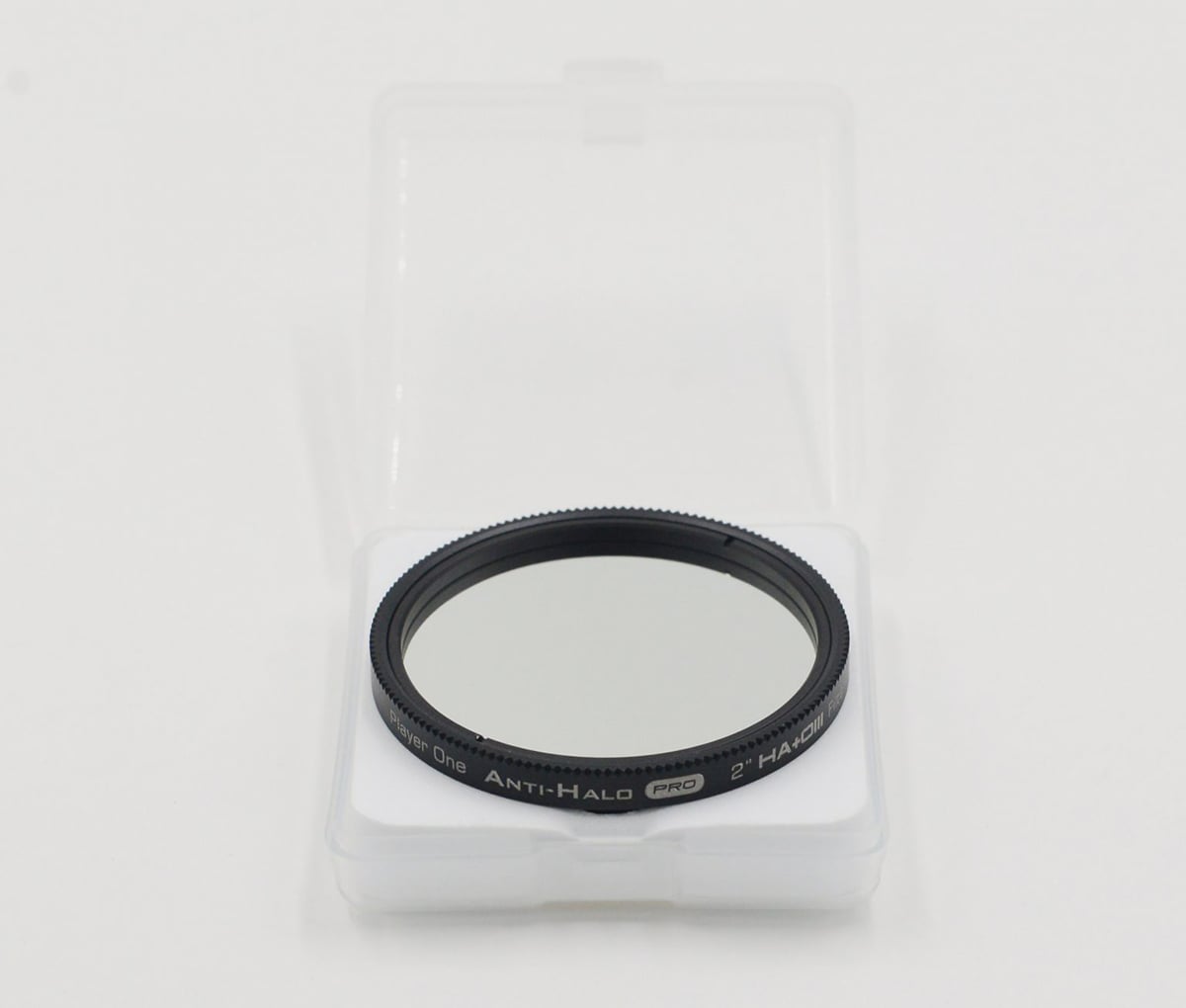
The Player One Anti-Halo Pro is more than just a filter. It’s a breakthrough for city-based astrophotographers. It isolates the most important emission lines. It blocks light pollution. And, most importantly, it eliminates halos.
Clear skies!
See more from DIYPhotography.net on Google
Add DIYPhotography.net as a trusted source. This makes
our stories more likely to appear in your Google Search results.
 Add as a preferred source on Google

Soumyadeep Mukherjee
Soumyadeep Mukherjee is an award-winning astrophotographer from India. He has a doctorate degree in Linguistics. His work extends to the sub-genres of nightscape, deep sky, solar, lunar and optical phenomenon photography. He is also a photography educator and has conducted numerous workshops. His works have appeared in over 40 books & magazines including Astronomy, BBC Sky at Night, Sky & Telescope among others, and in various websites including National Geographic, NASA, Forbes. He was the first Indian to win “Astronomy Photographer of the Year” award in a major category.

Join the Discussion
DIYP Comment Policy
Be nice, be on-topic, no personal information or flames.