




















What is the Bortle Scale and why is it important for astrophotography
Sep 11, 2024
Soumyadeep Mukherjee
Soumyadeep Mukherjee is an award-winning astrophotographer from India. He has a doctorate degree in Linguistics. His work extends to the sub-genres of nightscape, deep sky, solar, lunar and optical phenomenon photography. He is also a photography educator and has conducted numerous workshops. His works have appeared in over 40 books & magazines including Astronomy, BBC Sky at Night, Sky & Telescope among others, and in various websites including National Geographic, NASA, Forbes. He was the first Indian to win “Astronomy Photographer of the Year” award in a major category.
Share:

Visibility of the sky is not the same in every place. You will see more stars or a few stars depending on where you are and how light-polluted the region is. Bortle Scale is important for you to know what you can expect to see in the sky.
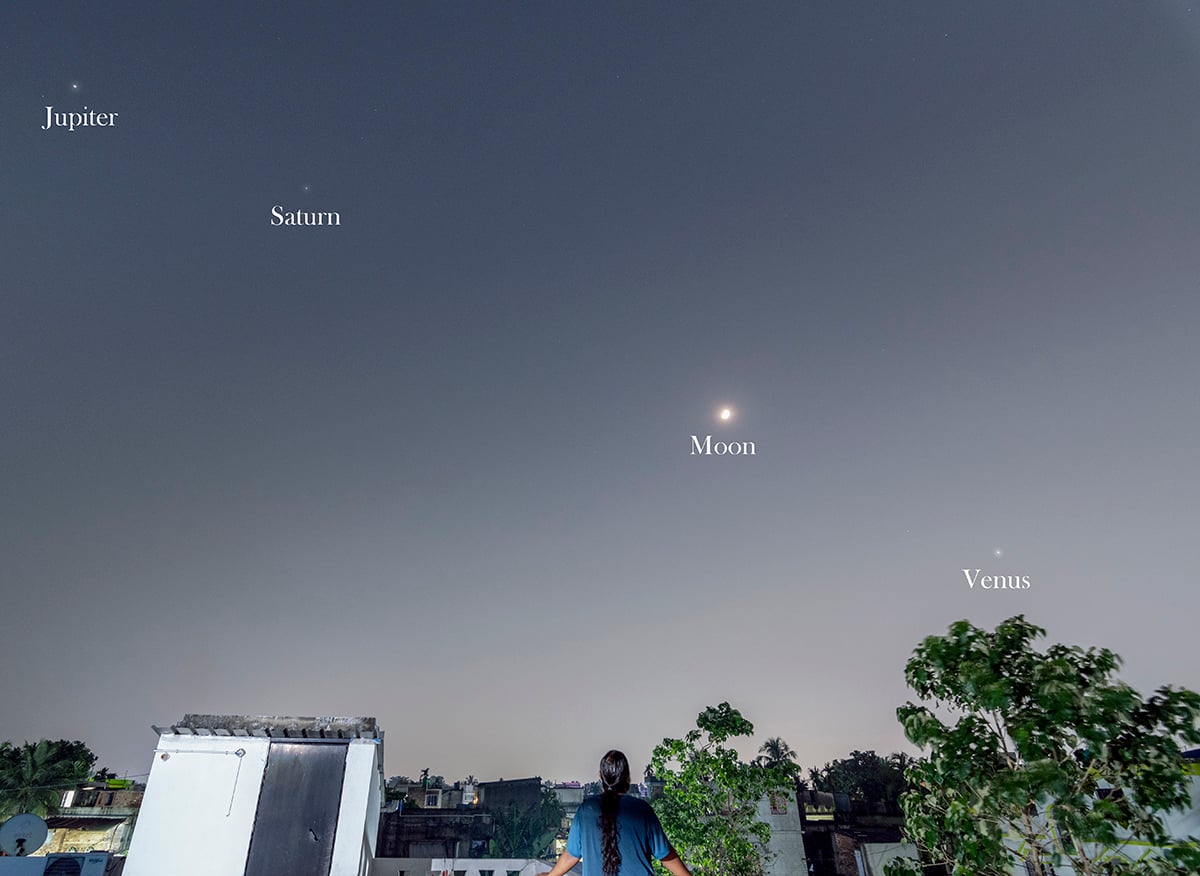
If you happen to live in a city and have tried looking at the night sky, you may have come across a few stars and some bright planets like Jupiter, Saturn or venus. On the other hand, if you have travelled to a distant mountain region hiking or trekking, the sky seems to be full of stars. The culprit here is light pollution. Thanks to the developing civilization, light pollution is a growing problem around the world. While some 30-40 years ago, people were able to enjoy the beauty of night sky sitting at home, astronomers and astrophotographers are travelling hundreds and thousands of miles to get a better view of the night sky.
There are some measures like Limting Magnitude (LM) or Naked Eye Limiting Magnitude (NELM) to gauge the darkness of a sky. But these may not be measurable by everyone. In 2001, John E. Bortle came up with a nine-level scale based on his “nearly 50 years of observing experience” to judge sky darkness. This scale is known as the Bortle Scale.
Bortle 1: Excellent dark sky
The limiting magnitude to the unassisted eye is 7.6 to 8.0 (with effort). It is so dark that the presence of Jupiter or Venus in the sky appears to reduce dark adaption. You can clearly view the zodiacal light, gegenschein, and zodiacal band. The zodiacal light is particularly noticeable, and the zodiacal band covers the whole sky. Even in direct view, it is easy to see the galaxy M33 with unaided eyes. On the ground, the Milky Way’s Sagittarius and Scorpius sections clearly cast diffuse shadows. It will be easy for you to see airglow. It is a very faint, naturally occurring glow that is most noticeable within about 15° of the horizon.
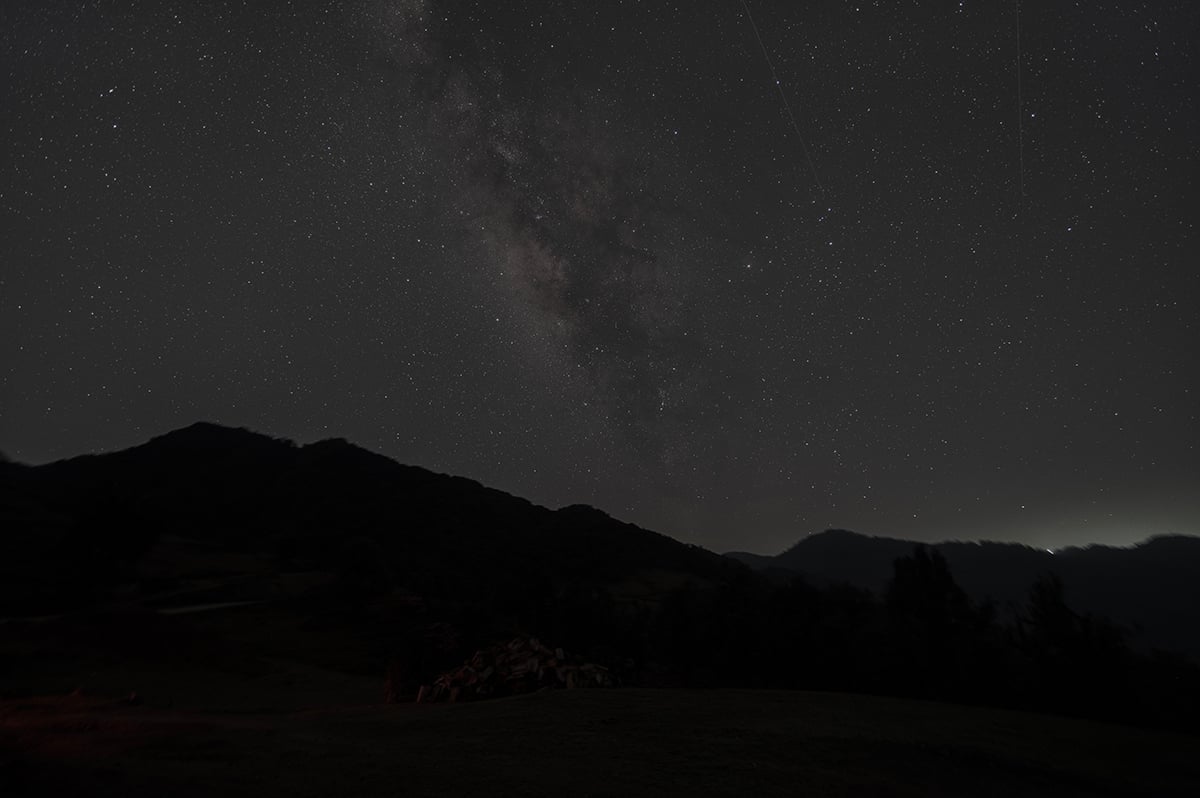
Bortle 2: Typical dark sky
You might be able to see air flow along the horizon. M33 is plainly visible with direct vision. The summer Milky Way is highly structured to the naked eye, and its brightest areas appear like veined marble when viewed through regular binoculars. The zodiacal light is intense enough to form mild shadows shortly before dawn and after dark. It appears yellowish when compared to the Milky Way’s blue-white. Any clouds in the sky appear solely as dark holes or voids against the starry background. You can barely see your telescope and surroundings except where they project against the sky.
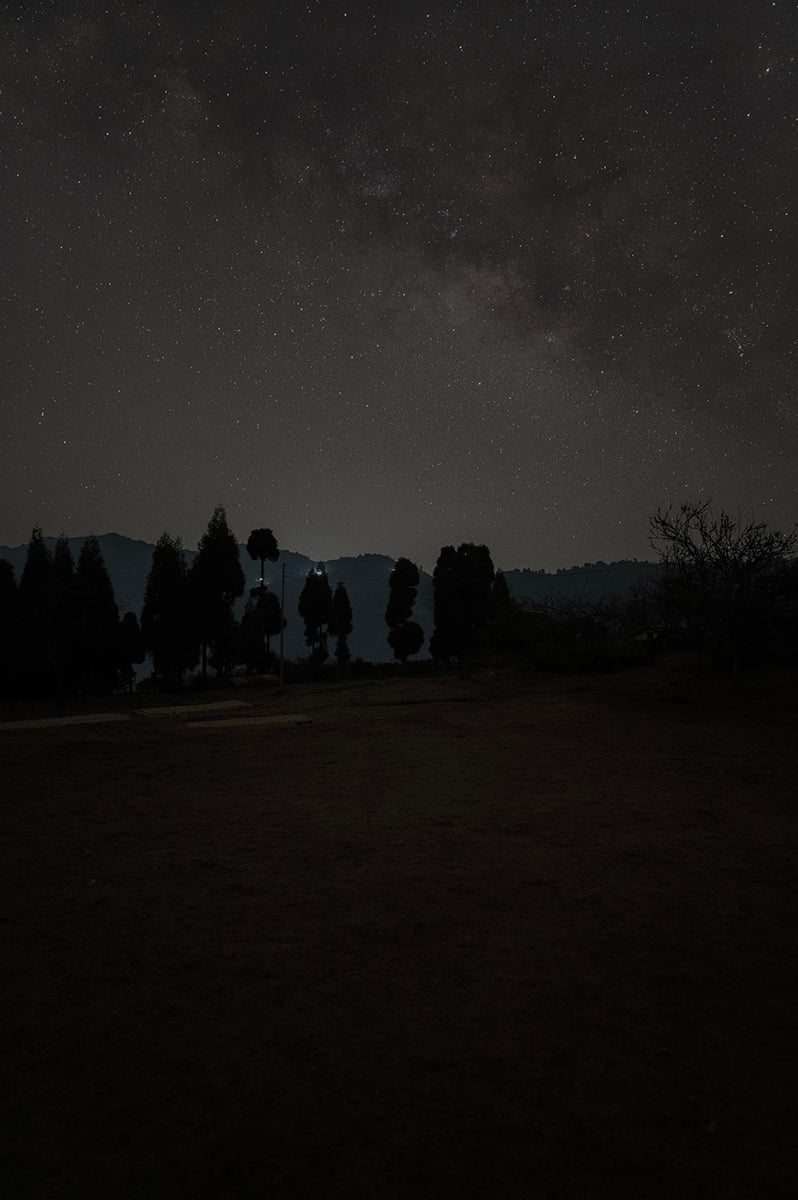
Bortle 3: Rural sky
There is evidence of light pollution along the horizon. Clouds appear slightly lighted in the brightest portions of the sky near the horizon, but they are black overhead. The Milky Way remains complex, with globular clusters like M4, M5, M15, and M22 standing out to the human eye. M33 is easily visible with averted vision. You can see the zodiacal light in spring and autumn (when it rises 60° above the horizon after sunset and before dawn), and its colour is faintly represented. You can barely see your telescope from a distance of 20 or 30 feet.
Bortle 4: Rural/suburban transition
Such a sky, which is fairly good by many people’s standards, could be rated 4 or 5 on the Bortle Scale. You can see many fainter stars with a close look. Light-pollution domes are visible over population centres in numerous directions. The zodiacal light is definitely visible, although it does not stretch halfway to the zenith at the start or end of twilight. The Milky Way above the horizon remains spectacular, but it lacks everything save the most visible structure. M33 is a challenging averted-vision object, visible only at altitudes greater than 50°.
Bortle 5: Suburban sky
You can see zodiacal lights only on the best nights. The Milky Way will appear very washed out overhead and is quite dim or undetectable close to the horizon. It is possible to see light sources in most, if not all, directions. You can notice clouds brighter than the sky overall, over most of the sky.
Bortle 6: Bright suburban sky
Even on the clearest evenings, there is no sign of the zodiacal light. Only at the zenith are there any signs of the Milky Way. The sky turns greyish white when it is 35° from the horizon. Anywhere in the sky, clouds appear to be fairly brilliant. You can see your eyepieces and telescope accessories easily on a table. M31 is barely little visible to the human eye, and M33 is completely invisible without binoculars.
Bortle 7: Suburban/urban transition
The background of the sky has a faint, greyish white colour. There are strong light sources visible in every direction. You won’t be able to see the milky way. While very faint, M44 or M31 can be seen with the unaided eye. The clouds have a dazzling light. The brightest Messier objects are pale, even with moderate-sized telescopes.
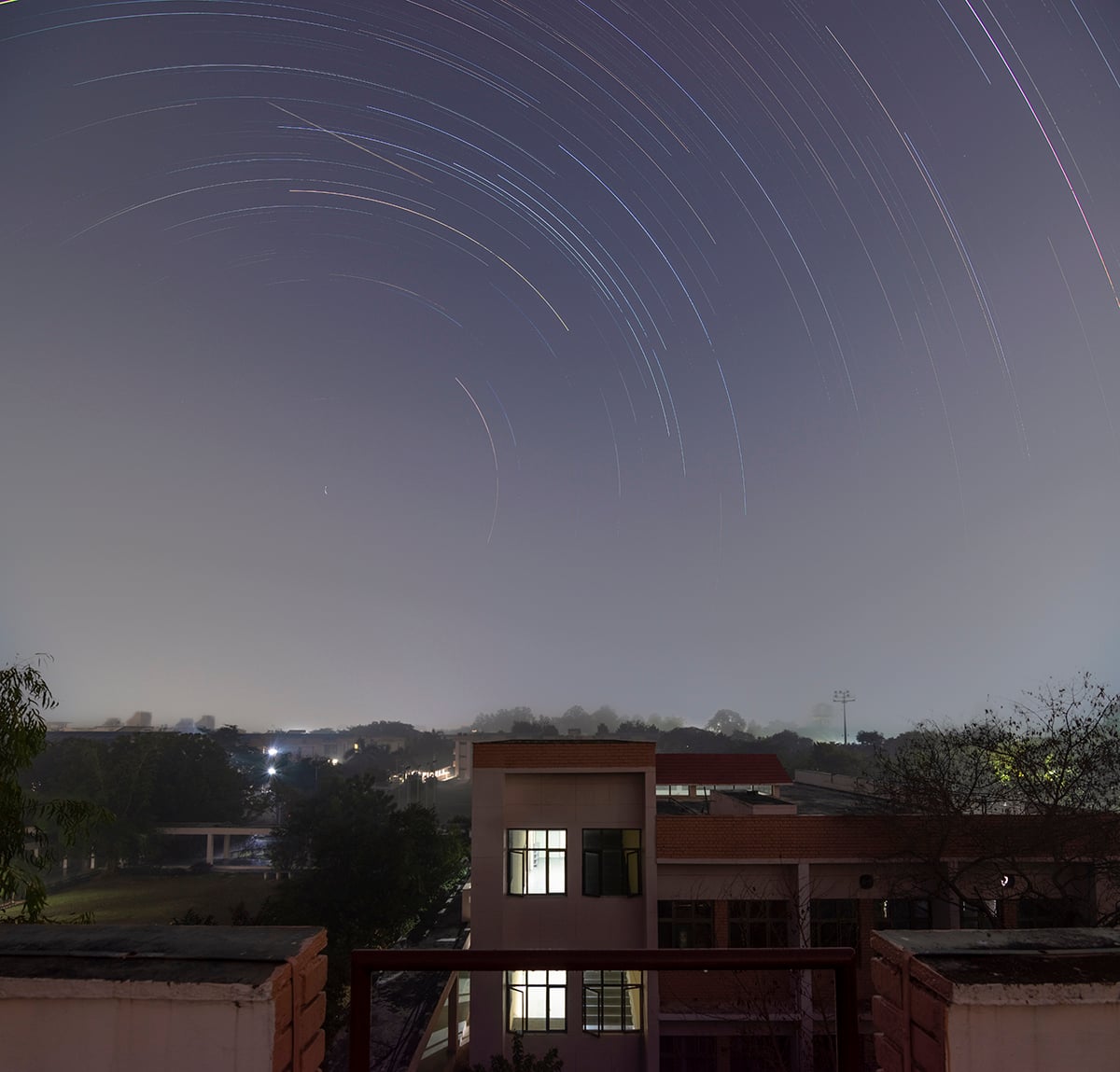
Bortle 8: City sky
The sky you will see is whitish grey or orangish, and you can even read newspaper headlines. If you are an experienced observer, you can see M31 or M44 with your small telescope on a clear night. A portion of the stars that comprise the well-known constellation patterns are either completely absent or very hard to discern. When you know where to look, you can see stars as faint as magnitude 4.5 with the unaided eye.
Bortle 9: Inner city sky
Your complete view of the sky will be illuminated with lights. Dim constellations like Cancer and Pisces are completely invisible. You won’t be able to see any messier objects, may be except of pleiades. Your companion in the sky will be the moon and the bright planets. These are the only objects you will enjoy looking at with your telescope.
For wide-field astrophotography, bortle 1-3 are best suited. With dark skies and barely visible foreground, you can push your shutter speed and ISO to get the best details of the sky. If you are using a telescope or a lens with narrowband filters, you can get decent images even at bortle 5-6. Light pollution filters may also help you get some details of the sky with a wide-field set up.
Sitting at home or on the run, you can find the Bortle Scale of any location around the world with light pollution map. This is extremely helpful if you are planning an astrophotography trip.
See more from DIYPhotography.net on Google
Add DIYPhotography.net as a trusted source. This makes
our stories more likely to appear in your Google Search results.
 Add as a preferred source on Google

Soumyadeep Mukherjee
Soumyadeep Mukherjee is an award-winning astrophotographer from India. He has a doctorate degree in Linguistics. His work extends to the sub-genres of nightscape, deep sky, solar, lunar and optical phenomenon photography. He is also a photography educator and has conducted numerous workshops. His works have appeared in over 40 books & magazines including Astronomy, BBC Sky at Night, Sky & Telescope among others, and in various websites including National Geographic, NASA, Forbes. He was the first Indian to win “Astronomy Photographer of the Year” award in a major category.




Join the Discussion
DIYP Comment Policy
Be nice, be on-topic, no personal information or flames.
One response to “What is the Bortle Scale and why is it important for astrophotography”
https://www.diyphotography.net/what-is-the-bortle-scale-and-why-is-it-important-for-astrophotography/ — Bortle 1 and 2 skies — The Milky Way is so bright, and the stars are so bright, that I can see the shadow of my hand over the other. I can see very easily by the star light … I never have to use a flash light and I can see M33 and the double star cluster as easy as pie ! If you can’t see your surrounding by star light in bortle one conditions, then something is wrong with your eyes ! … consider this … let me ask you a question … in bortle one conditions, can you see the Horse Nebula through the eyepiece with out a filter ? … if you can see it, it’ll be a deep shade of red, teaseing your eyes, just barely there … if you can see it, then you can see around you in bortle one condition. i live in an area that is Bortle 1 and 2. The only time i can’t see by star light is when the clouds moves in and hides the stars … enough said … smile …