




















The 70–200mm Mistakes You’re Probably Making (And How to Fix Them)
Mar 19, 2026
Alex Baker
Alex Baker is a portrait and lifestyle driven photographer based in Valencia, Spain. She works on a range of projects from commercial to fine art and has had work featured in publications such as The Daily Mail, Conde Nast Traveller and El Mundo, and has exhibited work across Europe
Share:
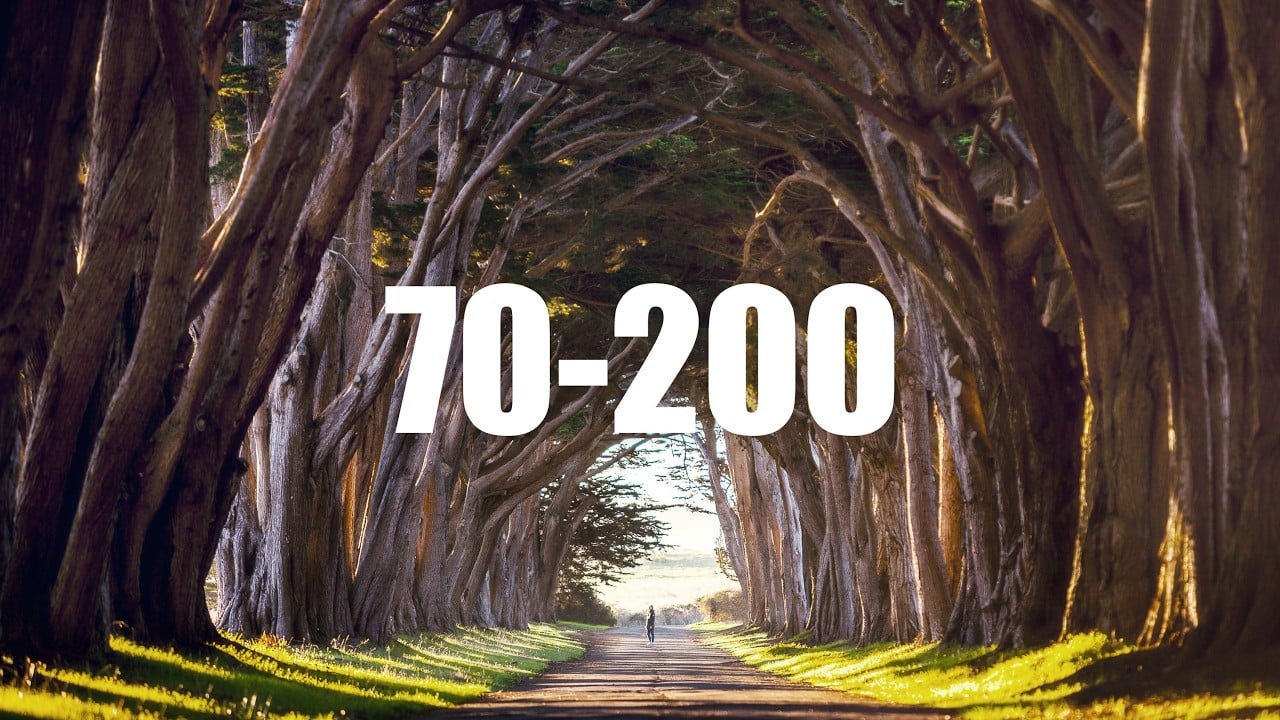
For years, landscape photography has been synonymous with wide-angle lenses wth those sweeping vistas, dramatic skies, and exaggerated foregrounds. But landscape photographer Mads Peter Iverson sees things a little differently. Over time, he’s found himself reaching for his 70–200mm lens more and more, quietly building a portfolio of images that feel more intentional, more layered, and often, more striking.
In his experience, the telephoto lens isn’t just a backup option, it’s a creative powerhouse. And yet, many photographers either overlook it entirely or misuse it in ways that limit its potential. So, here’s how Mads approaches the 70–200mm lens, along with the biggest mistakes he’s learned to avoid (and what to do instead).
The Stability Problem No One Talks About
Early on, Mads learned this the hard way: a 70–200mm lens can quickly turn even a solid tripod setup into a shaky mess. Because the lens is relatively heavy compared to a standard zoom, mounting the camera body directly onto a tripod creates an unbalanced setup. That imbalance introduces subtle movement, and at longer focal lengths, even the smallest vibration can soften an image.
The simple fix is to always use the lens collar. By mounting the tripod plate directly to the lens instead of the camera, the whole system becomes more stable and better balanced. It’s a small adjustment that makes a noticeable difference, especially when shooting in wind or at slower shutter speeds.
Mads also swears by a simple but underused trick: instead of tilting the tripod head for vertical shots, he rotates the camera within the lens collar. It keeps the weight centred and avoids that awkward, off-axis wobble.
Rethinking Shutter Speed (and Ditching the Tripod More Often)
One of the classic rules in photography is to keep your shutter speed at least double your focal length. So at 200mm, you’d aim for 1/400s. Mads says he used to follow that religiously, until modern image stabilisation changed the game.
With today’s camera and lens stabilisation systems, he’s often able to shoot handheld at much slower shutter speeds while still getting sharp images. That freedom means less time setting up a tripod and more time reacting to light and composition.
That said, he doesn’t throw the rule out entirely. Instead, he treats it as a guideline, something to fall back on when conditions get tricky or when sharpness is critical.
When Your Lens Hood Becomes a Sail
The lens hood is one of those accessories that feels like a no-brainer. It protects the front element, reduces flare, and helps keep rain or snow off your glass. But in windy conditions, it can work against you.
Mads has found that the hood can act like a miniature sail, catching wind and introducing vibrations, especially noticeable at 200mm. In those moments, removing the hood can actually improve image sharpness. It’s a trade-off: protection versus stability. And like most things in photography, the right choice depends on the conditions in front of you.
Why Telephoto Shots Can Feel Flat
One of the biggest creative challenges with a 70–200mm lens is depth, or rather, the lack of it. Telephoto lenses compress perspective, which is great for isolating subjects but can make scenes feel flat if you’re not careful. Mads noticed that many of his early shots had a strong subject and then just sky behind it. Clean, but not particularly compelling.
The solution was to think in layers. Instead of relying on a single focal point, he actively looks for foreground, midground, and background elements. The catch is that, unlike with a wide-angle lens, you can’t just shuffle a few steps to adjust composition. At longer distances, you have to move a lot.
He recalls hiking further up a ridge in the Faroe Islands just to align a foreground element with a distant peak. It took effort, but the result had far more depth and visual interest.
The Invisible Enemy: Atmospheric Distortion
Once you push beyond 200mm, especially toward 300mm and beyond, you’re not just photographing your subject. You’re photographing the air between you and it. Heat haze, shimmer, and atmospheric turbulence can soften your images in ways that no amount of sharpening can fix.
Mads has learned to work around this by being intentional about timing and conditions:
- Shoot early: Cooler air at sunrise is far more stable
- Gain elevation: Less ground heat means less distortion
- Look for overcast or post-rain conditions: Cleaner, clearer air
- Embrace a light breeze: It can help break up heat waves
It’s not something you can “fix”, only something you can anticipate.
Getting Everything in Focus (It’s Harder Than You Think)
At 200mm, the depth of field becomes razor-thin compared to wide-angle shooting. Even at smaller apertures like f/11 or f/16, getting both foreground and background sharp can be impossible, especially when they’re physically far apart.
Mads often runs into this when shooting layered landscapes. Focus on the foreground, and the background softens. Focus on the background, and the foreground falls apart. His go-to solution is Focus stacking. He’ll take multiple shots, one focused on each part of the scene, and blend them later in post-processing. It takes a bit more effort, but it allows him to maintain both sharpness and composition without compromising.
The Biggest Mistake: Leaving It At Home
Despite all its strengths, the 70–200mm lens often gets left in the bag, or worse, at home. It’s heavier, bulkier, and less “obvious” than a wide-angle. But Mads considers that a mistake he’s made too many times. Because the truth is simple: the lens you don’t bring is the one you’ll need!
Some of his favourite images, he says, were only possible because he had a telephoto lens on hand. It allowed him to isolate details, compress distant elements, and avoid cluttered compositions. When weight is a concern, he sometimes opts for a superzoom as a compromise. It may not match the optical quality of a dedicated 70–200mm, but it keeps those longer focal lengths within reach.
A Different Way of Seeing
For Mads, the 70–200mm lens isn’t just about zooming in, it’s about seeing differently. It encourages patience, it forces movement, and it rewards attention to detail. Once you start using it with intention, it’s hard to go back to thinking of it as anything less than essential.
So next time you head out to shoot landscapes, maybe don’t just pack the wide-angle. Bring the 70–200mm, and give it a proper chance to surprise you. Watch the whole video below:
See more from DIYPhotography.net on Google
Add DIYPhotography.net as a trusted source. This makes
our stories more likely to appear in your Google Search results.
 Add as a preferred source on Google

Alex Baker
Alex Baker is a portrait and lifestyle driven photographer based in Valencia, Spain. She works on a range of projects from commercial to fine art and has had work featured in publications such as The Daily Mail, Conde Nast Traveller and El Mundo, and has exhibited work across Europe




Join the Discussion
DIYP Comment Policy
Be nice, be on-topic, no personal information or flames.