

























Leica Moves Toward Custom Sensor Design With New Gpixel Partnership
Apr 28, 2026
Alysa Gavilan
Alysa Gavilan has spent years exploring photography through photojournalism and street scenes. She enjoys working with both film and mirrorless cameras, and her fascination with the craft has grown over the decades. Inspired by Vivian Maier, she is drawn to capturing everyday moments that often go unnoticed.
Share:

Leica Camera has entered a new strategic partnership with sensor specialist Gpixel to co-develop a next-generation CMOS image sensor, aiming to push image quality in future Leica cameras.
The collaboration signals a deeper shift in how premium camera systems are designed, moving closer integration between sensor engineering and camera design.
For photographers who follow Leica closely, this is not just a technical update but a sign of how much control manufacturers want over the entire imaging pipeline.
A New Sensor Built Around Leica’s Imaging Standards
At the center of the partnership is a jointly engineered sensor designed specifically for Leica’s performance requirements.
According to Leica Camera AG and Gpixel, the goal is to optimize image quality in areas such as dynamic range, color fidelity, noise performance, and low-light rendering.
Dr. Andreas Kaufmann, Chairman of the Supervisory Board and majority shareholder of Leica Camera AG, described the collaboration as a milestone in long-term cooperation.
“I am really happy and proud that our long-term cooperation with Gpixel will soon result in a true Leica sensor,” he said, highlighting the shared engineering effort across teams in Wetzlar, Antwerp, and Changchun.
From Gpixel’s side, CEO Xinyang Wang emphasized the alignment between both companies.
“Collaborating with Leica gives us the opportunity to combine our sensor-engineering strengths with their legendary imaging heritage,” he said, adding that the goal is to build sensors that expand what photographers can achieve in real-world shooting conditions.
The companies say the sensor will be purpose-built rather than adapted from existing designs, with joint work covering validation, tuning, and production readiness.
That detail matters for photographers because it suggests tighter integration between sensor behavior and final image rendering, something that often separates high-end systems from mass-market designs.
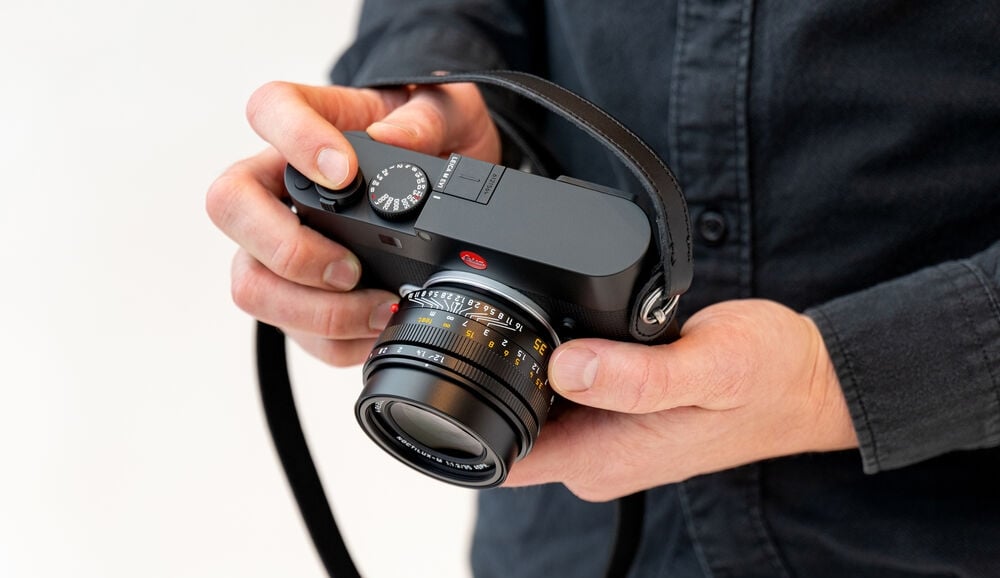
What This Means For Future Leica Cameras
Leica has long positioned itself around image character, color science, and optical precision rather than chasing specifications alone.
A custom sensor reinforces that direction. Instead of relying entirely on third-party sensor platforms, Leica appears to be moving toward deeper in-house influence over how light is captured and processed.
For working photographers, this could translate into more consistent color response across lighting conditions and improved control in challenging environments such as mixed light interiors or low-light street scenes. It may also affect how Leica cameras handle highlight roll-off and shadow detail, two areas where sensor design plays a critical role.
It is still early, and no specific camera model or release timeline has been attached to the sensor. The companies only confirmed that it will be used in future Leica products.
A Pattern Of Imaging Partnerships
Leica has been steadily expanding its collaboration strategy across the imaging ecosystem.
In recent years, it has worked with smartphone manufacturers such as Xiaomi to co-engineer camera systems that combine Leica optics with mobile sensors and computational imaging pipelines. These partnerships have helped Leica extend its color science and tuning philosophy beyond traditional cameras.
The new Gpixel agreement continues that approach but shifts focus back to dedicated imaging hardware. Unlike smartphone collaborations that prioritize compactness and computational photography, this partnership targets professional-grade performance, where sensor physics still plays a dominant role.
It also follows a broader industry trend where camera companies are no longer treating sensors as interchangeable components. Instead, they are increasingly co-developing hardware to differentiate image output in a saturated market.

Why This Matters For Image Quality
Sensor design influences almost every aspect of digital photography, from noise levels at high ISO to how smoothly tonal transitions are rendered. By working directly with a sensor manufacturer, Leica gains the ability to fine-tune these characteristics at a deeper level than off-the-shelf components typically allow.
For photographers, the real impact will only become clear once the first cameras using the sensor reach the field. Until then, the partnership signals intent more than outcome, but it is an intent that points toward tighter control over image creation from sensor to final file.
If Leica succeeds, the result could be a new benchmark for how much influence a camera maker can have over the raw image itself.
[Images via Leica]
See more from DIYPhotography.net on Google
Add DIYPhotography.net as a trusted source. This makes
our stories more likely to appear in your Google Search results.
 Add as a preferred source on Google

Alysa Gavilan
Alysa Gavilan has spent years exploring photography through photojournalism and street scenes. She enjoys working with both film and mirrorless cameras, and her fascination with the craft has grown over the decades. Inspired by Vivian Maier, she is drawn to capturing everyday moments that often go unnoticed.
Related Posts
 Chinese manufacturer Gpixel announces 8K 60 fps APS-C/Super35 BSI CMOS Image Sensor
 500px & Google Chromecast Partnership – Exclusive Interview With 500px
 Photoshop and Premiere Are Getting a Massive AI Brain Upgrade Thanks to a Partnership With NVIDIA
 How Six Of The World’s Most Difficult Ballet Moves Were Captured In Slow Motion
Join the Discussion
DIYP Comment Policy
Be nice, be on-topic, no personal information or flames.