
























ALMA Captures Star Birth Beyond the Milky Way for the First Time
Apr 29, 2026
Soumyadeep Mukherjee
Soumyadeep Mukherjee is an award-winning astrophotographer from India. He has a doctorate degree in Linguistics. His work extends to the sub-genres of nightscape, deep sky, solar, lunar and optical phenomenon photography. He is also a photography educator and has conducted numerous workshops. His works have appeared in over 40 books & magazines including Astronomy, BBC Sky at Night, Sky & Telescope among others, and in various websites including National Geographic, NASA, Forbes. He was the first Indian to win “Astronomy Photographer of the Year” award in a major category.
Share:
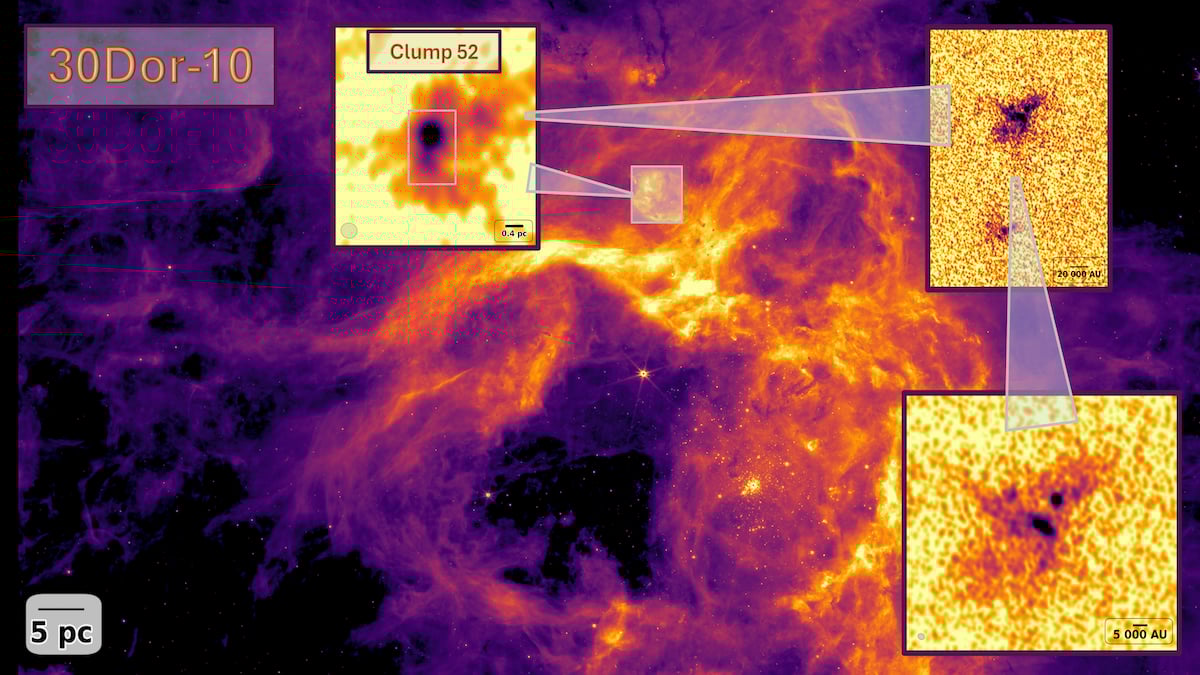
Star formation begins with the fragmentation of cold molecular gas into dense, self-gravitating structures. These structures, often referred to as prestellar cores, represent the initial conditions from which stars emerge. For decades, astronomers have measured these early stages within the Milky Way and established a strong link between the mass distribution of dense cores and the stellar initial mass function. However, extending such measurements to external galaxies has remained a major observational challenge.
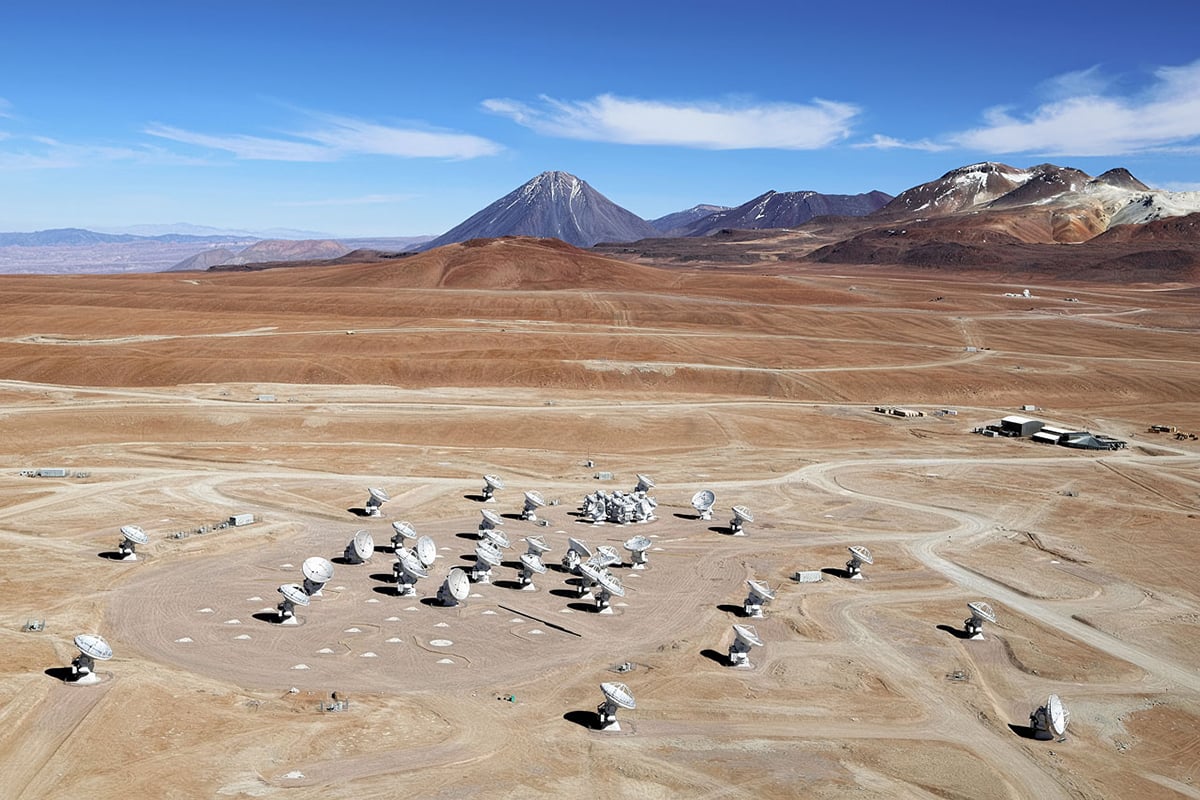
Recent observations using the Atacama Large Millimeter/submillimeter Array (ALMA) now overcome this barrier. For the first time, astronomers have resolved and characterized dense star-forming cores in a neighboring galaxy, providing a view of star formation at its earliest stage outside the Milky Way.
A nearby laboratory with extreme conditions
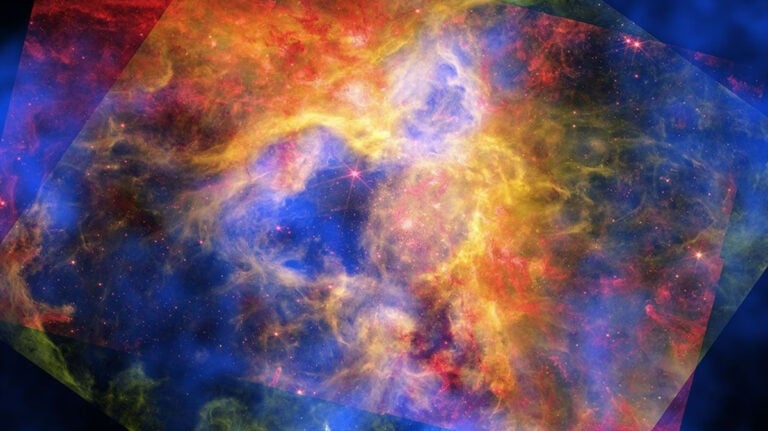
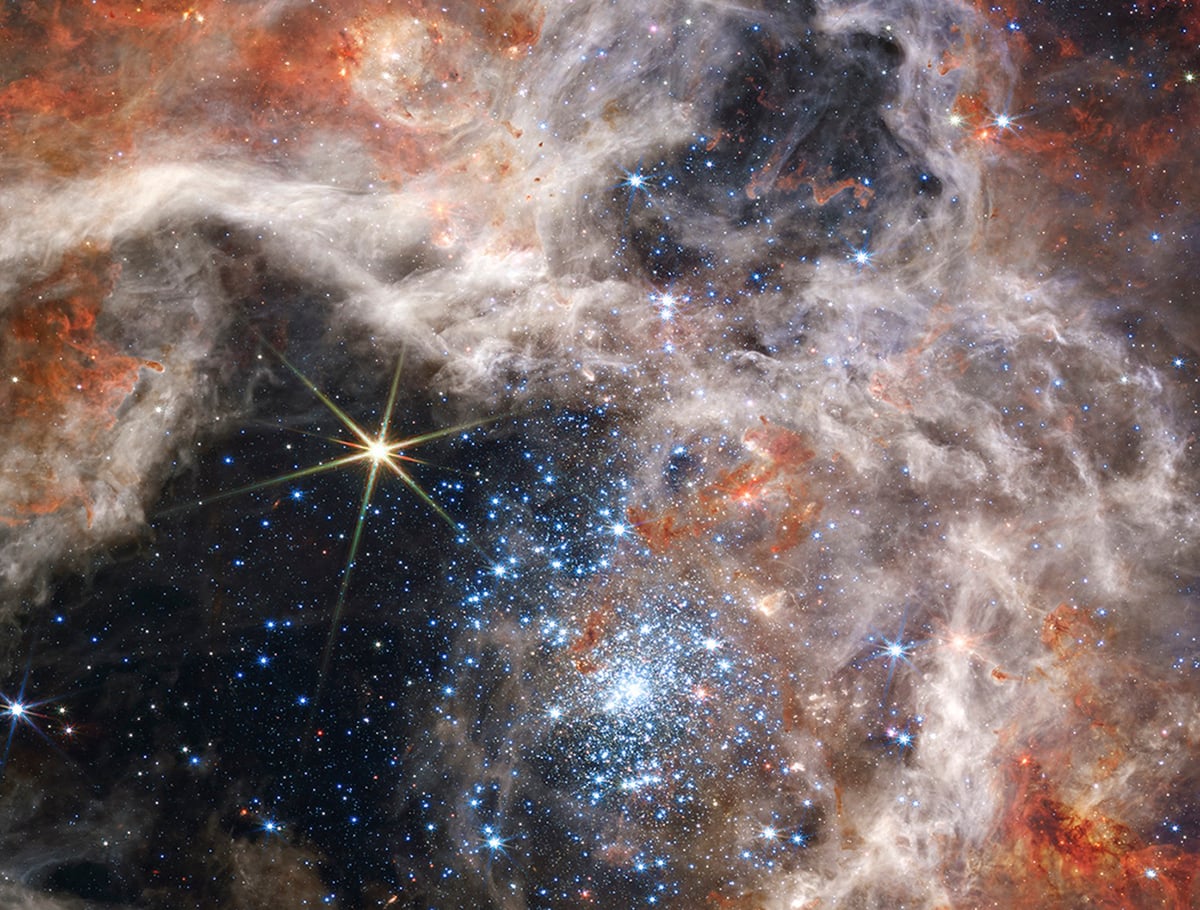
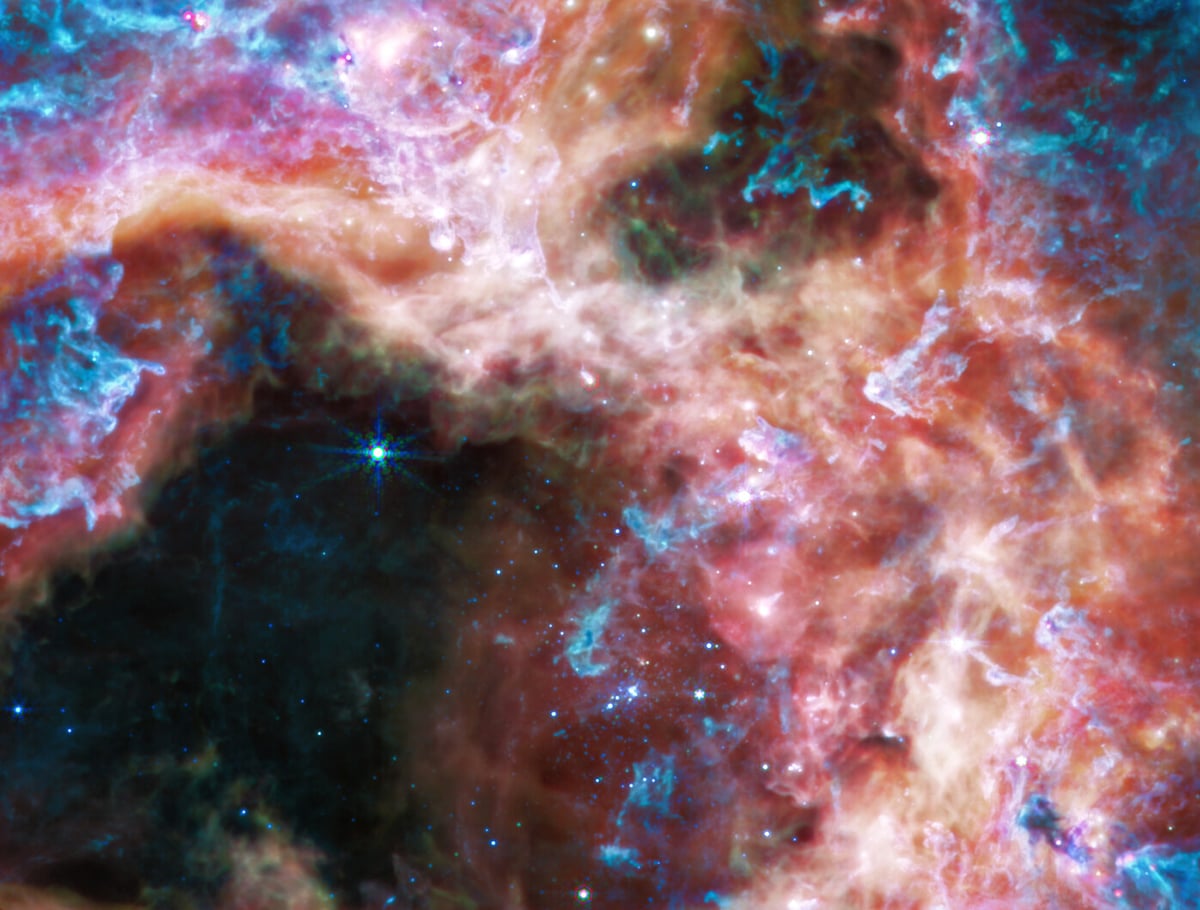
The observations focus on a well-known star-forming complex inside the Large Magellanic Cloud. This galaxy lies at a distance of about 160,000 light-years and offers a rare opportunity to study extragalactic environments at high spatial resolution. Within it, the region known as 30 Doradus stands out as the most active site of star formation in the Local Group.
At the heart of this region lies the molecular cloud 30Dor-10, which contains a large reservoir of cold gas and dust. This cloud experiences physical conditions that differ from those in typical Milky Way star-forming regions. The metallicity is lower, which affects gas cooling and chemistry. At the same time, intense ultraviolet radiation from nearby massive stars permeates the environment. These factors create a more extreme setting for star formation.
Because of these differences, 30 Doradus serves as an ideal laboratory. It allows astronomers to test whether the processes that govern star formation remain consistent across varying galactic environments. If similar structures form under such conditions, it would suggest that the underlying physics operates universally.
Resolving the building blocks of stars
The primary goal of the study involves identifying and characterizing dense cores within the molecular cloud. These cores represent the smallest units of star-forming material that can be observed before collapse leads to protostar formation. Measuring their properties provides insight into how gas fragments and how stars acquire their initial masses.
Using ALMA’s high angular resolution, astronomers resolved structures down to scales of roughly 2,000 astronomical units. At the distance of the Large Magellanic Cloud, this level of detail marks a significant achievement. It allows identification of compact, high-density regions embedded within the larger cloud.
The observations revealed more than seventy dense cores distributed throughout the 30Dor-10 region. Many of these cores appear clustered within larger structures known as protoclusters. These protoclusters represent early stages in the formation of stellar clusters, where multiple stars may form in proximity.
To confirm the evolutionary stage of these objects, the research team compared ALMA data with observations from the Hubble Space Telescope and the James Webb Space Telescope. These complementary datasets provide information at optical and infrared wavelengths. The comparison shows that many of the identified cores lack strong emission from embedded stars. This indicates that they are in a very early phase of evolution, prior to significant stellar feedback.
Consistency Across Different Environments
The similarity between the core mass functions in the Large Magellanic Cloud and the Milky Way carries important implications. The two environments differ in several key aspects, including metallicity, radiation field strength, and overall gas dynamics. These factors influence how molecular clouds evolve and how efficiently they form stars.
Despite these differences, the observed mass distribution of dense cores remains consistent. This suggests that the fundamental processes governing fragmentation operate in a similar way across different conditions. Turbulent motions within the cloud create density fluctuations. Gravity amplifies these fluctuations, leading to collapse in the densest regions. Thermal pressure and magnetic fields act to counterbalance this collapse. The interplay of these forces appears to produce a characteristic pattern that does not depend strongly on local conditions.
This result strengthens the idea that the earliest stage of star formation follows a universal pathway. It implies that the initial distribution of star-forming material may be largely independent of the broader galactic environment.
Expanding the Scope of Observations
The success of this study shows the potential for high-resolution extragalactic observations. It shows that instruments like ALMA can now probe small-scale structures in nearby galaxies with remarkable detail. This capability opens new avenues for research.
Future observations can target other star-forming regions within the Large Magellanic Cloud and beyond. By examining environments with varying properties, astronomers can test the limits of the observed universality. They can investigate whether the same patterns hold in galaxies with even lower metallicity or stronger radiation fields.
In addition, combining data from multiple observatories will enhance these studies. Radio observations from ALMA reveal cold gas structures, while optical and infrared data from space telescopes trace the presence of young stars and their surrounding material.
Clear skies!
See more from DIYPhotography.net on Google
Add DIYPhotography.net as a trusted source. This makes
our stories more likely to appear in your Google Search results.
 Add as a preferred source on Google

Soumyadeep Mukherjee
Soumyadeep Mukherjee is an award-winning astrophotographer from India. He has a doctorate degree in Linguistics. His work extends to the sub-genres of nightscape, deep sky, solar, lunar and optical phenomenon photography. He is also a photography educator and has conducted numerous workshops. His works have appeared in over 40 books & magazines including Astronomy, BBC Sky at Night, Sky & Telescope among others, and in various websites including National Geographic, NASA, Forbes. He was the first Indian to win “Astronomy Photographer of the Year” award in a major category.
Related Posts
 A Neighbouring Vista of Stellar Birth: Hubble Captures Active Star Formation
 Witnessing Birth of Planets: A Groundbreaking Photograph by ALMA and JWST
 ALMA Maps Milky Way’s Turbulent Heart in Its Largest Galactic Centre Survey
 Photographer captures the aurora, STEVE, Milky Way, and a shooting star in one photo
Join the Discussion
DIYP Comment Policy
Be nice, be on-topic, no personal information or flames.