
























Witnessing Birth of Planets: A Groundbreaking Photograph by ALMA and JWST
Jul 16, 2025
Soumyadeep Mukherjee
Soumyadeep Mukherjee is an award-winning astrophotographer from India. He has a doctorate degree in Linguistics. His work extends to the sub-genres of nightscape, deep sky, solar, lunar and optical phenomenon photography. He is also a photography educator and has conducted numerous workshops. His works have appeared in over 40 books & magazines including Astronomy, BBC Sky at Night, Sky & Telescope among others, and in various websites including National Geographic, NASA, Forbes. He was the first Indian to win “Astronomy Photographer of the Year” award in a major category.
Share:

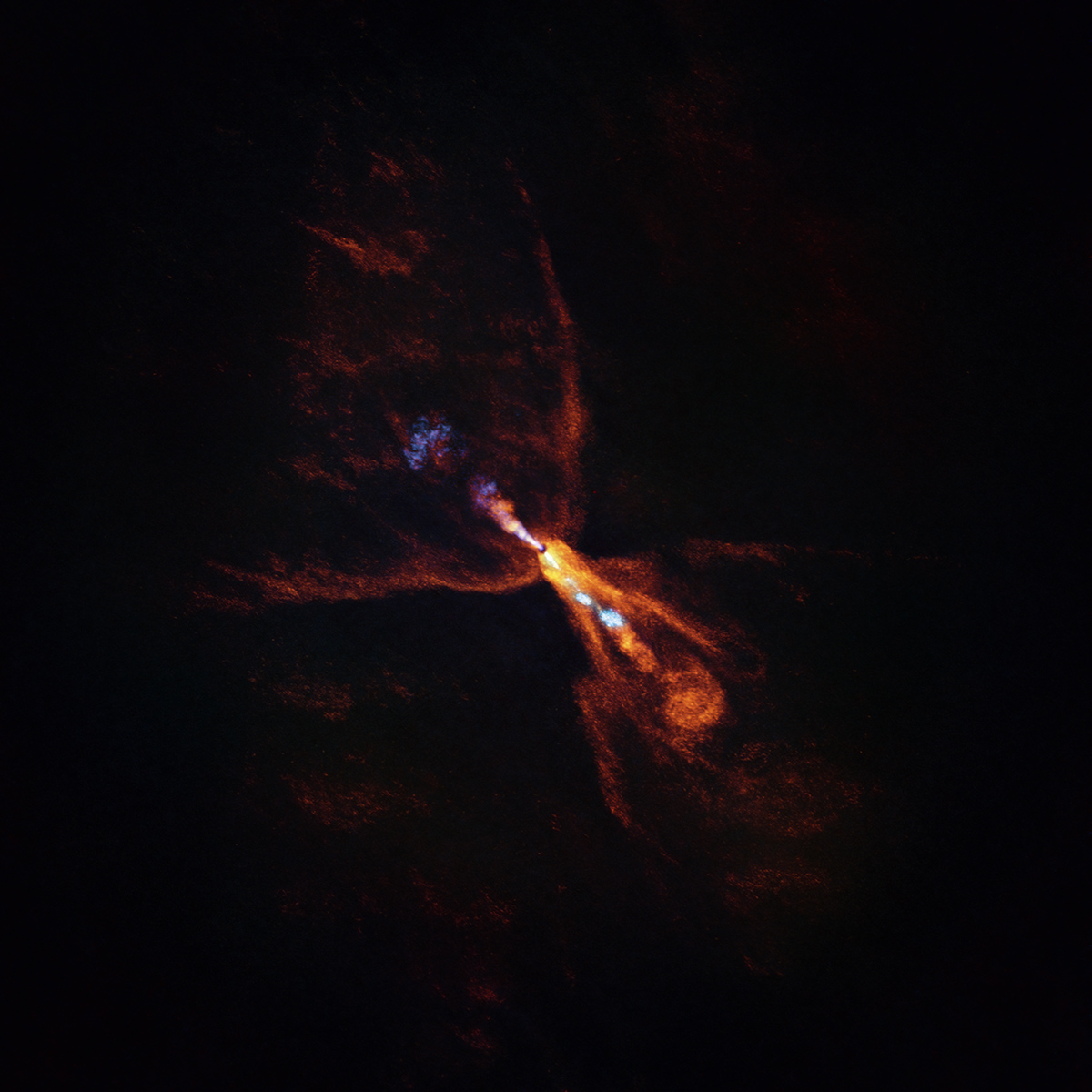
In a remarkable achievement, astronomers have captured the earliest phase of planet formation. Using the Atacama Large Millimeter/submillimeter Array (ALMA) and NASA’s James Webb Space Telescope (JWST), scientists observed solid minerals forming in a young star’s disc. This discovery, announced by the European Southern Observatory (ESO), provides a direct glimpse into the moment when cosmic dust begins its journey toward becoming planets.
The discovery star: HOPS 315
The focus of the observation is a young protostar named HOPS 315. It lies about 1300 light-years away in the Orion Molecular Cloud Complex, one of the most active star-forming regions near Earth. HOPS 315 is a very young star, only about a few hundred thousand years old. In stellar terms, that’s infancy. Like the early Sun, HOPS 315 is surrounded by a protoplanetary disc. This disc is made of gas and dust. Over time, these particles stick together to form pebbles, rocks, and eventually planets. This process is known as planet formation. Until now, astronomers had never directly observed the very first step: the condensation of minerals from hot gas into solid particles.
Instruments that made it possible
Two of the world’s most powerful astronomical instruments made this discovery possible.
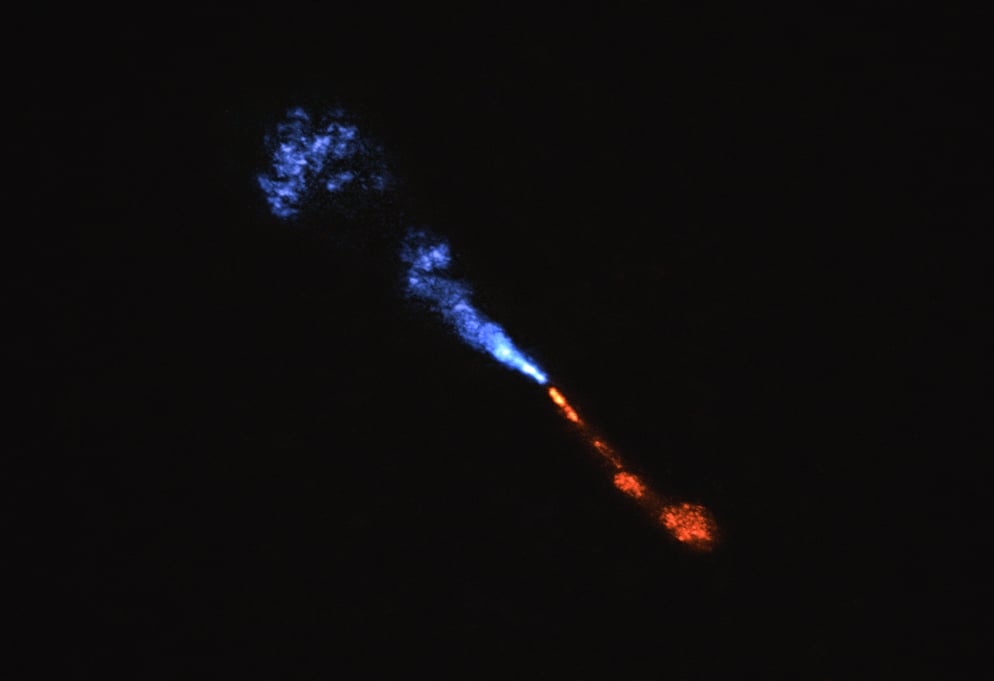
- James Webb Space Telescope (JWST): JWST observed hot silicon monoxide (SiO) gas in the inner disc of HOPS 315. This gas forms when dust is vaporized at high temperatures.
- Atacama Large Millimeter/submillimeter Array (ALMA): ALMA detected solid silicate dust grains at the same location. These solids had just condensed from the hot vapor. ALMA’s sharp resolution allowed scientists to pinpoint the exact region where solids were forming.
This was the first time researchers had linked the gas and solid phases of silicates in a young stellar disc.
What exactly formed?
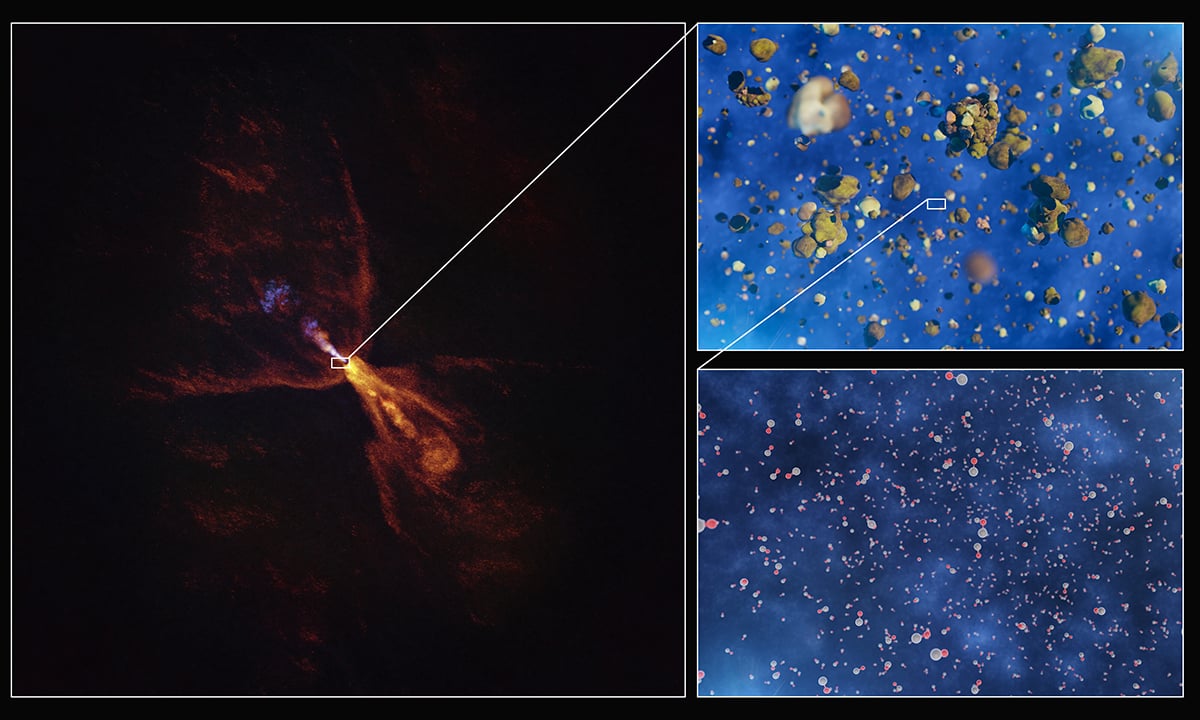
The main discovery was the formation of silicate minerals. These are the same kinds of minerals that make up much of Earth’s crust and the rocky material in asteroids and meteorites. In particular, scientists observed:
- Silicon monoxide (SiO) gas, which forms at high temperatures (over 1000 °C).
- Crystalline silicates, which form when this gas cools and condenses into solids.
In the Solar System, scientists find similar minerals in meteorites. These ancient rocks hold clues about the early Solar System. The silicates in HOPS 315 could eventually become planets, moons, or asteroids. Meteorites that fall on Earth often contain tiny silicate grains that formed before the planets did. These presolar grains carry the chemical signature of hot condensation processes. Until now, astronomers had only seen the results of such condensation, never the process itself. This discovery demonstrates that such processes continue to occur in other star systems. It also supports theories that planets begin forming while the star is still growing. That aligns with current models of the Solar System’s evolution.
A new window into planet formation
The universe just revealed one of its best-kept secrets: the very beginning of planet formation. For the first time, scientists watched minerals form in the swirling gas around a newborn star. This observation is part of a larger effort to understand how planetary systems form. Thanks to facilities like ALMA and JWST, astronomers can now study these processes in exquisite detail. The discovery around HOPS 315 may just be the beginning. Many more young stars with protoplanetary discs are waiting to be observed. Each new target could reveal more clues about how common Earth-like planets might be in the galaxy.
Clear skies!
See more from DIYPhotography.net on Google
Add DIYPhotography.net as a trusted source. This makes
our stories more likely to appear in your Google Search results.
 Add as a preferred source on Google

Soumyadeep Mukherjee
Soumyadeep Mukherjee is an award-winning astrophotographer from India. He has a doctorate degree in Linguistics. His work extends to the sub-genres of nightscape, deep sky, solar, lunar and optical phenomenon photography. He is also a photography educator and has conducted numerous workshops. His works have appeared in over 40 books & magazines including Astronomy, BBC Sky at Night, Sky & Telescope among others, and in various websites including National Geographic, NASA, Forbes. He was the first Indian to win “Astronomy Photographer of the Year” award in a major category.
Related Posts
 ALMA Captures Star Birth Beyond the Milky Way for the First Time
 Canon hails groundbreaking 1-megapixel SPAD image sensor as the “eye of the future”
 Groundbreaking AI “reads your mind”: Turns thoughts into images with 75% accuracy
 Tamron 50-400mm f/4.5-6.3 is a new, groundbreaking all-purpose zoom for Sony E
Join the Discussion
DIYP Comment Policy
Be nice, be on-topic, no personal information or flames.