























Hubble Photographs Young Stars and Jets in the Trifid Nebula
Apr 20, 2026
Soumyadeep Mukherjee
Soumyadeep Mukherjee is an award-winning astrophotographer from India. He has a doctorate degree in Linguistics. His work extends to the sub-genres of nightscape, deep sky, solar, lunar and optical phenomenon photography. He is also a photography educator and has conducted numerous workshops. His works have appeared in over 40 books & magazines including Astronomy, BBC Sky at Night, Sky & Telescope among others, and in various websites including National Geographic, NASA, Forbes. He was the first Indian to win “Astronomy Photographer of the Year” award in a major category.
Share:
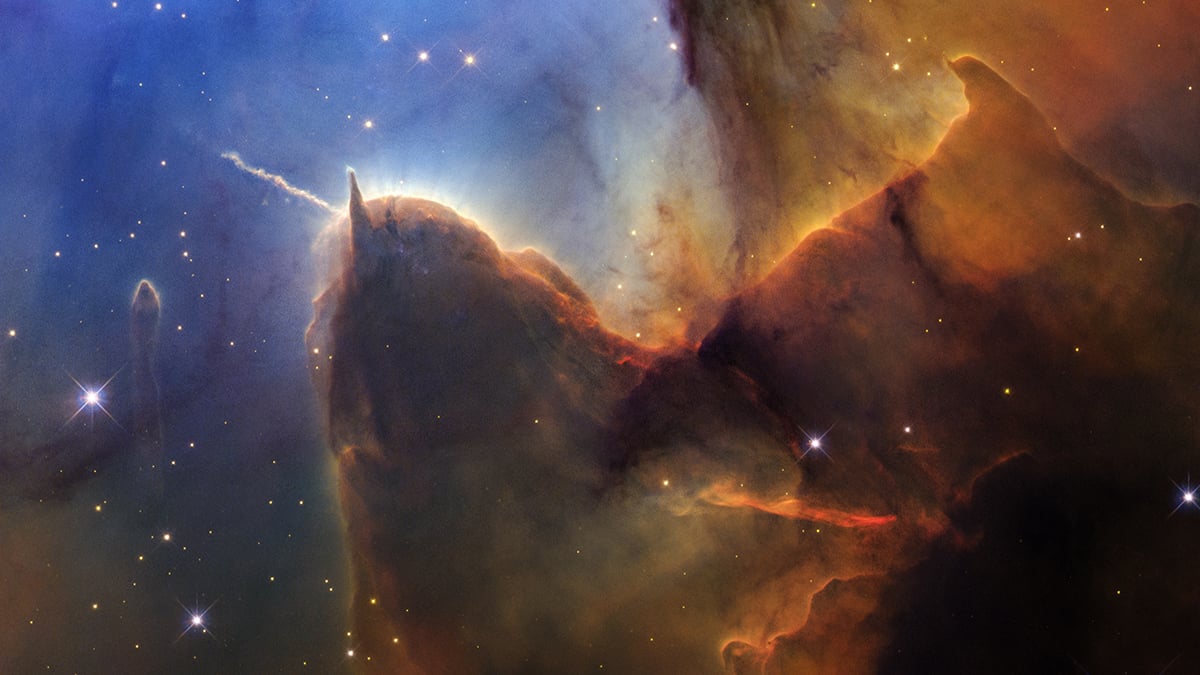
The Hubble Space Telescope has produced a new high-resolution image of a compact star-forming structure inside the Trifid Nebula (Messier 20). This observation focuses on a dense molecular feature shaped by ultraviolet radiation from nearby massive stars. The image also records changes that occurred over nearly three decades. Astronomers compared the new dataset with earlier observations obtained in 1997 and detected measurable motion in stellar jets and evolving gas structures inside the nebula.
These observations provide evidence of ongoing protostellar activity in one of the youngest known stellar nurseries visible in optical wavelengths. At the same time, they highlight how radiation from massive stars modifies surrounding material and influences the next generation of star formation.
A young stellar nursery in the direction of Sagittarius
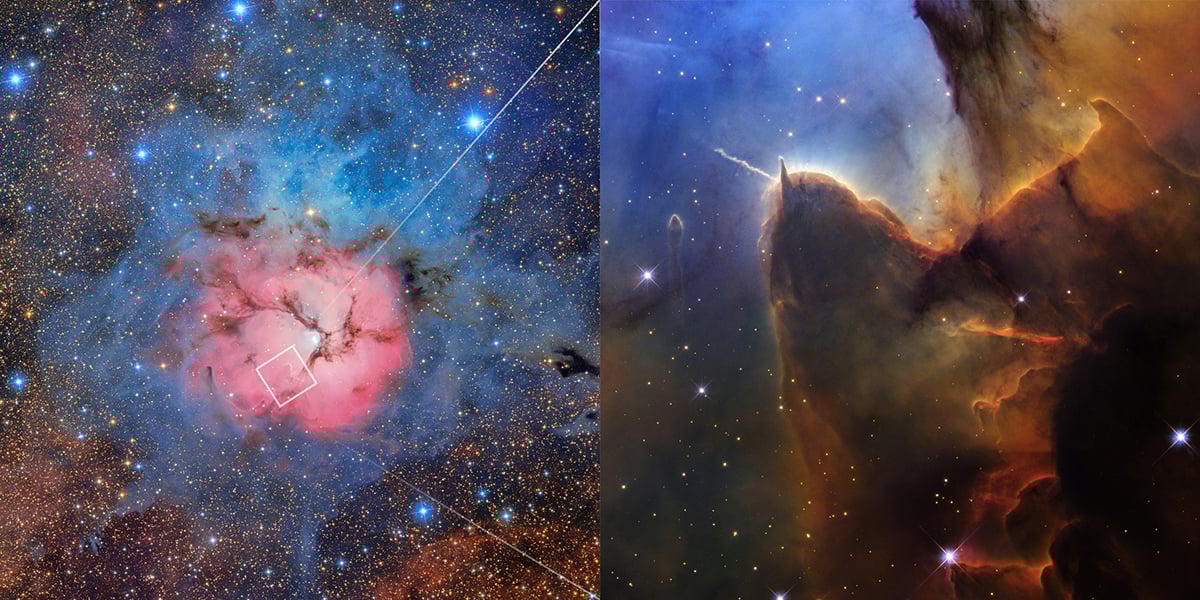
The Trifid Nebula lies about 9,000 light-years from Earth in the constellation Sagittarius. French astronomer Charles Messier discovered it in 1764 while compiling his catalog of comet-like objects. In the modern age, astronomers recognize it as one of the youngest emission nebulae accessible to optical observation.
The nebula contains a mixture of ionized hydrogen gas, dust clouds, and newly formed stars. These components reveal different stages of stellar evolution within the same region. Massive stars near the nebular center emit strong ultraviolet radiation. That radiation ionizes the surrounding gas, producing the bright emission visible across the cloud.
At the same time, dense dust lanes cross the nebula and divide its luminous structure into three main sections. These lanes block visible light and conceal colder material inside the cloud. However, those hidden regions still contain active star formation. As a result, the Trifid Nebula offers a direct view of both exposed and embedded stellar birth environments.
Radiation from massive stars: Reshaping the cloud
Massive stars inside the Trifid Nebula dominate its structure. Their intense ultraviolet radiation heats nearby gas and drives ionization fronts through surrounding material. Consequently, the edges of dense clouds appear sculpted into curved shapes and narrow pillars.
These pillars represent zones where radiation compresses gas rather than dispersing it immediately. Compression can increase local density and support the formation of additional stars. Therefore, the same radiation that erodes the cloud also helps trigger new collapses in selected regions.
This interaction between radiation and gas defines the overall appearance of the nebula. It also explains why the Trifid contains several generations of stars forming within a relatively small volume of space.
Furthermore, stellar winds from massive stars continue to remove material from the cloud surface. Over time, this process reduces the amount of gas available for future star formation. The nebula records both the creation and gradual clearing of stellar birth environments.
Hubble captures motion in a protostellar jet over three decades
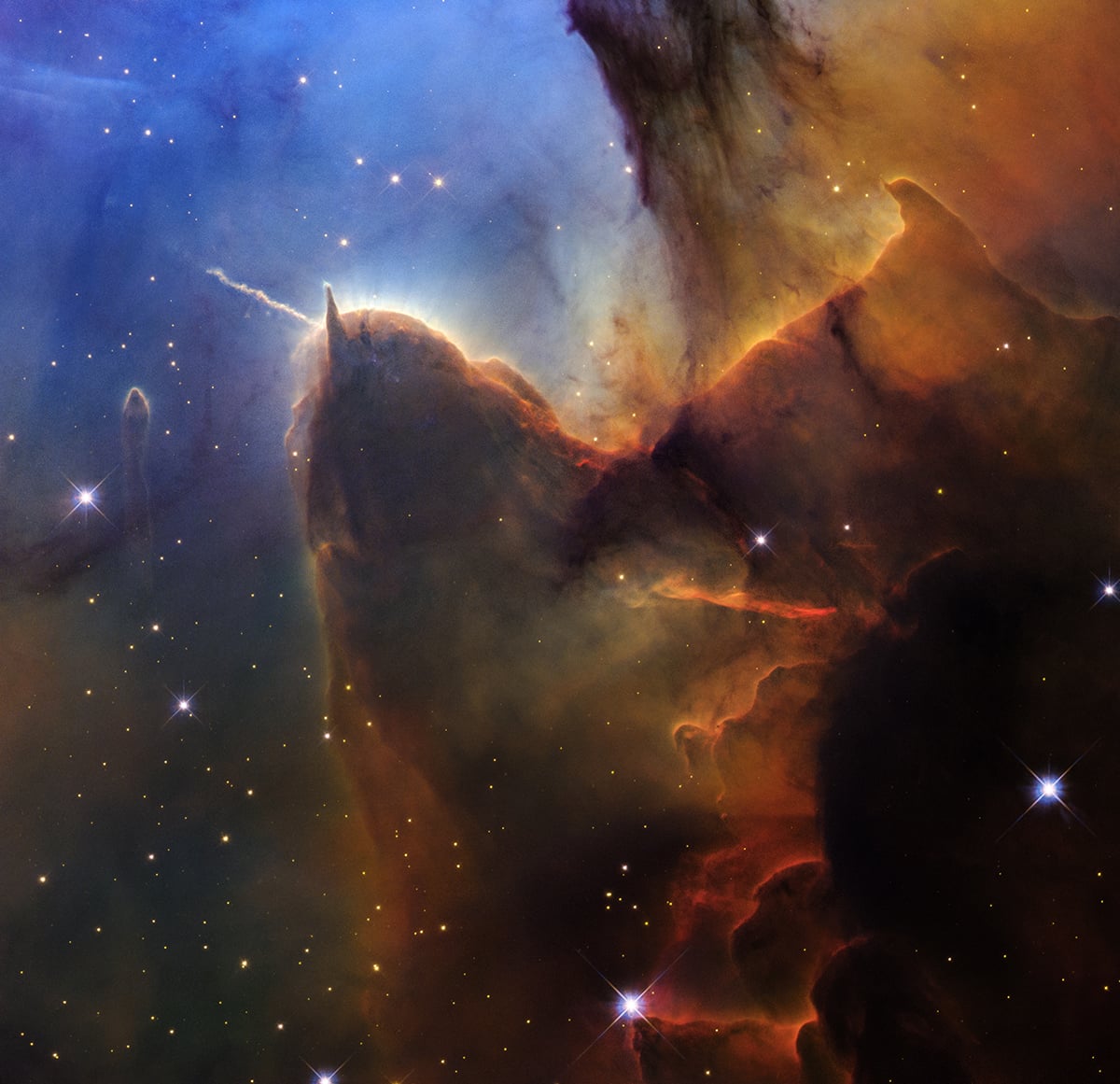
The most important feature in the new Hubble observation is a long jet emerging from a deeply embedded young star. Astronomers identify this structure as Herbig–Haro 399, a narrow outflow produced during the earliest stages of stellar evolution.
Young stars form through the collapse of rotating gas clouds. During this process, part of the infalling material is redirected along the star’s rotational axis. Magnetic fields guide this material outward at high speed. As the jet travels through surrounding gas, it creates glowing shock fronts that become visible in optical wavelengths.
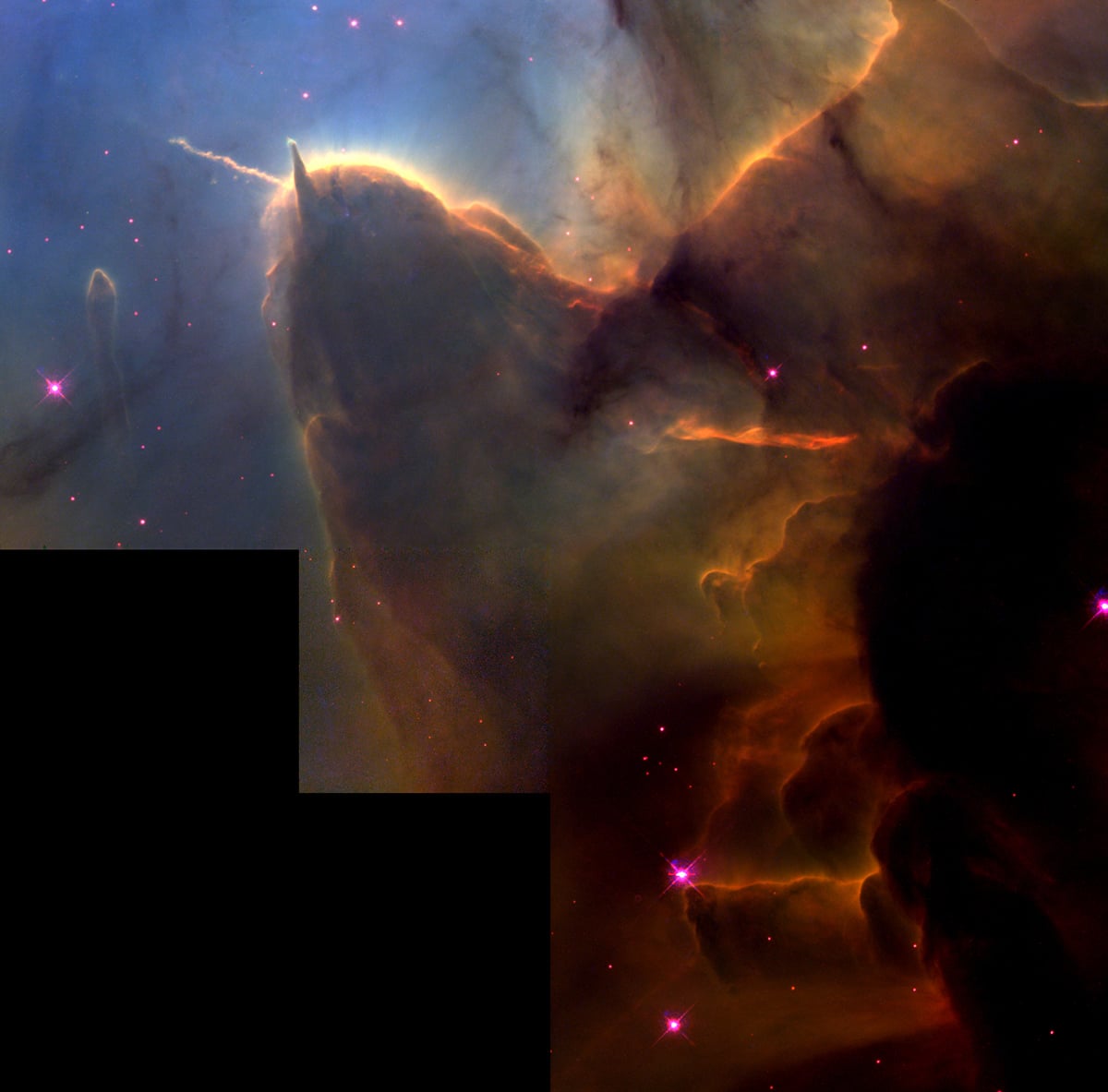
Hubble first recorded this jet in 1997. The telescope has now reobserved the same structure using its improved imaging capability. Because the observations span nearly thirty years, astronomers can measure how far the jet has moved through space.
The measurements confirm that the jet continues to expand across the surrounding cloud. They also allow researchers to estimate the velocity of material flowing away from the young star. Such long-term tracking provides rare observational evidence of stellar growth processes unfolding over human timescales.
Evidence for protoplanetary disks inside a harsh radiation environment
The new image also reveals a protoplanetary disk associated with another young star inside the nebula. Such disks form naturally during the collapse of gas around newborn stars. They contain dust grains that later combine to produce planets.
In the Trifid Nebula, the disk appears elongated and partially eroded. Nearby massive stars expose it to strong ultraviolet radiation. This radiation removes gas from the outer layers of the disk through photoevaporation. As a result, the disk gradually loses material over time.
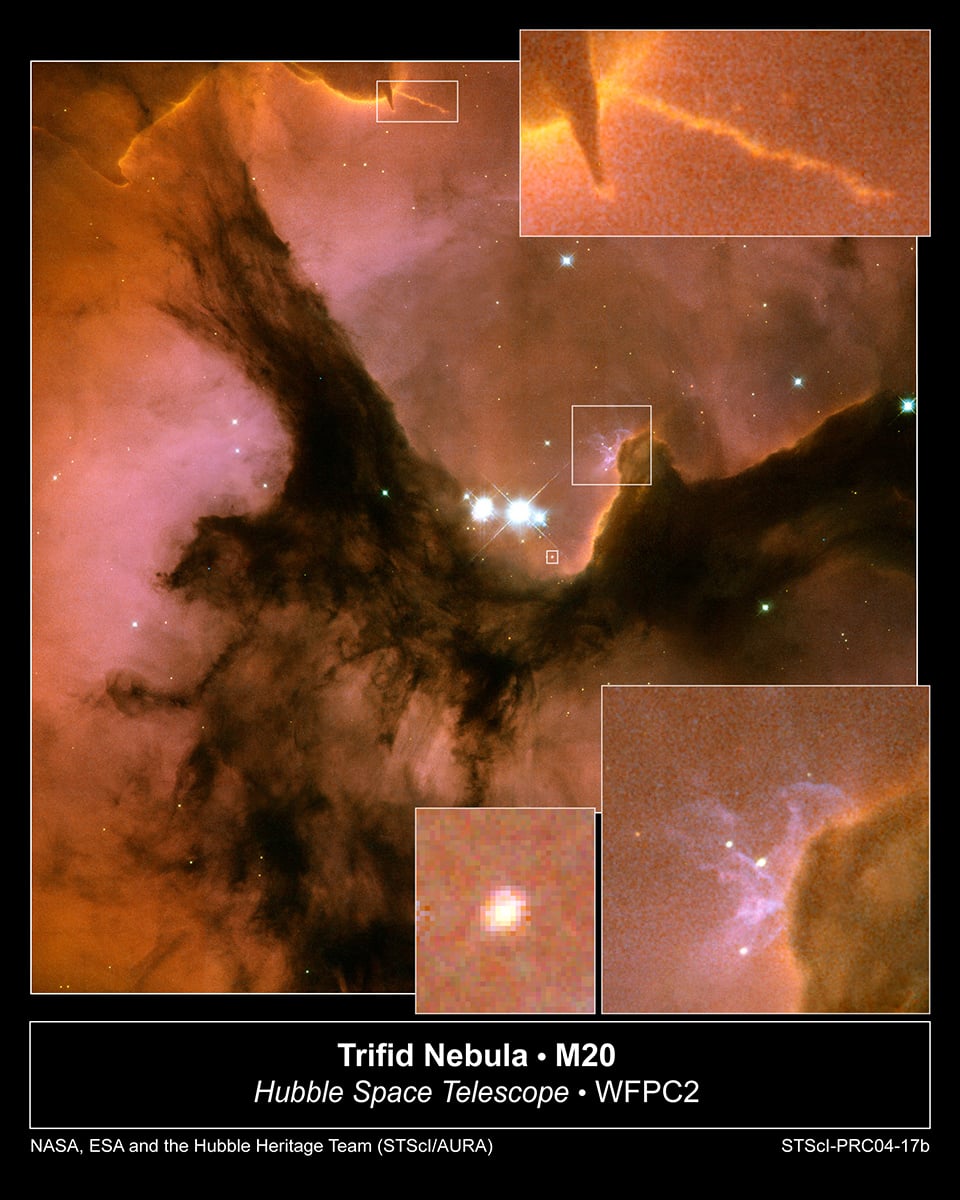
However, the inner regions of the disk can remain dense enough to support planet formation. Observations like this help astronomers understand how planetary systems develop in crowded stellar environments. Many stars form in clusters that contain massive neighbors. Therefore, conditions seen in the Trifid Nebula likely resemble those present during the formation of many planetary systems across the galaxy.
Clear skies!
See more from DIYPhotography.net on Google
Add DIYPhotography.net as a trusted source. This makes
our stories more likely to appear in your Google Search results.
 Add as a preferred source on Google

Soumyadeep Mukherjee
Soumyadeep Mukherjee is an award-winning astrophotographer from India. He has a doctorate degree in Linguistics. His work extends to the sub-genres of nightscape, deep sky, solar, lunar and optical phenomenon photography. He is also a photography educator and has conducted numerous workshops. His works have appeared in over 40 books & magazines including Astronomy, BBC Sky at Night, Sky & Telescope among others, and in various websites including National Geographic, NASA, Forbes. He was the first Indian to win “Astronomy Photographer of the Year” award in a major category.


Join the Discussion
DIYP Comment Policy
Be nice, be on-topic, no personal information or flames.