













The best camera gear for Milky Way Photography 2024
May 16, 2024
Benjamin Barakat
Benjamin Barakat is an astrophotographer who hosts seminars, workshops & photography expeditions internationally worldwide. He is based out of Switzerland, where he is also a researcher at the highest observatory in Europe, the Sphinx Observatory on top of Jungfraujoch, 3571 meters above sea level. His work has been featured by National Geographic, CNN, BBC, Forbes, Guardian, Vice, and many more.
Share:

Ever wondered which gear some of the best astrophotographers in the world are using? Well, here is an updated and revised article from last year’s one. Last year, I talked about my favorite system being Canon, but after doing some digging around and experimentation, my opinions have totally shifted, and now I’m all in for Sony. After being a Canon shooter for several years and highly backing them as the best, that time has ended. I’ve finally given in to the inevitable: Sony outshines them all.
Table of contents
Sony is the best!
Why would I make such a bold statement? Let’s face it: Sony has risen in recent years. It constantly strives to provide us with the newest technology and pushes the boundaries of what cameras can offer amateur and professional photographers like myself.
Their cameras are astonishing in low light conditions, and the fact that they are ISO invariant makes a huge difference for someone like me who has always worked on a Canon camera being ISO variant. To put it in clear terms for those of you who don’t understand these terms, ISO invariant means I can capture an image exposed, and in post-processing, I can raise the exposure by one to two stops without damaging the image too much. The issue with the ISO variant cameras is that you have to be exposed enough to see your image, as trying to recover the brightness in the post process isn’t an option; another downside is that you burn out your highlights. To put it clear, it wasn’t a perfect scenario, no matter what you did with such cameras. That’s why Sony wins when it comes down to it.
If that’s not enough to convince you, how about this?
While being a strong believer in Canon over the rest of the previous years, one statement I always made and always knew was that No other brand has a glass-like Sony. They smash it with image quality, lightweight lenses, and a broad range of lenses covering the needs of any photographer out there. In the past, I was forced to use third-party lenses as the original Canon ones just didn’t cut it in terms of image quality for the stars. If you read my previous article when I was boasting about Canon, you would have seen I don’t own a single Canon lens. That’s not to say they don’t have great lenses, too; they just do not have the lenses I, as an astrophotographer, need, and that’s a pity. On the other hand, Sony has some of the best lenses for night photography out there, and they are super lightweight. Anyway, I will mention a few of my favorite lenses that Sony has to offer later on in the article.
If you haven’t already thrown your camera to the side and started looking for a new Sony camera, then allow me to make one last point.
If you didn’t know already, then now I will tell you. The company ZWO ASI (Astronomy Imaging Camera) is the world’s leading brand for Deep Sky Astrophotography cameras, and hey, guess what sensors they are using? Sony, it does not take much to put two and two together, but there must be a good reason they are using them, and it is quite simple because there are no other sensors out there like the ones Sony offers.
This is the statement from ZWO ASI
Sony’s back-illuminated CMOS image sensor improves sensitivity and noise reduction—the key factors in enhancing image quality—while radically realigning its fundamental pixel structure from front illumination to back illumination.
So, with that being said, let’s get into the best gear for Milky Way Photography 2024.
The Camera
Sony A7IV – With 33MP and a flip-out screen, this is the strongest contender against my old favorite, the Canon R. It happens to be also my favorite imaging camera for Milky Way from the Sony lineup. As I stated before, this camera is ISO Invariant, so now I can under-expose my images and still brighten the shadows in the post process without damaging the highlights by masking out the sky when doing so. This alone takes my single images to another level. The Sony A7IV can also take 670 shots versus 370 shots from the Canon R with one single battery, that’s almost double, so I have no issues taking timelapses anymore and don’t need an external power source.
The Sony A7IV also allows in-camera interval shooting, whereas the Canon R doesn’t. So, no need for an external intervalometer anymore. And if I need to take my exposures longer than 30, then I can just use the Sony app, which works like a charm for taking those long exposures. There’s much more, but I won’t go into them as these points alone make it a no-brainer for deciding on which camera to get. Of course, you might say, well, other Sony and Canon models may offer those features, but the key reason I had the Canon R and now have the Sony A7IV is because of the midpoint MP range; too many MP results in more noise and less light signal being picked up and lower MP results in more light but less noise but with the sacrifice of details. That’s why I tend to always lean toward cameras in the range of 26-33 MP for Astrophotography.

Some other great cameras in the Sony line-up are as follows:
Sony A7III ($1,498) – The cheaper alternative to an A7IV that still provides great results in low light conditions but with a sacrifice of some of the awesome features the A7IV has to offer.
Sony A7SIII ($3,198)– The ultimate low light camera for filming at night, also a great camera for deep sky photography but comes with the sacrifice of some of the details.
Sony ZV-E1 ($1,898)—The more affordable version of an A7SIII—has the same sensor that produces excellent low-light film at the cost of no raw filming in camera (the A7SIII needs an external screen to do this anyway, so if you’re not filming at the pro level and still want excellent content, then this is your best bet).
Sony A7RV ($3,498)—This is an awesome all-rounder camera that excels in low-light photography. However, its 61 MP sensor will result in more noise than the A7IV. The most popular camera from ZWO ASI, the ZWO6200, uses the same sensor.
Sony A1 ($6,498)—The Sony A1 uses all the best features from the A7 and A9 camera lineups, making it a very strong contender. It also has the biggest viewfinder of all the cameras in Sony’s lineup, which makes it a breeze to look through during low-light conditions.
The best lenses for Milky Way photography
I use a variety of lenses, and I have tested almost everything out there. Here are my favorite lenses for Milky Way Photography:
WIDE LENSES
- TTARTISAN 11mm F2.8 ($215)
- Sony FE 12-24mm F2.8 GM ($2,898)
- Sony FE 14mm F1.8 GM ($1,498)
- Sony FE 20mm F1.8 GM ($798)
- Sony FE 24mm F1.4 GM ($1,298)
MEDIUM LENSES
- Sony FE 35mm F1.4 GM ($1,298)
- Sony FE 50mm F1.2 GM ($1,898)
- Sony FE 24-70mm F2.8 GM II ($2,298)
TELE LENSES
- Sony FE 85mm F1.4 GM ($1,698)
- Sony FE 70-200mm F2.8 GM II ($2,798)
- Sony FE 135mm F1.8 GM ($2,098)
- Sony FE 200-600mm F5.6-6.3 G OSS ($1,898)
All of these lenses are excellent for Milky Way and Astronomical Photography. The key to having a good lens is a fast aperture with superior optics that have very little or close to no coma or aberrations on the edges of the images.
The best tripod for Milky Way photography
Once you nail your camera and lens, the tripod is the most crucial part. It is the foundation of your imaging and setup, and your results are highly dependent on it. Do not be cheap, and try to get away with an unstable and unreliable tripod. In doing so, you can ruin your images and, even worse, damage your camera. I often work in rough conditions with wind or currents in the water, and stability is key to my images being dead-sharp.
I have tried many tripods out there from top brands and marks but ended up with a lineup of tripods I truly believe to be one of the best tripod companies out there; their name is Sunway Foto. The quality of their gear is outstanding, and they have carefully thought through their gear when creating them. They are stronger, lighter, easier to use, practical, and more compact than any other tripod I have ever used.
My two favorite models from them are the:
- T3640 CM ($578) (for heavier loads and ultimate stability, which is also travel-friendly)
- T2840 CK ($219)(also handles heavy loads but isn’t as strong as the bigger model and is super travel-friendly.)
Additionally, I use other accessories from Sunway Foto. They are beautifully machined and well-made products.
I use the EB-44 Ball head ($99), which is perfect for any load, heavy or small, and very smooth to use. It’s strong and reliable. It’s also lightweight and can handle a heavy payload.
I also use their IRC-64 Panning base, which is a perfect tool for panoramas due to its click-in-degrees function.
I also always have a leveling base on the top of my tripod or perfect balance. This is also a big game changer for getting polar aligned when using a star tracker. I use the LB-90 R from Sunwayfoto, which also has a panorama function for rotating.
Another tool I am using is the A-Toll from Silence Corner, the ultimate way to switch between landscape and portrait orientation without even having to dismantle your camera from the ball head. Another great advantage is that it doesn’t cover any of the ports on your camera, which allows freedom and makes the overall photography experience so much better. I highly recommend you get one, as this is a game-changer.
The tracking mount
The next level up after all of this is star trackers, which are devices that turn and compensate for the rotation of the earth once aligned to the celestial pole. These devices allow us to expose longer than what we are normally limited to. In doing so, we can reduce the ISO and slow down the aperture to have sharper and cleaner images overall.
My two favorite trackers are the:
- iOptron Skytracker Pro ($288) (very small and reliable)
- iOptron Skyguider Pro ($398) (slightly bigger, allows bigger payloads, and is extremely reliable)
Both of these trackers are easy to use for beginners and advanced enough for astrophotographers with experience like me. I’ve tried all the other brands and when it comes down to it, iOptron is the best for portable star trackers.
Intervalometer
An intervalometer is also highly recommended for setting multiple exposures or intervals for time lapses, etc. The main reason I use one is to avoid camera shake when touching the shutter button to take an exposure.
My secret weapon for photographing the Milky Way
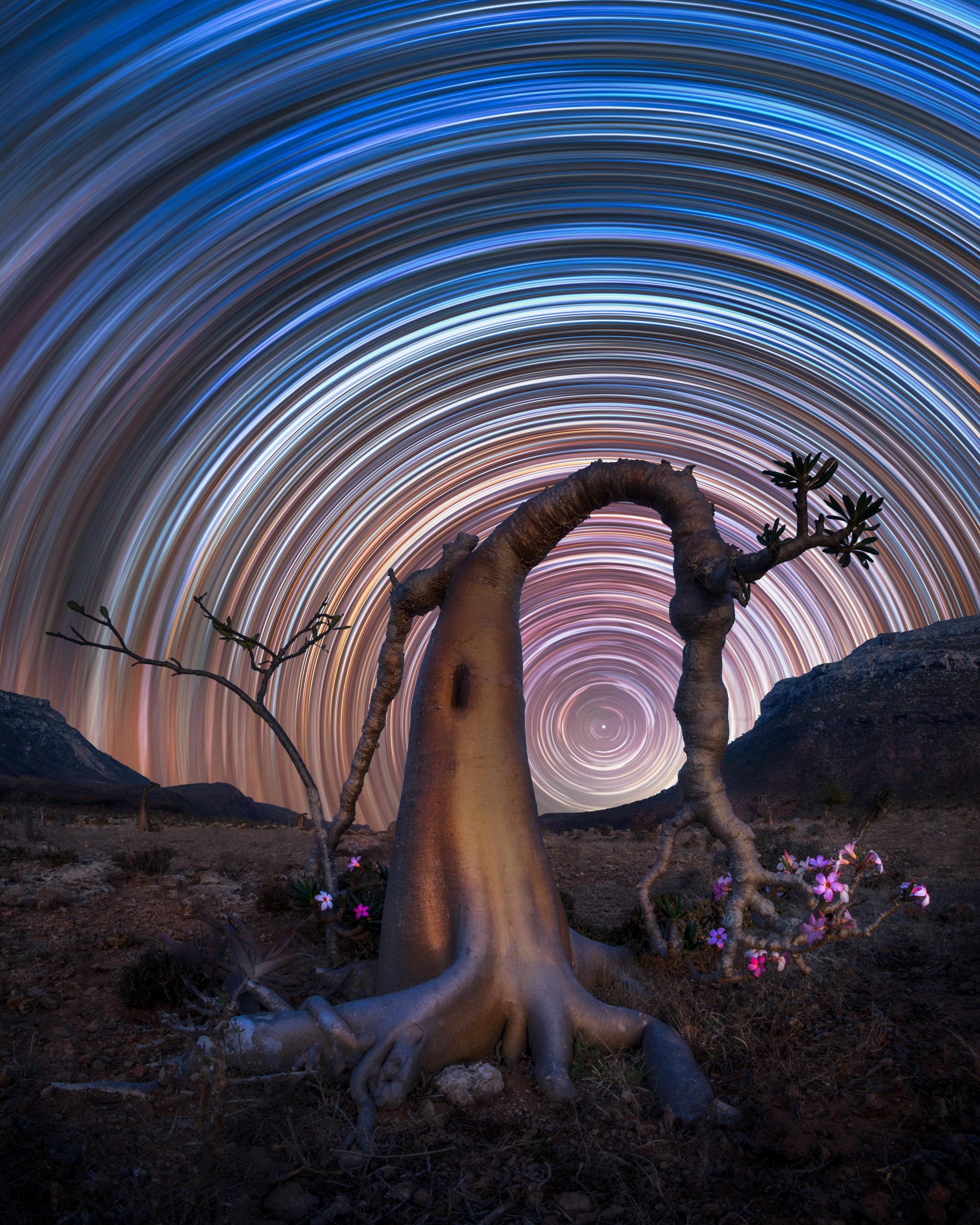
My secret weapon is one bit of kit that I never leave the house with; it’s my drop-in filter adapter with my HA Alpha and OI dual-band filter. Created originally by IDAS, these bad-boy filters take imaging to another level. Now, there are many filters out there, but what makes this one special is there isn’t anything better out there that even comes close to the results it produces. For one, we have no vignetting second sharp images edge to edge regardless of how wide your focal length is, and third, the contrast that results in the raw image of the ha alpha and oi signal is just astonishing, making post-processing a breeze when trying to combine the RGB data with the filtered data. Now when it comes to the drop in filter adapter system itself it isn’t for everyone, people are limited to which lenses and cameras they can actually use it with. To make things easier, let’s share an example of my setup:
I’m using a Samyang 14mm XP F2.4 lens ($699) (EF Canon Mount) attached to my Meike drop-in filter adapter, which is attached to my Sony A7IV. The advantage of the drop-in filter system is that I can easily exchange between the clear filter (shooting RGB) and the Nebula booster filter. The result is that the images should align perfectly, making merging the two images much easier than any other type of filter. It’s not physically possible to use native lenses on native bodies with such an adapter as the distances change between lens and sensor. You may have already seen these types of filters from competitors, but before you invest, keep in mind they were designed for telescopes and not wide-angle lenses. I’ve tested everything out there on the market, and nothing produces the same quality as this filter. Check out the images below yourself to see the results, and if you’re interested in using a similar setup, then feel free to contact me. Currently, I’m the only person in stock of these filters, as I bought the last in the market before they discontinued this model. I sell the filters at 400 CHF a piece, and it comes with a free tutorial on how to integrate the images in post-processing.
See more from DIYPhotography.net on Google
Add DIYPhotography.net as a trusted source. This makes
our stories more likely to appear in your Google Search results.
 Add as a preferred source on Google

Benjamin Barakat
Benjamin Barakat is an astrophotographer who hosts seminars, workshops & photography expeditions internationally worldwide. He is based out of Switzerland, where he is also a researcher at the highest observatory in Europe, the Sphinx Observatory on top of Jungfraujoch, 3571 meters above sea level. His work has been featured by National Geographic, CNN, BBC, Forbes, Guardian, Vice, and many more.

Join the Discussion
DIYP Comment Policy
Be nice, be on-topic, no personal information or flames.
One response to “The best camera gear for Milky Way Photography 2024”
This is so advertisement infested that it is nearly impossible to see. You are providing good information here, but it is not accessible.