

























Gemini and Blanco Detect the Longest Gamma-Ray Burst Ever
Dec 28, 2025
Soumyadeep Mukherjee
Soumyadeep Mukherjee is an award-winning astrophotographer from India. He has a doctorate degree in Linguistics. His work extends to the sub-genres of nightscape, deep sky, solar, lunar and optical phenomenon photography. He is also a photography educator and has conducted numerous workshops. His works have appeared in over 40 books & magazines including Astronomy, BBC Sky at Night, Sky & Telescope among others, and in various websites including National Geographic, NASA, Forbes. He was the first Indian to win “Astronomy Photographer of the Year” award in a major category.
Share:
Gamma-ray bursts are brief, intense releases of high-energy radiation produced during catastrophic astrophysical events. They are detected as sudden spikes in gamma-ray flux, followed by fading emission across lower energies. For decades, observations have shown that these bursts operate on short timescales. Even the longest known examples typically shut down within minutes. On 2 July 2025, that assumption failed. Instruments aboard NASA’s Fermi Gamma-ray Space Telescope detected a high-energy transient that refused to fade. Instead of declining rapidly, the gamma-ray emission persisted. It remained active for hours.
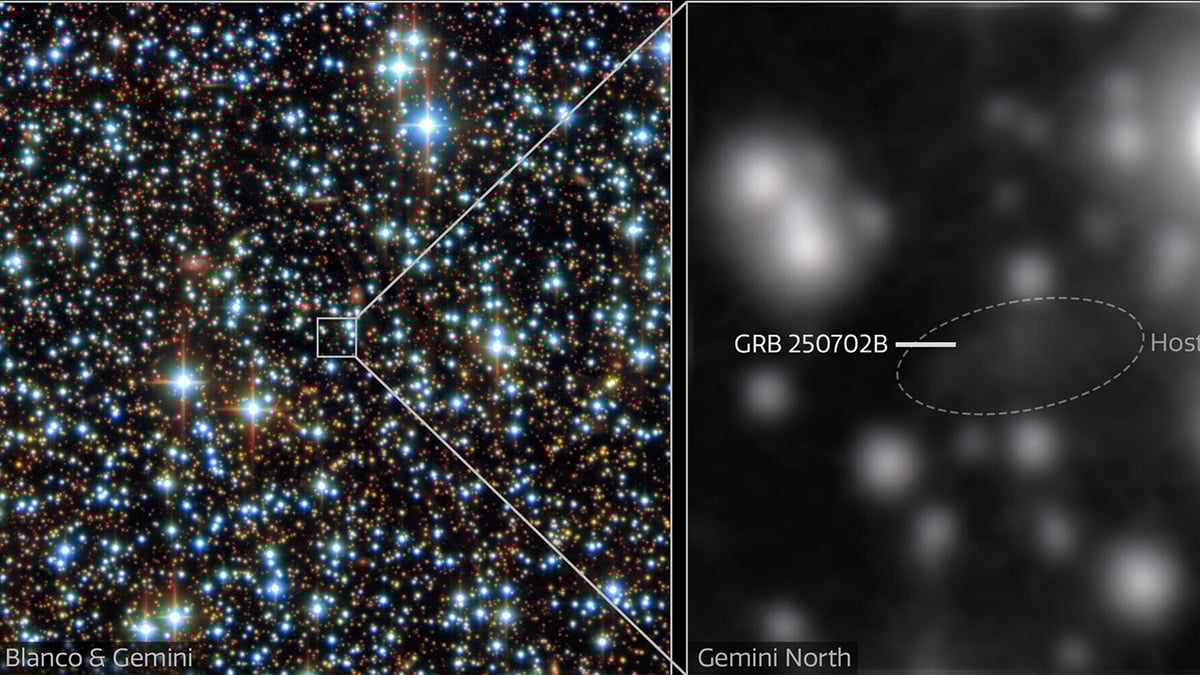
The event, now designated GRB 250702B, continued emitting gamma rays for more than seven hours. This duration exceeds all previously recorded gamma-ray bursts by a wide margin. The discovery forced astronomers to reassess the physical limits of gamma-ray burst engines. Follow-up observations using the Gemini North and South telescopes and the Víctor M. Blanco 4-meter Telescope provided critical data. These observations revealed an unexpected host environment, strengthening the case that GRB 250702B represents a fundamentally different kind of explosion.
Gamma-ray bursts and the limits of existing models
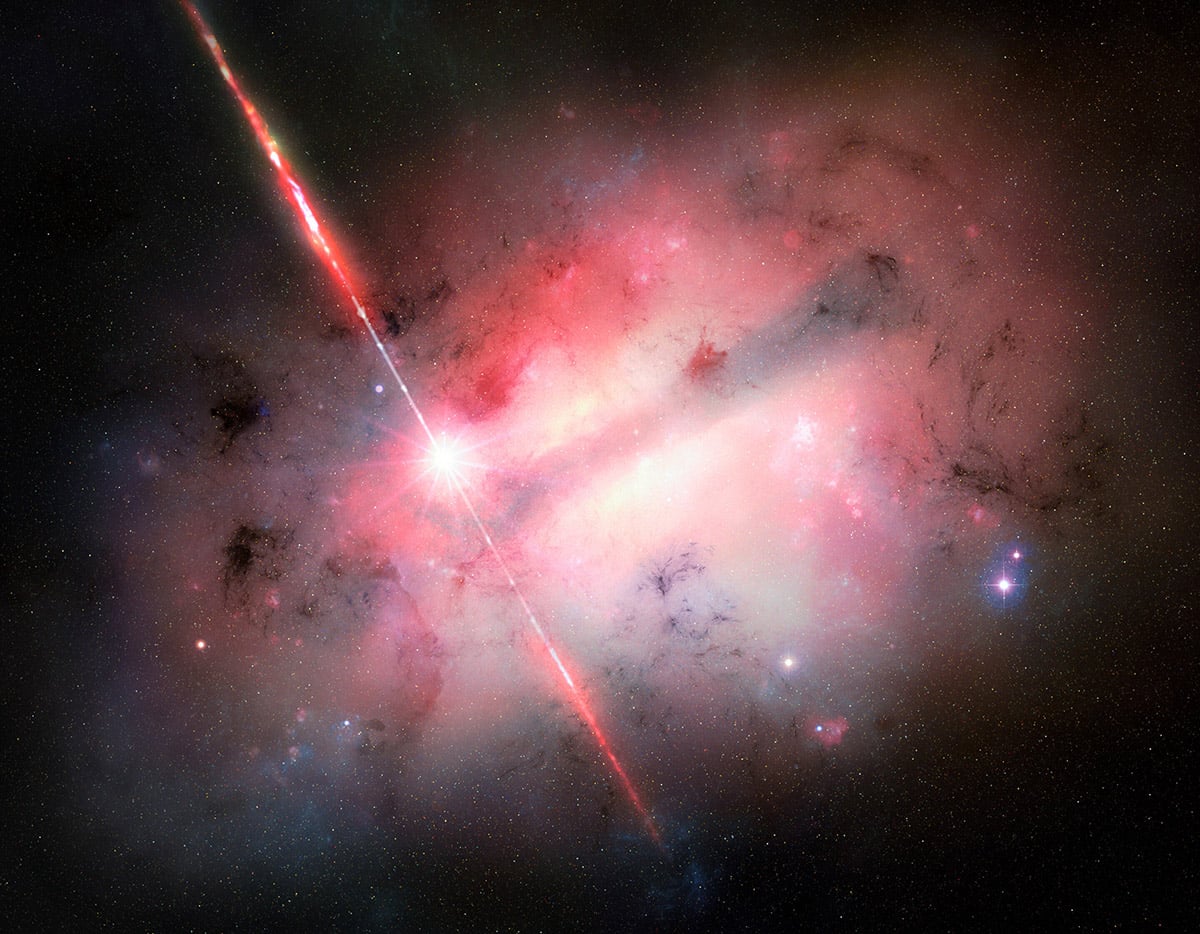
Gamma-ray bursts represent the most luminous explosions observed since the Big Bang. They occur when compact objects release energy through tightly collimated relativistic jets. These jets generate gamma rays when they interact with surrounding matter or magnetic fields.
Standard classification divides GRBs into two groups. Short bursts last less than two seconds and usually originate from neutron star mergers. Long bursts can last several minutes and are associated with collapsing massive stars. In both cases, the gamma-ray phase ends when the central engine stops feeding the jet. This framework has remained stable for decades. Observational data consistently supported short-lived energy release. Even so-called ultra-long bursts rarely exceeded a few hours.
GRB 250702B breaks this pattern completely. Its sustained emission cannot be explained by a brief engine activity or a single explosive collapse. The event suggests that gamma-ray production can continue far longer than existing models predict.
Detection and rapid multi-wavelength follow-up
The first alert came from Fermi’s Gamma-ray Burst Monitor. The instrument detected strong gamma-ray emission and flagged its unusual persistence. As the signal continued, other observatories initiated follow-up campaigns. NASA’s Swift Observatory tracked the event in X-ray wavelengths. Instead of a smooth decay, the emission showed continued variability. This behavior suggested ongoing energy injection rather than a fading afterglow.
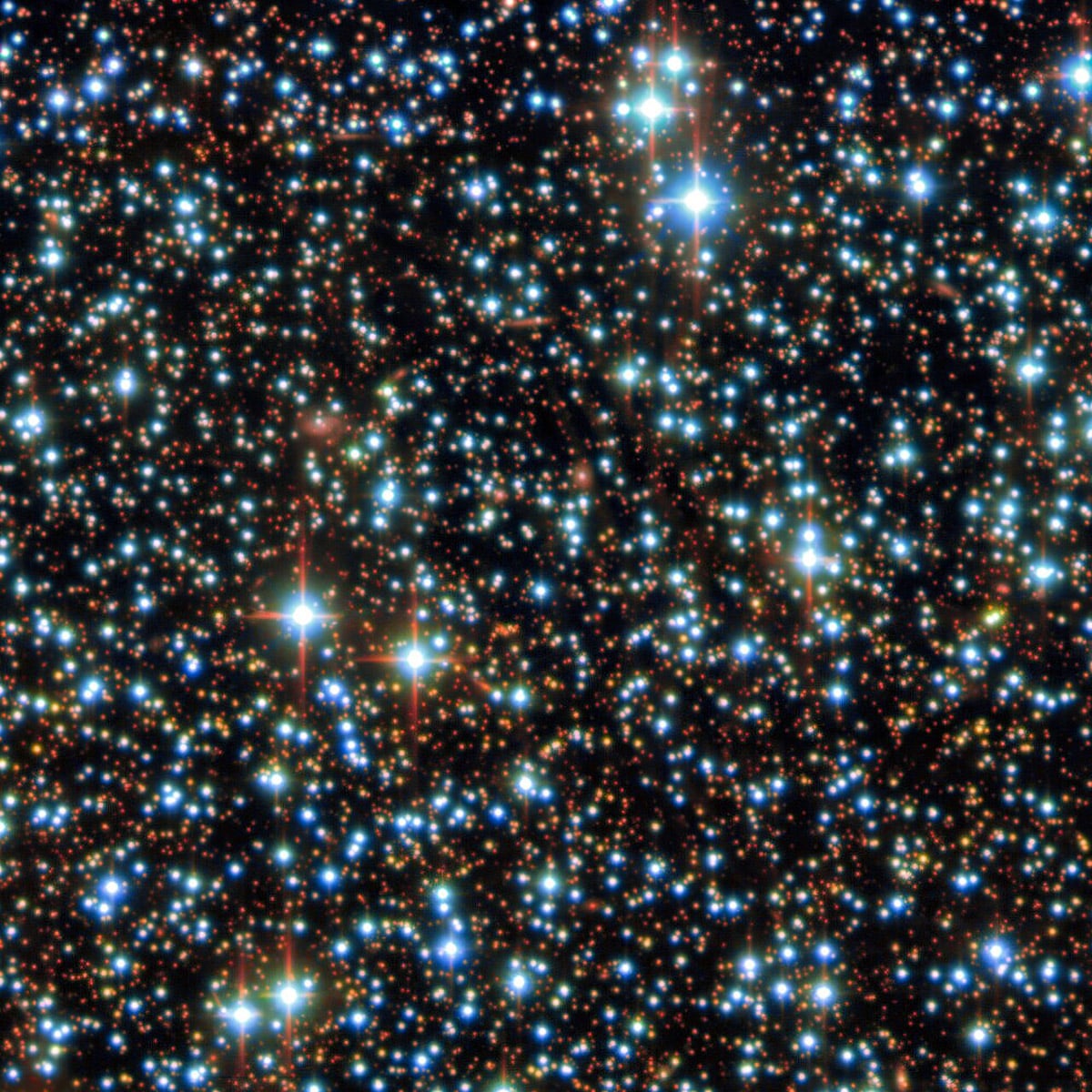
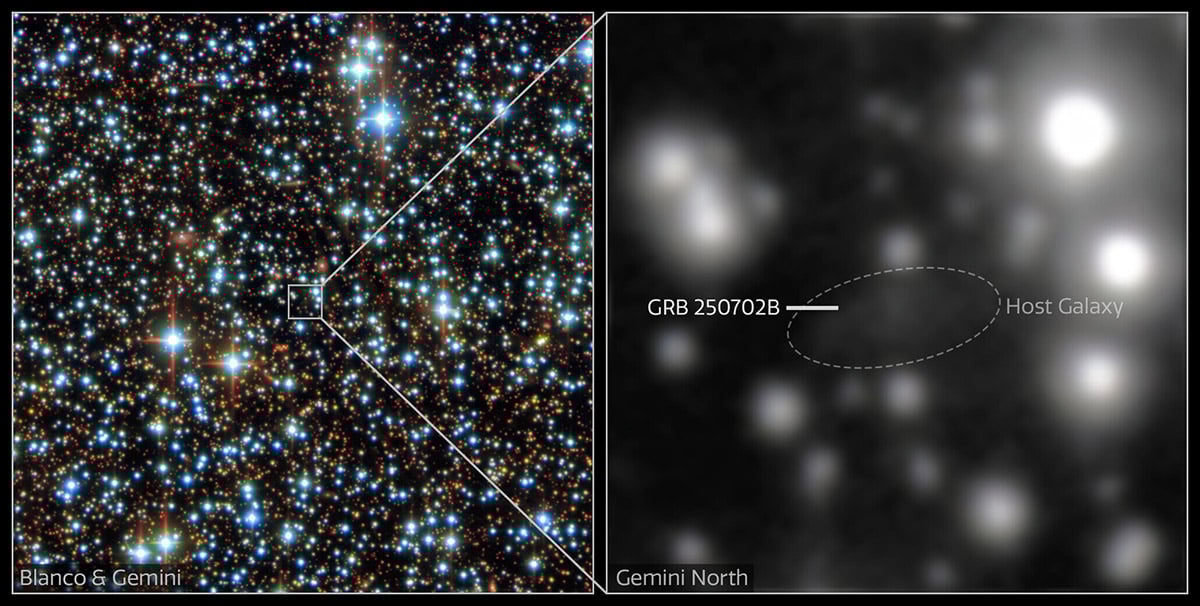
Ground-based observatories quickly joined the effort. Timing mattered. The afterglow was faint and heavily obscured. Without large-aperture telescopes, the host galaxy would have remained invisible. The Gemini telescopes provided deep optical and infrared imaging. The Blanco Telescope, using the Dark Energy Camera, mapped the region in detail. These combined observations allowed astronomers to localize the burst and identify its galactic environment.
The defining feature of GRB 250702B is its duration. Explaining seven hours of gamma-ray emission requires a central engine that remains active far longer than expected. One leading hypothesis involves prolonged accretion onto a newly formed black hole. Instead of collapsing quickly, the surrounding material may have fallen inward over an extended period. This process could sustain jet activity for hours.
A host galaxy unlike typical gamma-ray burst sites
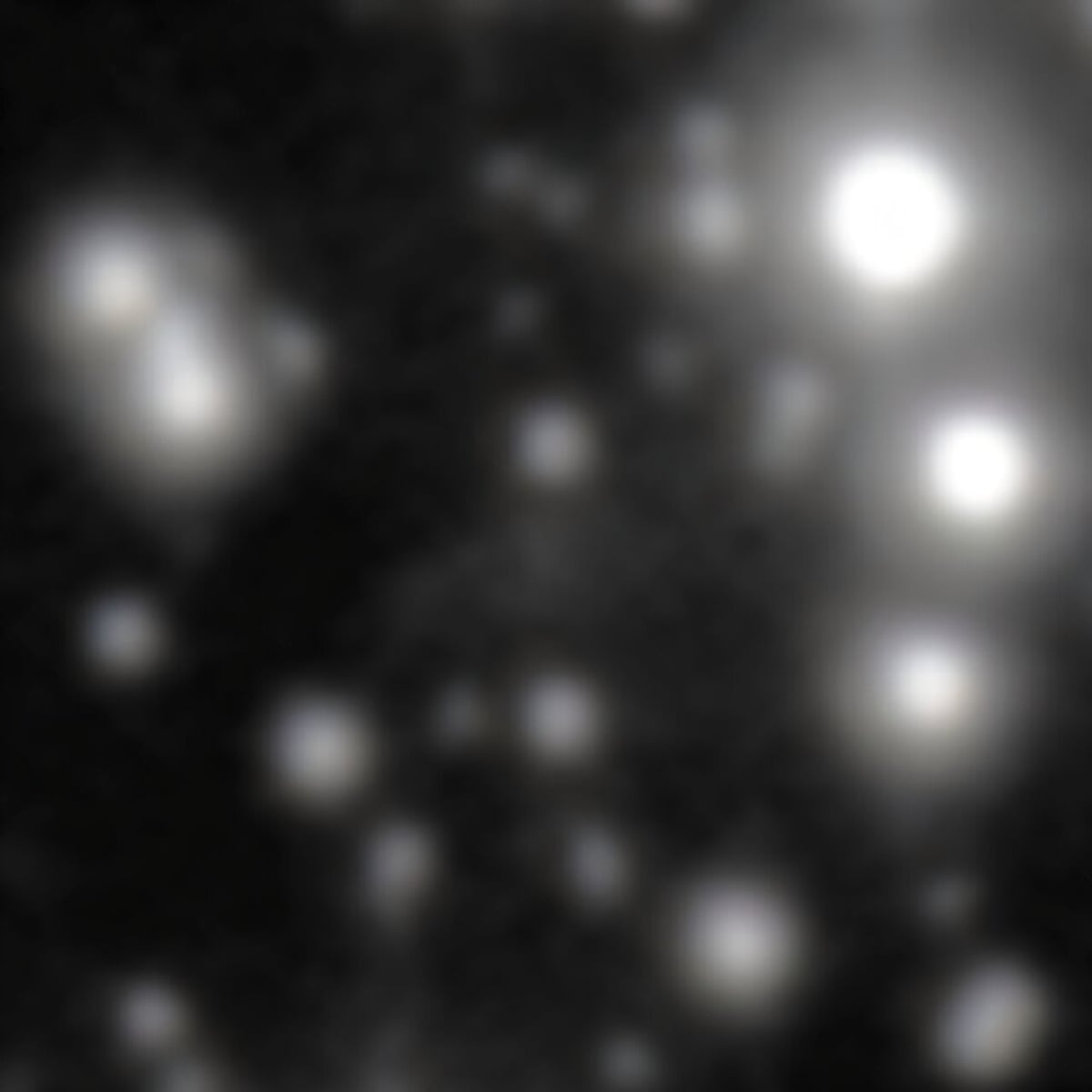
The host galaxy of GRB 250702B defied expectations. Most long gamma-ray bursts occur in small, low-mass galaxies with little dust. These conditions favor massive stars that retain angular momentum before collapse. GRB 250702B originated in a massive, dust-rich galaxy. Dense interstellar dust heavily absorbed visible light. Infrared observations proved essential for detection.
Spectroscopic data indicated a complex and evolved environment. The galaxy showed signs of significant star formation but also substantial metal enrichment. This combination is uncommon among known GRB hosts. The dusty surroundings likely influenced how the burst evolved and how it appeared to observers. They may also hint at a different progenitor system than those seen in classical long GRBs.
The role of Gemini and Blanco
The Gemini telescopes played a key role by detecting faint emission from the host galaxy. Their sensitivity in infrared wavelengths overcame dust extinction. This allowed accurate localization and distance measurement. The Blanco Telescope expanded the view. Its wide-field imaging ruled out nearby sources and clarified the galaxy’s structure. The data confirmed that the burst originated deep within a dense galactic environment.
GRB 250702B raises a broader issue. Current gamma-ray burst classifications may be incomplete. Ultra-long events could represent a separate physical population rather than rare outliers. If such bursts are associated with dusty, massive galaxies, many may have gone undetected. Optical surveys struggle in these environments. Infrared capability becomes essential. The event also highlights the need for long-duration monitoring.
Future observatories will address these gaps. Improved sensitivity and continuous sky coverage will allow astronomers to detect similar events earlier and study them more thoroughly.
Clear skies!
See more from DIYPhotography.net on Google
Add DIYPhotography.net as a trusted source. This makes
our stories more likely to appear in your Google Search results.
 Add as a preferred source on Google

Soumyadeep Mukherjee
Soumyadeep Mukherjee is an award-winning astrophotographer from India. He has a doctorate degree in Linguistics. His work extends to the sub-genres of nightscape, deep sky, solar, lunar and optical phenomenon photography. He is also a photography educator and has conducted numerous workshops. His works have appeared in over 40 books & magazines including Astronomy, BBC Sky at Night, Sky & Telescope among others, and in various websites including National Geographic, NASA, Forbes. He was the first Indian to win “Astronomy Photographer of the Year” award in a major category.



Join the Discussion
DIYP Comment Policy
Be nice, be on-topic, no personal information or flames.