


















Chandra Reveals a New Face of Cassiopeia A Supernova Remnant
Aug 28, 2025
Soumyadeep Mukherjee
Soumyadeep Mukherjee is an award-winning astrophotographer from India. He has a doctorate degree in Linguistics. His work extends to the sub-genres of nightscape, deep sky, solar, lunar and optical phenomenon photography. He is also a photography educator and has conducted numerous workshops. His works have appeared in over 40 books & magazines including Astronomy, BBC Sky at Night, Sky & Telescope among others, and in various websites including National Geographic, NASA, Forbes. He was the first Indian to win “Astronomy Photographer of the Year” award in a major category.
Share:
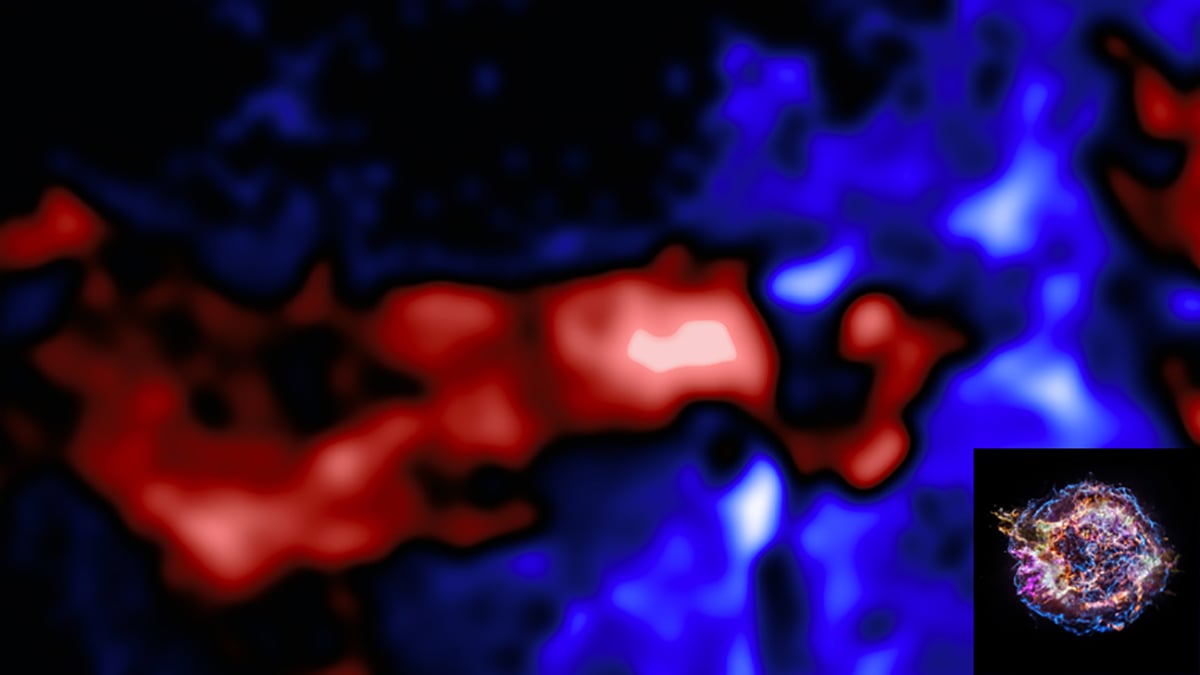
Cassiopeia A (Cas A) has long been one of the most studied objects in the sky. This expanding cloud of debris is all that remains of a massive star that exploded more than three hundred years ago in our own galaxy. Located about 11,000 light-years away, it sits in the constellation Cassiopeia, glowing across the spectrum in visible, infrared, radio, and X-rays. For decades, Cassiopeia A has been a laboratory for scientists trying to understand the mechanics of stellar death. NASA’s Chandra X-ray Observatory has delivered its most revealing view yet. The new image contains evidence that the star’s final hours were marked by violent upheaval deep inside its core. That finding could reshape how astronomers think about the last stages of massive stars.
A map written in X-rays
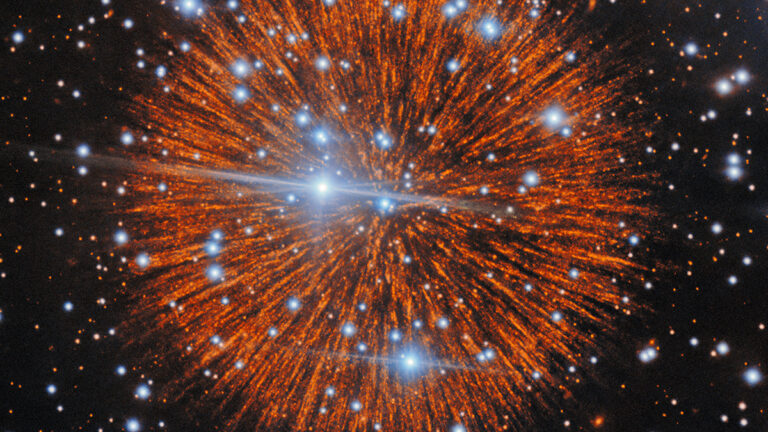
The new image is built from Chandra’s Advanced CCD Imaging Spectrometer, using deep exposures totaling 278 hours. By breaking X-ray light into energy ranges, scientists can identify specific elements in the debris. Each color in the picture corresponds to a different chemical signature: silicon in red, sulfur in yellow, calcium in green, and iron in purple. The brilliant blue shell traces the highest-energy X-rays from the expanding shock wave, the outer edge of the explosion tearing through space.
Seen together, these hues reveal the skeleton of the blast. Cas A does not look like a simple sphere. Instead, the debris is uneven and lopsided, with a donut-like structure and gaps where material appears thinner. Chandra’s view offers not only beauty but a direct record of the physics that shaped this celestial catastrophe.
A last-minute reshuffle
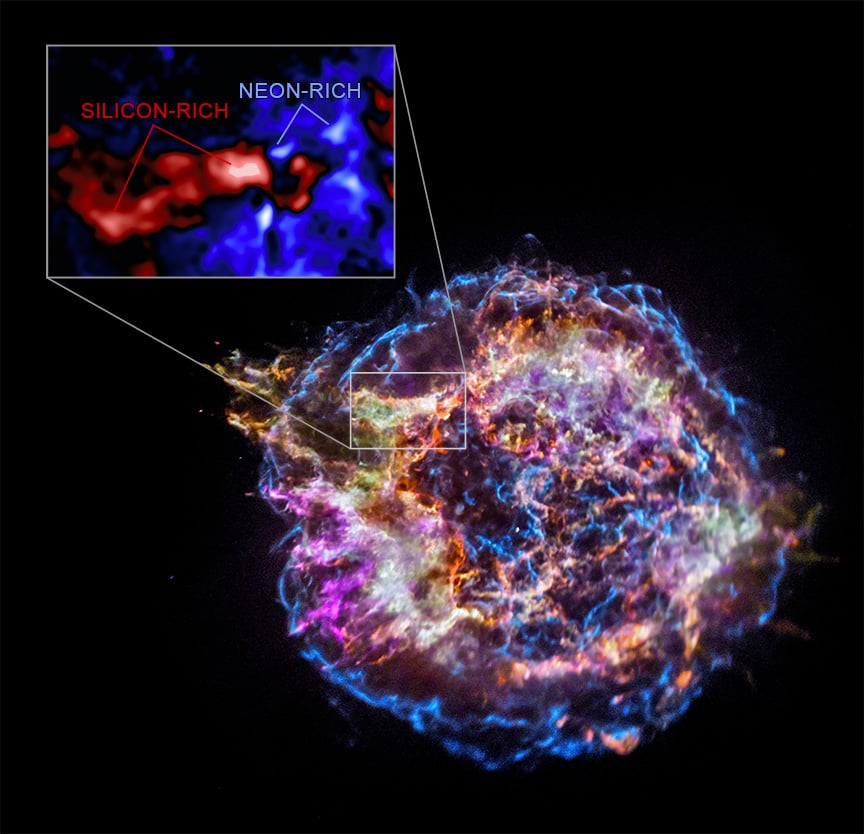
The most surprising finding comes from a detailed inset in the Chandra release. In this region, scientists compared the distribution of silicon and neon. The contrast shows something remarkable: just hours before the star collapsed, its internal layers seem to have traded places. Silicon-rich material, which should have stayed deeper inside, surged outward. At the same time, neon-rich material from farther out fell inward.
This turbulent motion likely scrambled the star’s interior and helped set the stage for an uneven explosion. The discovery matches predictions from sophisticated computer simulations, but finding real observational evidence of such a reshuffle is rare. It means astronomers can now connect theory to a physical example. Cas A gives us a snapshot of the final instability inside a massive star only moments before it tore itself apart.

The science behind the picture
Chandra observes X-rays that cannot penetrate Earth’s atmosphere, so its telescope orbits high above the planet. Each observation collects light from specific energy bands, which are then linked to the fingerprints of elements in hot gas. By carefully processing multiple observations, scientists can separate overlapping emissions and build detailed maps of where different materials are located.
The Cas A image used archival data from 2004, chosen for its exceptional depth. With hundreds of hours of exposure, researchers were able to isolate the faint signals of individual elements. These maps were then compared with simulations of massive stars in their final stages. The match between data and theory gave researchers confidence that they were seeing a genuine interior rearrangement that happened shortly before the explosion.

Cassiopeia A’s legacy
Cas A is no stranger to scientists. It was one of the very first targets observed by Chandra after its launch in 1999. Since then, the observatory has returned to it many times. Each new look has revealed another layer of detail: expanding shock fronts, jets of material, knots of heavy elements, and the elusive neutron star at its heart. The remnant has become a benchmark for testing models of supernova explosions.
What makes Cas A so valuable is not only its brightness and proximity but also its age. At about 340 years old, it is young enough that the structure of the explosion is still visible. Older remnants tend to become diffuse and harder to interpret. With Cas A, astronomers can study the debris almost as if the explosion happened yesterday, piecing together a three-dimensional story of how a star’s death unfolds.
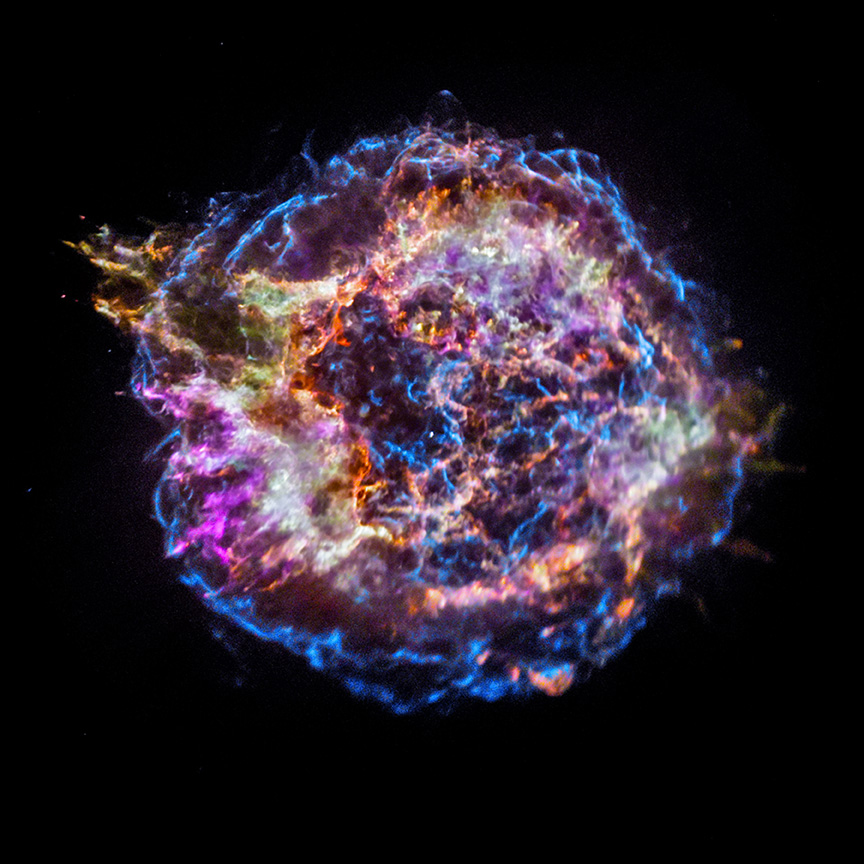
The new image of Cas A demonstrates the enduring power of long-term observatories like Chandra. Even after more than 25 years in orbit, the telescope continues to produce discoveries of fundamental importance. Its ability to map high-energy processes is unmatched, and its deep archive allows scientists to revisit old data with new questions.
Clear skies!
See more from DIYPhotography.net on Google
Add DIYPhotography.net as a trusted source. This makes
our stories more likely to appear in your Google Search results.
 Add as a preferred source on Google

Soumyadeep Mukherjee
Soumyadeep Mukherjee is an award-winning astrophotographer from India. He has a doctorate degree in Linguistics. His work extends to the sub-genres of nightscape, deep sky, solar, lunar and optical phenomenon photography. He is also a photography educator and has conducted numerous workshops. His works have appeared in over 40 books & magazines including Astronomy, BBC Sky at Night, Sky & Telescope among others, and in various websites including National Geographic, NASA, Forbes. He was the first Indian to win “Astronomy Photographer of the Year” award in a major category.

Join the Discussion
DIYP Comment Policy
Be nice, be on-topic, no personal information or flames.