
























SIRUI Expands Its Cine Lens Lineup with New Vision Primes and IronStar Anamorphics
May 5, 2026
Alex Baker
Alex Baker is a portrait and lifestyle driven photographer based in Valencia, Spain. She works on a range of projects from commercial to fine art and has had work featured in publications such as The Daily Mail, Conde Nast Traveller and El Mundo, and has exhibited work across Europe
Share:
SIRUI has been busy building a reputation for making cinema lenses that don’t completely destroy your entire budget. They might not carry the same weight as the big-name cine brands, but they’ve consistently leaned into something arguably more useful for a lot of shooters: accessible tools that still deliver a cinematic look.
With its latest announcement at NAB 2026, SIRUI is doubling down on that approach. The company is expanding both its Vision Prime series and its IronStar anamorphic lineup, adding new focal lengths that round out each system into something far more complete.
Filling Out the Vision Prime Range
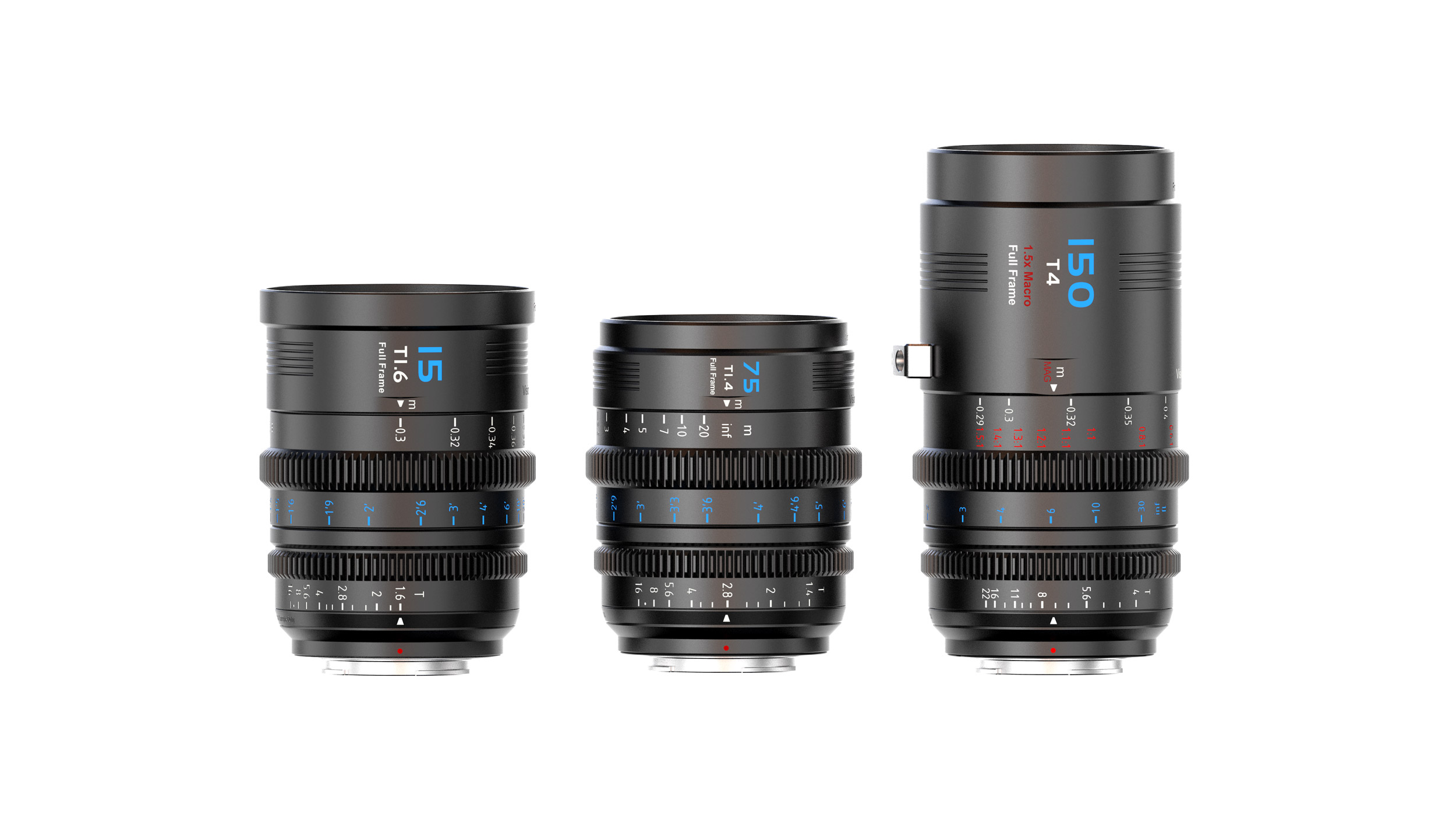
The Vision Prime series is designed as a compact, full-frame cine lens lineup with relatively fast apertures and a focus on versatility. Up until now, it covered the basics of 24mm, 35mm, and 50mm, but the addition of 15mm, 75mm, and 150mm fills in some important gaps.
The 15mm pushes things firmly into wide-angle territory. This is the kind of focal length that opens up landscapes, interiors, and establishing shots, while also giving you that slightly exaggerated perspective that can feel more immersive when used well.
At the other end, the 75mm and 150mm bring more compression into play. The 75mm sits in a comfortable portrait range, offering separation without feeling overly tight, while the 150mm is clearly aimed at close-ups and detail work. That longer reach is useful for isolating subjects, especially in situations where you cannot physically move closer.
A Consistent Range
What ties these lenses together is consistency. SIRUI is positioning the Vision Prime series as a unified set, emphasising that individual specs matter less when you are shooting narrative or commercial work. Matching lenses across focal lengths means more predictable colour, contrast, and rendering, which makes life easier in post.
There is also a practical angle here. The lenses feature interchangeable mount modules, allowing them to be adapted across different camera systems. For shooters working with multiple bodies or upgrading over time, that kind of flexibility can make a noticeable difference in long-term cost.
A More Complete Anamorphic System: The IronStar
Alongside the Vision Primes, SIRUI is also expanding its IronStar anamorphic lineup. If the Vision series is about flexibility and coverage, IronStar is about style.
These lenses use a constant 1.5x ratio, which gives you that characteristic widescreen look without some of the more extreme quirks that come with higher squeeze factors. It is a relatively approachable entry point into anamorphic shooting, particularly for smaller productions or independent filmmakers.
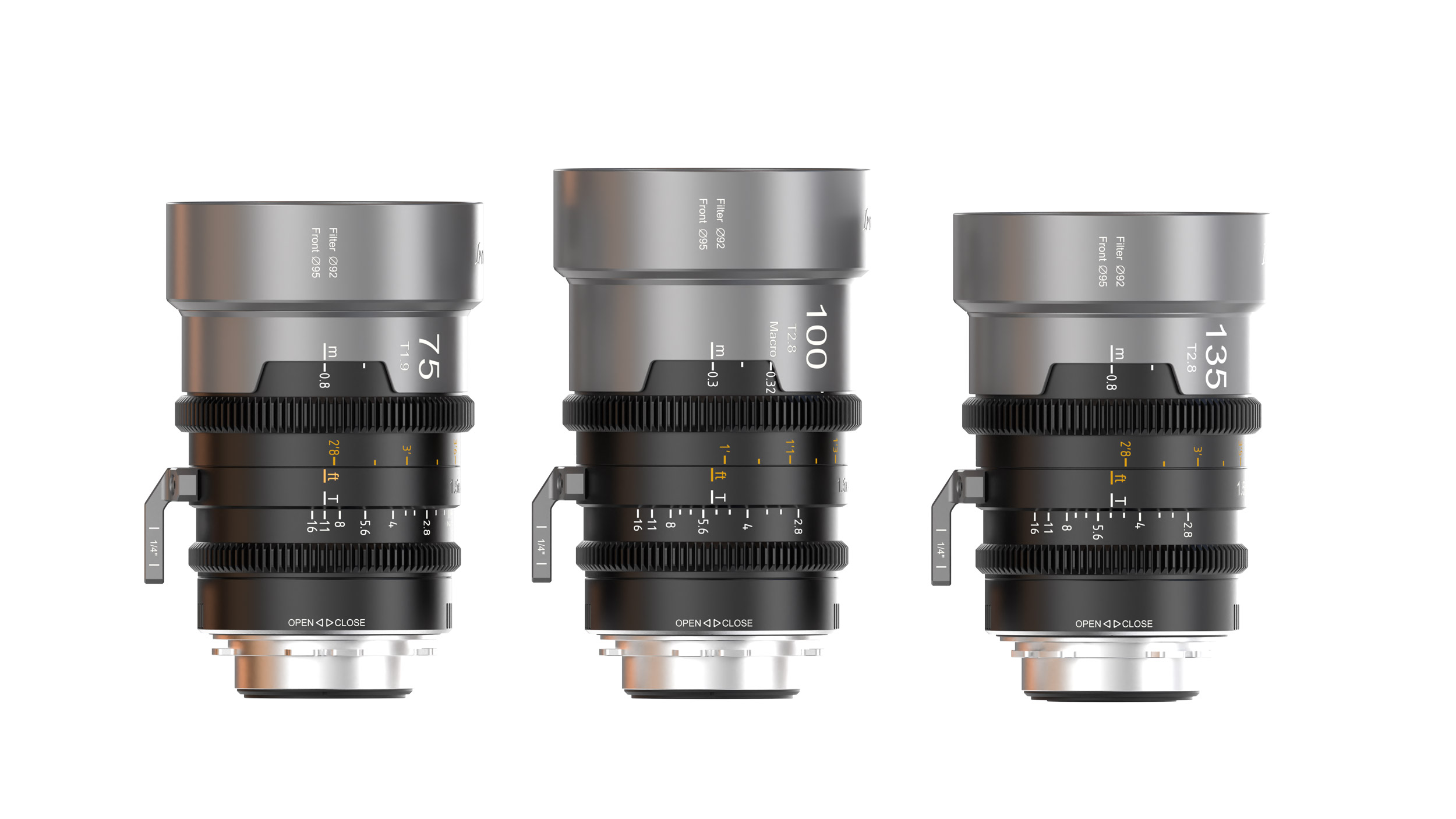
The original set covered 35mm, 45mm, and 60mm, which handled most general-purpose framing. With the addition of 75mm, 100mm, and 135mm, the system now stretches comfortably into portrait and telephoto territory.
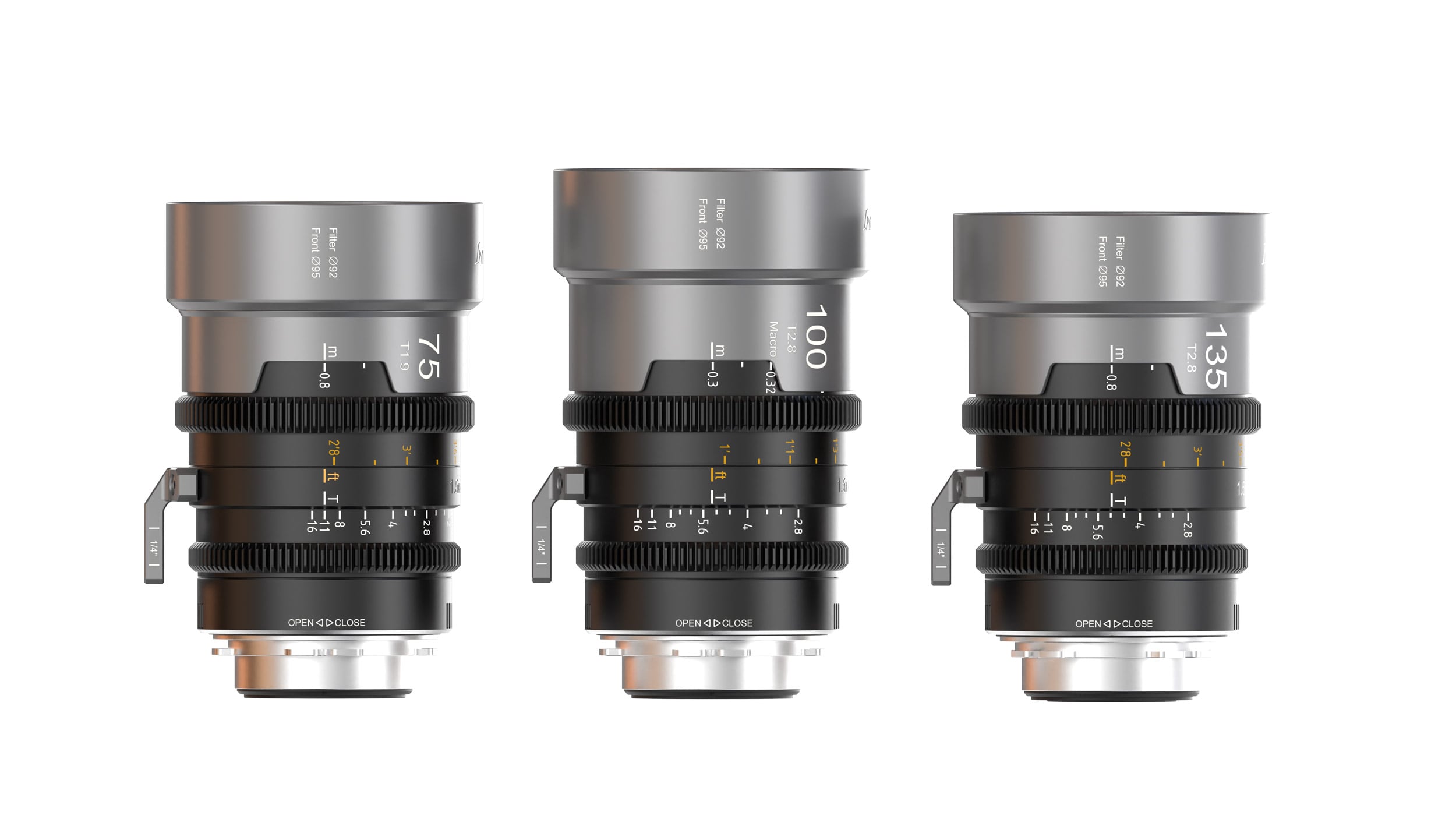
The 75mm sits in a familiar space for dialogue and character-driven shots, offering a natural perspective with just enough compression to separate your subject from the background. The 100mm moves further into close-up work, making it a strong option for product, food, or detail-focused shooting where texture and subject isolation matter.
Then there is the 135mm, which is clearly built for tighter framing. This is the lens you reach for when you want to isolate a subject completely or compress a busy background into something more manageable. In narrative work, it can help create a more intimate, focused feel, especially in close-up scenes.
What SIRUI is aiming for here is not just a set of lenses, but a complete anamorphic ecosystem. Having consistent squeeze, rendering, and handling across multiple focal lengths makes it far easier to shoot entire projects without constantly adapting your workflow.
Practical Cinema Tools
There is a clear theme running through both of these updates. SIRUI is not trying to reinvent cinema lenses or compete at the very top end of the market. Instead, it is focusing on building systems that are practical, consistent, and relatively accessible.
The Vision Prime series leans into flexibility, covering a broad range of focal lengths with a unified look and adaptable mounts. The IronStar series focuses on delivering a cinematic anamorphic aesthetic in a package that is more manageable for everyday production.
Neither approach is particularly flashy on its own, but together they point to something more useful. For a lot of filmmakers and content creators, the challenge is not finding the “best” lens. It is building a kit that works across different types of projects without constantly needing to be swapped out or rethought. By expanding both lineups, SIRUI is making that process a bit easier.
Price and Availability
The new Vision Prime and IronStar lenses are expected to be available in the second half of 2026. Pricing has not been confirmed yet, but if SIRUI’s previous releases are anything to go by, the focus will likely remain on keeping things relatively accessible compared to traditional cinema glass.
For now, it looks like SIRUI is continuing to refine a formula that has been working for them: practical tools, consistent performance, and just enough character to keep things interesting.
See more from DIYPhotography.net on Google
Add DIYPhotography.net as a trusted source. This makes
our stories more likely to appear in your Google Search results.
 Add as a preferred source on Google

Alex Baker
Alex Baker is a portrait and lifestyle driven photographer based in Valencia, Spain. She works on a range of projects from commercial to fine art and has had work featured in publications such as The Daily Mail, Conde Nast Traveller and El Mundo, and has exhibited work across Europe
Related Posts
 Sirui’s new “Jupiter” full-frame cine lens lineup includes 24mm, 35mm & 50mm T2 macro primes and 28-85mm T3.2 zoom
 ZY Optics completes its MFT cine lens lineup with the new Mitakon Speedmaster 50mm T1.0 MFT Cine
 Budget-friendly Sirui Vision Prime 1 Series cine lenses are now ready for orders
 Thypoch Expands Its Lens Lineup With a “Golden Range” Zoom and a Pocket-Sized Prime
Join the Discussion
DIYP Comment Policy
Be nice, be on-topic, no personal information or flames.