





















Rare Apollo 11 Photo of Neil Armstrong on the Moon Sells for $25,469
May 4, 2026
Alysa Gavilan
Alysa Gavilan has spent years exploring photography through photojournalism and street scenes. She enjoys working with both film and mirrorless cameras, and her fascination with the craft has grown over the decades. Inspired by Vivian Maier, she is drawn to capturing everyday moments that often go unnoticed.
Share:
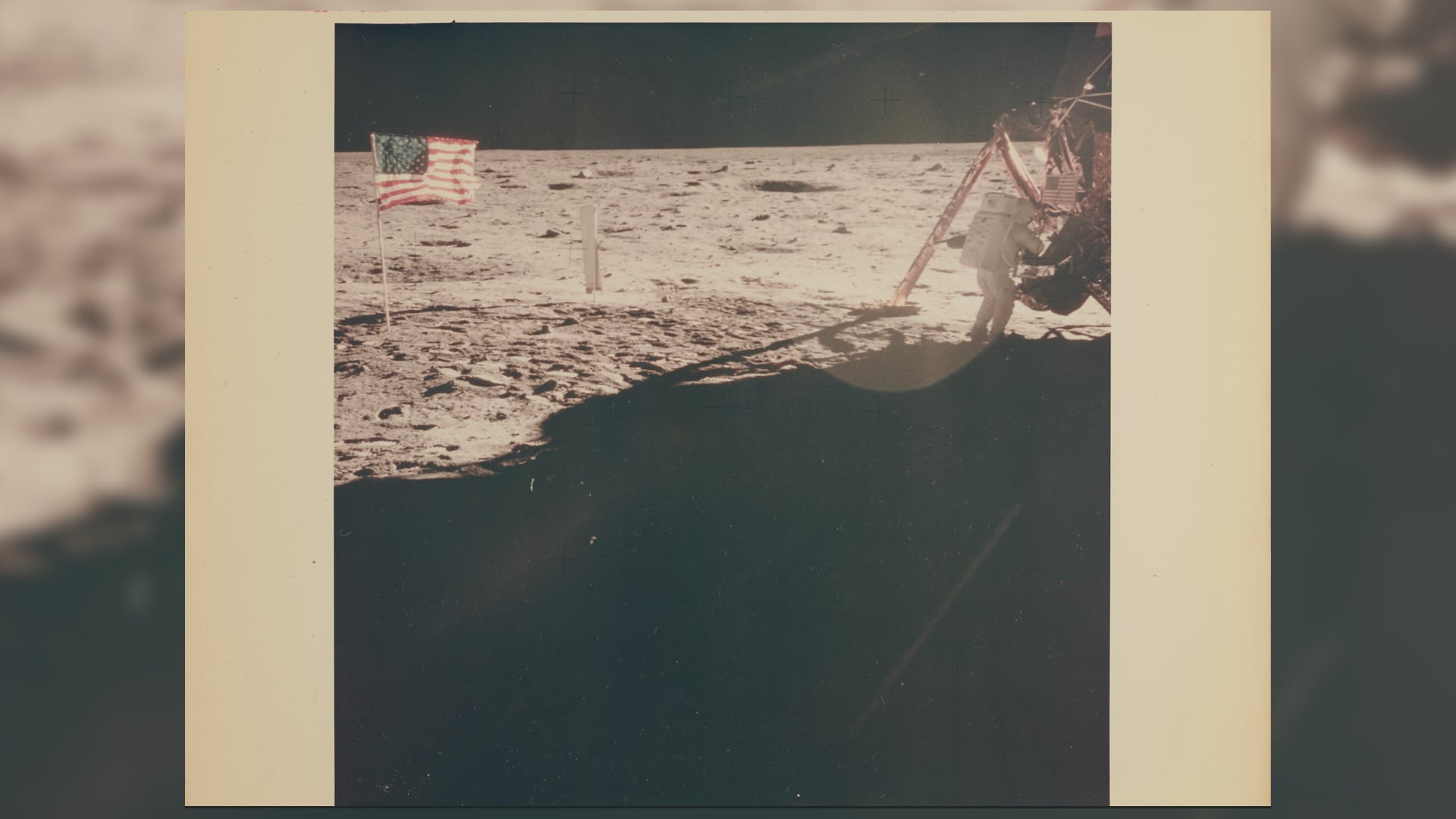
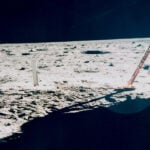
A rare Apollo 11 photograph showing Neil Armstrong on the lunar surface has sold for $25,469, drawing attention once again to how space photography continues to shape both historical record and the modern collector market.
The image, an original vintage 10 by 8 inch NASA Type 1 print, captures Armstrong working at the Modular Stowage Equipment Assembly while the United States flag stands nearby and the Lunar Module Eagle casts a long shadow across the Moon’s surface.
The photograph, catalogued as AS11-40-5886 and sold by RR Auction, is considered one of the most important surviving visual records of the Apollo 11 mission. It is the only known Hasselblad still image of Armstrong on the lunar surface, a detail that places it in a category of its own among Apollo era photography.
A Rare View Of Neil Armstrong On The Moon
During the Apollo 11 mission in July 1969, Armstrong was almost always behind the camera, documenting the lunar surface and collecting samples while Buzz Aldrin handled many of the photographic duties.
As a result, most visual records of Armstrong on the Moon come from video frames or motion film rather than still photography.
For years, it was widely assumed that no high resolution still image existed showing Armstrong on the lunar surface. That changed in 1987 when researchers reviewing mission archives identified this frame within a panoramic sequence taken by Aldrin, according to RR Auction.
The image shows Armstrong in profile as he works methodically with lunar samples, offering a glimpse of an unposed moment during one of humanity’s most significant scientific missions.
The print that sold is an original red numbered NASA Type 1 photograph, printed on Kodak paper with mission markings on the reverse. It remained largely unseen for decades after NASA did not select it for public release in 1969.
Only a small number of these vintage prints are believed to exist, making it highly sought after among collectors of space photography and historical artifacts.
The Importance Of Space Photography In Historical Record
Space photography plays a critical role in documenting human exploration beyond Earth.
Unlike terrestrial photography, these images often serve as both scientific records and cultural milestones. Each frame captured during Apollo missions contributed to mapping the lunar surface, studying environmental conditions, and verifying mission activities.
The Apollo 11 images in particular carry added significance because they represent the first human steps on another celestial body. Photographs from the mission are not only visual documentation but also primary evidence of events that shaped modern space exploration history.
Images like AS11-40-5886 are also technically important. They were captured using Hasselblad 70mm cameras modified for lunar conditions, producing high resolution frames that remain useful for analysis even decades later. The clarity of these images continues to support research, museum preservation, and public education.

Auctioned Space Photographs And Growing Collector Interest
Space photography has developed a strong presence in the auction market, particularly for vintage NASA prints from the Apollo era. These items are valued not only for their visual content but also for their rarity, provenance, and connection to key historical moments.
Apollo mission prints, especially those marked as Type 1 or early generation NASA releases, are considered the most desirable. Many were distributed internally or released in limited quantities to media and institutions, which has contributed to their scarcity today.
One example includes a rare Apollo 11 print of Aldrin captured by Armstrong, often referred to as the “visor portrait,” which sold for around $32,000. The image is notable because Armstrong appears as a reflection in Aldrin’s helmet, effectively making it one of the few indirect self representations of Armstrong on the Moon.
Another significant sale involved a Zeiss lens linked to Apollo mission photography hardware, which was expected to reach approximately $146,000 due to its direct association with lunar imaging systems used by NASA.
A separate auction featured a signed Apollo 11 image of Aldrin on the lunar surface that sold for about $7,700, reinforcing consistent collector interest in astronaut signed photographic material.
A Singular Frame In A Larger Story
As space photography continues to evolve with modern digital missions and high resolution imaging from orbiters and rovers, early lunar photographs remain foundational. They are reminders of the first steps in extraterrestrial exploration and continue to hold cultural and scientific value.
With this Apollo 11 print now sold, it adds another chapter to the ongoing appreciation of space photography as both historical documentation and collectible artifact.
What other unseen moments from space history might still be waiting to be rediscovered in archives today?
See more from DIYPhotography.net on Google
Add DIYPhotography.net as a trusted source. This makes
our stories more likely to appear in your Google Search results.
 Add as a preferred source on Google

Alysa Gavilan
Alysa Gavilan has spent years exploring photography through photojournalism and street scenes. She enjoys working with both film and mirrorless cameras, and her fascination with the craft has grown over the decades. Inspired by Vivian Maier, she is drawn to capturing everyday moments that often go unnoticed.


Join the Discussion
DIYP Comment Policy
Be nice, be on-topic, no personal information or flames.