
























Hubble Space Telescope Captures a Detailed Image of NGC 3137
Apr 30, 2026
Soumyadeep Mukherjee
Soumyadeep Mukherjee is an award-winning astrophotographer from India. He has a doctorate degree in Linguistics. His work extends to the sub-genres of nightscape, deep sky, solar, lunar and optical phenomenon photography. He is also a photography educator and has conducted numerous workshops. His works have appeared in over 40 books & magazines including Astronomy, BBC Sky at Night, Sky & Telescope among others, and in various websites including National Geographic, NASA, Forbes. He was the first Indian to win “Astronomy Photographer of the Year” award in a major category.
Share:
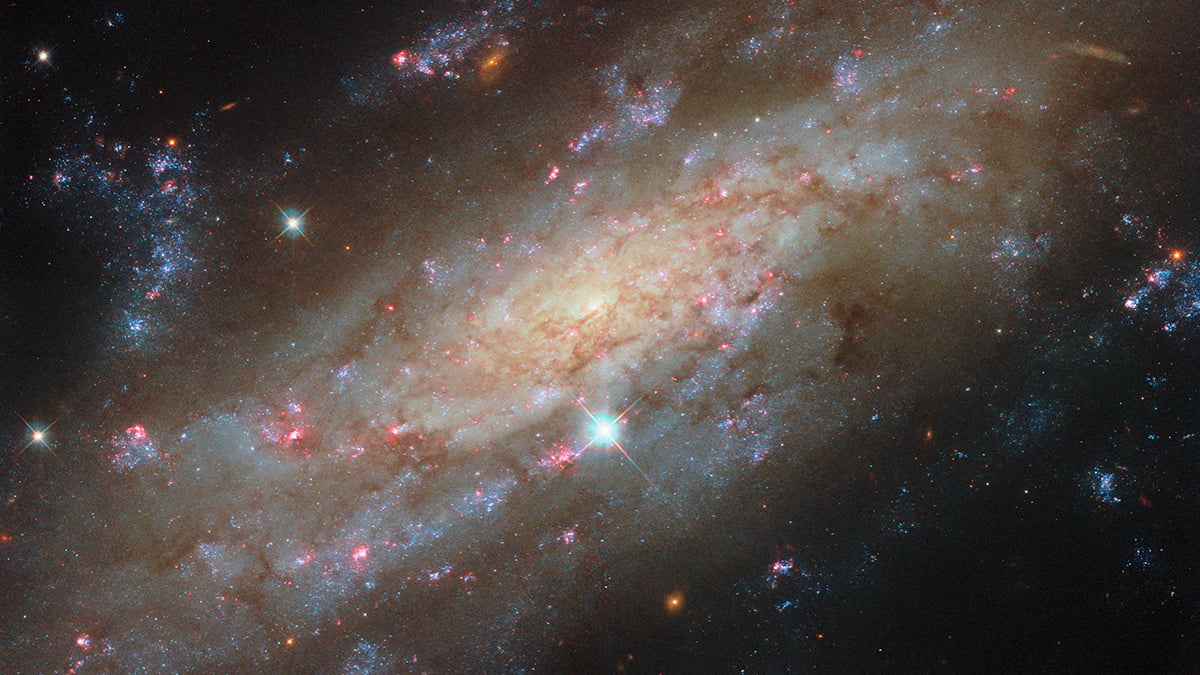
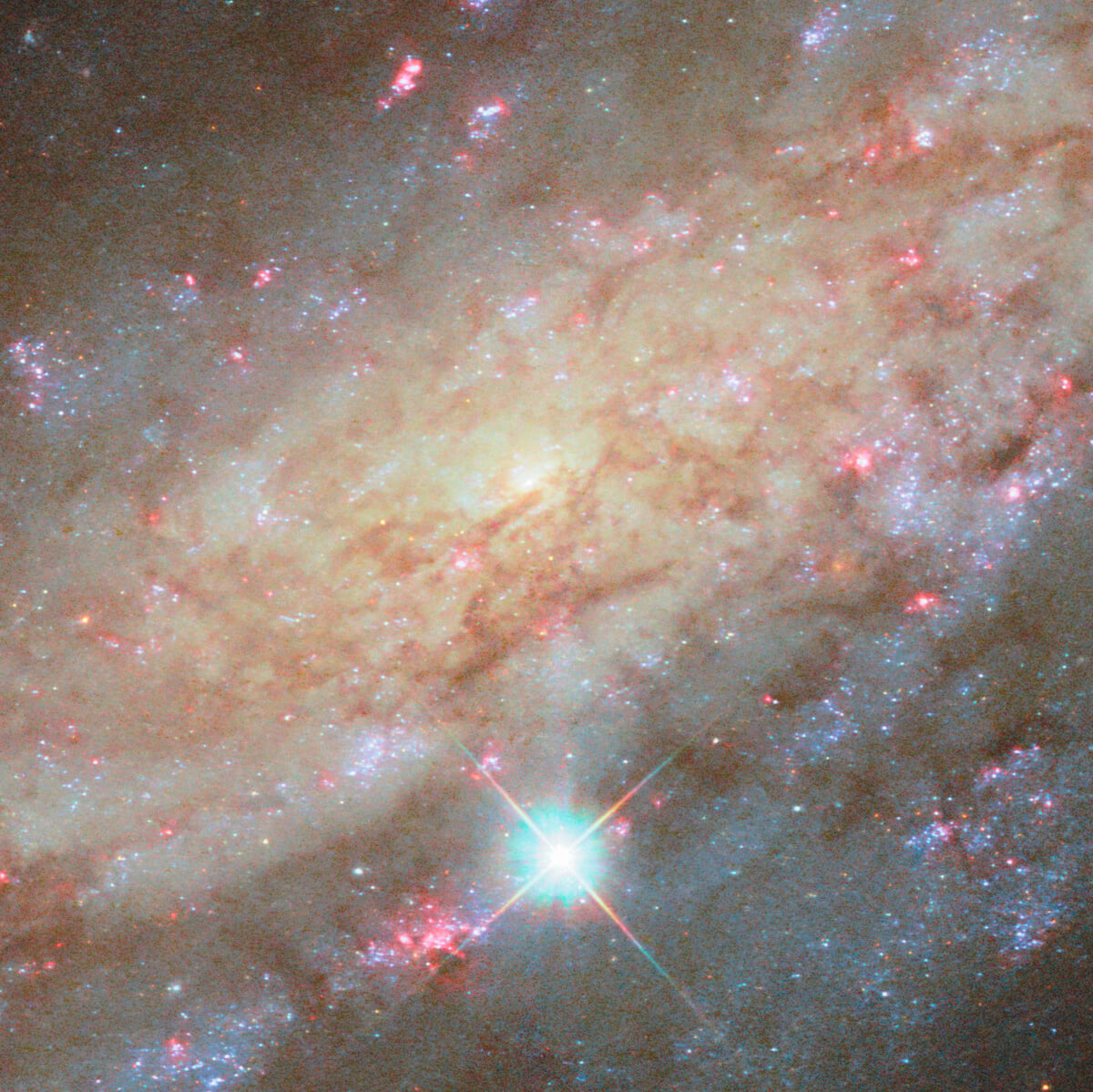
The Hubble Space Telescope continues to play a central role in resolving the fine structure of nearby galaxies. Its high spatial resolution and sensitivity across optical and ultraviolet wavelengths allow astronomers to isolate star clusters, trace dust lanes, and map regions of active star formation. One of its recent observations is that of NGC 3137.
Located approximately 53 million light-years away in the constellation Antlia, this spiral galaxy provides a well-defined system for examining the interplay between stellar populations, interstellar medium, and galactic dynamics.
NGC 3137: Characteristics and viewing geometry
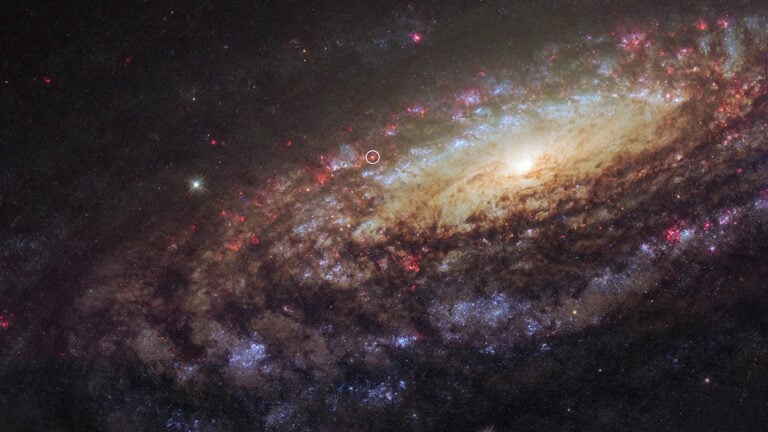
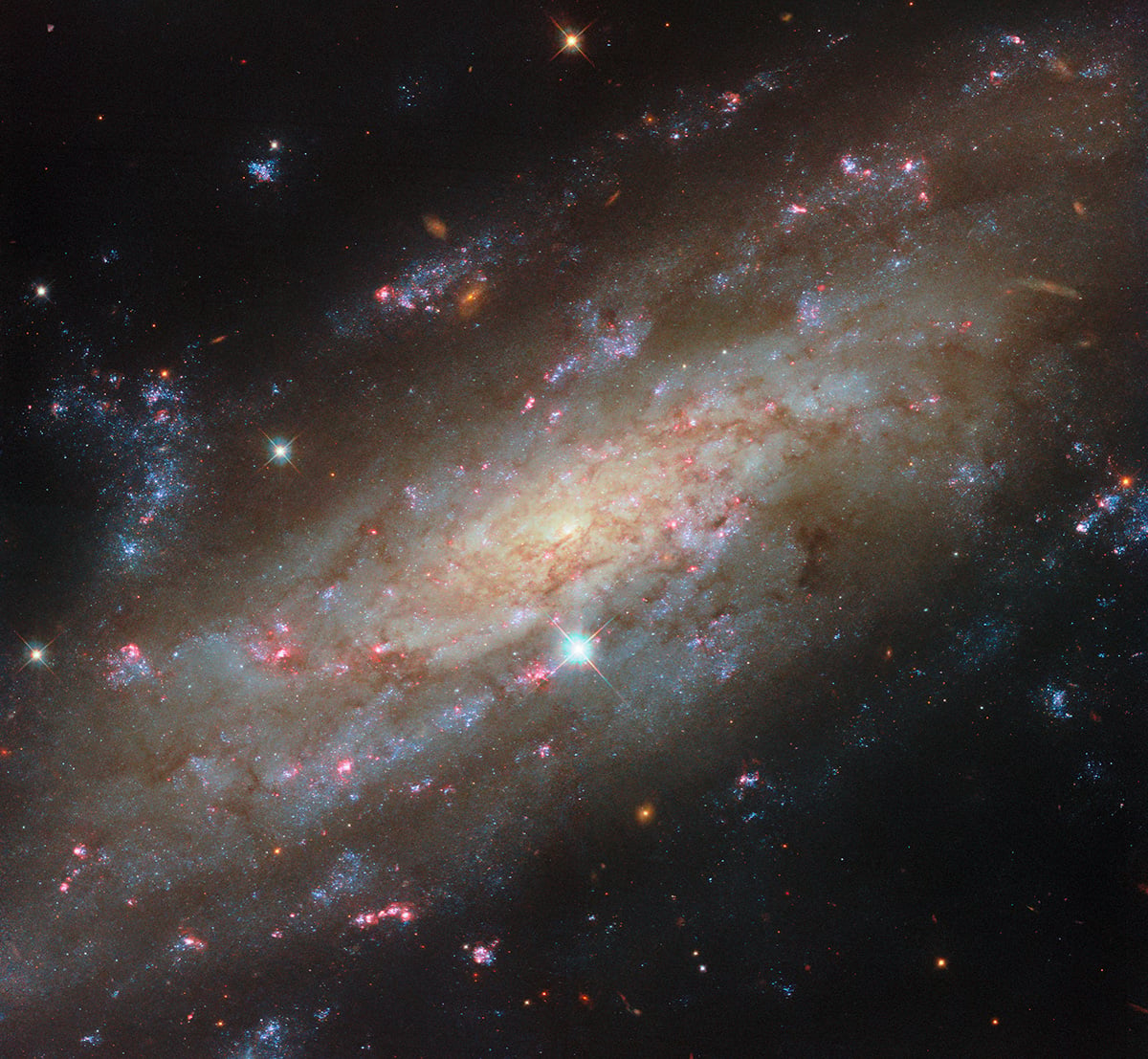
NGC 3137 presents itself at a moderate inclination, rather than in a fully face-on configuration. This viewing geometry provides a distinct advantage. It allows astronomers to examine both the radial and vertical distribution of stellar and gaseous components within the disc. The central bulge appears compact and luminous, dominated by an older stellar population that emits strongly in yellow and red wavelengths. These stars represent earlier stages of the galaxy’s evolutionary history and trace the buildup of mass in the inner regions.
Moving outward, the disc transitions into a network of spiral arms that exhibit segmentation. These arms host a mixture of stellar populations, ranging from recently formed clusters to more evolved stars. The arms do not appear uniformly smooth. They exhibit clumpy and irregular patterns, which reflect localized star formation activity and the underlying density waves that shape spiral structure.
Dust lanes form a prominent feature across the disc. These lanes appear as dark, filamentary structures that obscure background starlight. They contain cold gas and dust, which serve as the primary reservoir for star formation. Their distribution follows the spiral pattern, yet shows deviations that hint at turbulent processes within the interstellar medium. Because the galaxy is inclined, these dust structures become easier to trace, revealing their three-dimensional arrangement.
Environmental context within a galaxy group
NGC 3137 resides within the NGC 3175 Group, a system that shares several characteristics with the Local Group. This context is important, as galaxies rarely evolve in isolation. Instead, they respond to gravitational interactions and environmental influences that shape their morphology and star formation history.
Within this group, NGC 3137 and NGC 3175 act as the dominant spiral systems. Their presence resembles the configuration seen between the Milky Way and the Andromeda Galaxy in the Local Group. Surrounding these major galaxies are numerous smaller companions, many of which fall into the category of dwarf galaxies.
These dwarf systems attract considerable attention. Although they are faint and difficult to detect, they contribute significantly to the overall mass distribution of the group. They also provide insight into the role of dark matter in galaxy formation. Observations suggest that the NGC 3175 group may host a substantial population of such objects, though their exact number remains under investigation.
The gravitational interactions within the group influence the evolution of its members. Even weak tidal forces can distort spiral arms, redistribute gas, and trigger episodes of star formation. In the case of NGC 3137, the overall structure remains relatively stable. However, subtle asymmetries in the disc may reflect past or ongoing interactions with nearby companions.
Star Formation Across the Spiral Arms
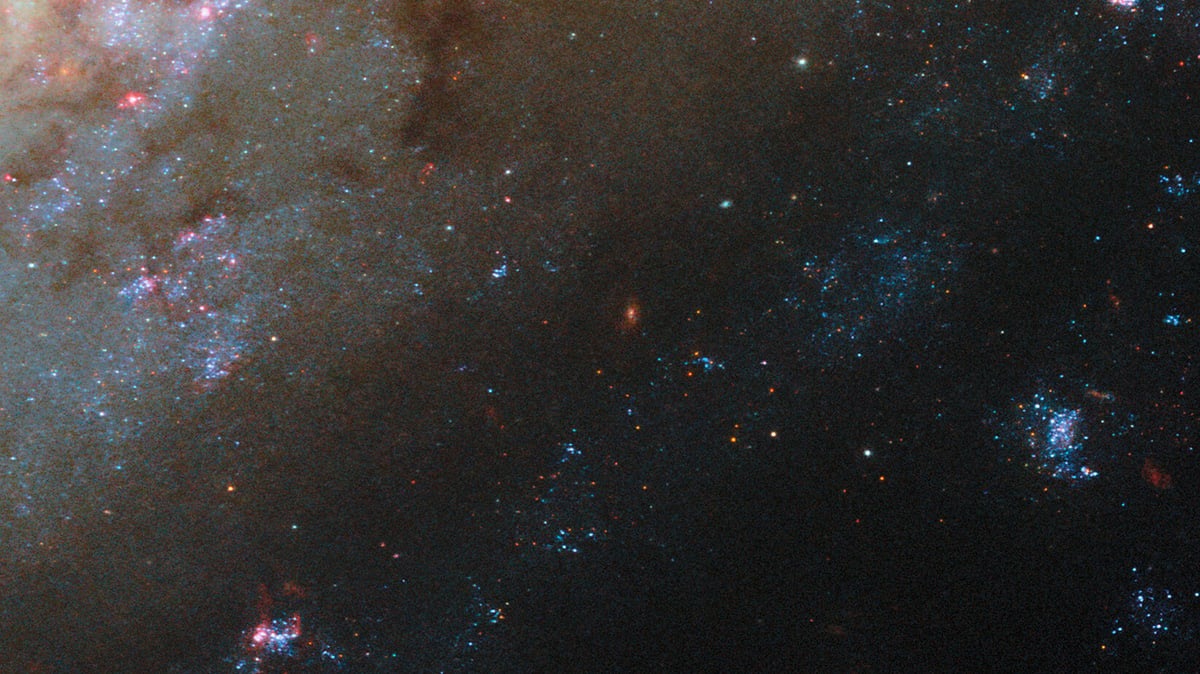
The spiral arms of NGC 3137 provide a view of ongoing star formation. Bright blue clusters mark regions where young, massive stars dominate. These stars emit strongly in ultraviolet and blue wavelengths, which makes them stand out against the older stellar background. Their presence indicates that star formation remains active across the disc.
Adjacent to these clusters, regions of ionised hydrogen gas appear as faint reddish patches. These H II regions form when radiation from young stars excites the surrounding gas. The process begins when dense molecular clouds collapse under gravity. As protostars emerge, they heat and ionise the nearby material, producing the emission signatures observed in the image.
This sequence reveals the lifecycle of star formation. Gas condenses into clouds, stars form within those clouds, and feedback from those stars alters the surrounding environment. Over time, stellar winds and radiation disperse the remaining gas. This halts further star formation in that region and leaves behind a cluster of stars.
The role of the central black hole
At the core of NGC 3137 lies a supermassive black hole with an estimated mass of about 60 million solar masses. Although it remains invisible in direct imaging, its gravitational influence shapes the dynamics of the central region. Stars and gas orbit under its pull, creating velocity patterns that astronomers can measure through spectroscopy.
Unlike active galactic nuclei, which emit intense radiation, the central region of NGC 3137 appears relatively quiescent. This suggests that the black hole is not currently accreting large amounts of material. However, its presence still affects the long-term evolution of the galaxy. It may regulate the flow of gas toward the center and influence star formation in the inner regions.
The relationship between supermassive black holes and their host galaxies remains an active area of research. Observations show correlations between black hole mass and properties of the galactic bulge. NGC 3137 contributes to this field by providing a case where the central black hole exists within a stable and moderately active system.
Clear skies!
See more from DIYPhotography.net on Google
Add DIYPhotography.net as a trusted source. This makes
our stories more likely to appear in your Google Search results.
 Add as a preferred source on Google

Soumyadeep Mukherjee
Soumyadeep Mukherjee is an award-winning astrophotographer from India. He has a doctorate degree in Linguistics. His work extends to the sub-genres of nightscape, deep sky, solar, lunar and optical phenomenon photography. He is also a photography educator and has conducted numerous workshops. His works have appeared in over 40 books & magazines including Astronomy, BBC Sky at Night, Sky & Telescope among others, and in various websites including National Geographic, NASA, Forbes. He was the first Indian to win “Astronomy Photographer of the Year” award in a major category.


Join the Discussion
DIYP Comment Policy
Be nice, be on-topic, no personal information or flames.