























A New Visitor from the Stars: Comet 3I/ATLAS
Jul 5, 2025
Soumyadeep Mukherjee
Soumyadeep Mukherjee is an award-winning astrophotographer from India. He has a doctorate degree in Linguistics. His work extends to the sub-genres of nightscape, deep sky, solar, lunar and optical phenomenon photography. He is also a photography educator and has conducted numerous workshops. His works have appeared in over 40 books & magazines including Astronomy, BBC Sky at Night, Sky & Telescope among others, and in various websites including National Geographic, NASA, Forbes. He was the first Indian to win “Astronomy Photographer of the Year” award in a major category.
Share:
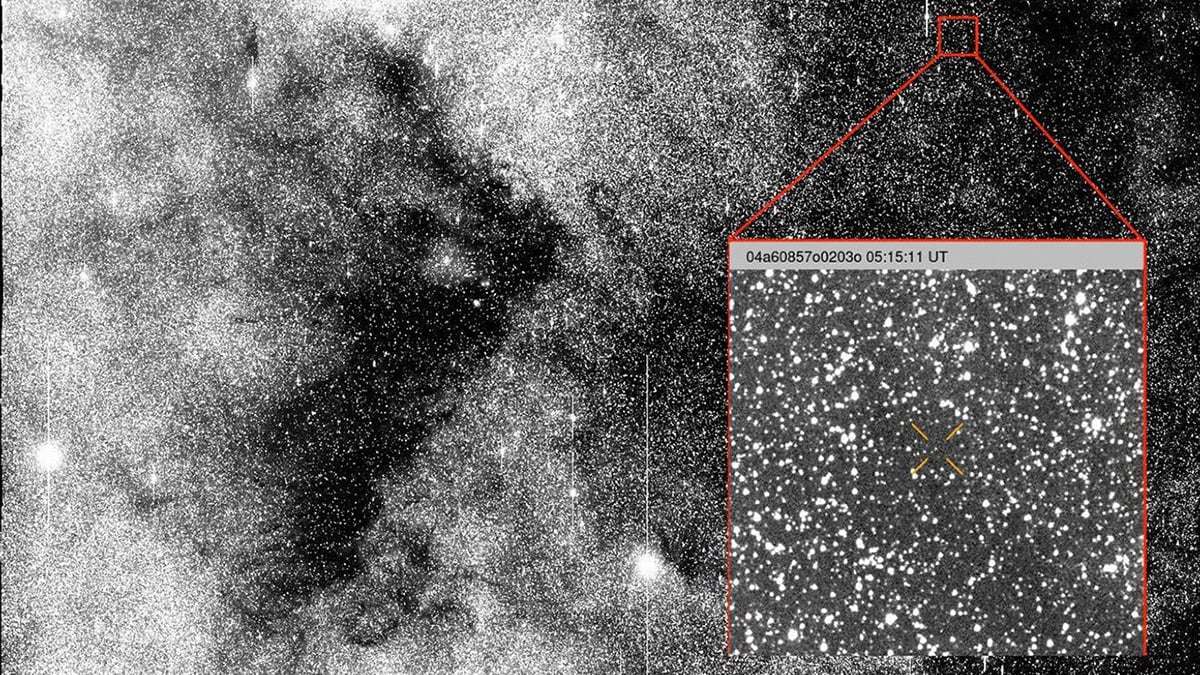
In July 2025, astronomers made a thrilling discovery. A comet named 3I/ATLAS was spotted racing through our Solar System. This is no ordinary comet. It comes from beyond the Sun’s reach. It is only the third confirmed interstellar object ever photographed. This is a historic moment for astronomy. Every interstellar visitor tells us something new. These objects come from distant stars. They carry material from alien worlds.
Discovery of 3I/ATLAS
The comet was discovered on July 1, 2025, by NASA-funded Asteroid Terrestrial-impact Last Alert System (ATLAS). The team spotted it using a telescope at Cerro Pachón, Chile. This location is part of the expanding ATLAS network. ATLAS is designed to find dangerous asteroids. But in this case, it found something far more exciting. The object had an unusual orbit. It was moving too fast to be bound to the Sun. That was the first clue.
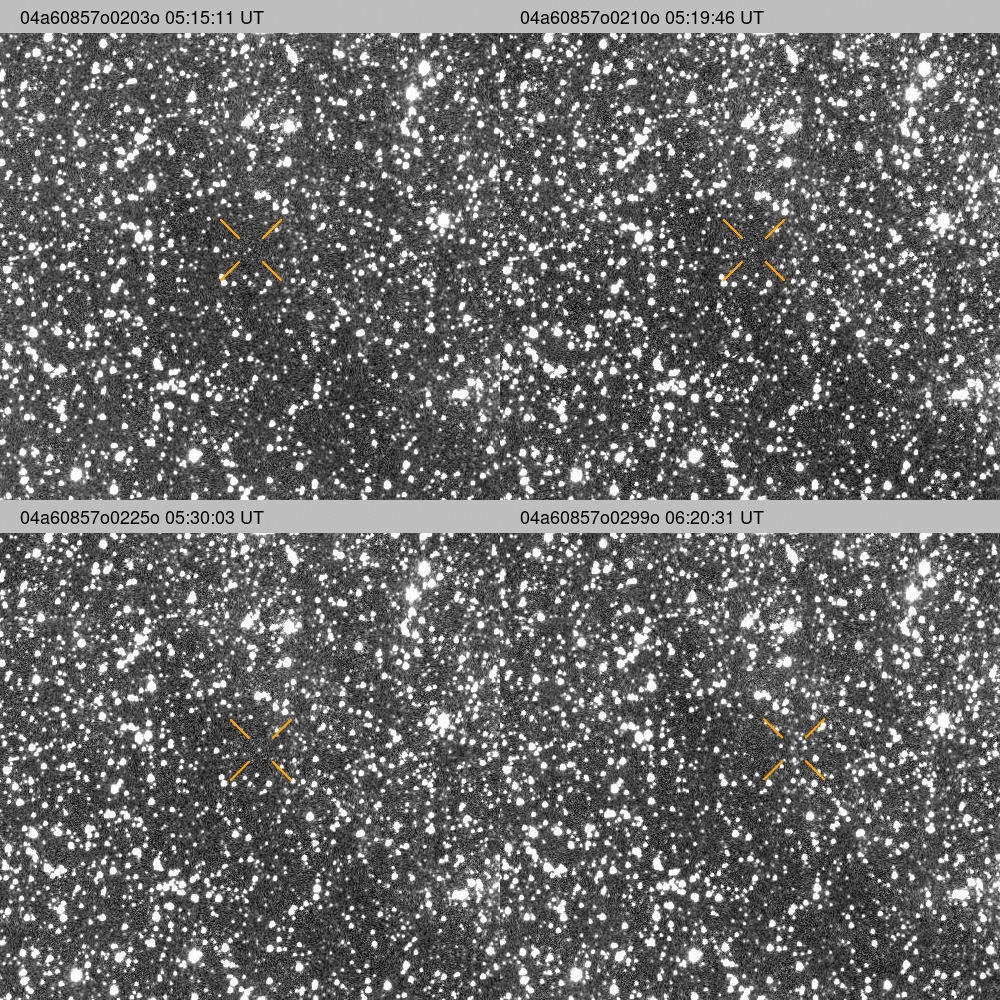
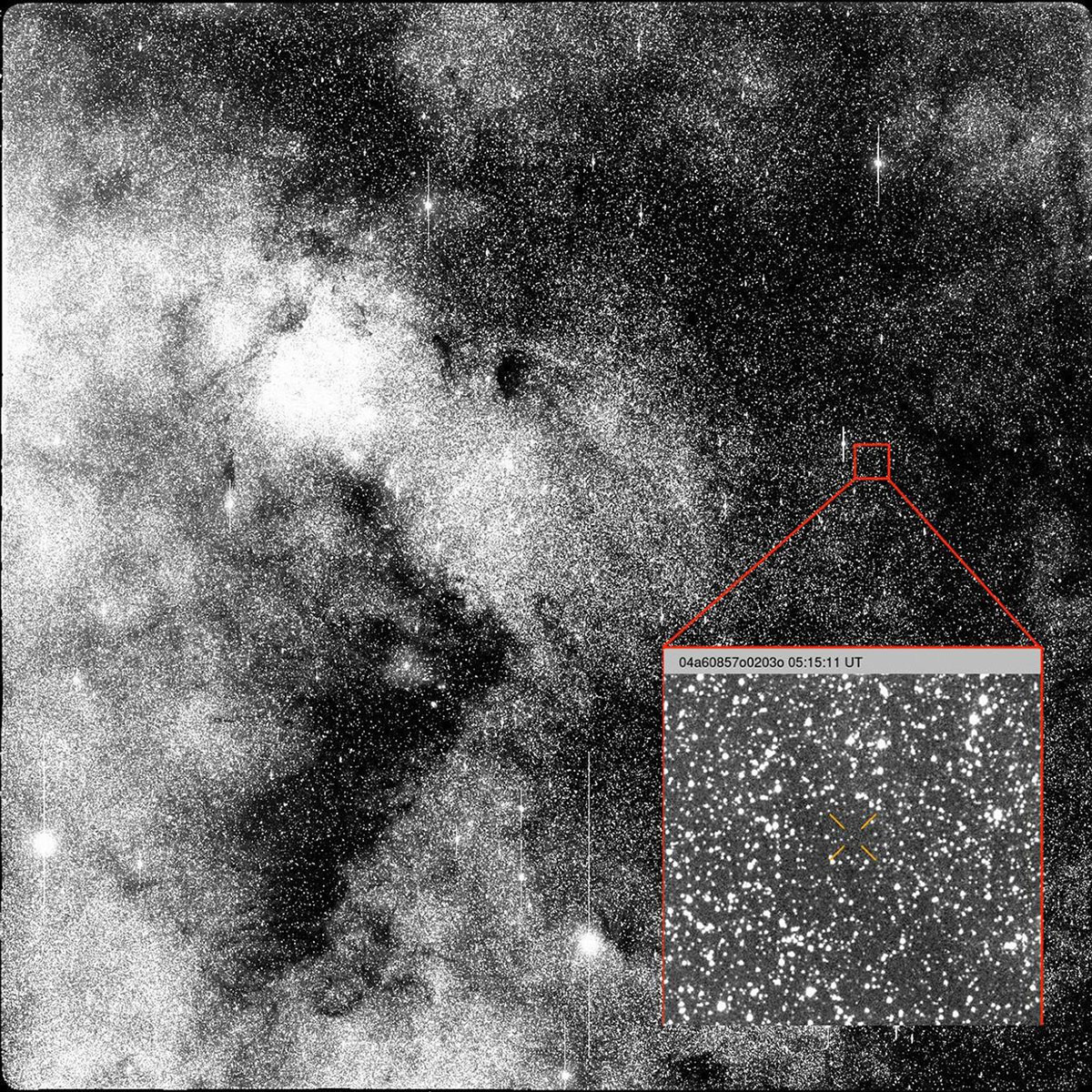
Astronomers dug into older images. They found that 3I/ATLAS had actually appeared in photos from mid-June 2025. These pre-discovery observations helped scientists calculate its path. After several weeks of careful tracking, astronomers confirmed it. The object had a hyperbolic trajectory. That means it came from outside the Solar System. It was officially named 3I/ATLAS. The “3I” stands for “third interstellar”.
A rare cosmic visitor
To date, only three interstellar objects have been confirmed and photographed:
- 1I/‘Oumuamua in 2017
- 2I/Borisov in 2019
- 3I/ATLAS in 2025
Each object is unique. ‘Oumuamua had an elongated shape and showed no comet-like activity. Borisov was an active comet with a tail. Now, 3I/ATLAS joins this exclusive club. It is also a comet, and it’s actively shedding material as it nears the Sun. The discovery of 3I/ATLAS shows that interstellar objects may be more common than we once believed. We just need the right tools to spot them.
What is 3I/ATLAS?
3I/ATLAS is a comet, not an asteroid. This is an important detail. Comets have icy cores. When they approach the Sun, heat causes gas and dust to escape. This creates a coma (a fuzzy atmosphere) and sometimes a tail. Observations show that 3I/ATLAS has both. It has a faint coma and a short tail. This is clear evidence of its cometary nature. Scientists estimate its nucleus could be 5 to 20 kilometers wide. The size is still uncertain. Much of the brightness may come from the coma. That makes measuring the solid body tricky. Even from hundreds of millions of kilometers away, its activity is visible. That gives astronomers a rare chance to study interstellar ice and dust.
Its journey through the solar system
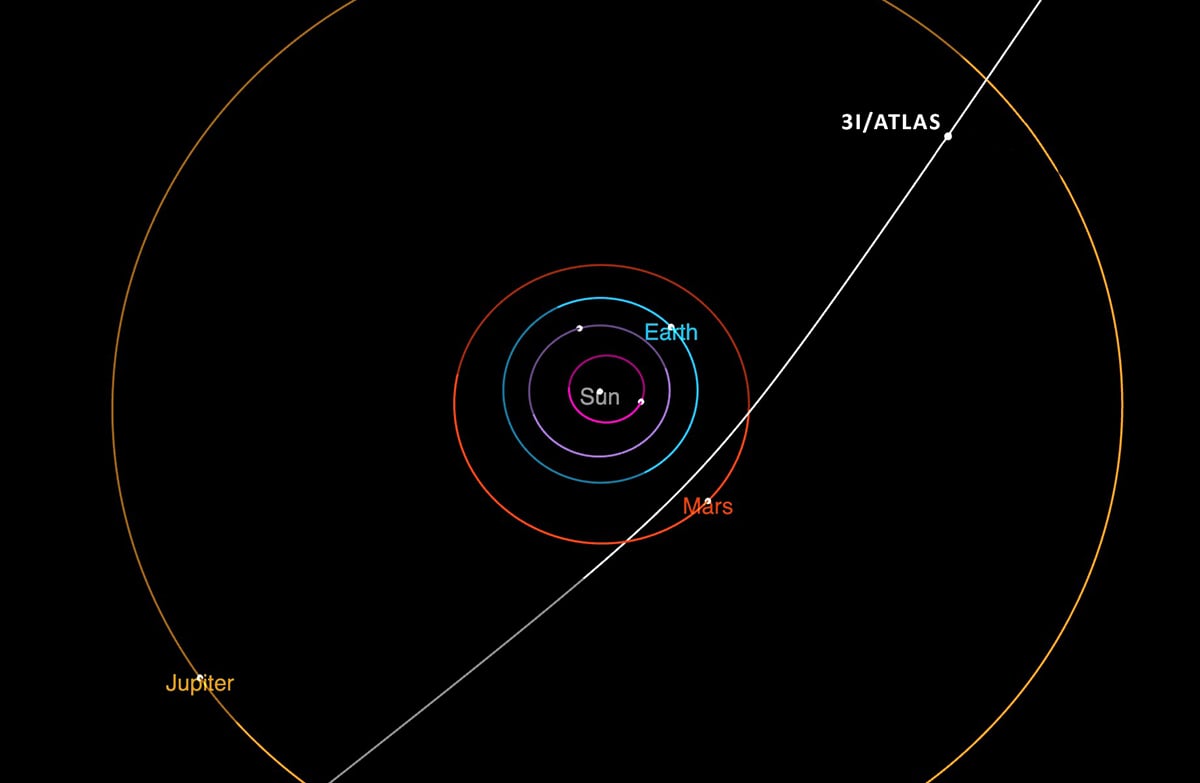
3I/ATLAS is moving incredibly fast. Its speed is estimated to be around 60 to 68 kilometers per second. That’s roughly 40 times faster than a commercial jet. As of July 2025, it is about 4.5 AU from the Sun. That’s roughly 670 million kilometers away. It will continue to approach the Sun until late October 2025. That’s when it will reach its perihelion, the closest point to the Sun. At perihelion, it will be about 1.38 to 1.4 AU from the Sun. That’s slightly inside the orbit of Mars. But it will be behind the Sun from Earth’s point of view. So it won’t be visible at its brightest. Its closest approach to Earth will happen in mid-December 2025. At that time, it will be about 1.6 to 1.8 AU away. That’s around 240 million kilometers. Even then, it won’t be visible without a powerful telescope.
There’s no danger from 3I/ATLAS. It will not come anywhere near Earth. Its closest approach is still more than 150 million miles away. Its path is hyperbolic. That means it entered our Solar System once and will never return. After its solar encounter, it will head back into interstellar space. It may never be seen again.
Can you photograph it?
Unfortunately, 3I/ATLAS is too faint for most amateur telescopes. At its closest, it will still be dim. It may reach a magnitude of around 16 to 18, depending on activity. That’s far below naked-eye visibility. Large professional telescopes will continue to track it. You can follow updates on NASA’s official 3I/ATLAS page. Websites like ESA’s Near-Earth Objects Portal and JPL’s Small-Body Database will also post updates. Some observatories may share live streams or time-lapse videos. Keep an eye on astronomy outreach platforms.
3I/ATLAS is a messenger from the stars. It’s only the third interstellar object ever photographed. And it’s giving astronomers a rare chance to study alien material. Its discovery reminds us of the cosmic connections that link star systems. We share a galaxy full of icy wanderers. Some of them, like 3I/ATLAS, visit us, briefly, silently, and spectacularly.
Clear skies!
See more from DIYPhotography.net on Google
Add DIYPhotography.net as a trusted source. This makes
our stories more likely to appear in your Google Search results.
 Add as a preferred source on Google

Soumyadeep Mukherjee
Soumyadeep Mukherjee is an award-winning astrophotographer from India. He has a doctorate degree in Linguistics. His work extends to the sub-genres of nightscape, deep sky, solar, lunar and optical phenomenon photography. He is also a photography educator and has conducted numerous workshops. His works have appeared in over 40 books & magazines including Astronomy, BBC Sky at Night, Sky & Telescope among others, and in various websites including National Geographic, NASA, Forbes. He was the first Indian to win “Astronomy Photographer of the Year” award in a major category.


Join the Discussion
DIYP Comment Policy
Be nice, be on-topic, no personal information or flames.