
























JWST Reveals the Sharpest Ever Image of Dark Matter
Feb 2, 2026
Soumyadeep Mukherjee
Soumyadeep Mukherjee is an award-winning astrophotographer from India. He has a doctorate degree in Linguistics. His work extends to the sub-genres of nightscape, deep sky, solar, lunar and optical phenomenon photography. He is also a photography educator and has conducted numerous workshops. His works have appeared in over 40 books & magazines including Astronomy, BBC Sky at Night, Sky & Telescope among others, and in various websites including National Geographic, NASA, Forbes. He was the first Indian to win “Astronomy Photographer of the Year” award in a major category.
Share:
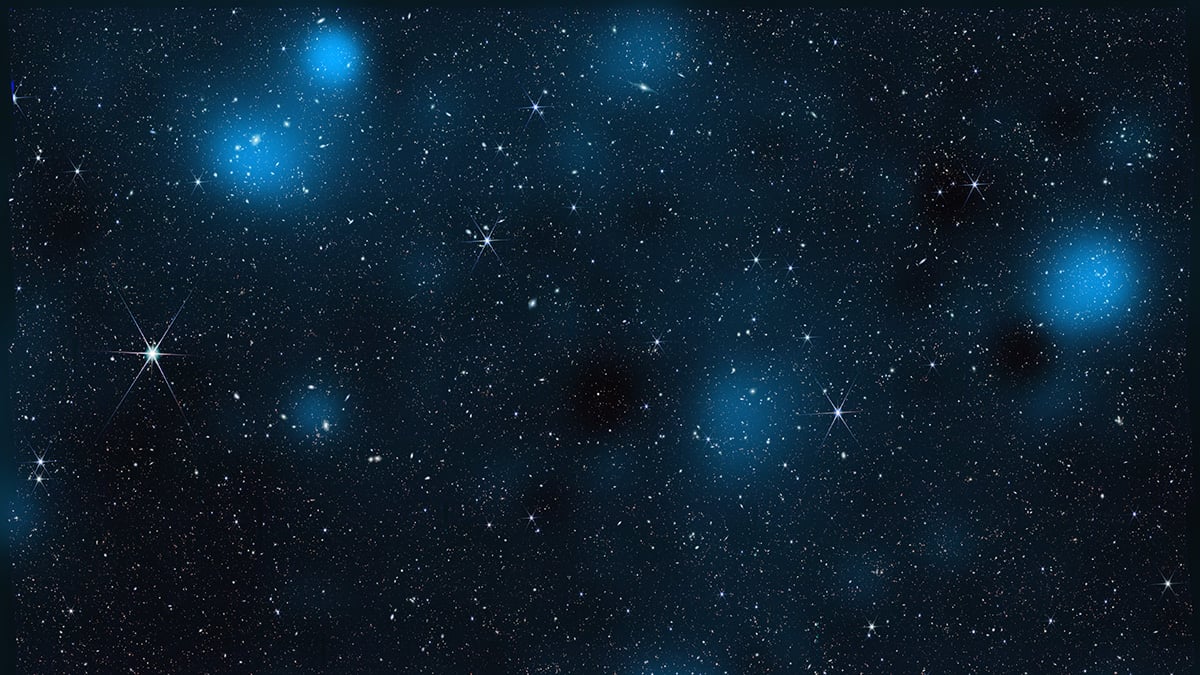
Modern cosmology rests on a quiet assumption: most of the universe does not shine. Galaxies, stars, gas, and dust account for only a small fraction of cosmic mass. Instead, an invisible component dominates gravitational dynamics across every scale. Astronomers call it dark matter. For decades, scientists have inferred its presence through motion and lensing. They observed galaxies rotating too fast. They saw clusters bending the background light. Yet dark matter itself remained elusive. No telescope could see it directly. Now, the James Webb Space Telescope has changed the situation in a profound way.
Using JWST’s deep infrared imaging of the COSMOS field, NASA scientists have produced the most detailed dark matter map ever created. The result does more than confirm existing models. It exposes the hidden framework of the universe with unprecedented clarity. More importantly, it shows how dark matter guided the growth of galaxies from the early cosmos to the present day. For the first time, astronomers can trace dark matter and ordinary matter together across a large region of space, with twice the resolution of earlier efforts.
Dark matter and the architecture of the cosmos
Dark matter does not emit light. It does not absorb radiation. It does not reflect photons. Yet it outweighs ordinary matter by more than five to one. According to NASA, dark matter accounts for about 27 percent of the universe, while familiar matter accounts for only about 5 percent. The rest belongs to dark energy. Despite its invisibility, dark matter leaves clear fingerprints. Gravity betrays its presence.
Light traveling through space follows curved paths when massive objects intervene. This effect, known as gravitational lensing, allows astronomers to map mass that cannot be seen. When lensing is strong, galaxies appear stretched into arcs. When lensing is weak, distortions become subtle. However, when scientists measure these tiny shape changes across hundreds of thousands of galaxies, patterns start emerging. Those patterns reveal where mass resides.
Over time, researchers realized that dark matter forms a vast cosmic web. Dense nodes connect through long filaments. Between them lie immense voids. Ordinary matter settles into this structure. Galaxies form inside dark matter halos. Clusters grow where filaments intersect. In effect, dark matter acts as the universe’s structural backbone.
How JWST built the sharpest dark matter map ever
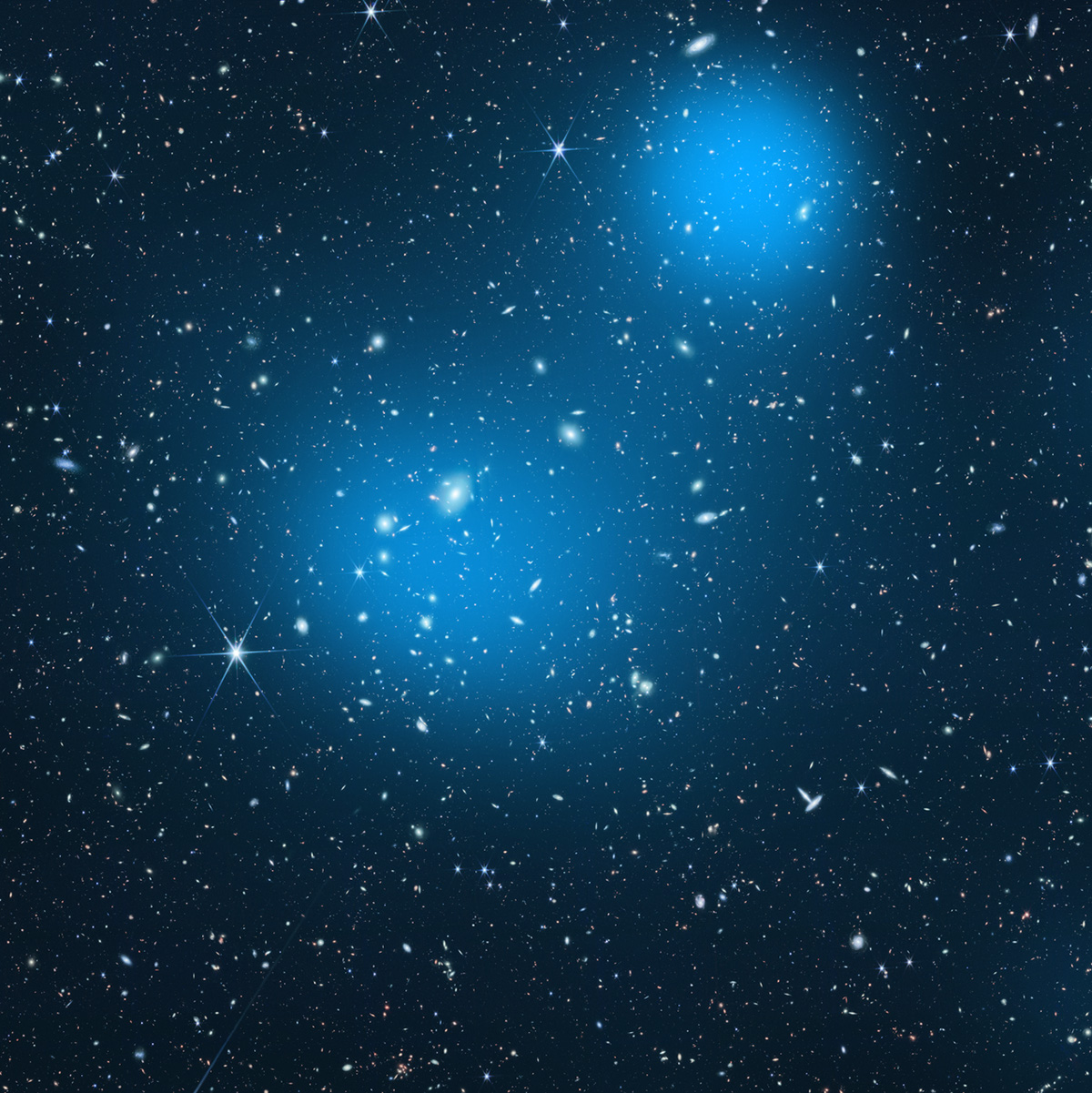
The breakthrough came from JWST’s observations of the COSMOS field, one of the most studied regions in the sky. JWST spent about 255 hours imaging this patch. Its instruments detected nearly 800,000 galaxies, many far fainter than previous surveys could reach. Weak gravitational lensing relies on statistics. The more galaxies astronomers measure, the clearer the mass distribution becomes. JWST provided both quantity and quality. Its Near-Infrared Camera delivered sharp galaxy shapes. Its sensitivity revealed distant systems hidden from earlier telescopes. Meanwhile, JWST’s infrared coverage improved distance estimates, which strengthened the final map.
Scientists then analyzed how foreground mass distorted the shapes of background galaxies. They combined these measurements into a coherent reconstruction of dark matter across roughly 0.54 square degrees of sky, an area about two and a half times the size of the full Moon.
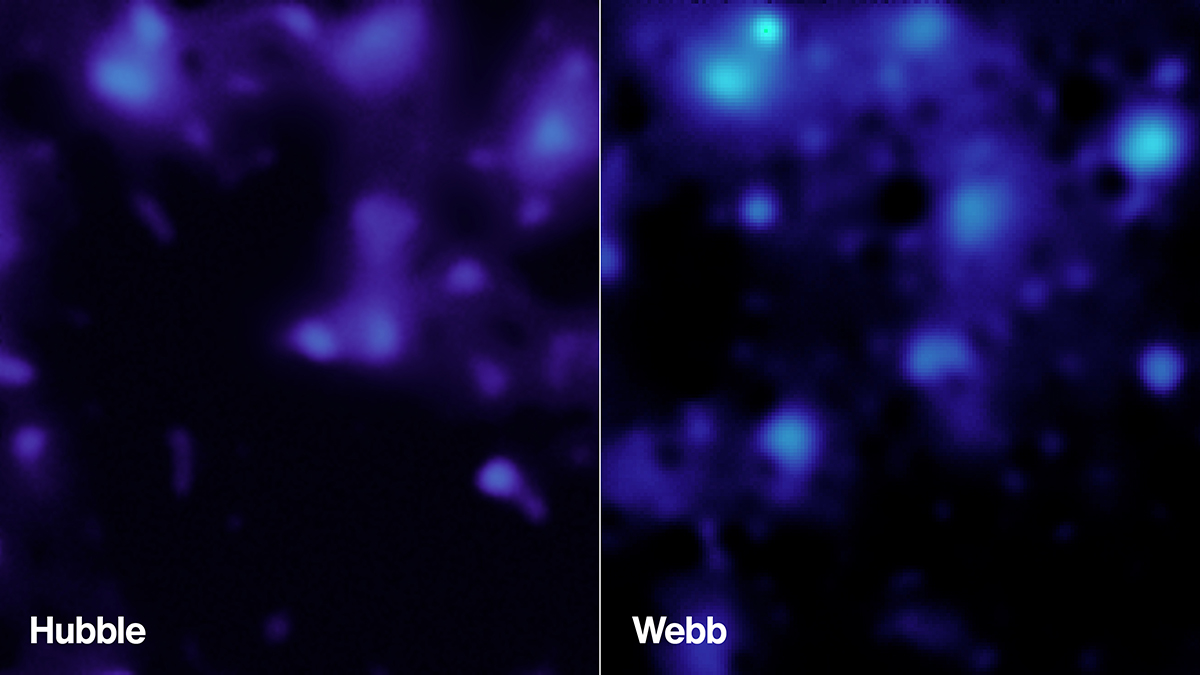
The resulting map surpasses earlier efforts in two key ways:
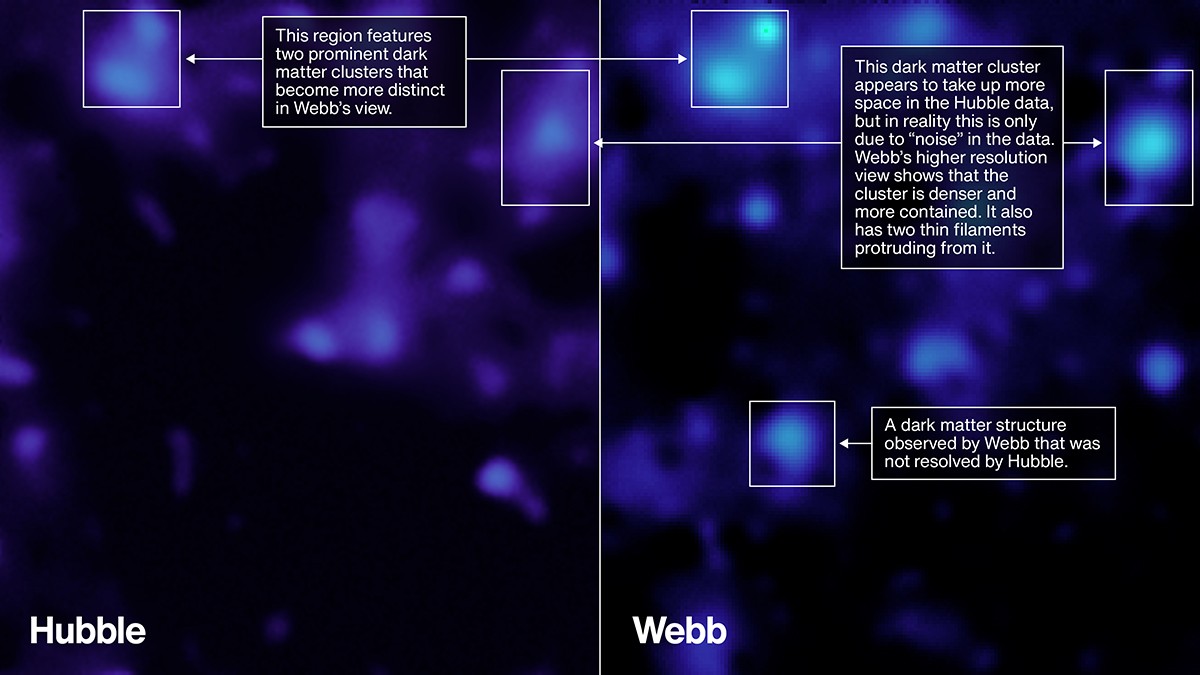
- First, it achieves about twice the resolution of Hubble-based dark matter maps.
- Second, it uses roughly 10 times as many galaxies as comparable ground-based studies. Together, these gains expose finer structures inside the cosmic web.
Small dark matter clumps emerge more clearly. Filaments appear sharper and boundaries become better defined.
A Universe where dark and ordinary matter grow together
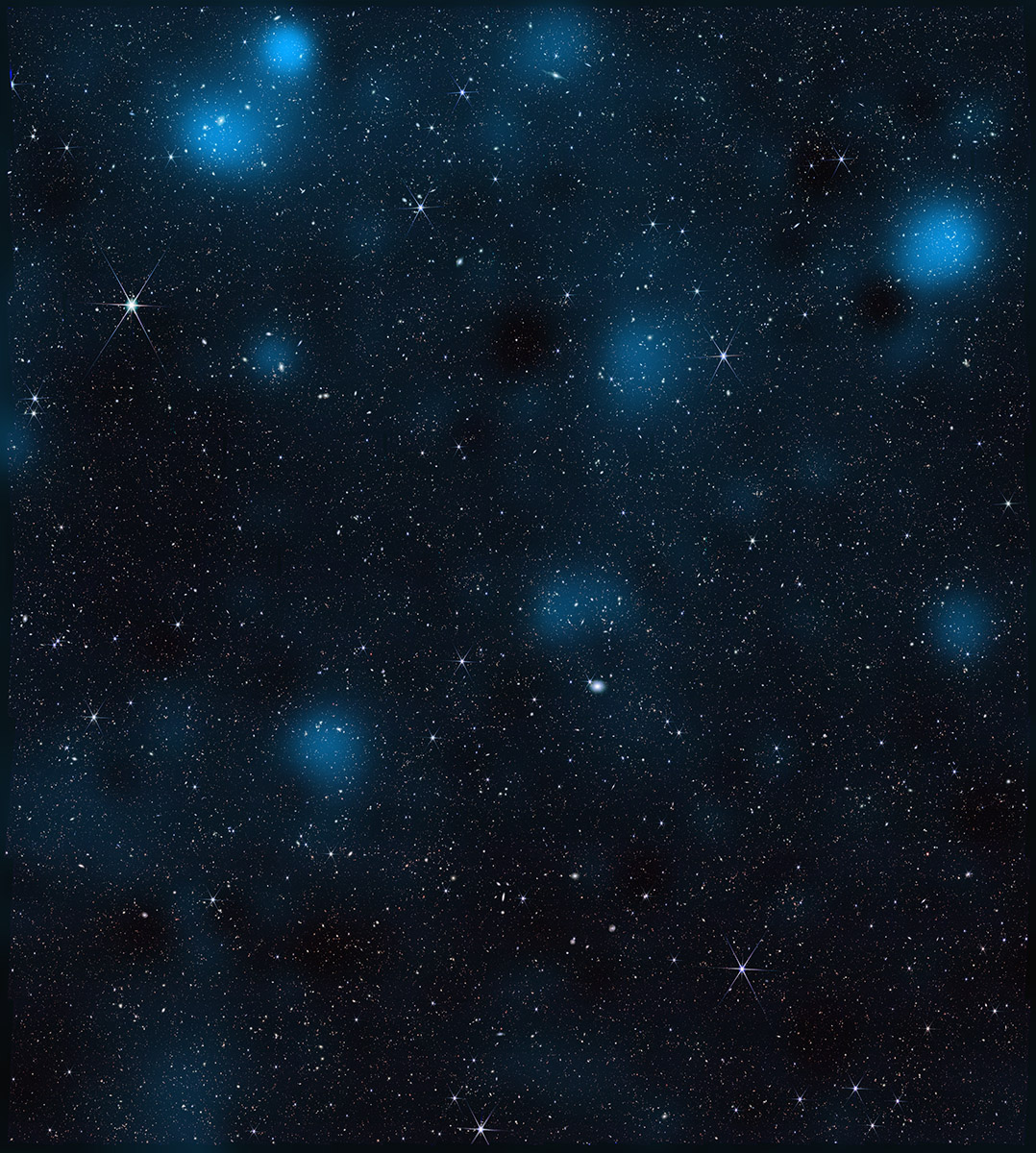
Once scientists assembled the map, a striking pattern appeared. Dark matter and ordinary matter align almost perfectly. Where galaxies cluster, dark matter concentrates. Where thin chains of galaxies stretch between clusters, dark matter filaments follow the same paths. This correspondence supports a central idea of cosmology: dark matter formed the initial scaffolding, and visible matter later filled it in.
In the early universe, dark matter began to collapse under gravity. Because it does not interact with light, radiation pressure cannot slow it down. Dense regions formed quickly. These regions then pulled in ordinary matter. Gas accumulated. Stars ignited. Galaxies took shape. JWST’s map shows this process in action, frozen across cosmic time.
Researchers now see that dark matter did not merely coexist with galaxies. It guided their assembly from the beginning. Both components evolved together. Neither acted alone. This finding strengthens theoretical models that predict hierarchical structure formation, where small systems merge into larger ones over billions of years. It also explains why galaxies appear where they do. Their positions trace invisible mass beneath them.
Why JWST succeeds where others could not
JWST’s advantage lies in infrared vision. As the universe expands, light from distant galaxies stretches into longer wavelengths. Many of the faintest systems glow mainly in infrared. JWST detects them with ease. It also sees through dust that obscures optical telescopes.
This capability dramatically increases the number of usable background galaxies for lensing studies. More galaxies mean stronger statistics. Stronger statistics mean clearer mass maps. JWST also benefits from stable space-based observing conditions. It avoids atmospheric distortion. It delivers consistent image quality across its field. These factors reduce systematic errors that plague ground-based surveys.
Hubble laid critical groundwork. It proved that weak lensing could map dark matter. JWST builds on that legacy. It pushes deeper. It resolves smaller scales. And it opens windows onto earlier cosmic epochs. Together, Hubble and JWST form a powerful partnership. One established the method. The other perfected it.
The COSMOS field represents only a tiny fraction of the sky. NASA now plans to scale this work dramatically. The upcoming Nancy Grace Roman Space Telescope will survey vast areas of space. Roman will not match JWST’s resolution. However, it will cover regions thousands of times larger. JWST will continue to provide detailed maps of selected fields. Roman will reveal the broader cosmic context. And together, they will chart dark matter across billions of galaxies.
Clear skies!
See more from DIYPhotography.net on Google
Add DIYPhotography.net as a trusted source. This makes
our stories more likely to appear in your Google Search results.
 Add as a preferred source on Google

Soumyadeep Mukherjee
Soumyadeep Mukherjee is an award-winning astrophotographer from India. He has a doctorate degree in Linguistics. His work extends to the sub-genres of nightscape, deep sky, solar, lunar and optical phenomenon photography. He is also a photography educator and has conducted numerous workshops. His works have appeared in over 40 books & magazines including Astronomy, BBC Sky at Night, Sky & Telescope among others, and in various websites including National Geographic, NASA, Forbes. He was the first Indian to win “Astronomy Photographer of the Year” award in a major category.

Join the Discussion
DIYP Comment Policy
Be nice, be on-topic, no personal information or flames.