























AnomalyMatch AI Reveals 1,400 Cosmic Anomalies in Hubble’s Archive
Jan 28, 2026
Soumyadeep Mukherjee
Soumyadeep Mukherjee is an award-winning astrophotographer from India. He has a doctorate degree in Linguistics. His work extends to the sub-genres of nightscape, deep sky, solar, lunar and optical phenomenon photography. He is also a photography educator and has conducted numerous workshops. His works have appeared in over 40 books & magazines including Astronomy, BBC Sky at Night, Sky & Telescope among others, and in various websites including National Geographic, NASA, Forbes. He was the first Indian to win “Astronomy Photographer of the Year” award in a major category.
Share:
For more than thirty-five years, the Hubble Space Telescope has opened windows into the cosmos that were once unimaginable. Scientists have used its observations to study phenomena from our own solar system to the most distant reaches of the observable universe. Hubble’s images lie at the core of modern astronomy. They have transformed textbooks, inspired countless discoveries, and revealed the universe in its breathtaking complexity. Yet, even after decades of study, much of Hubble’s data remained unexplored, buried in a massive archive too vast for human researchers to sift through completely.
Recently, a team of astronomers applied a new kind of tool, artificial intelligence specifically trained to find rare and curious objects. This tool searched nearly 100 million image cutouts from the sprawling Hubble Legacy Archive. In just about 2.5 days, it flagged nearly 1,400 astrophysical anomalies, more than 800 of which had never been documented before. This discovery, along with the expansion of our inventory of strange cosmic objects, underscores the enduring scientific value of Hubble’s rich dataset and the powerful role AI now plays in astronomy.
A legacy of light: Hubble’s impact on astronomy
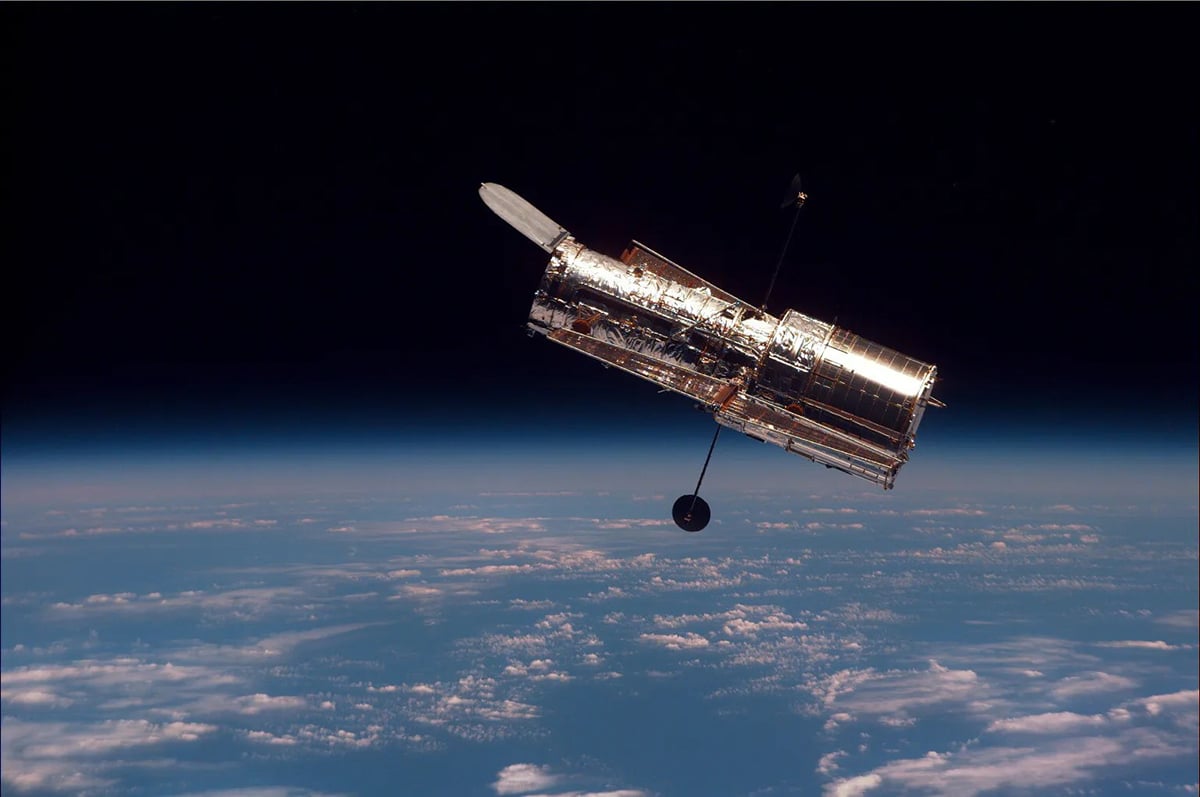
The Hubble Space Telescope launched in 1990, marking a turning point in observational astronomy. Suspended above Earth’s atmosphere, it avoids the blurring effects that limit ground-based telescopes. Over the decades, Hubble has delivered detailed images of nebulae, star clusters, and galaxies in varying stages of evolution. One of its most famous achievements came in 2004 with the Hubble Ultra Deep Field. In this image, astronomers combined long exposures pointed at a seemingly empty patch of sky and revealed nearly 10,000 galaxies, some of which formed when the universe was less than a billion years old.
Images like the Ultra Deep Field have informed astronomers about the structure of the early universe, how galaxies grow and evolve, and how star formation changed over cosmic time. Hubble’s deep fields allowed scientists to study galaxies at different distances, each showing light that left billions of years ago. This offered a kind of time machine, letting us witness the universe’s formative periods.
Other iconic Hubble achievements include detailed studies of gravitational lenses, where the gravity of massive objects bends and magnifies light from objects behind them. Gravitational lenses confirm Einstein’s theory of relativity and also act as natural magnifying glasses that let astronomers see incredibly distant galaxies. Hubble’s observations of clusters such as Abell 370 have revealed curved arcs of lensed galaxies that are far dimmer and farther away than would otherwise be visible.
Over its lifetime, Hubble has also photographed star-forming regions like the Orion Nebula, provided deep images of supernovae exploding in distant galaxies, and mapped the complex structures of interacting galaxies. Each image added a piece to the puzzle of how the universe works. Yet the archive grew so large that even experts could not manually examine every dataset for rare or unusual objects.
The archive with hidden treasures
The Hubble Legacy Archive is an enormous repository containing tens of millions of individual image cutouts from Hubble’s observations made over decades. Each cutout captures a small patch of sky. It might show a galaxy or a field filled with stars, or it might be part of a larger mosaic. The archive contains nearly 100 million such snippets.
Researchers knew that hidden among these countless images could be rare or unusual objects, galaxies interacting in strange ways, warped gravitational lenses, or objects that challenge classification. But the dataset was too vast for exhaustive human inspection. Astronomers needed a tool that could rapidly analyse the data and highlight the most unusual features.
This is where AI entered the picture. Instead of random human searches, the research team applied a neural-network-based algorithm named AnomalyMatch. This AI system was trained on examples of rare objects, known mergers, lenses, and unique galaxies, so that it could recognise similar patterns across millions of images. Once trained, the AI scanned the entire archive in a fraction of the time a human team would need.
Introducing AnomalyMatch: AI for astronomy
AnomalyMatch represents a new generation of machine-learning tools designed for astronomy. It processes images by recognising patterns and deviations from the norm, much like how a human eye might spot something unusual against a background of typical galaxies. The AI was first trained on existing examples of rare objects, then deployed to analyse all 99.6 million image cutouts from the Hubble Legacy Archive.
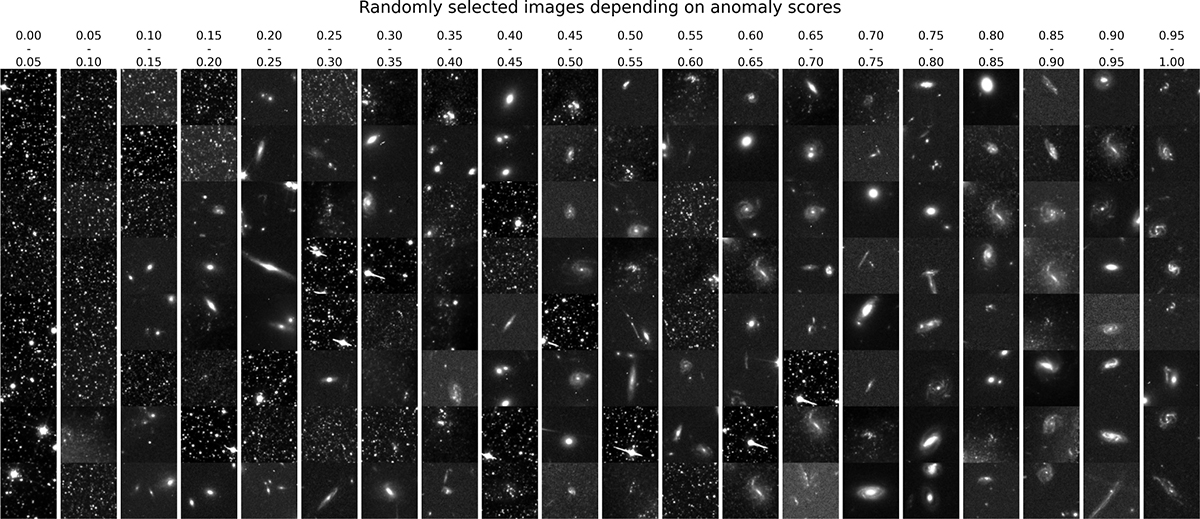
Once the AI completed its scan, it produced a ranked list of candidates, prioritising sources that looked most unlike the ordinary. The top candidates were then reviewed by expert astronomers. This human step ensured that the final list of anomalies was scientifically valid, free from misclassified artefacts or calibration defects.
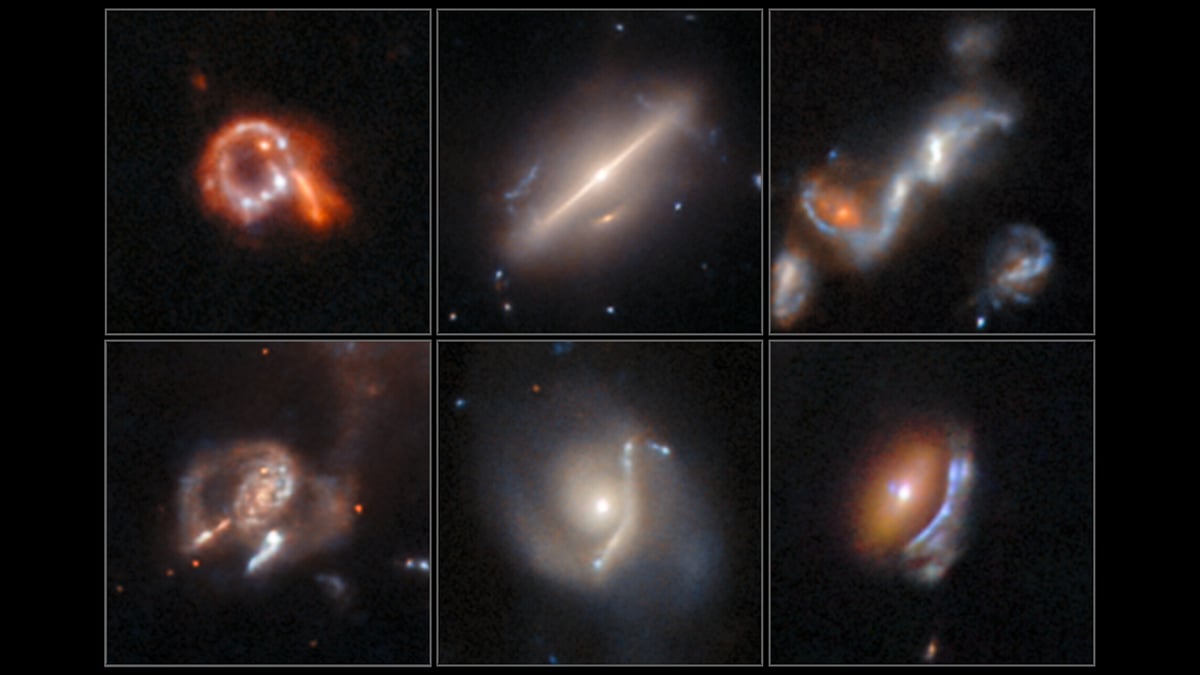
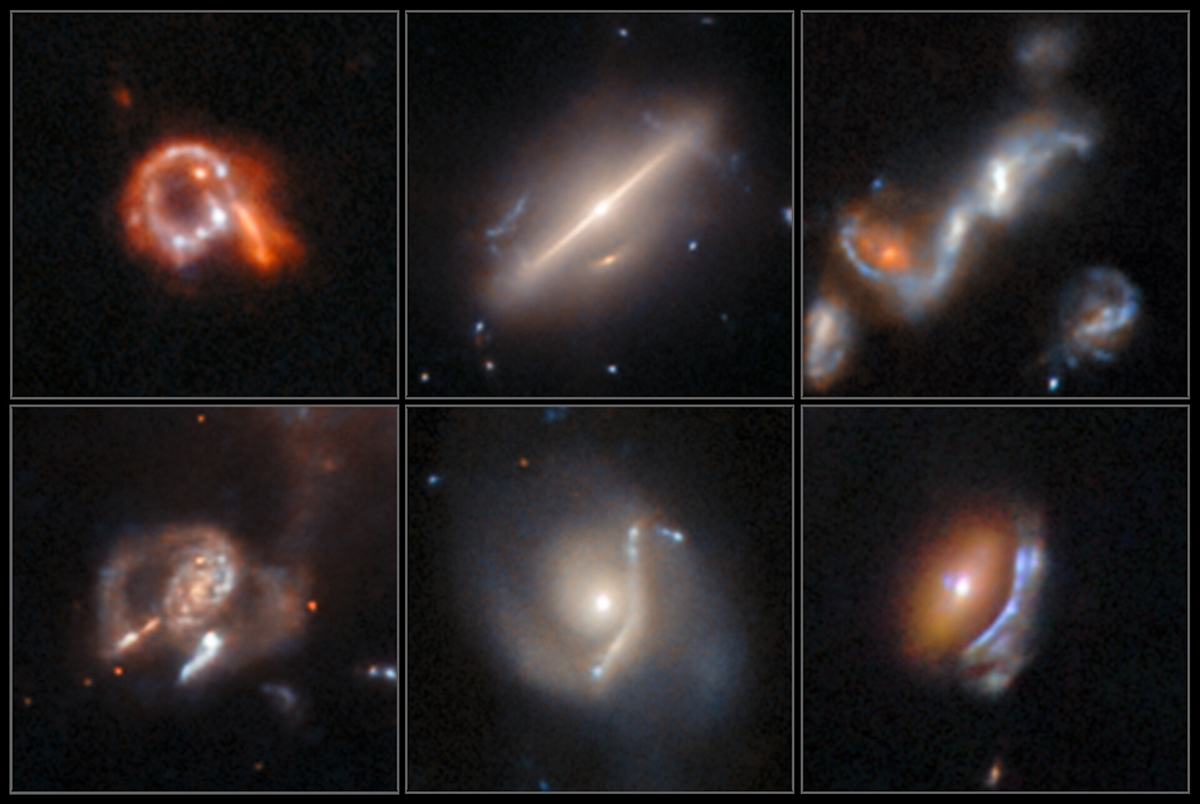
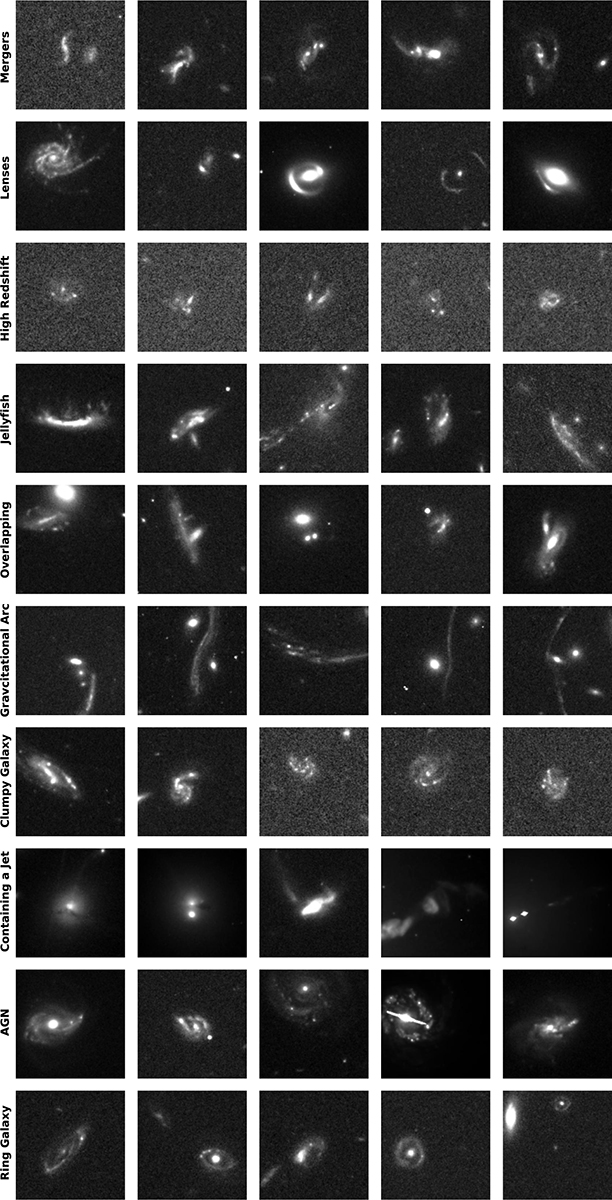
In total, the hybrid approach revealed almost 1,400 distinct anomalous objects, with over 800 previously undocumented in the scientific literature. These objects range from known categories like gravitational lenses and merging galaxies to objects that defy easy categorisation.
The human factor in AI-driven discovery
Despite the usage of AI, human expertise remains central to the process. AnomalyMatch does an initial pass to identify patterns that stand out. Then scientists examine and validate each candidate. This hybrid approach balances speed with scientific judgment. It ensures that discoveries are real, meaningful, and not artifacts of the algorithm.
Astronomers still play the final role in interpretation. Once an anomaly is confirmed, researchers can study its properties in more detail. They can propose follow-up observations with other telescopes. They can test theories about what the object might be. AI accelerates discovery, but interpretation still rests with human scientists.
This partnership also helps refine AI tools over time. As humans validate discoveries, they feed back information that can improve future training of AI models. In this way, both humans and machines get better at recognizing the unexpected.
Exploring the new anomalies: Gravitational lenses and more
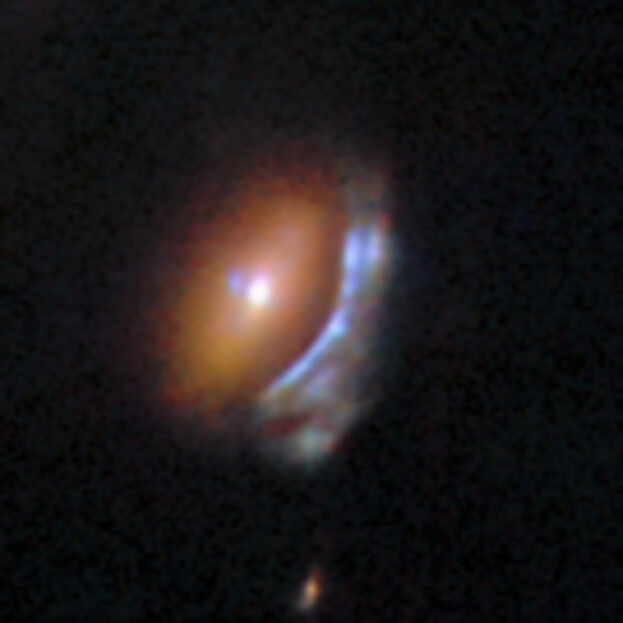
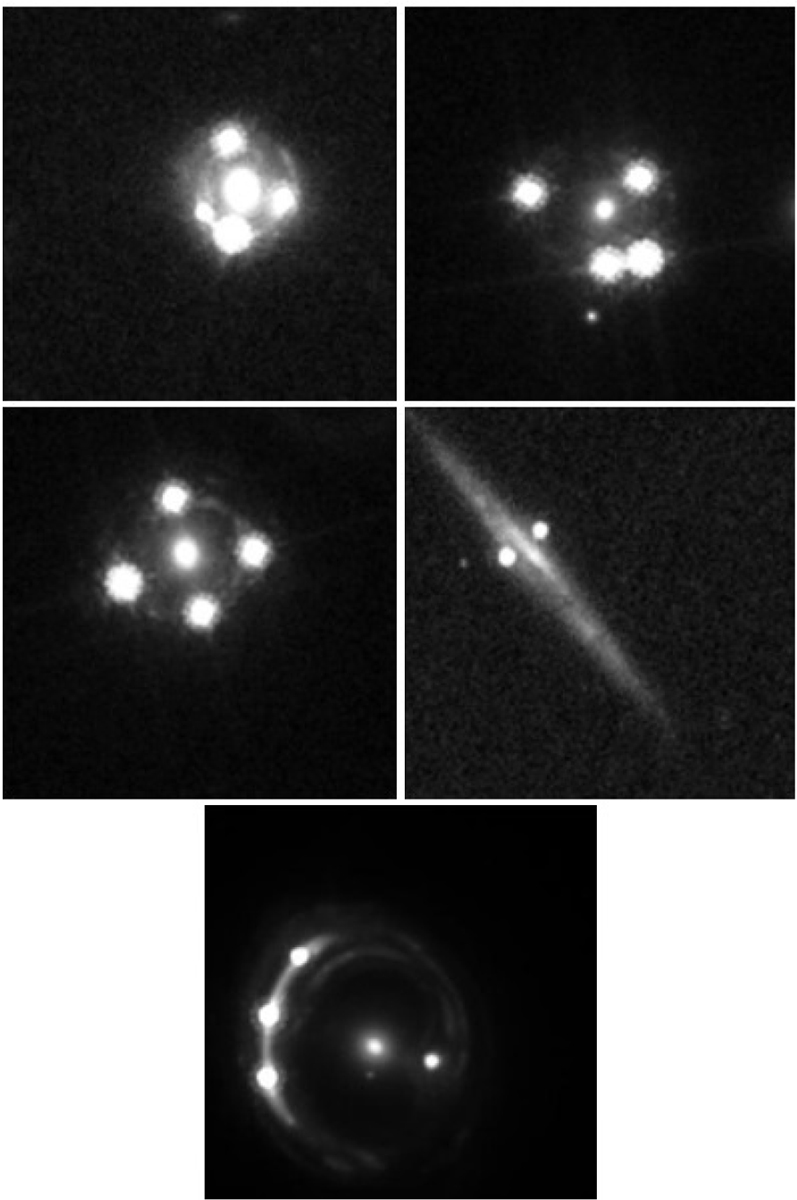
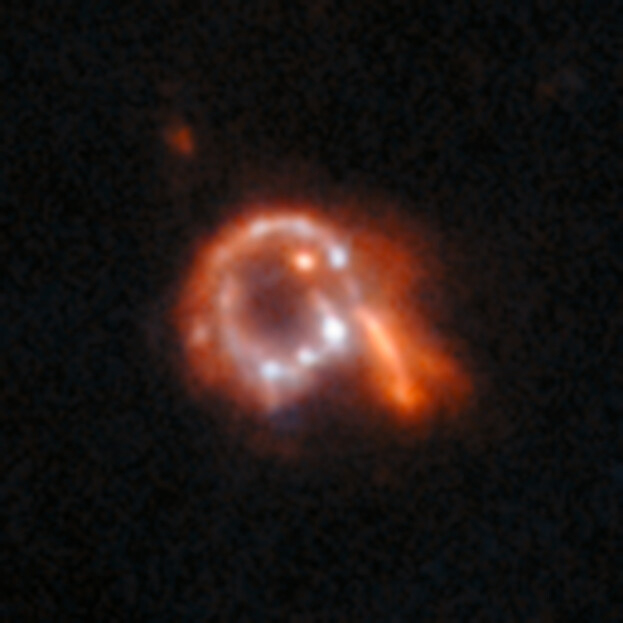
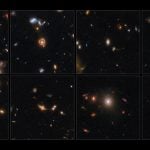
Among the anomalies found by AI, gravitational lenses stand out for both their scientific value and visual intrigue. These occur when a massive galaxy or cluster bends and magnifies the light of a more distant background object. In one such example recently uncovered, a compact, reddish elliptical galaxy bends light from a blue spiral galaxy behind it into a graceful arc. The blue arc curve clearly shows how spacetime itself has bent the light.
Another lens shows a striking arc wrapped around the core of a massive foreground galaxy. The background galaxy’s light is stretched into a shape that almost encircles the lensing galaxy. In each case, the warped appearance is a cosmic fingerprint of gravity at work.
These lensing systems help astronomers do more than make pretty pictures. They provide natural magnification that reveals very distant galaxies otherwise too faint to see. They also allow researchers to map the distribution of dark matter, a mysterious substance that does not emit light but exerts gravitational influence on visible matter.

Merging and interacting galaxies: Collisions in motion
A large number of the new anomalies are galaxies in the act of merging or interacting. When galaxies collide, their shapes distort under mutual gravity. Stars, gas, and dust can form long tidal tails and bridges between the interacting systems.
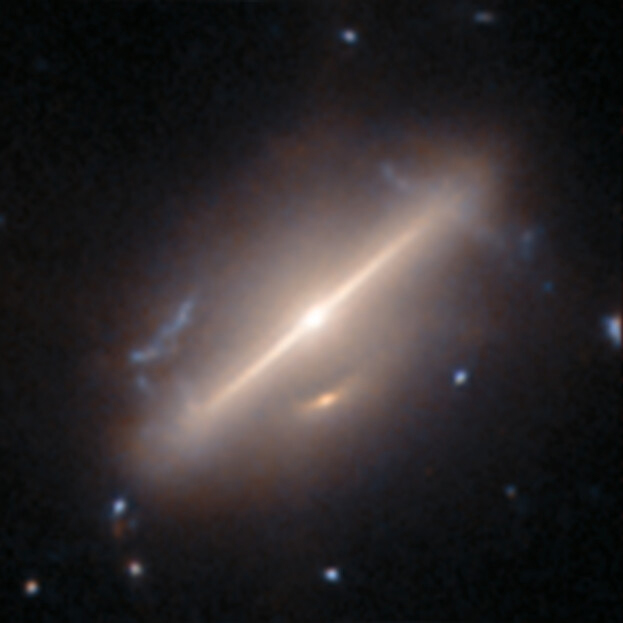
In one striking Hubble image now identified in the anomaly survey, an elliptical galaxy shows a long, thin beam of light crossing its centre. This feature likely traces the path and influence of an interacting partner galaxy. In some cases, subtle arcs or beams hint at smaller companion galaxies tugging at the primary system.
Galaxy mergers are crucial because they are fundamental to cosmic evolution. Over billions of years, galaxies grow and change through such collisions. Merging can trigger bursts of star formation or drive central black hole activity, radically altering a galaxy’s future.
Jellyfish galaxies and unique structures
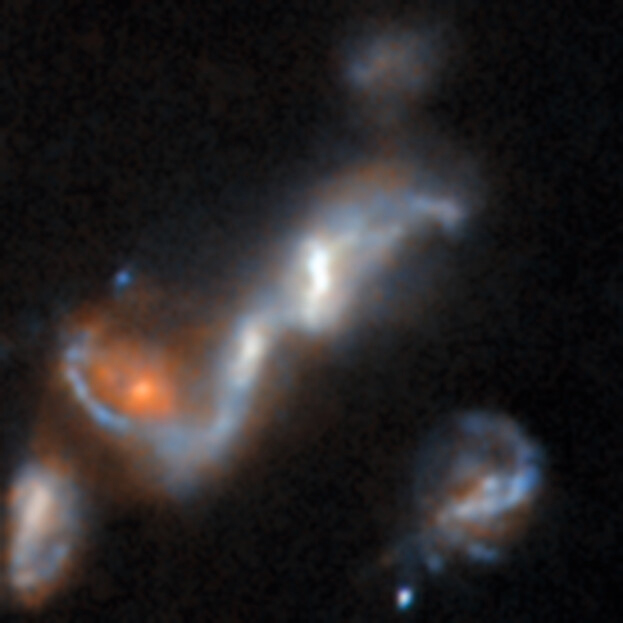
The new findings also include examples of “jellyfish” galaxies: systems with long tendrils of gas and stars trailing behind them like tentacles. These features form when a galaxy moves through a dense environment, such as a galaxy cluster, and its gas gets stripped by pressure. The resulting filaments often contain bright star-forming regions, making them both dramatic and scientifically rich objects for study.
These jellyfish systems are of special interest because they illustrate how the environment shapes galaxies. In clusters, galaxies are not isolated. They constantly interact with other members and with the hot gas that fills the space between galaxies. These interactions strip material and influence how galaxies grow and form stars. Experienced astronomers have even studied similar jellyfish galaxies in targeted observations, gaining insights into ram pressure stripping and the mechanics of extreme galactic environments.
Oddities that defy classification
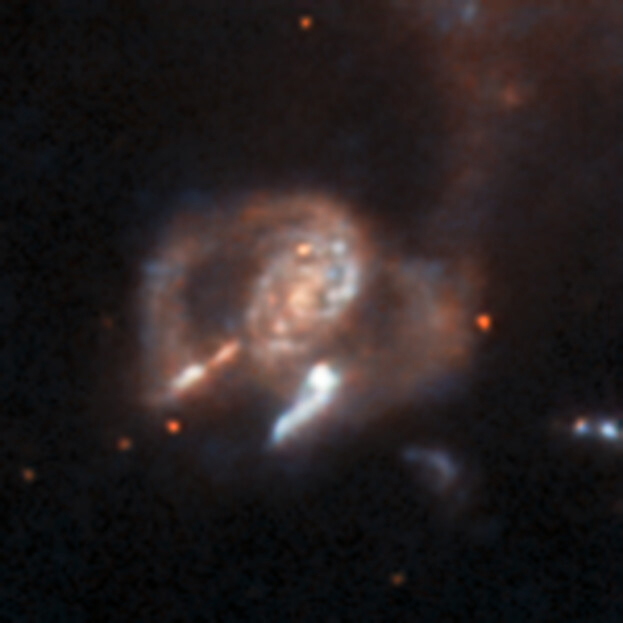
Perhaps the most intriguing objects from the AI survey are those that don’t fit well into any known category. One such example is a bi-polar galaxy, with a compact core flanked by two open lobes of light. Its unusual structure does not match typical spiral or elliptical shapes. Its exact nature remains unclear, inviting follow-up observations.
These unclassified objects exemplify the importance of systematic searches. Human researchers might overlook such features, especially if they are rare or faint. But AI can highlight them, opening new lines of inquiry that could lead to entirely new astrophysical understanding.
While the AI discovery focuses on rare anomalies, it builds on a foundation laid by Hubble’s many iconic images. The Ultra Deep Field revealed galaxies from the early universe, offering a sense of cosmic history on the smallest scales. Other deep fields showed the diversity of galaxies at different epochs. Hubble also provided stunning examples of gravitational lenses long before the AI survey. Clusters like Abell 370 displayed sweeping arcs of distorted light from background galaxies, some of the clearest visual evidence of Einstein’s theory of general relativity and the massive influence of dark matter.
These legacy images served as a training ground for both human and machine learning. By teaching AnomalyMatch what to look for, researchers could apply Hubble’s historical successes to uncover new and unexpected findings hidden in the archive.
From Hubble’s archive to future science
Each newly discovered anomaly adds to our understanding of the universe. Gravitational lenses help map dark matter and see deeper into space. Merging galaxies show how structures grow and transform. Jellyfish galaxies reveal how the environment affects cosmic evolution. Unclassified objects hint at phenomena still not fully understood.
Importantly, these discoveries come from data already collected. They demonstrate that archives like Hubble’s still have untapped scientific potential. The combination of AI and human insight is now making it possible to explore these massive datasets in ways that were once unimaginable.
The identification of nearly 1,400 anomalies in Hubble’s archive is a milestone that reflects telescopes’ past, present, and future. It shows that even after decades of observations, Hubble’s data can still surprise. With the help of advanced tools like AnomalyMatch, scientists can reveal hidden patterns and rare phenomena that would otherwise go unnoticed. The lessons from this project will influence how researchers analyse data from new observatories. As the volume of astronomical data continues to grow, the synergy between artificial intelligence and human expertise will remain essential.
Clear skies!
See more from DIYPhotography.net on Google
Add DIYPhotography.net as a trusted source. This makes
our stories more likely to appear in your Google Search results.
 Add as a preferred source on Google

Soumyadeep Mukherjee
Soumyadeep Mukherjee is an award-winning astrophotographer from India. He has a doctorate degree in Linguistics. His work extends to the sub-genres of nightscape, deep sky, solar, lunar and optical phenomenon photography. He is also a photography educator and has conducted numerous workshops. His works have appeared in over 40 books & magazines including Astronomy, BBC Sky at Night, Sky & Telescope among others, and in various websites including National Geographic, NASA, Forbes. He was the first Indian to win “Astronomy Photographer of the Year” award in a major category.

Join the Discussion
DIYP Comment Policy
Be nice, be on-topic, no personal information or flames.