





















Unistellar Odyssey: Exploring the Cosmos Made Simple
Jun 3, 2025
Soumyadeep Mukherjee
Soumyadeep Mukherjee is an award-winning astrophotographer from India. He has a doctorate degree in Linguistics. His work extends to the sub-genres of nightscape, deep sky, solar, lunar and optical phenomenon photography. He is also a photography educator and has conducted numerous workshops. His works have appeared in over 40 books & magazines including Astronomy, BBC Sky at Night, Sky & Telescope among others, and in various websites including National Geographic, NASA, Forbes. He was the first Indian to win “Astronomy Photographer of the Year” award in a major category.
Share:

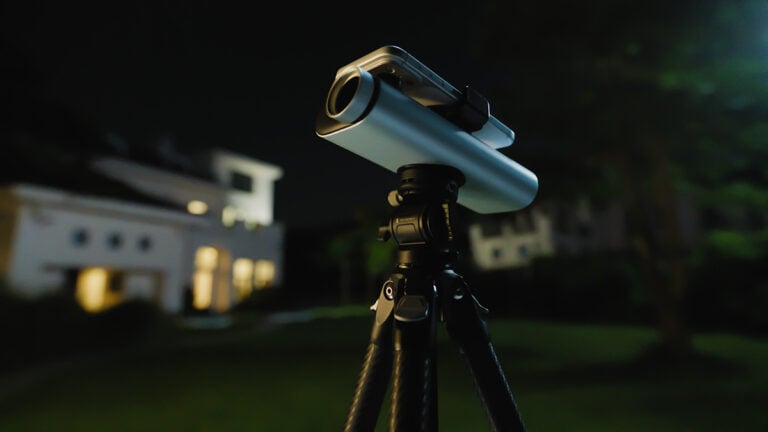
The Unistellar Odyssey is a smart telescope that brings the universe closer to you. Designed for both beginners and seasoned stargazers, it provides an automated and user-friendly experience. With its compact design and advanced technology, the Odyssey makes exploring the night sky accessible and enjoyable.
Design and portability
Weighing just 4 kg, the Odyssey is lightweight and portable. Its sleek design allows for easy transport, making it ideal for on-the-go observations. Whether you’re in your backyard or at a remote location, setting up the Odyssey is straightforward. The telescope’s modern aesthetic complements its advanced features, offering both form and function.

Optical and imaging capabilities
The Odyssey features an 85mm aperture and a focal length of 320mm, providing a wide field of view. Its fast f/3.9 focal ratio allows for bright and detailed images of celestial objects. Equipped with a 3.4-megapixel Sony CMOS sensor, the telescope captures high-resolution images in real-time. The Stellar Autofocus system ensures sharp focus throughout your observation session.

Smart features and automation
The Odyssey’s Smart Star Finder technology autonomously targets and tracks celestial objects. With a database of over 5,000 objects, including planets, galaxies, and nebulae, the telescope offers a vast array of targets. The Unistellar App, available on iOS and Android, serves as your control center, providing real-time guidance and information.

Observational experience
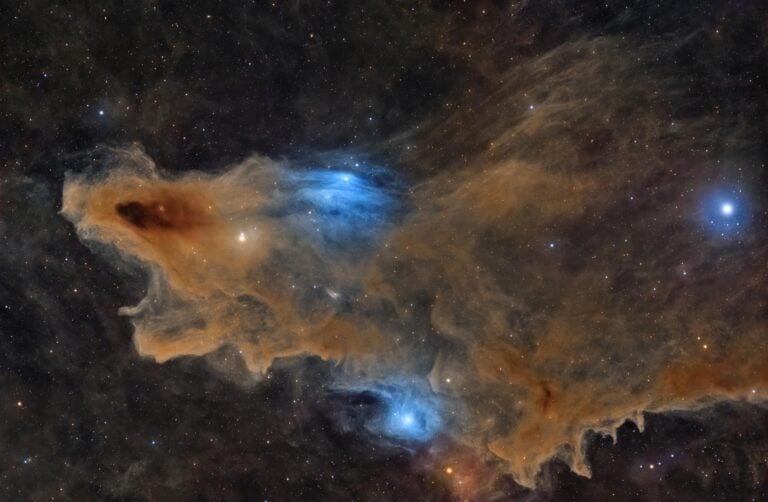
The Odyssey allows you to observe a variety of celestial objects with ease. From the craters of the Moon to the rings of Saturn, the telescope delivers detailed views. Its wide field of view is particularly suited for deep-sky objects like the Orion Nebula and the Andromeda Galaxy. The automated features ensure a seamless experience, letting you focus on the wonders of the universe.

Battery life and storage
The Odyssey is powered by a rechargeable battery that provides up to 5 hours of continuous use. It features 64 GB of internal storage, enabling you to store images and data directly on the device. The telescope’s Wi-Fi connectivity enables easy transfer of files to your smartphone or tablet.
Key specifications
Here is a quick glance at the specifications of the smart telescope:
| Optical System | Imaging Sensor |
| Type: Newtonian reflector | Sensor Type: Sony CMOS |
| Aperture: 85 mm | Sensor Size: 6.3 mm diagonal (similar to a 1/2.9″ sensor) |
| Focal Length: 320 mm | Resolution: 3.4 megapixels |
| Focal Ratio: f/3.9 | Bit Depth: 16-bit dynamic range |
| Field of View: 33.6 x 45 arcmin | Color Sensor: Yes (captures full-color images) |
| Mount and Control | Storage, Connectivity and Power |
| Mount Type: Alt-azimuth, fully motorized | Internal Storage: 64 GB |
| Control: Wi-Fi connection to iOS or Android via the Unistellar app | Wireless Connectivity: Wi-Fi only (no cables required) |
| Autofocus: Yes, automatic focusing system | Battery Life: 5 hours (typical use) |
| Auto-object tracking: Yes, thanks to GPS and internal star databases | Charging: USB-C port (power bank compatible) |

Who is it for?
The Unistellar Odyssey is ideal for:
- Beginners who want a frictionless start to astronomy
- Urban dwellers requiring light pollution reduction
- Photographers who prefer automated astrophotography
- Stargazers seeking portability and ease-of-use
The Unistellar Odyssey is a modern telescope for a modern world. It brings deep-sky imaging to anyone, anywhere, without technical knowledge or dark skies. It’s not built for hardcore astronomy or high-detail planetary work. But for most users, it opens the universe in just a few taps.

Price and availability
The Unistellar Odyssey is priced at $2,499 (currently available for $2,124 with discounts) and is available for purchase through Unistellar’s official website and authorized retailers. It comes with a 2-year warranty and a 30-day return policy. The package includes the telescope, tripod, accessory kit, and charging cable.

The Unistellar Odyssey smart telescope offers a blend of advanced technology and user-friendly design. Its automated features, high-quality imaging, and portability make it an excellent choice for anyone interested in exploring the night sky. Whether you’re a beginner or an experienced astronomer, the Odyssey provides a gateway to the cosmos, making stargazing more accessible than ever before.
Clear skies!
See more from DIYPhotography.net on Google
Add DIYPhotography.net as a trusted source. This makes
our stories more likely to appear in your Google Search results.
 Add as a preferred source on Google

Soumyadeep Mukherjee
Soumyadeep Mukherjee is an award-winning astrophotographer from India. He has a doctorate degree in Linguistics. His work extends to the sub-genres of nightscape, deep sky, solar, lunar and optical phenomenon photography. He is also a photography educator and has conducted numerous workshops. His works have appeared in over 40 books & magazines including Astronomy, BBC Sky at Night, Sky & Telescope among others, and in various websites including National Geographic, NASA, Forbes. He was the first Indian to win “Astronomy Photographer of the Year” award in a major category.


Join the Discussion
DIYP Comment Policy
Be nice, be on-topic, no personal information or flames.