





















Unlock the Night Sky with Celestron’s StarSense AutoAlign
Jul 20, 2025
Soumyadeep Mukherjee
Soumyadeep Mukherjee is an award-winning astrophotographer from India. He has a doctorate degree in Linguistics. His work extends to the sub-genres of nightscape, deep sky, solar, lunar and optical phenomenon photography. He is also a photography educator and has conducted numerous workshops. His works have appeared in over 40 books & magazines including Astronomy, BBC Sky at Night, Sky & Telescope among others, and in various websites including National Geographic, NASA, Forbes. He was the first Indian to win “Astronomy Photographer of the Year” award in a major category.
Share:
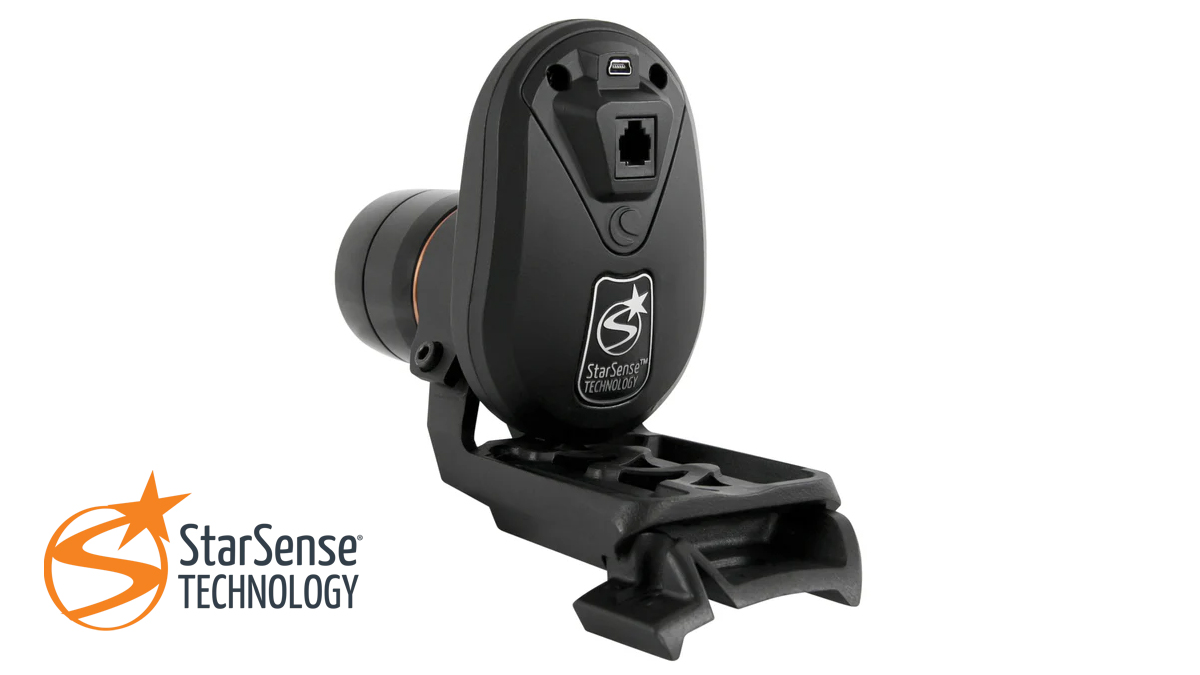
Celestron’s StarSense AutoAlign has changed how amateur astronomers set up their telescopes. It has made the once tedious process of alignment fast, accurate, and automatic. No more struggling with finding and centering stars manually. StarSense handles that with the push of a button.
What is StarSense AutoAlign?
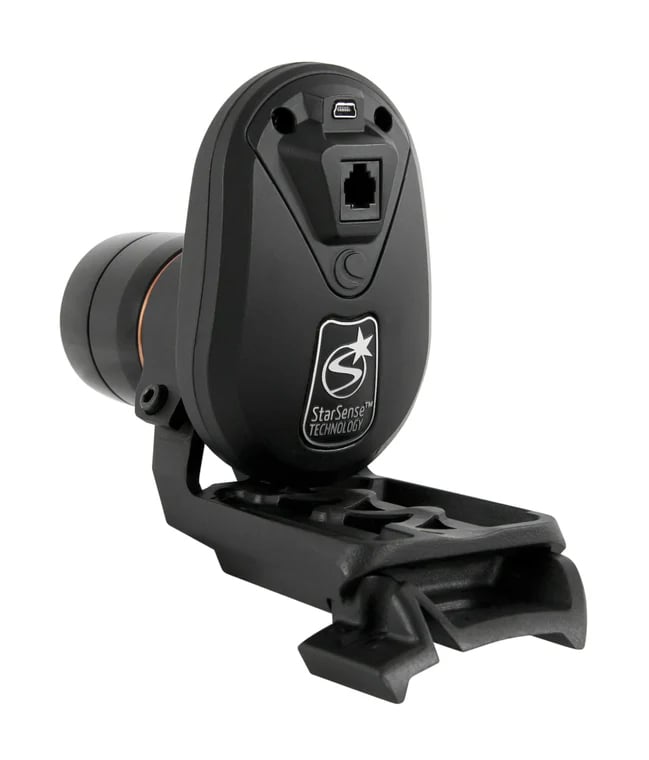
StarSense AutoAlign is an automatic alignment accessory from Celestron. It is designed for Celestron computerized telescope mounts. The system uses a small onboard digital camera and custom firmware. It captures images of the night sky and identifies star patterns. The device then calculates the telescope’s position and orientation. It automatically aligns the scope with the night sky in about 3 minutes. It replaces the traditional manual alignment routine.
How does it work?
The process is simple and fully automated:.
- Power on the telescope
- Enter the time, date, and location.
- Select “Auto Align” on the hand controller.
- The camera takes several images of the sky.
- It identifies stars in each image.
- It triangulates the telescope’s orientation.
- The mount becomes fully aligned for GoTo operation.
It uses star pattern recognition, not GPS. So even partial skies with obstructions like trees or buildings work well. The process does not require user interaction once started.

Accuracy and performance
StarSense AutoAlign achieves alignment accuracy comparable to a four-star manual alignment. It builds a wide-field model of the sky using 3–5 images. This allows highly accurate GoTo performance across the sky. You can further improve pointing accuracy with “calibration stars.” This matches the camera’s view to your eyepiece or camera center. You only need to do this once per telescope. Note that it works with compatible Celestron mounts and systems. You can find the compatibility list here.
Benefits for visual observers and astrophotographers
StarSense is ideal for beginners and seasoned people alike. Key benefits include:
- No star knowledge needed: You don’t need to identify stars or constellations.
- Fast setup: Aligns in 3 minutes or less.
- Stress-free experience: Spend more time observing, less time aligning.
- Dark sky use: Works even when constellations aren’t easy to spot.
- Works in urban areas: Needs only a few visible stars to function.
This makes it perfect for public outreach, star parties, and casual stargazing. StarSense is great for visual astronomy, but astrophotographers may want to consider a few things:
- It aligns the mount for GoTo use, not polar alignment.
- You still need to polar align separately if imaging deep sky objects.
- Plate-solving software offers more precise alignment for imaging rigs.

What’s in the box
StarSense AutoAlign ships with:
- A StarSense camera
- A dedicated StarSense hand controller
- Mounting brackets
- Cables for connection
The camera looks like a compact finderscope. It attaches where the finderscope usually goes. The hand controller includes a graphical LCD and special firmware.

Price and availability
StarSense AutoAlign retails for $439.99. It is available for purchase via various retailers, including B&H and Amazon.
Celestron’s StarSense AutoAlign simplifies alignment, speeds up setup, and boosts GoTo accuracy. For visual observers, it saves time and effort. For beginners, it removes the stress of learning sky alignment. If you own a compatible Celestron mount and want faster, smarter telescope control, StarSense is a must-have. It brings automation to your stargazing and lets you spend more time under the stars.
Clear skies!
See more from DIYPhotography.net on Google
Add DIYPhotography.net as a trusted source. This makes
our stories more likely to appear in your Google Search results.
 Add as a preferred source on Google

Soumyadeep Mukherjee
Soumyadeep Mukherjee is an award-winning astrophotographer from India. He has a doctorate degree in Linguistics. His work extends to the sub-genres of nightscape, deep sky, solar, lunar and optical phenomenon photography. He is also a photography educator and has conducted numerous workshops. His works have appeared in over 40 books & magazines including Astronomy, BBC Sky at Night, Sky & Telescope among others, and in various websites including National Geographic, NASA, Forbes. He was the first Indian to win “Astronomy Photographer of the Year” award in a major category.


Join the Discussion
DIYP Comment Policy
Be nice, be on-topic, no personal information or flames.