


















Unlocking the Night Sky with the Optolong L-QEF
Jun 19, 2025
Soumyadeep Mukherjee
Soumyadeep Mukherjee is an award-winning astrophotographer from India. He has a doctorate degree in Linguistics. His work extends to the sub-genres of nightscape, deep sky, solar, lunar and optical phenomenon photography. He is also a photography educator and has conducted numerous workshops. His works have appeared in over 40 books & magazines including Astronomy, BBC Sky at Night, Sky & Telescope among others, and in various websites including National Geographic, NASA, Forbes. He was the first Indian to win “Astronomy Photographer of the Year” award in a major category.
Share:
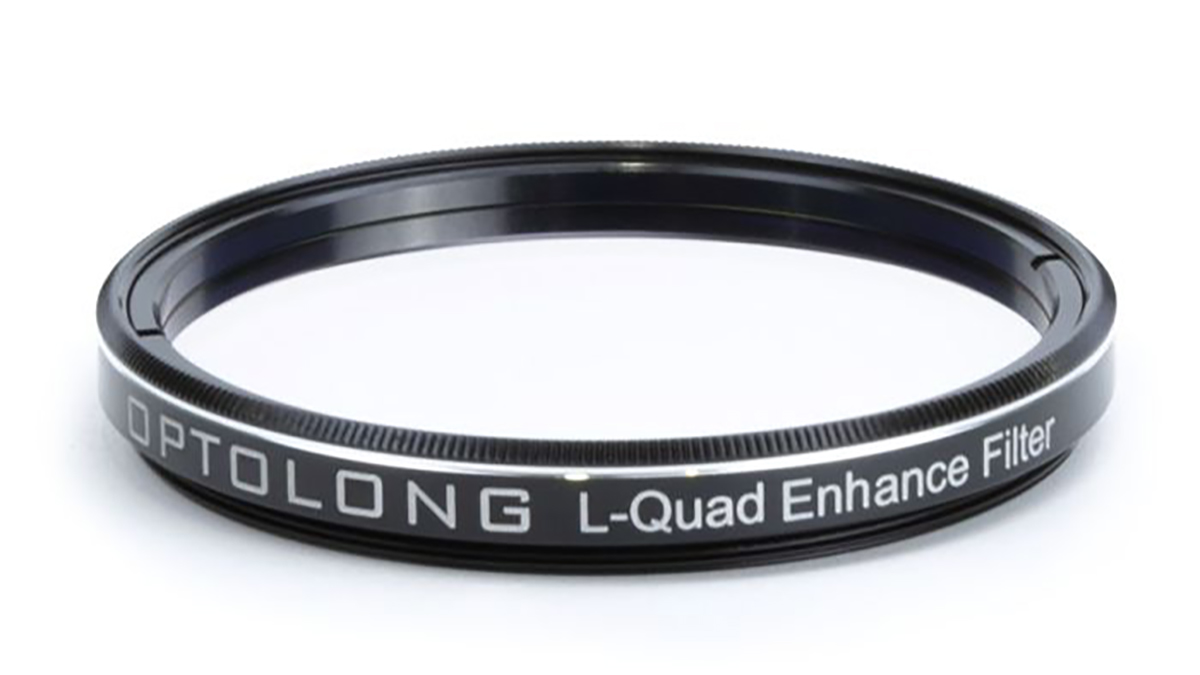
Astrophotography faces a constant enemy, light pollution. City lights wash out the night sky. Nebulae fade. Galaxies become faint ghosts. But filters help fight back. The Optolong L-QEF is a tool for this battle. It promises better contrast, more detail, and cleaner images.
What is the Optolong L-QEF Filter?
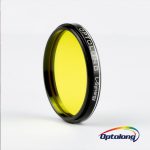
The Optolong L-QEF stands for L-Quad Enhance Filter. It’s a quad-bandpass broadband light pollution filter. It’s designed specifically for one-shot color (OSC) cameras. That includes DSLR (modified), mirrorless (modified), and dedicated astronomy cameras. It blocks light pollution. At the same time, it lets important nebular emission lines pass. This allows you to capture deep-sky objects with better clarity and more contrast.
What makes it “Quad-Band”?
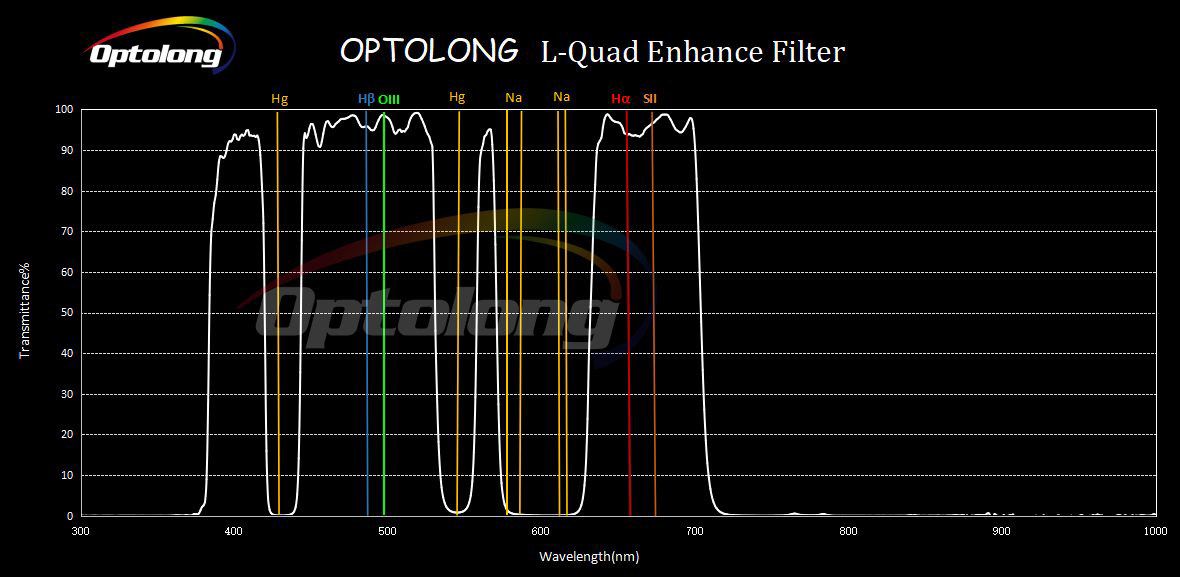
The “quad” refers to four key wavelengths that the filter allows:
- H-beta (486nm)
- OIII (501nm)
- H-alpha (656nm)
- SII (672nm)
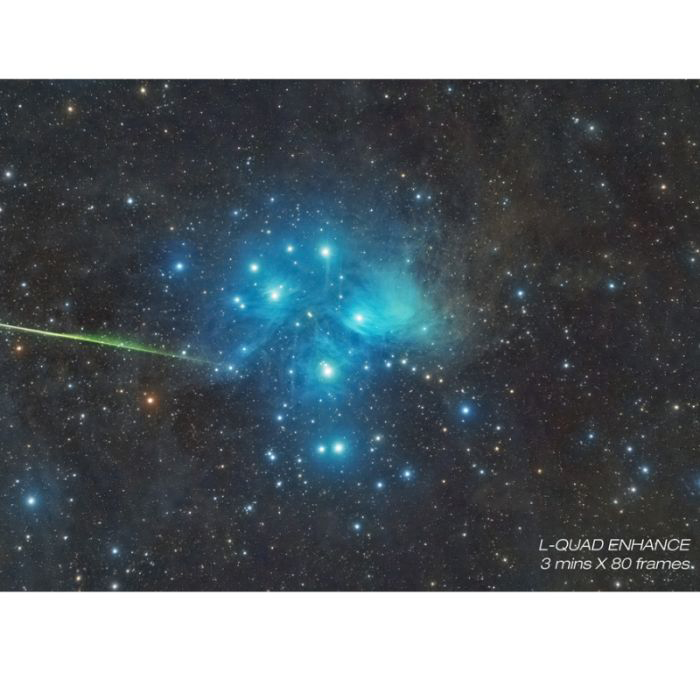
These are the emission lines produced by nebulae and other deep-sky objects. By letting them through, the filter preserves real celestial light. At the same time, it blocks unwanted artificial light. The transmission rate is greater than 90% at these four peaks. That means most of the desired light reaches your sensor.
How does it block light pollution?
The L-QEF targets the most common pollution sources:
- Mercury vapor street lights
- High- and low-pressure sodium lamps
- Other broadband city lighting
It also suppresses infrared light up to 1000nm. That reduces the chance of fuzzy star halos. Many OSC cameras are sensitive to IR, so this is a key feature. The off-band blocking depth ranges from OD2 to OD4. OD stands for optical density. OD4 blocks 99.99% of unwanted light. This helps raise your signal-to-noise ratio in heavily polluted areas.

Physical and optical specs
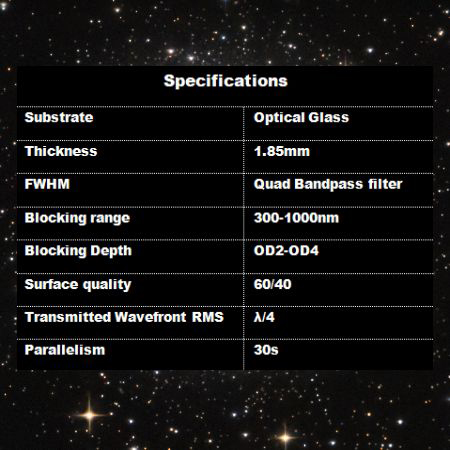
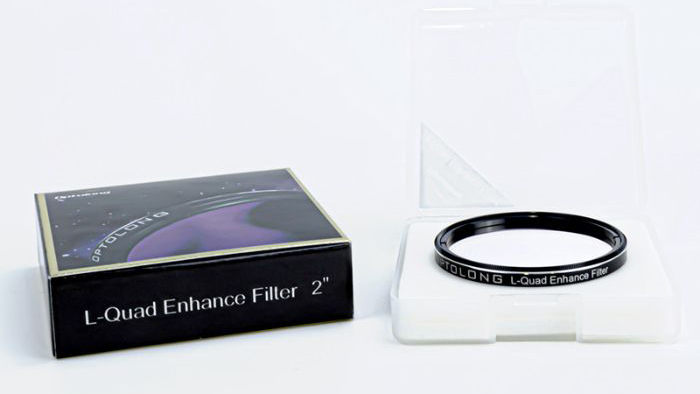
The L-QEF filter is only available in a 2-inch mounted size (M48 x 0.75 thread). This size fits most filter wheels, sliders, and holders for astro-cameras and DSLR setups.
It has:
- A 1.85 mm-thick optical substrate
- λ/4 wavefront error for high optical clarity
- Surface quality of 60/40 (MIL standard)
- Parallelism under 30 arcseconds
- Ion-assisted multilayer coatings
The coatings make the filter resistant to scratches, humidity, and temperature swings. That’s critical for outdoor use, especially in harsh conditions.
Who should buy it?
The L-QEF is perfect for:
- Astrophotographers under moderate to heavy light pollution
- Users with OSC cameras who want an easy setup
- Beginners who want a “set it and shoot” solution
- Advanced imagers looking to enhance nebulae
Price and availability
The Optolong L-QEF is available for around $219 via multiple retailers across the globe.
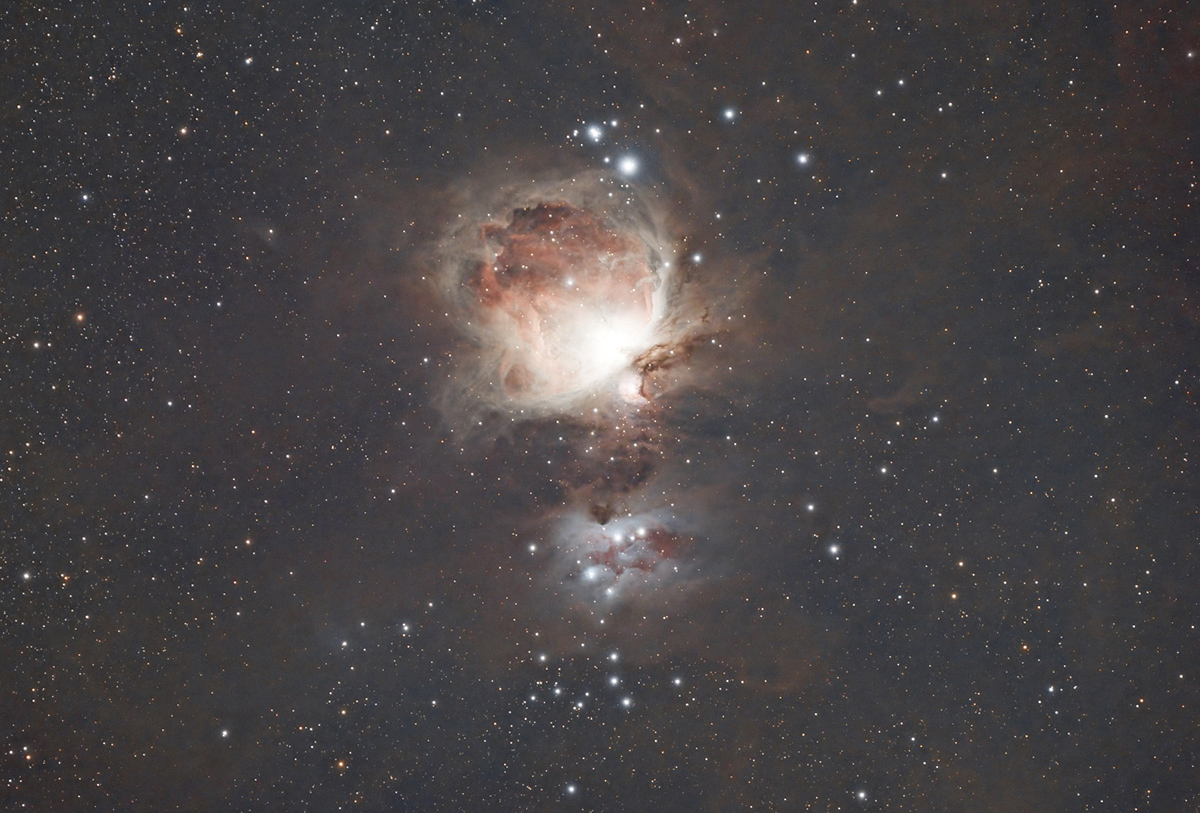
The Optolong L-QEF is a powerful addition to your astrophotography toolkit. It blocks the worst of light pollution, preserves rich nebular detail. It balances cost, performance, and ease of use. Whether you’re shooting wide-field stars or detailed nebulae, the L-QEF delivers. It lets you capture the night sky, even when city lights try to steal the show. If you’re ready to see more stars, more color, and more detail, the L-QEF is worth every penny.
Clear skies!
See more from DIYPhotography.net on Google
Add DIYPhotography.net as a trusted source. This makes
our stories more likely to appear in your Google Search results.
 Add as a preferred source on Google

Soumyadeep Mukherjee
Soumyadeep Mukherjee is an award-winning astrophotographer from India. He has a doctorate degree in Linguistics. His work extends to the sub-genres of nightscape, deep sky, solar, lunar and optical phenomenon photography. He is also a photography educator and has conducted numerous workshops. His works have appeared in over 40 books & magazines including Astronomy, BBC Sky at Night, Sky & Telescope among others, and in various websites including National Geographic, NASA, Forbes. He was the first Indian to win “Astronomy Photographer of the Year” award in a major category.


Join the Discussion
DIYP Comment Policy
Be nice, be on-topic, no personal information or flames.