





















Hubble Photographs Cloud-9: A New Type of Astronomical Object
Jan 5, 2026
Soumyadeep Mukherjee
Soumyadeep Mukherjee is an award-winning astrophotographer from India. He has a doctorate degree in Linguistics. His work extends to the sub-genres of nightscape, deep sky, solar, lunar and optical phenomenon photography. He is also a photography educator and has conducted numerous workshops. His works have appeared in over 40 books & magazines including Astronomy, BBC Sky at Night, Sky & Telescope among others, and in various websites including National Geographic, NASA, Forbes. He was the first Indian to win “Astronomy Photographer of the Year” award in a major category.
Share:
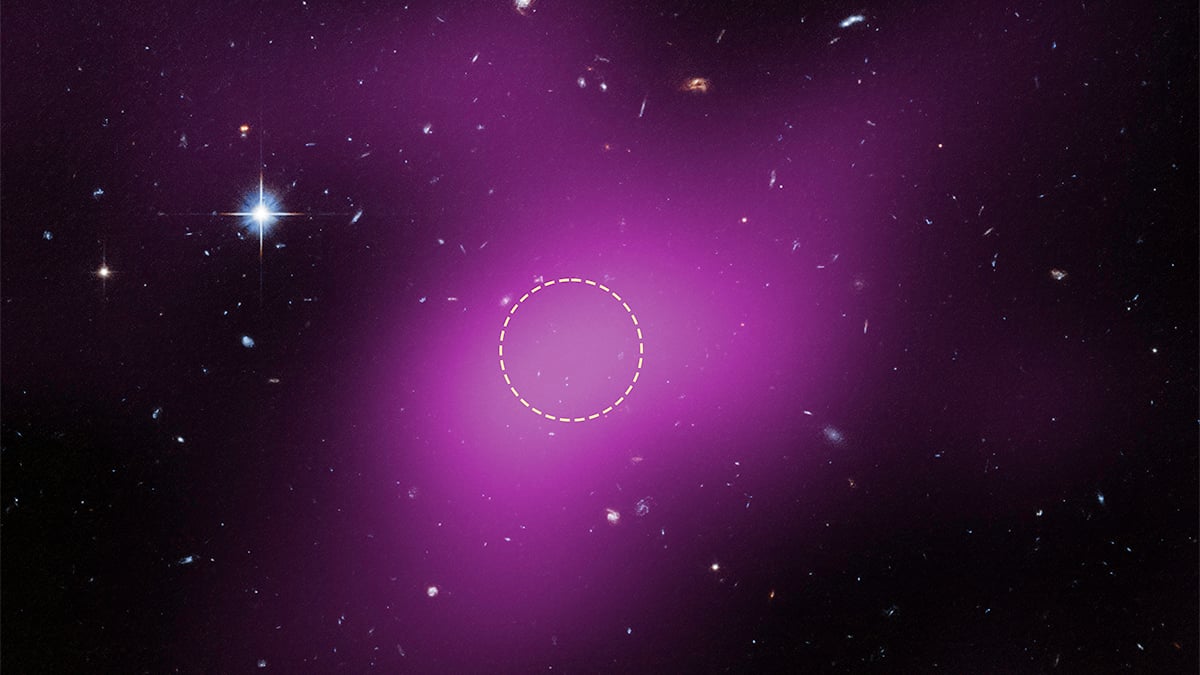
Modern cosmology predicts that dark matter assembled the universe long before the first stars ignited. Numerical simulations show countless small dark matter halos forming shortly after the Big Bang. Some of these halos captured cold gas and became galaxies. Others failed. Their gas never cooled. Their stars never formed. Until now, those failures remained theoretical. The NASA/ESA Hubble Space Telescope has provided the first direct confirmation.
In a series of deep observations released in early 2026, Hubble confirmed that an object known as Cloud-9 contains gas but no stars. The data show a compact neutral hydrogen cloud embedded in a massive dark matter halo. Optical imaging reveals nothing inside it except darkness. This makes Cloud-9 the strongest observational evidence yet for a long-predicted class of objects known as Reionization-Limited H I Clouds. With this result, Hubble has revealed a new category of cosmic structure. It has also delivered a rare opportunity to study dark matter in near isolation.
From theory to detection
The idea behind starless dark matter halos is not new. Cosmological simulations based on the Lambda Cold Dark Matter model have predicted them for decades. In these models, dark matter collapses first and forms gravitational wells. Gas follows. However, after the epoch of reionization, intense ultraviolet radiation heats intergalactic gas. Small halos struggle to retain it. Without cold gas, stars never form. These objects became known as RELHICs. They should exist in large numbers. Yet astronomers could not find them.
The difficulty was observational. Without stars, such objects emit almost no visible light. Dark matter itself remains invisible. Only neutral hydrogen offers a detectable signal, and even that signal is faint. For years, radio surveys detected isolated hydrogen clouds. Most later turned out to be tidal debris or faint dwarf galaxies. None could be proven starless.
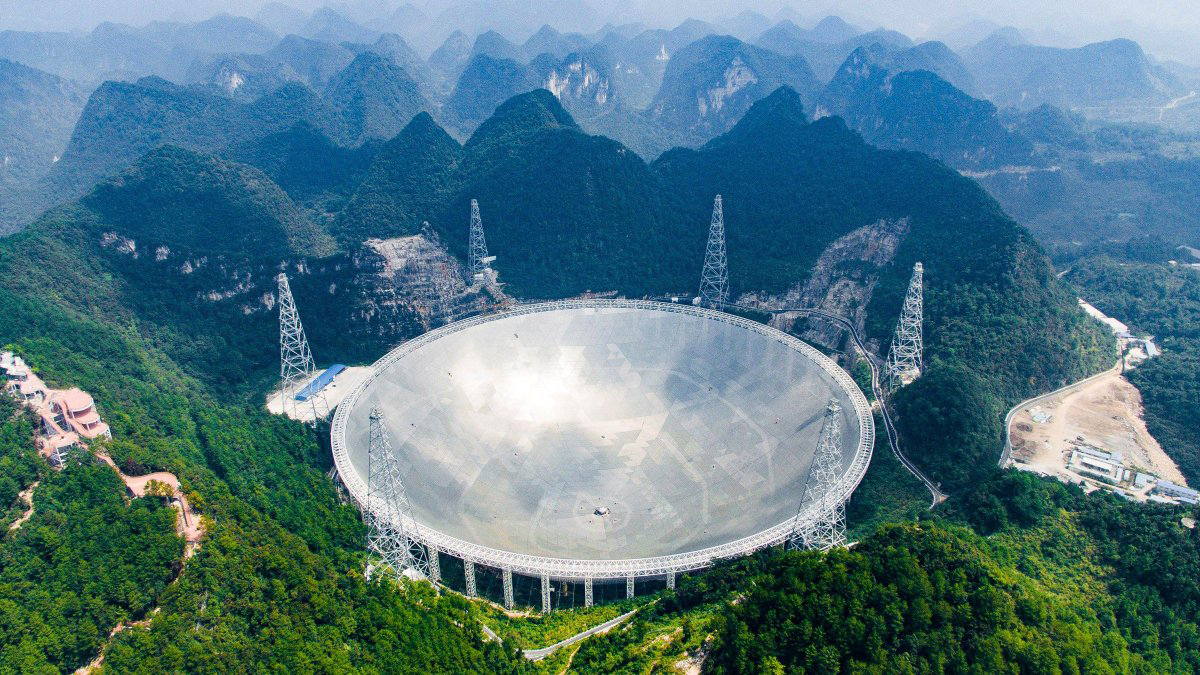
The first clues came from the Five-hundred-meter Aperture Spherical Telescope (FAST) in China. FAST conducted deep surveys of neutral hydrogen near the nearby spiral galaxy Messier 94. Among the detections was a compact cloud with a clean velocity signature. The cloud appeared isolated. It showed no obvious optical counterpart. Its motion did not match known galactic debris. This raised immediate interest.
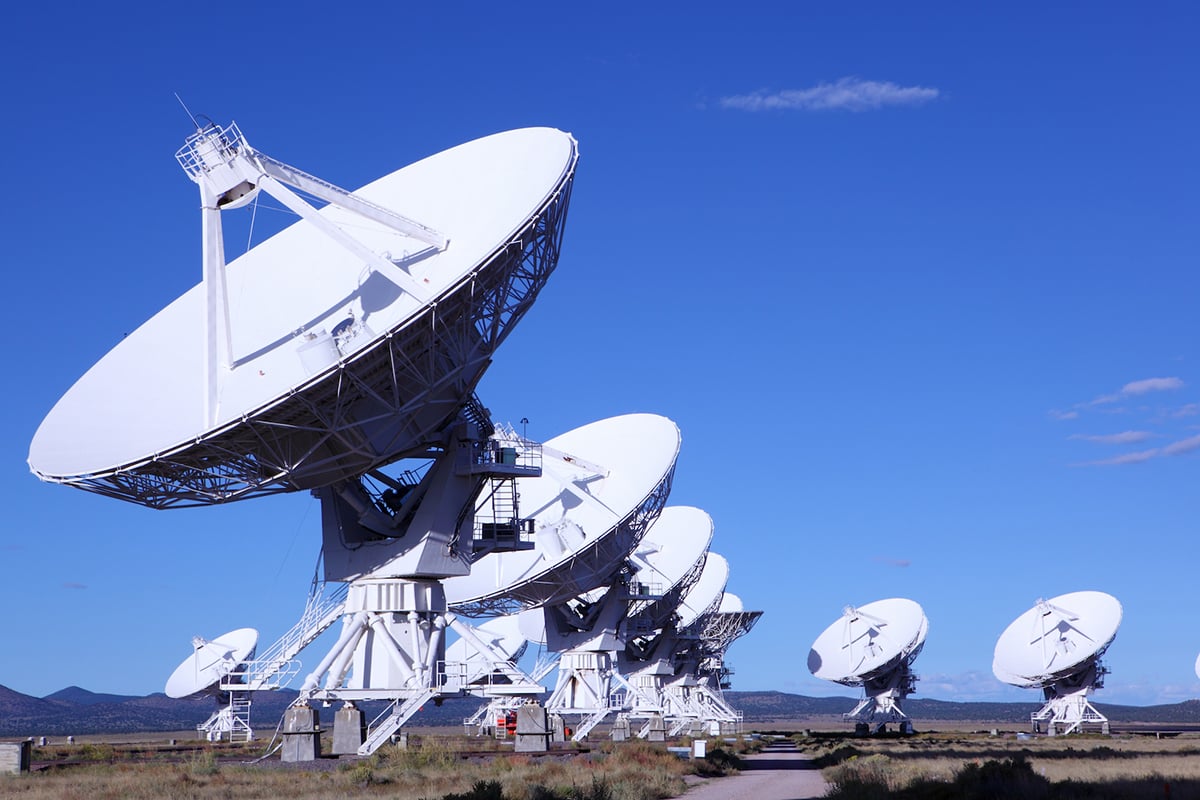
Astronomers followed up using the Green Bank Telescope and the Karl G. Jansky Very Large Array. These observations confirmed the hydrogen signal and refined its properties. The gas mass measured roughly one million times the mass of the Sun. The cloud’s velocity structure suggested it was gravitationally bound. A faint dwarf galaxy could hide a small stellar population below the detection limit of ground-based telescopes. To settle the issue, astronomers needed space-based imaging, and they turned to Hubble.
Hubble sees a structure held together by dark matter
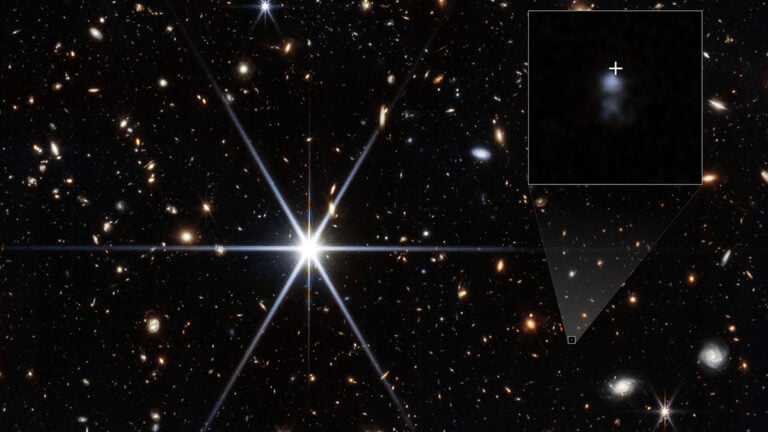
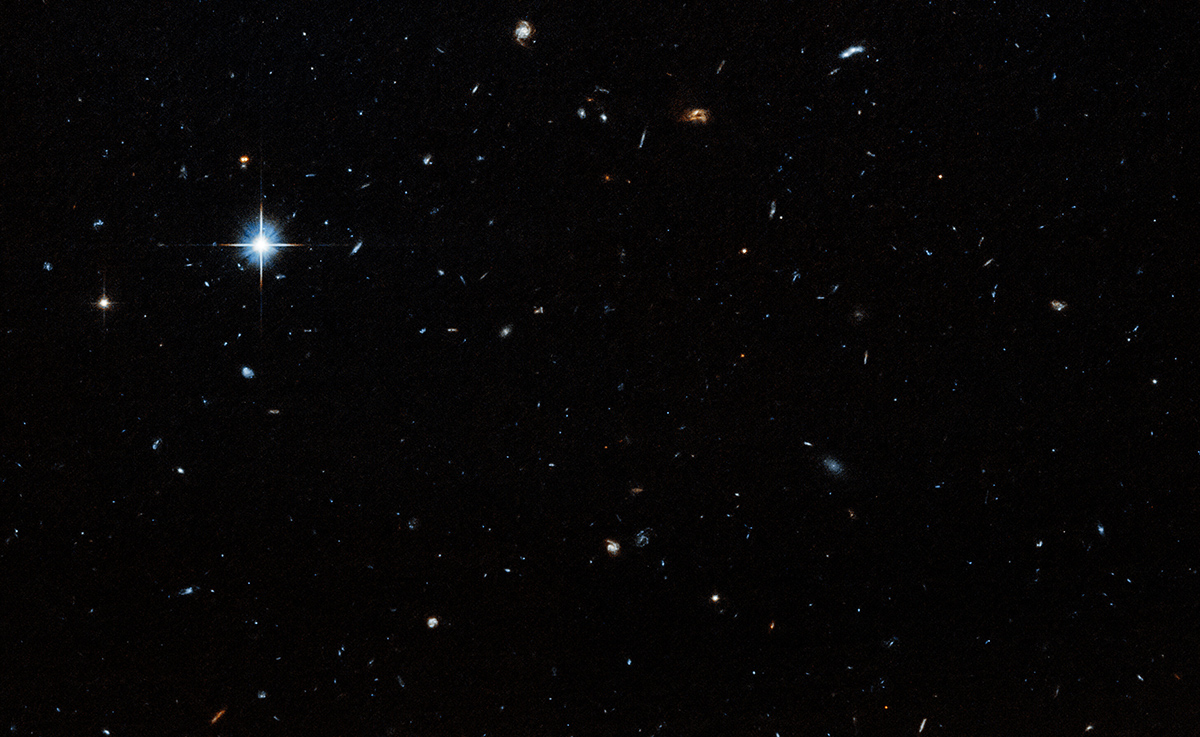
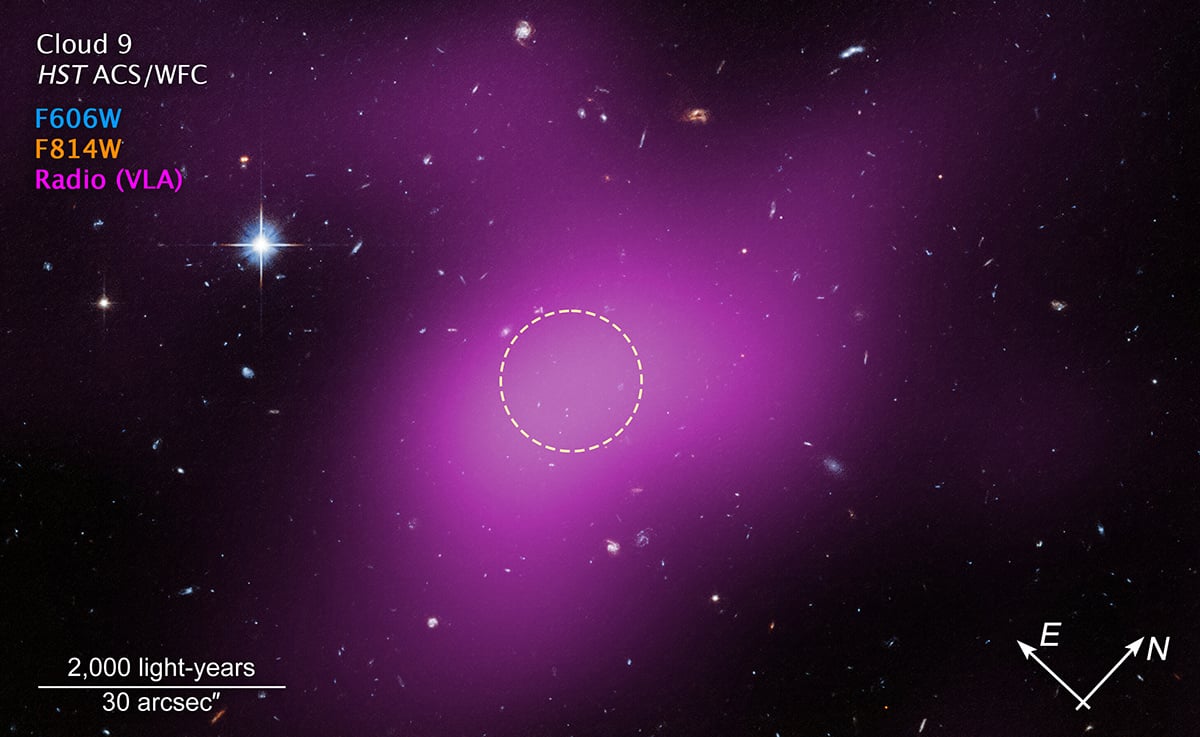
Hubble’s Advanced Camera for Surveys observed the precise location of Cloud-9 with extreme sensitivity. The goal was simple: detect even the faintest stars if they existed. The images showed distant background galaxies and unrelated foreground stars. Inside the cloud’s projected area, there was no stellar population. The data ruled out even ultra-faint dwarf galaxies.
For the first time, astronomers confirmed a gravitationally bound object containing gas but no stars. The result matched RELHIC predictions with remarkable accuracy. ESA released two complementary images. One shows Cloud-9’s location in the wider sky. The other shows the empty stellar field.
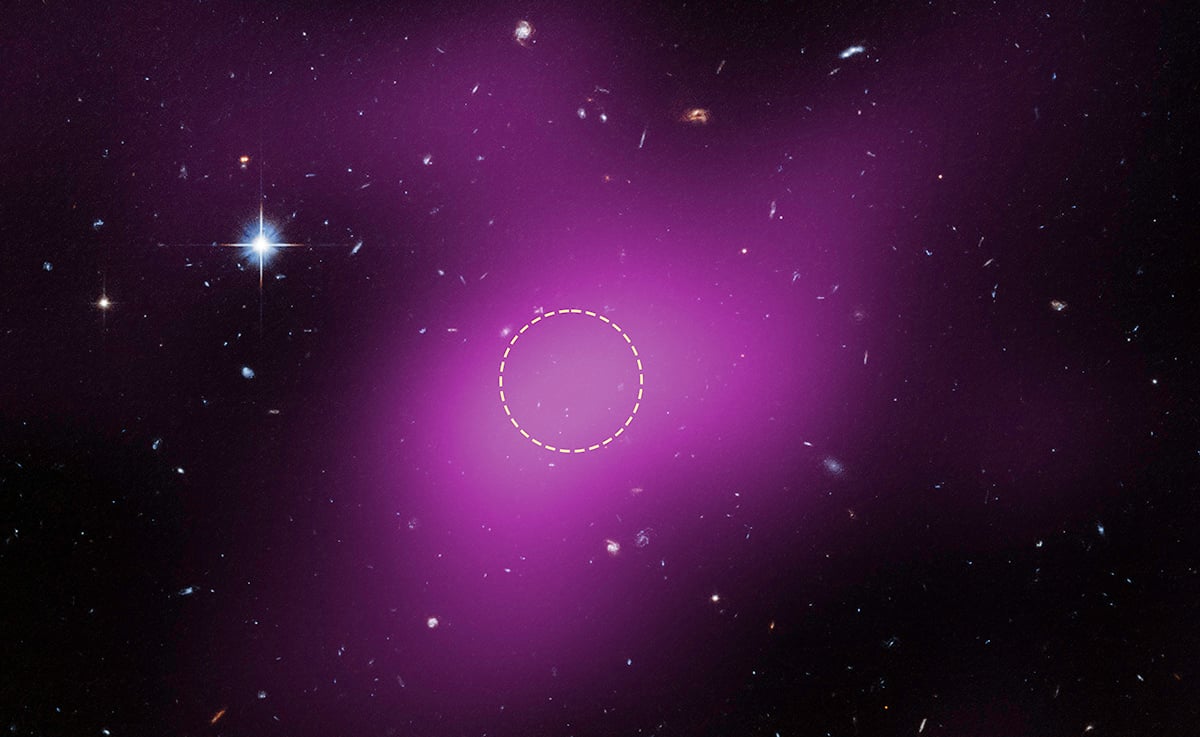
The cloud’s dense core spans about 4,900 light-years. It remains compact and roughly spherical. These features differ from typical hydrogen clouds formed through galactic interactions. Cloud-9 also shows no tidal connection to Messier 94. It does not resemble stripped material. Instead, it appears dynamically stable. These characteristics strengthen its classification as a genuine dark matter relic rather than a transient structure.
Galaxy formation and a tool for studying dark matter
Cloud-9 provides evidence that galaxy formation is not inevitable. Dark matter halos can exist without stars for billions of years. This finding supports models in which reionization suppressed star formation in low-mass systems. It also helps explain the long-standing missing satellites problem. Simulations predict more small dark matter halos than observed dwarf galaxies. Cloud-9 suggests many of those halos may simply be dark.
The discovery also constrains feedback models. It shows that some halos retained gas without forming stars. This limits the efficiency of heating and stripping processes in the early universe. In short, Cloud-9 fills a missing link between theory and observation.
Most dark matter studies rely on stellar motions. Those measurements always involve complex baryonic physics. Stars evolve. They explode. They inject energy into their surroundings. Cloud-9 avoids all of that. Here, gas traces gravity directly. There are no stars to complicate the picture. This makes Cloud-9 an unusually clean system for testing dark matter behavior on small scales.
Future studies may use it to refine dark matter density profiles. They may also test alternative dark matter models. Cloud-9 is likely not unique. It is simply the first confirmed example.
Clear skies!
See more from DIYPhotography.net on Google
Add DIYPhotography.net as a trusted source. This makes
our stories more likely to appear in your Google Search results.
 Add as a preferred source on Google

Soumyadeep Mukherjee
Soumyadeep Mukherjee is an award-winning astrophotographer from India. He has a doctorate degree in Linguistics. His work extends to the sub-genres of nightscape, deep sky, solar, lunar and optical phenomenon photography. He is also a photography educator and has conducted numerous workshops. His works have appeared in over 40 books & magazines including Astronomy, BBC Sky at Night, Sky & Telescope among others, and in various websites including National Geographic, NASA, Forbes. He was the first Indian to win “Astronomy Photographer of the Year” award in a major category.


Join the Discussion
DIYP Comment Policy
Be nice, be on-topic, no personal information or flames.