


























VLT Photographs the Faintest Exoplanet ever imaged from Earth
Jul 16, 2026
Soumyadeep Mukherjee
Soumyadeep Mukherjee is an award-winning astrophotographer from India. He has a doctorate degree in Linguistics. His work extends to the sub-genres of nightscape, deep sky, solar, lunar and optical phenomenon photography. He is also a photography educator and has conducted numerous workshops. His works have appeared in over 40 books & magazines including Astronomy, BBC Sky at Night, Sky & Telescope among others, and in various websites including National Geographic, NASA, Forbes. He was the first Indian to win “Astronomy Photographer of the Year” award in a major category.
Share:
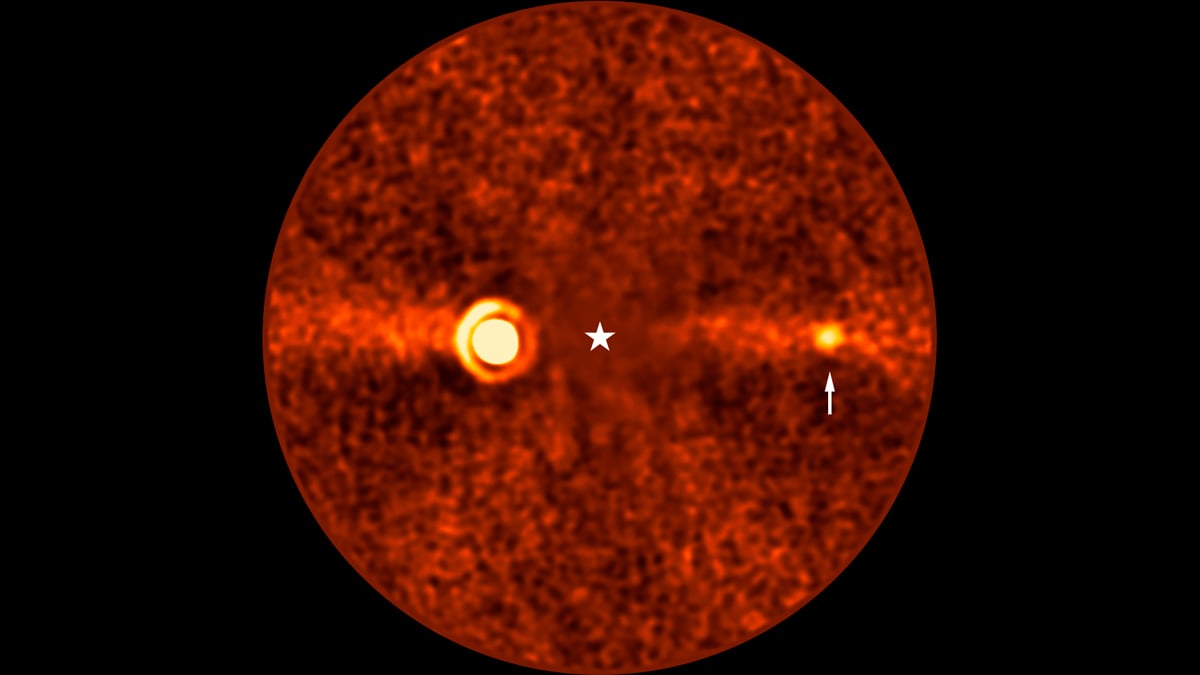
Astronomers have found another giant planet orbiting one of the most famous stars in the night sky. The new world, named Beta Pictoris d, had remained hidden for years despite repeated observations of its host star. Researchers finally spotted it after taking a fresh look at more than a decade of telescope data with improved image-processing techniques.
The discovery originates from the European Southern Observatory (ESO), whose Very Large Telescope (VLT) in Chile has been observing the Beta Pictoris system for many years. The finding adds a third known planet to a stellar system that has already played a major role in exoplanet research.
Beta Pictoris: A cornerstone of exoplanet research
Few nearby stars have influenced the study of planetary systems as much as Beta Pictoris. The star is only about 20 million years old. In astronomical terms, that makes it extremely young. Our Sun, by comparison, is around 4.6 billion years old. Because of its youth, the Beta Pictoris system still preserves many of the features that disappear as planetary systems mature. Scientists can observe processes that took place in our own Solar System billions of years ago but have long since ended.
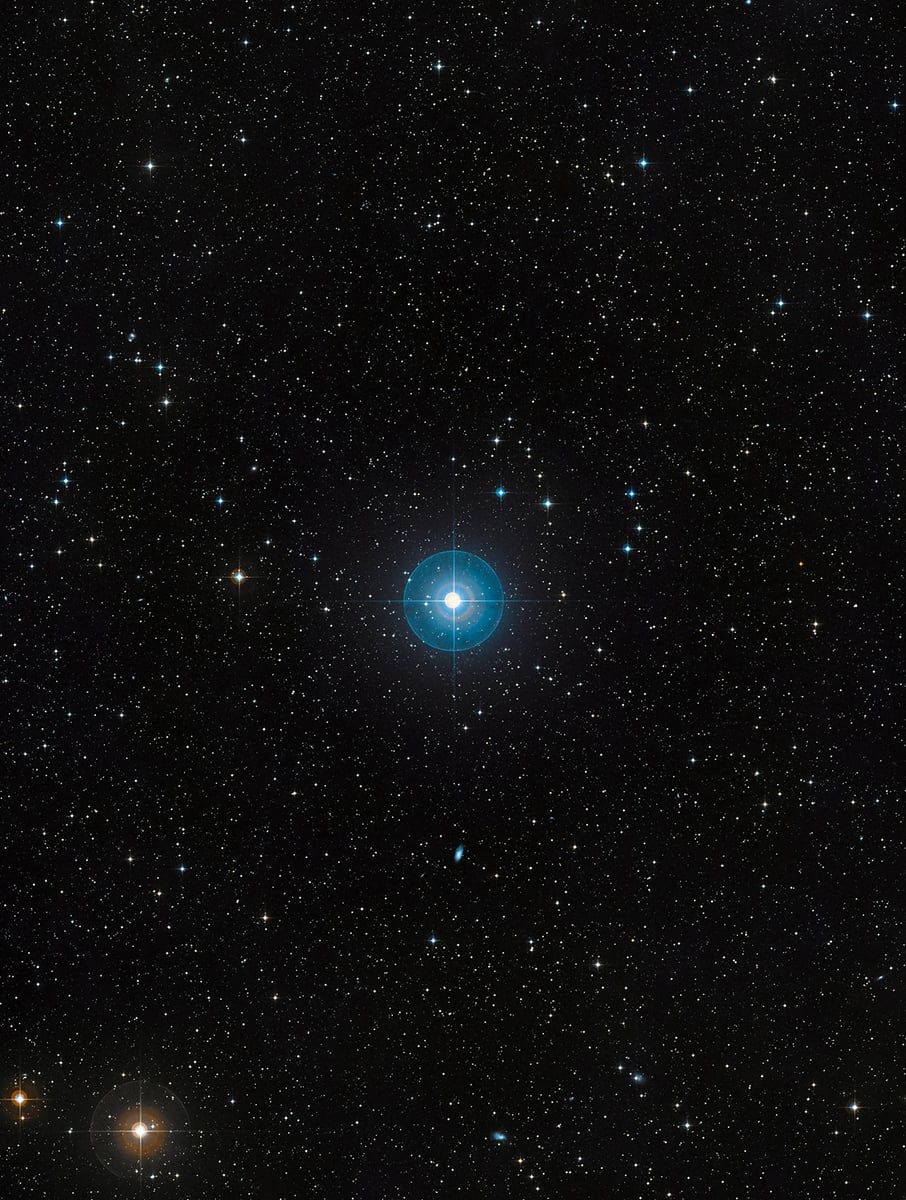
Interest in Beta Pictoris first surged in 1984 when astronomers discovered a broad disk of dust surrounding the star. At the time, it became one of the first debris disks ever detected around a nearby star. The finding immediately suggested that planets were either forming or had recently formed within the system. Since then, the star has remained under continuous observation with both ground-based and space-based telescopes.
In 2008, astronomers announced the discovery of Beta Pictoris b, one of the first exoplanets ever captured through direct imaging. The achievement marked an important milestone because most exoplanets at the time had been detected indirectly. Another breakthrough followed with the discovery of Beta Pictoris c. Scientists first identified this planet using the radial velocity method, which measures tiny motions of the host star caused by the gravitational pull of an orbiting planet. Later, astronomers managed to image the planet directly as well.
Looking back at old data
The discovery of Beta Pictoris d began with a question: could older observations reveal something that previous analyses had overlooked? To answer that question, researchers turned to data collected by the SPHERE instrument on ESO‘s Very Large Telescope in Chile. SPHERE was designed specifically for high-contrast imaging, making it one of the world’s most powerful instruments for searching for exoplanets around nearby stars.
When the original observations of Beta Pictoris were taken, the available image-processing techniques could not completely separate those unwanted signals from faint planetary light. As a result, Beta Pictoris d blended into the background and escaped detection.
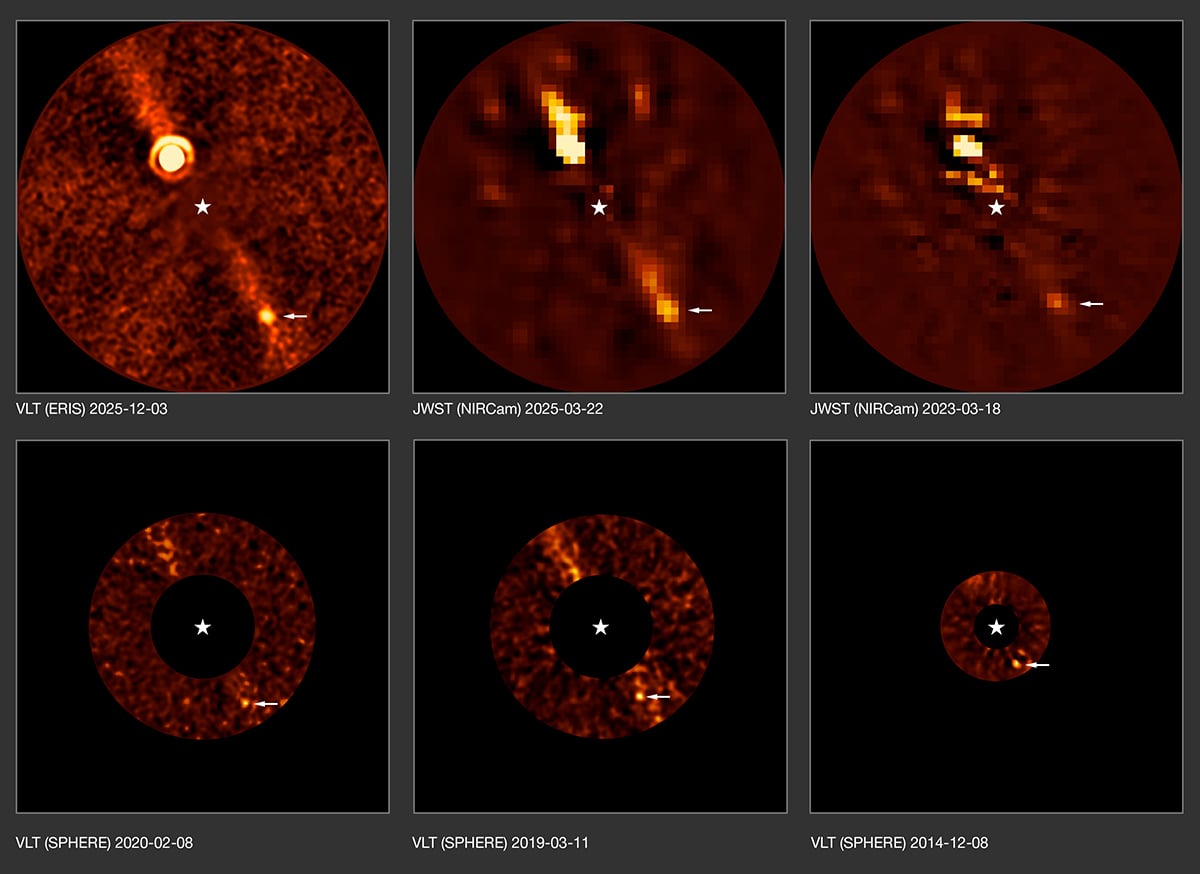
Over the past decade, however, image analysis has advanced significantly. Researchers now have access to more sophisticated algorithms that can distinguish genuine celestial objects from optical artefacts with much greater accuracy. They also benefit from a much longer sequence of observations, allowing them to track the motion of faint objects over time.
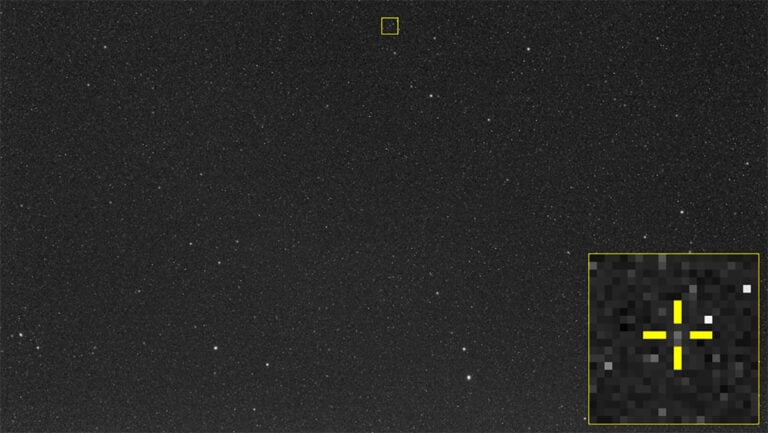
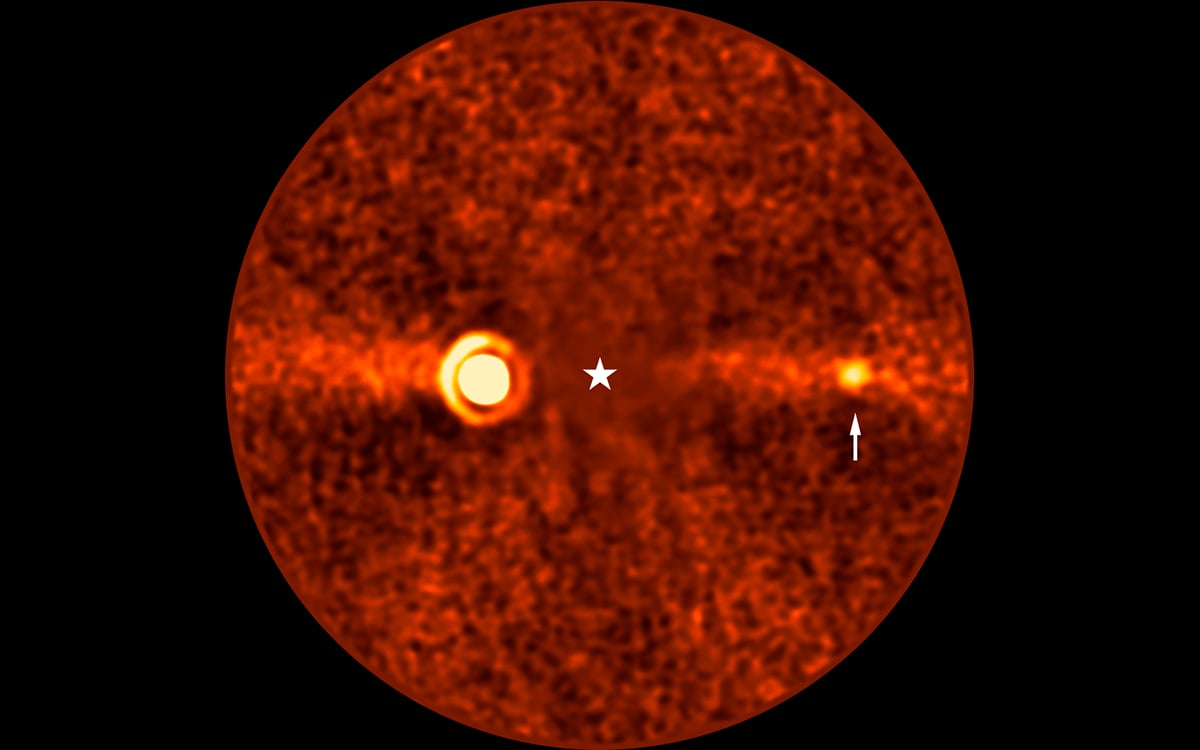
The research team combined observations collected over more than ten years and processed them using these improved techniques. A weak signal began appearing repeatedly in exactly the right locations. As more observations were analyzed, that signal became increasingly convincing. Eventually, the researchers confirmed that it belonged to a previously unknown giant planet orbiting Beta Pictoris.
Pushing the limits of direct exoplanet imaging
According to ESO, the planet is about 100 times fainter than Beta Pictoris b, the first giant planet discovered in the same system. Even the world’s largest telescopes cannot avoid this problem completely.
The Very Large Telescope took up this challenge with several advanced technologies working together. Its adaptive optics system constantly measures the distortions introduced by Earth‘s atmosphere. It then reshapes a deformable mirror hundreds of times every second to correct those distortions before they blur the image. This allows the telescope to produce remarkably sharp observations despite operating from the ground.

The telescope also uses a coronagraph, which blocks most of the star’s light before it reaches the detector. However, no coronagraph can remove every trace of starlight. Small amounts remain and create speckle patterns across the image. These bright spots often resemble faint planets, making it difficult to distinguish between real objects and optical noise.
With modern image processing techniques, the research team analysed observations collected over many years. They aligned the data, removed residual starlight, and searched for faint sources that moved consistently around the star. As the researchers traced the signal through more than a decade of observations, its orbital motion became increasingly clear. What had once looked like background noise slowly emerged as a genuine planetary companion.
Clear skies!
See more from DIYPhotography.net on Google
Add DIYPhotography.net as a trusted source. This makes
our stories more likely to appear in your Google Search results.
 Add as a preferred source on Google

Soumyadeep Mukherjee
Soumyadeep Mukherjee is an award-winning astrophotographer from India. He has a doctorate degree in Linguistics. His work extends to the sub-genres of nightscape, deep sky, solar, lunar and optical phenomenon photography. He is also a photography educator and has conducted numerous workshops. His works have appeared in over 40 books & magazines including Astronomy, BBC Sky at Night, Sky & Telescope among others, and in various websites including National Geographic, NASA, Forbes. He was the first Indian to win “Astronomy Photographer of the Year” award in a major category.



Join the Discussion
DIYP Comment Policy
Be nice, be on-topic, no personal information or flames.