



















Askar SQA55: A Quintuplet Refractor for Wide-field Astrophotography
Nov 15, 2025
Soumyadeep Mukherjee
Soumyadeep Mukherjee is an award-winning astrophotographer from India. He has a doctorate degree in Linguistics. His work extends to the sub-genres of nightscape, deep sky, solar, lunar and optical phenomenon photography. He is also a photography educator and has conducted numerous workshops. His works have appeared in over 40 books & magazines including Astronomy, BBC Sky at Night, Sky & Telescope among others, and in various websites including National Geographic, NASA, Forbes. He was the first Indian to win “Astronomy Photographer of the Year” award in a major category.
Share:

The Askar SQA55 is a compact astrograph designed for astrophotographers who want a fast, wide, and highly corrected imaging system. It brings together a short focal length, a flat field, and a well-engineered lens structure inside a small, travel-ready body. The telescope focuses on giving users a stable, predictable optical platform that works with today’s high-resolution cameras. In this introduction, we explore the design of the SQA55, the optical layout, the mechanical structure, and the imaging features that define it.
A compact astrograph built around a quintuplet lens system
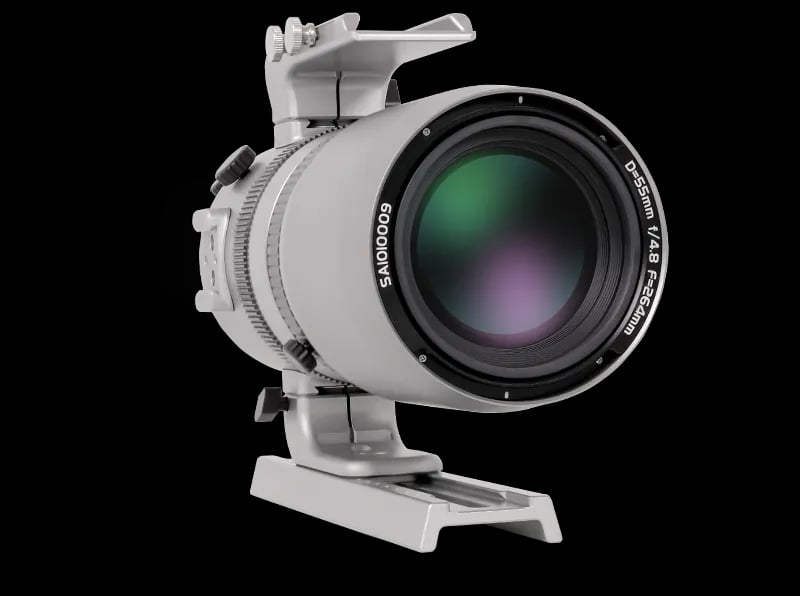
The key feature of the SQA55 is its five-element Petzval optical design. Askar utilizes two specialized glass elements within the group: one SD element and one ED element. These components play an important role in correcting chromatic errors. They also help maintain image quality at high speeds. The lens layout forms a complete optical system inside the tube. This is different from traditional refractors that need an external field flattener. The SQA55 carries its correction elements internally, so the user does not have to add extra optics at the back.
The telescope has a 55 mm aperture and a focal length of 264 mm. This produces a focal ratio of f/4.8. That combination gives the instrument a wide field of view. The optical system is built to illuminate a large full-frame surface. Askar lists the image circle as 44 mm. This means the telescope can support full-frame sensors without significant loss of illumination across the field. The Petzval arrangement also ensures that the focal plane remains flat. A flat field is useful when working with large sensors and detailed astrophotography cameras.
Mechanical build
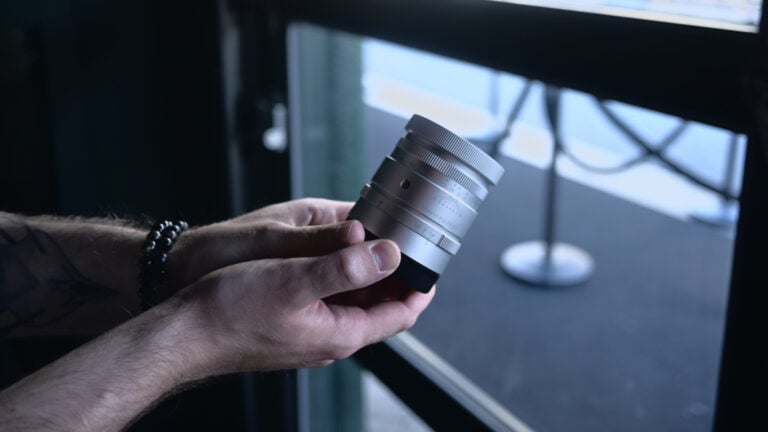
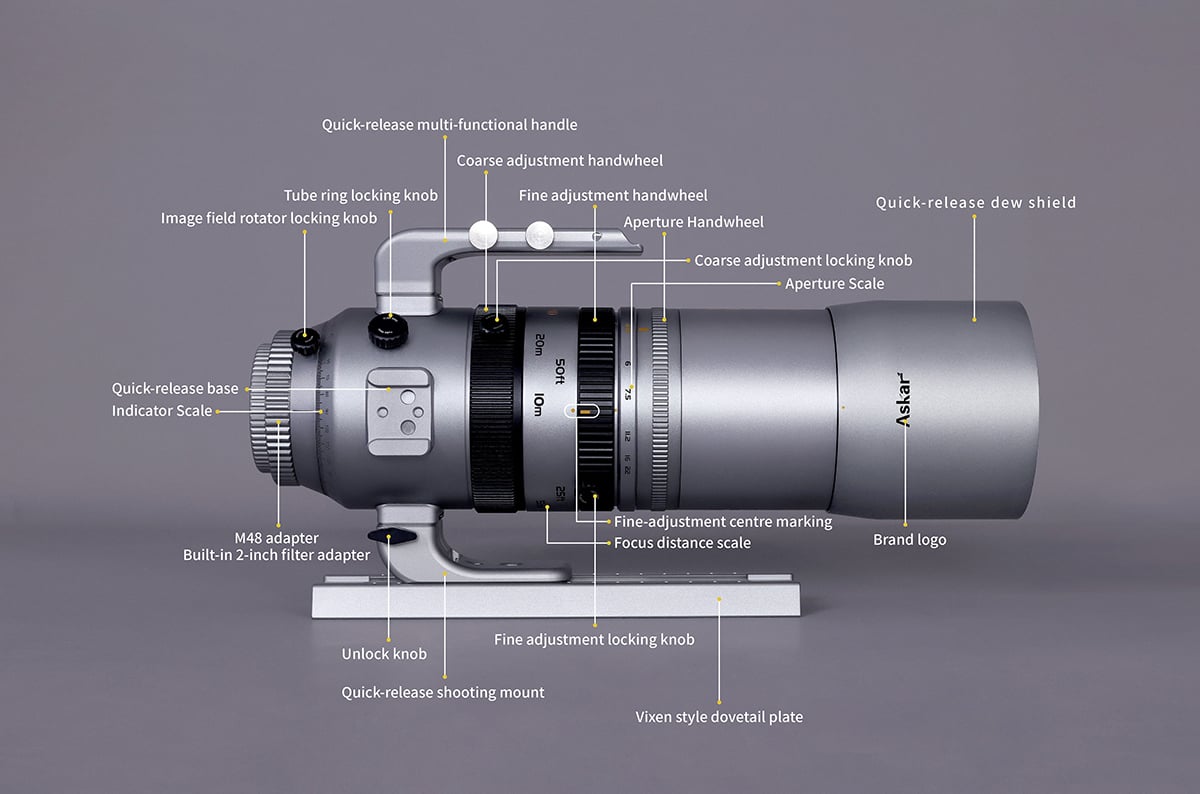
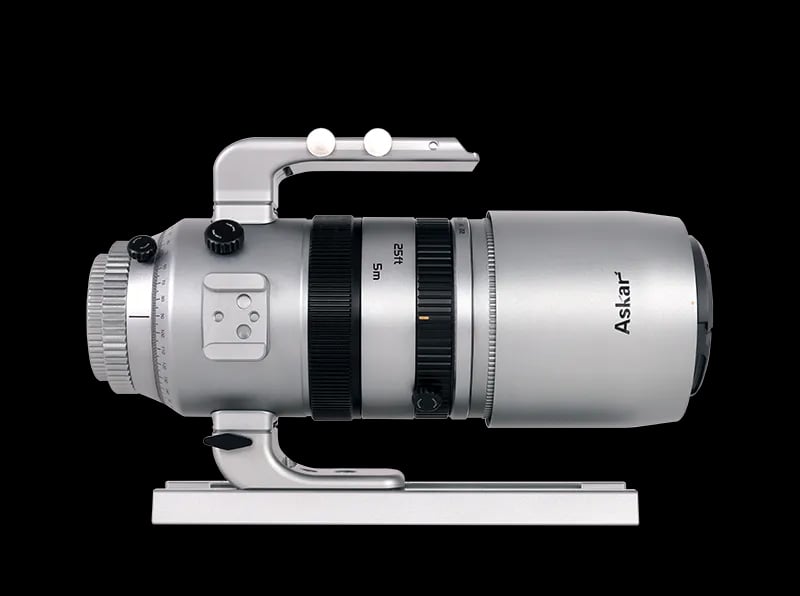
A key part of the SQA55’s product identity is its compact body. The tube length is about 316 mm with the dew shield extended and around 244 mm when the shield is retracted. This makes the telescope easy to transport. It fits into many photography backpacks and carries well during travel. The tube weight is 1.84 kg. With the handle and dovetail installed, the weight is about 2.18 kg. The size-to-performance ratio is central to the SQA55’s appeal.
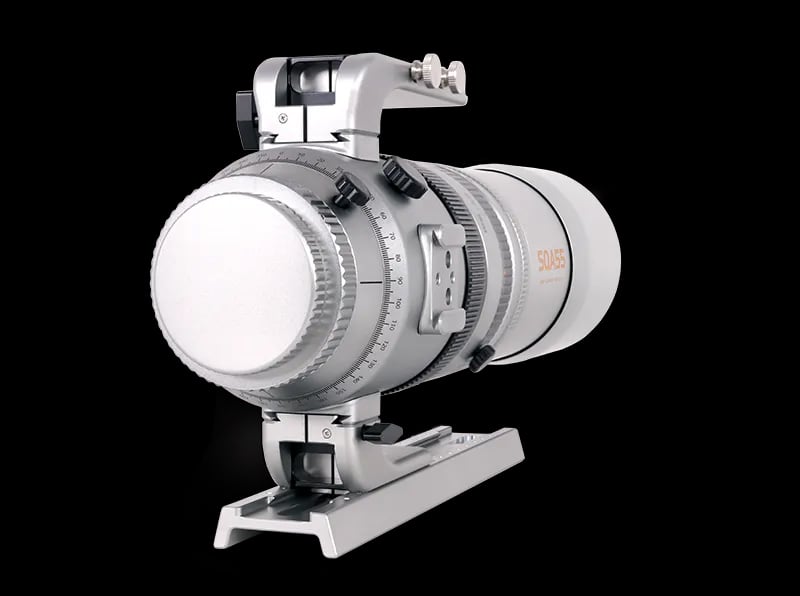
Askar equips the telescope with a dual-speed helical focuser. The focuser helps maintain a rigid optical train because it moves smoothly along its axis. The mechanical layout supports precise focusing while keeping the tube short. The rear connection uses an M48×0.75 thread. The backfocus specification is 50–60 mm, with 55 mm recommended for most setups. This spacing is important because it ensures the camera sits at the correct distance from the optical group.
The front of the telescope accepts M67 filters. The mechanical housing includes a sliding dew shield, a solid handle, and a standard dovetail plate. The construction supports frequent field use. Askar uses a metal tube and machined components to keep the system stable when the camera attaches to the rear. The finish reflects the company’s current design direction, with red and grey accents similar to its newer product line.
Wide-field imaging capabilities
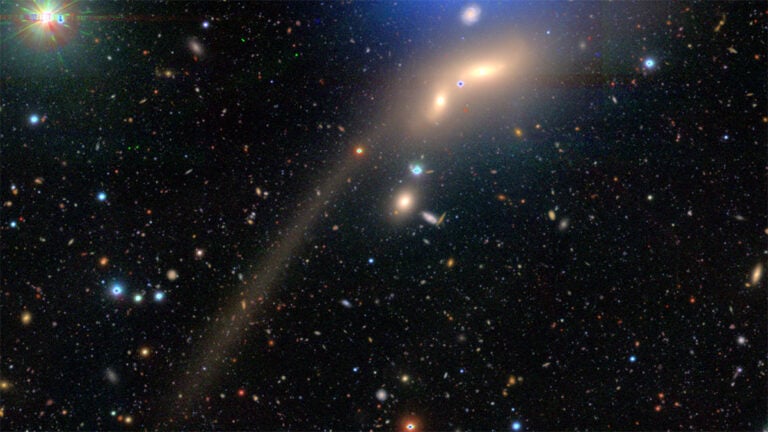
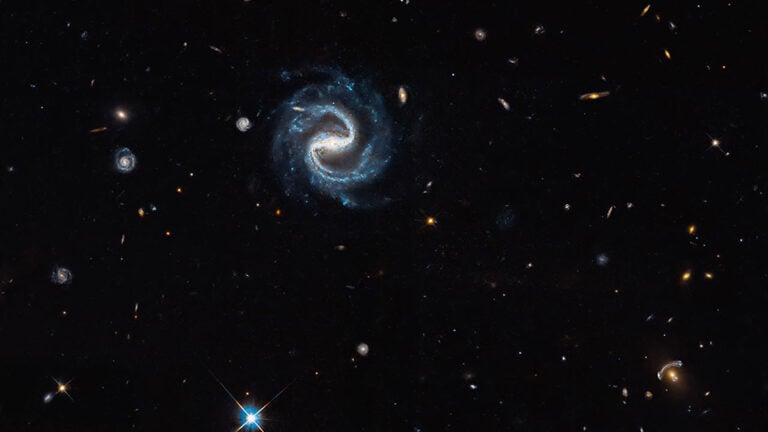
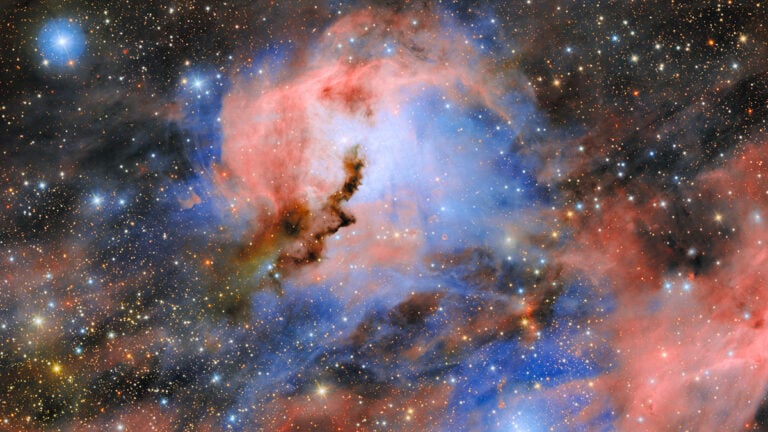
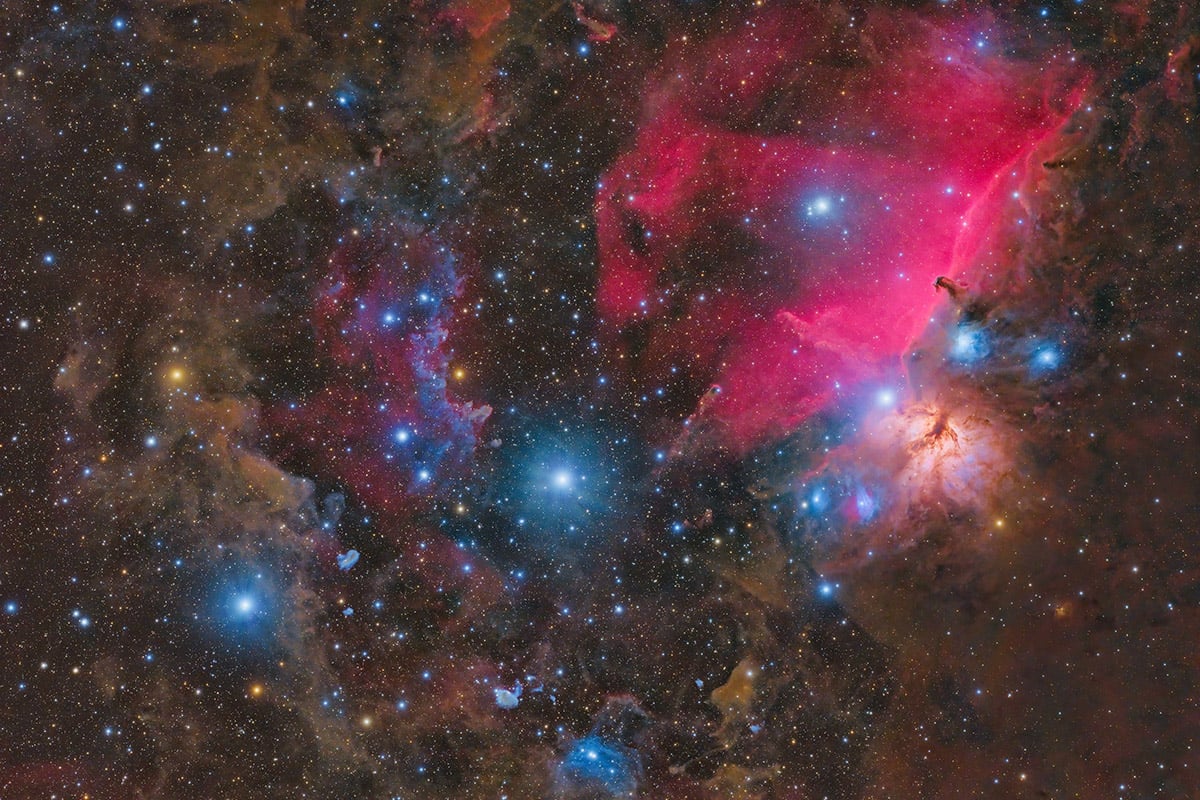
The SQA55 is designed for wide-field astrophotography. Its short focal length, large image circle, and flat field make it suitable for capturing extended regions of the sky. Large nebulae, star clouds, dust structures, and Milky Way fields fit comfortably within its frame. The fast focal ratio helps create a strong signal in shorter exposure times, which is useful during travel sessions or casual night shoots.
The optical design keeps star shapes controlled across the field when the spacing is correct. The Petzval layout ensures that the image plane stays flat. This matters for large sensors. A curved field usually leads to soft corners, but the internal elements in the SQA55 handle this challenge. Users can position full-frame cameras behind the telescope without relying on external flatteners.
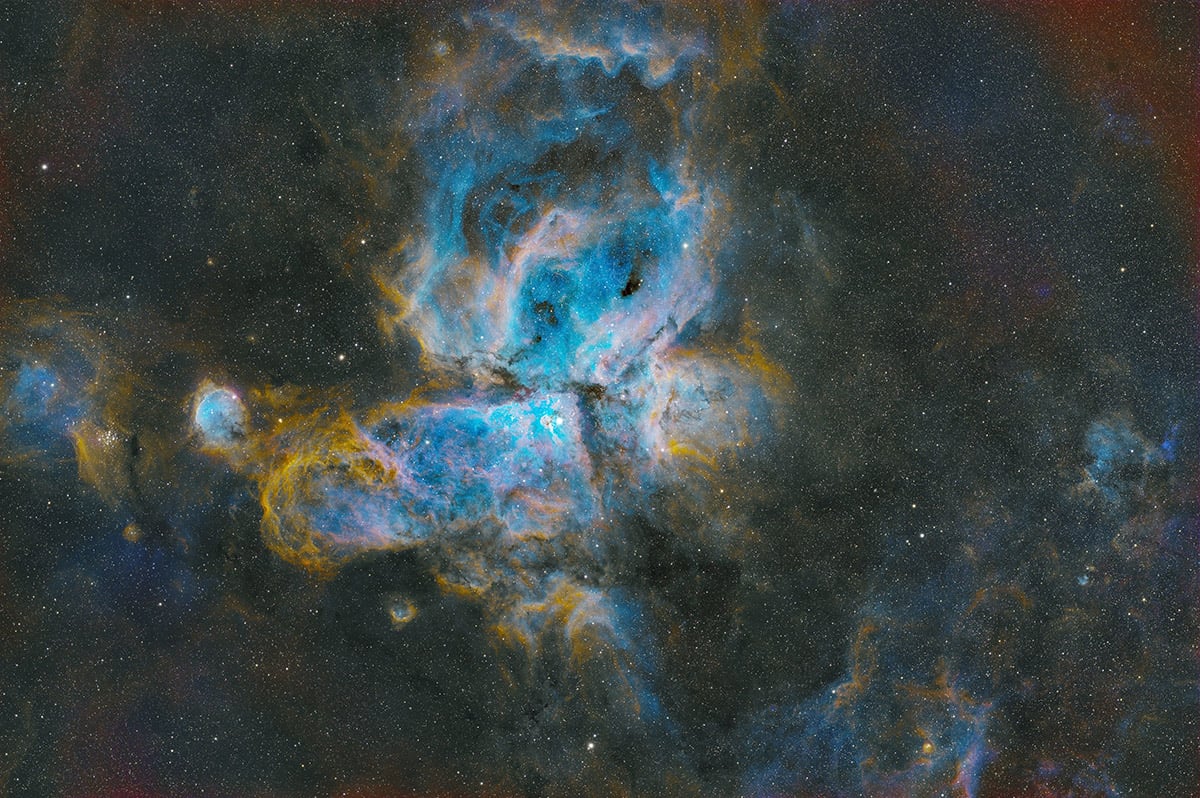
The illumination pattern covers the 44 mm circle stably. The telescope provides even light distribution to a large part of the frame. This makes it suitable for modern mirrorless bodies and cooled CMOS cameras. The wide field supports several astrophotography styles, including nebulae images, Milky Way compositions, and large mosaic projects.
Because the telescope uses a built-in corrector, its optical behaviour remains consistent. The user does not have to adjust external lenses or spacing rings. Once the back focus is set to the recommended value, the frame stays uniform.
Compatibility with cameras and mounts
The SQA55 pairs well with a variety of imaging systems. Full-frame mirrorless cameras benefit from the large image circle. APS-C and Micro Four Thirds cameras take advantage of the clean central zone of the optics. Cooled astronomy cameras work effectively when paired with the correct spacers to reach 55 mm backfocus.
The telescope works well with portable mounts because of its low weight and short tube length. The mechanical stability reduces flex or shift in the optical system during long exposures. This makes the imaging workflow predictable. Users can attach guide scopes, dew heaters, and filter wheels without compromising balance.
Key specifications
Here are the key specifications of the Askar SQA55 astrograph:
| Aperture size | 55mm |
| Focal length | 264mm |
| Focal ratio | f/4.8 |
| Objective lens | Quintuplet petzval APO |
| Image circle | 44mm |
| Aperture blades | 14 pieces |
| Graded Aperture | f/4.8-f/22 |
| Closest Focus Distance | 5m |
| Focusing mode | Manual focus |
| Filter Diameter | M67 |
| Total length | 316mm (inclulding dew shield); 244mm (without dew shield) |
| OTA weight | 1.84kg |
| Total weight | 2.18kg |
Price and availability
Askar SQA55 quintuplet astrograph is priced at $795 and is available to purchase via online retailers.
The SQA55 is built for astrophotographers who want a simple, travel-friendly optical system. It is designed to deliver wide, clean, and corrected fields without requiring complex accessories. The quintuplet design handles many optical challenges inside the tube. This allows users to focus on the imaging process rather than optical calibration.
The telescope’s specifications make it suitable for capturing large-scale astronomical structures. The design supports deep-sky fields that feature bright nebulae and star-dense regions. The fast focal ratio reduces exposure time requirements. This helps users who shoot during short dark-sky trips or under variable weather.
Clear skies!
See more from DIYPhotography.net on Google
Add DIYPhotography.net as a trusted source. This makes
our stories more likely to appear in your Google Search results.
 Add as a preferred source on Google

Soumyadeep Mukherjee
Soumyadeep Mukherjee is an award-winning astrophotographer from India. He has a doctorate degree in Linguistics. His work extends to the sub-genres of nightscape, deep sky, solar, lunar and optical phenomenon photography. He is also a photography educator and has conducted numerous workshops. His works have appeared in over 40 books & magazines including Astronomy, BBC Sky at Night, Sky & Telescope among others, and in various websites including National Geographic, NASA, Forbes. He was the first Indian to win “Astronomy Photographer of the Year” award in a major category.


Join the Discussion
DIYP Comment Policy
Be nice, be on-topic, no personal information or flames.