





















Svbony SV240 Multi-Narrowband Filter: A Solution for Urban Astrophotography
Nov 6, 2025
Soumyadeep Mukherjee
Soumyadeep Mukherjee is an award-winning astrophotographer from India. He has a doctorate degree in Linguistics. His work extends to the sub-genres of nightscape, deep sky, solar, lunar and optical phenomenon photography. He is also a photography educator and has conducted numerous workshops. His works have appeared in over 40 books & magazines including Astronomy, BBC Sky at Night, Sky & Telescope among others, and in various websites including National Geographic, NASA, Forbes. He was the first Indian to win “Astronomy Photographer of the Year” award in a major category.
Share:
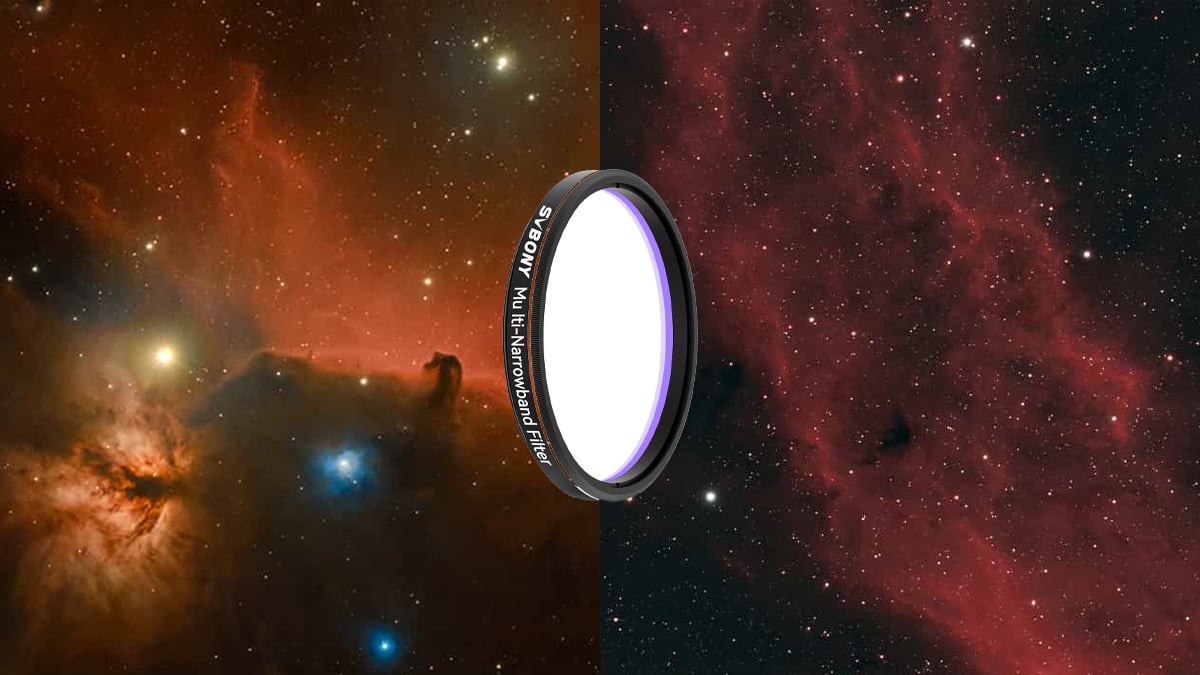
Astrophotography is no longer limited to those living under pristine, dark skies. With the right tools, even city dwellers can capture impressive images of nebulae, galaxies, and clusters. The Svbony SV240 Multi-Narrowband Filter is one such tool that bridges this gap. It’s designed to help astrophotographers overcome light pollution, simplify their workflow, and still produce clear, vibrant deep-sky images.
Rather than focusing on one wavelength at a time like traditional narrowband filters, the SV240 combines several key emission lines: Hydrogen-alpha (Hα), Oxygen III (O III), and Hydrogen-beta (H-β), into a single optical element. It’s a clever compromise that promises flexibility without the need for multiple filters or a filter wheel.
Made for real-world conditions
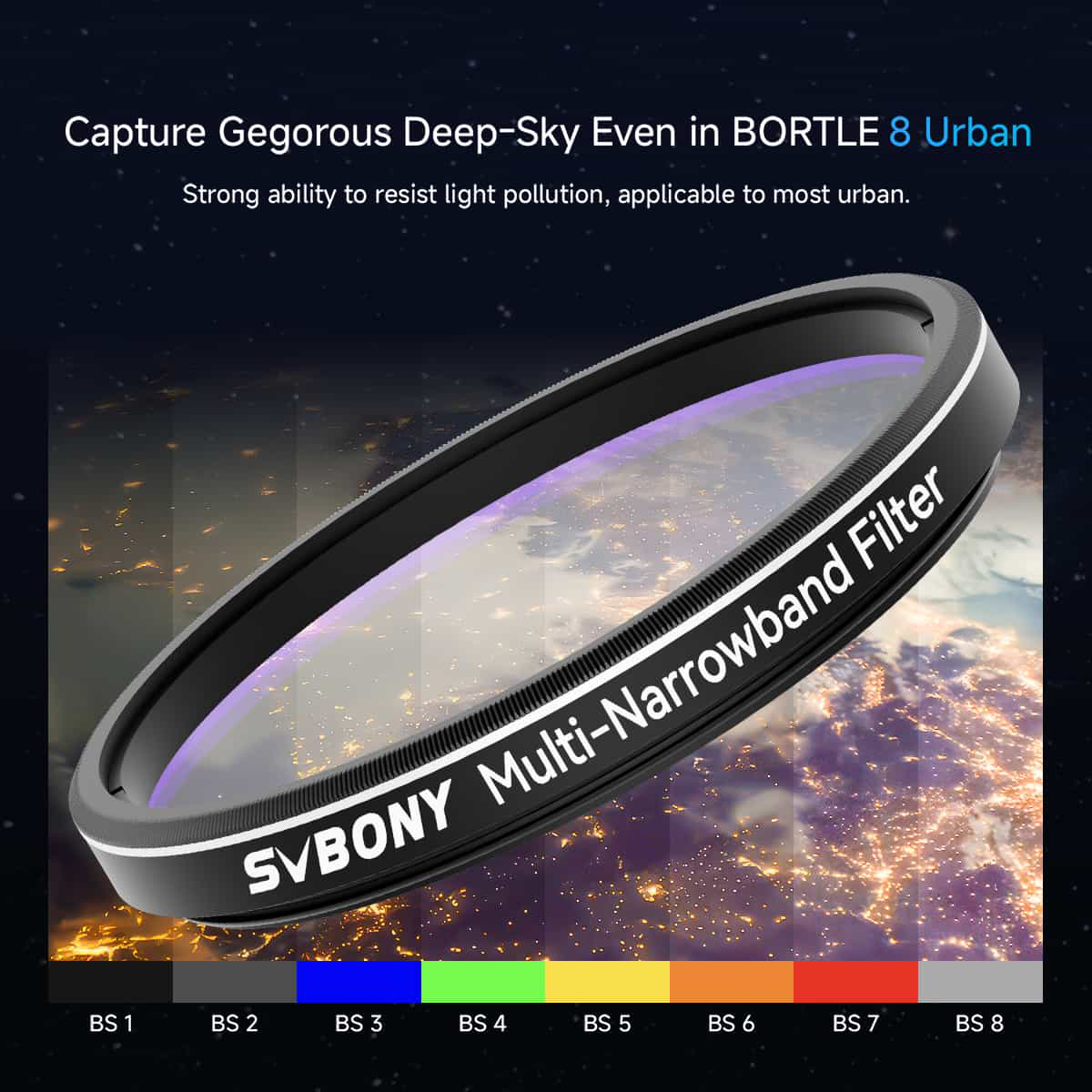
Svbony built the SV240 specifically for astrophotographers working in light-polluted areas. Many of us live in or near cities, where artificial lighting washes out faint celestial details. Traditional broadband filters can’t block enough of this light, and ultra-narrow filters often limit the camera’s sensitivity or color range. The SV240 aims to find a balance between these extremes.
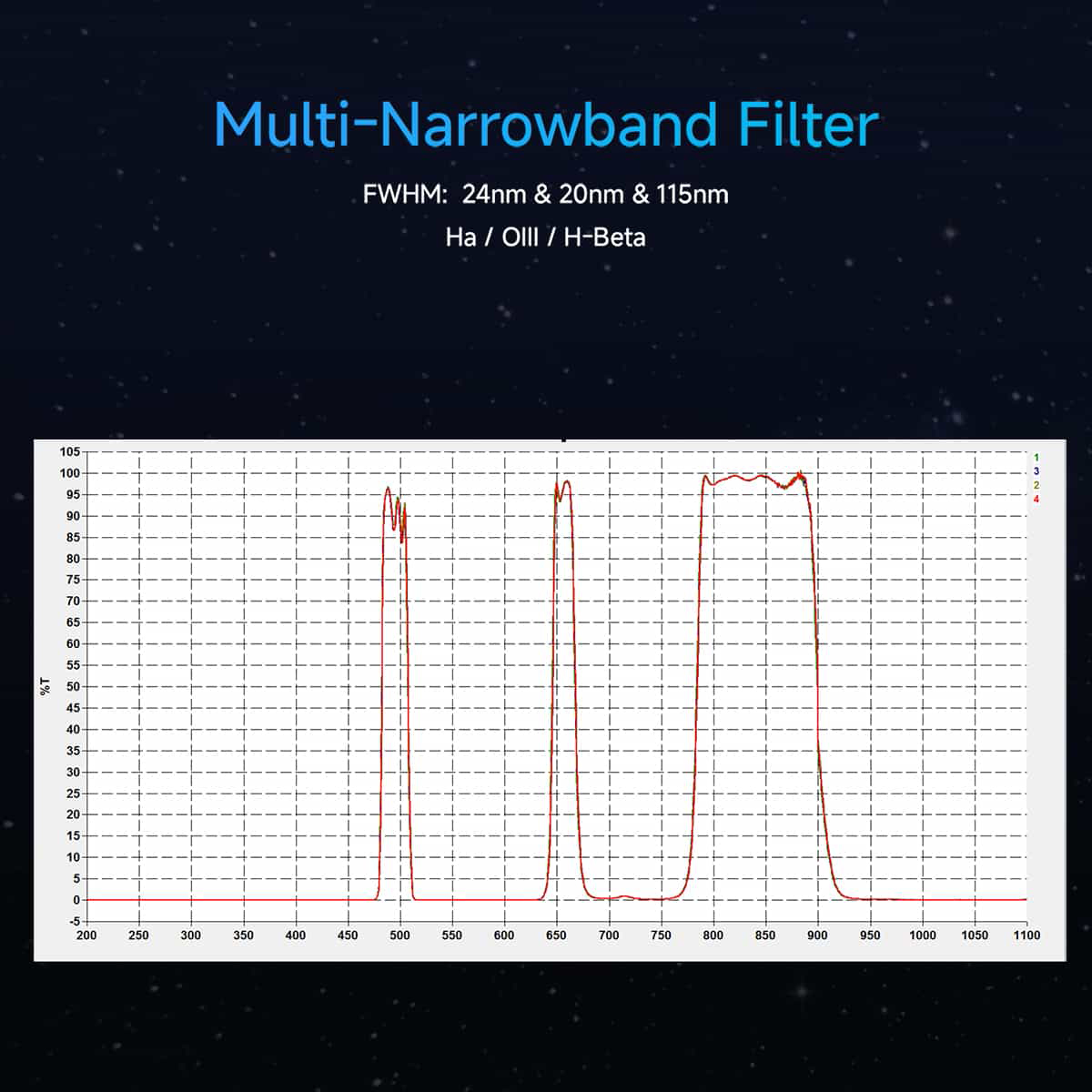
The company describes the filter as a “multi-narrowband” design. It passes light efficiently at three narrow wavelength regions, around 486 nm (H-β), 500 nm (O III), and 656 nm (Hα), while blocking most other parts of the spectrum. This means you can photograph emission nebulae and certain galaxies without the overwhelming orange or white haze of city light.
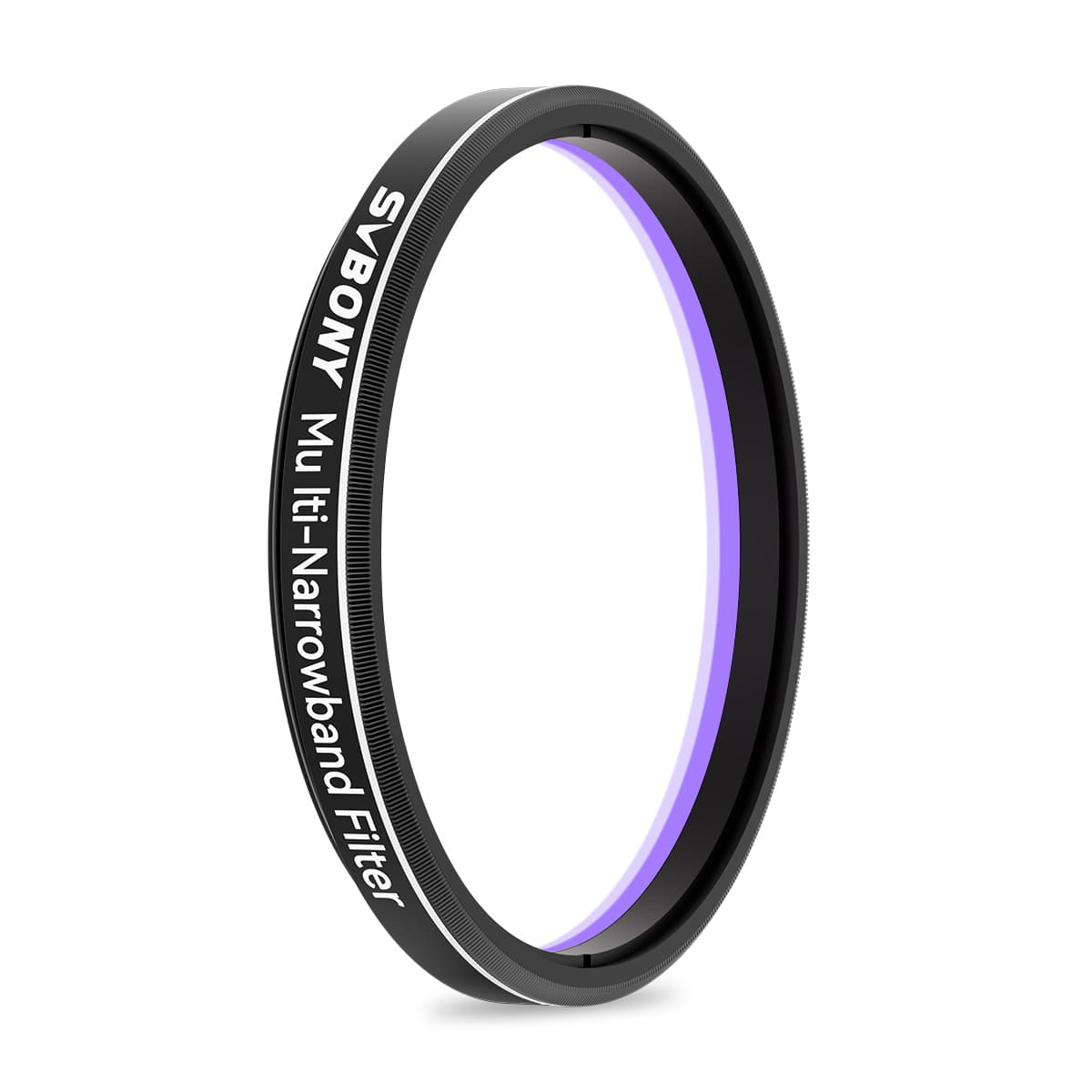
Svbony claims the SV240 maintains a high optical density (OD4 or greater), ensuring strong rejection of unwanted light. In practical terms, that translates to clean, contrasty backgrounds even in skies rated up to Bortle 8, which covers bright suburban or inner-city locations. The filter’s mounted design makes it easy to use with a wide range of accessories, whether you screw it directly onto a field flattener, a filter drawer, or a camera adapter. The aluminum frame is anodized black to minimize reflections, and the coating on optical glass resists moisture and scratches.
Optical performance and transmission
According to official specifications, the SV240 achieves over 90 percent transmittance at its primary wavelengths: Hα, O III, and H-β. That high level of throughput ensures that the signal from celestial emission lines is strong enough to cut through the background glow.
The filter’s working wavelength range extends from 300 nm to 1100 nm, covering the visible and near-infrared spectrum. This wide response is useful for modern color CMOS sensors, which often maintain sensitivity beyond the visible range. However, Svbony does note that users may encounter slight haloing effects when imaging in the near-infrared region.
The filter’s bandpass widths, roughly 24 nm for Hα, 20 nm for O III, and 115 nm for its broad transmission window, offer a balance between narrowband selectivity and broadband flexibility. You can shoot emission nebulae with enhanced contrast while still capturing the color and brightness of stars and galaxies. Unlike extremely narrow filters that limit star colors or create uneven backgrounds, the SV240’s moderate bandpasses preserve the natural appearance of star fields. This makes it especially attractive for photographers who enjoy composing wide-field images that combine deep-sky structures with the surrounding Milky Way.
Build quality and coating technology
Svbony has steadily improved its manufacturing quality over recent years, and the SV240 reflects that progress. The filter utilizes high-quality optical glass, precision-polished and featuring multi-layer coatings. These coatings are applied through ion-assisted deposition to ensure durability and consistency across the surface.
The anti-reflective layers are designed to reduce ghosting and internal reflections, which can be problematic when shooting bright stars near emission regions. While no filter is entirely immune to reflections, users have reported minimal haloing with most optical systems, particularly refractors with well-controlled field flatteners.
The filter’s outer frame feels robust and is easy to handle even with gloves, which is useful during cold-night imaging sessions. The threads engage smoothly with standard accessories, and the filter ships in a padded plastic case for storage and transport.
Who is it for?
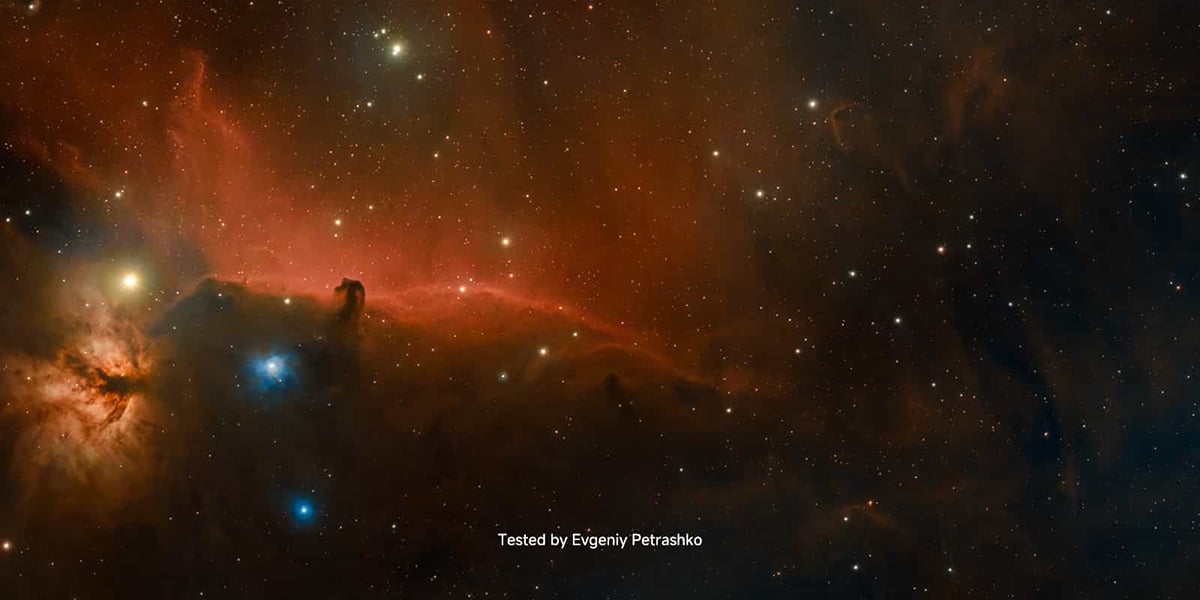
The SV240’s appeal lies in its versatility. It’s an excellent option for photographers who shoot from urban or suburban locations but still want to capture nebulae with decent contrast. The filter suits those who use color cameras and prefer a single-filter setup. For beginners, it’s a logical upgrade from basic light pollution filters. It allows exploration of emission targets without requiring a complex monochrome workflow. Intermediate photographers will appreciate how it streamlines imaging sessions and minimizes post-processing complexity.
That said, it’s important to understand its limits. Dedicated narrowband filters with very tight 3 nm or 5 nm bandpasses will still outperform the SV240 when imaging faint or highly specific emission lines from dark-sky sites. The SV240, on the other hand, prioritizes convenience and usability. It’s a filter you can keep on your camera most of the time, knowing it will handle both emission and broadband targets reasonably well.
Price and availability
The Svbony SV240 multi-narrowband filter is available in two sizes:
- 1.25” filter: $119.99
- 2” filter: $139.99
Both models are available from the official Svbony website.
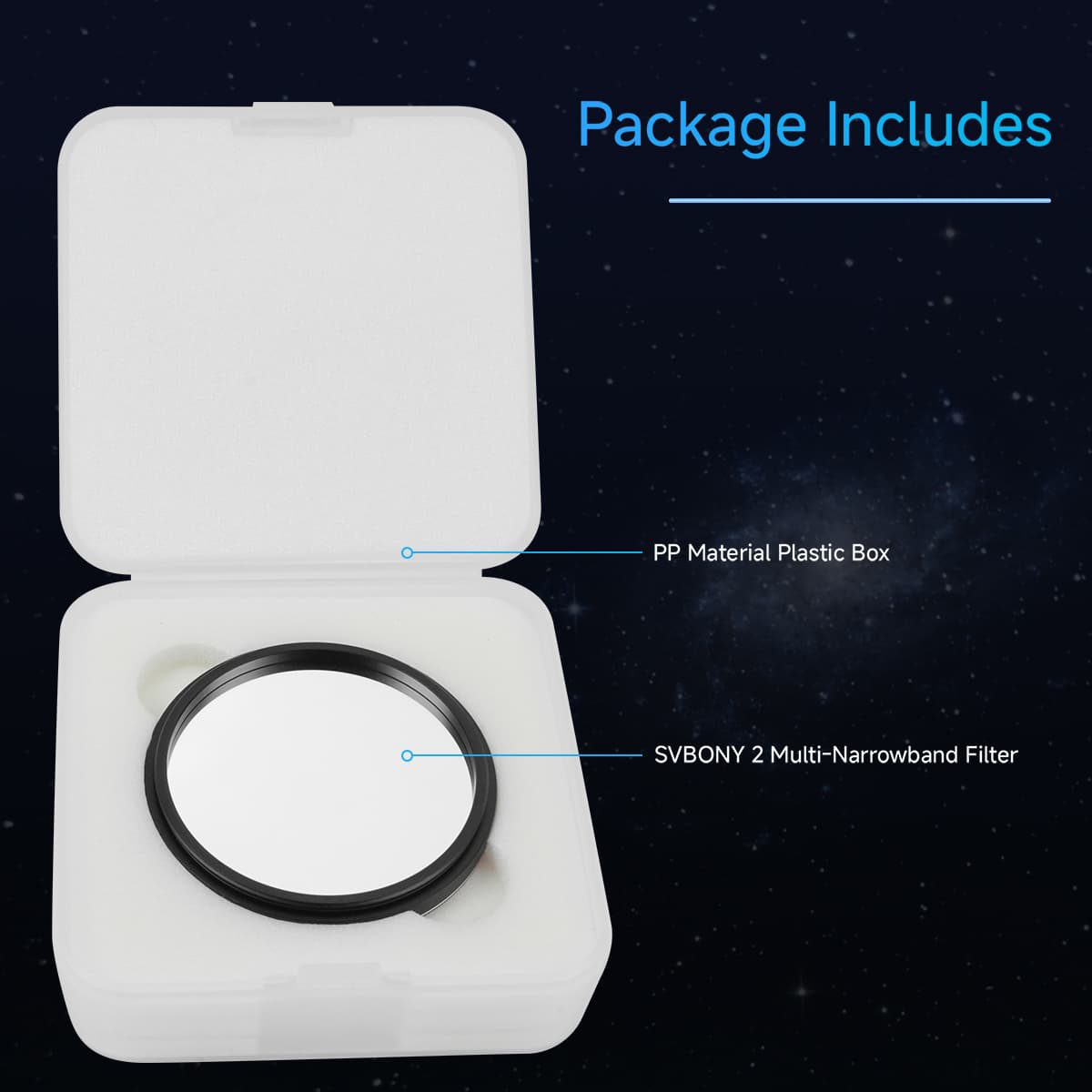
Svbony’s filter offers a cost-effective way to improve image quality in bright environments without breaking the bank. For anyone starting in astrophotography or looking to simplify their imaging workflow, the SV240 is a strong candidate. It’s durable, affordable, and designed with modern imaging systems in mind.
Clear skies!
See more from DIYPhotography.net on Google
Add DIYPhotography.net as a trusted source. This makes
our stories more likely to appear in your Google Search results.
 Add as a preferred source on Google

Soumyadeep Mukherjee
Soumyadeep Mukherjee is an award-winning astrophotographer from India. He has a doctorate degree in Linguistics. His work extends to the sub-genres of nightscape, deep sky, solar, lunar and optical phenomenon photography. He is also a photography educator and has conducted numerous workshops. His works have appeared in over 40 books & magazines including Astronomy, BBC Sky at Night, Sky & Telescope among others, and in various websites including National Geographic, NASA, Forbes. He was the first Indian to win “Astronomy Photographer of the Year” award in a major category.

Join the Discussion
DIYP Comment Policy
Be nice, be on-topic, no personal information or flames.