






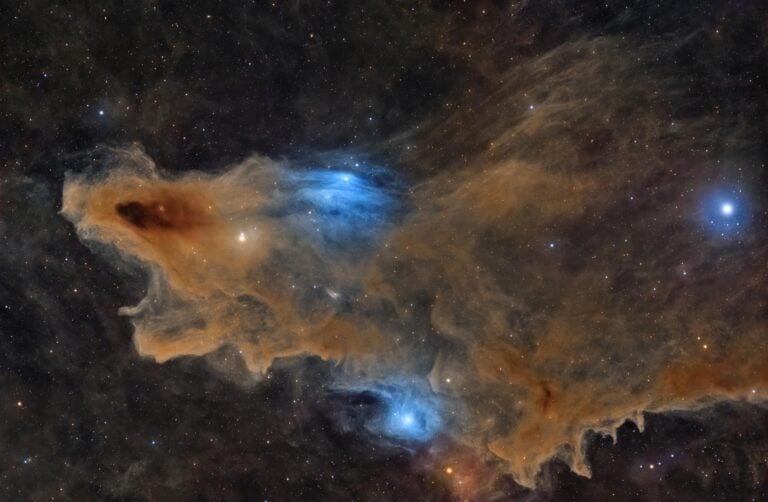













Optolong Launches L-Synergy Filter: Dual Narrowband Imaging with OIII and SII
Sep 26, 2025
Soumyadeep Mukherjee
Soumyadeep Mukherjee is an award-winning astrophotographer from India. He has a doctorate degree in Linguistics. His work extends to the sub-genres of nightscape, deep sky, solar, lunar and optical phenomenon photography. He is also a photography educator and has conducted numerous workshops. His works have appeared in over 40 books & magazines including Astronomy, BBC Sky at Night, Sky & Telescope among others, and in various websites including National Geographic, NASA, Forbes. He was the first Indian to win “Astronomy Photographer of the Year” award in a major category.
Share:

Astrophotography thrives on innovation. Over the past decade, the tools available to amateur and professional imagers have evolved rapidly. Cameras have become more sensitive, mounts more precise, and filters more specialized. Among these, narrowband filters hold a unique place. They allow astrophotographers to isolate faint emission lines from nebulae and bring out details that would otherwise remain invisible.
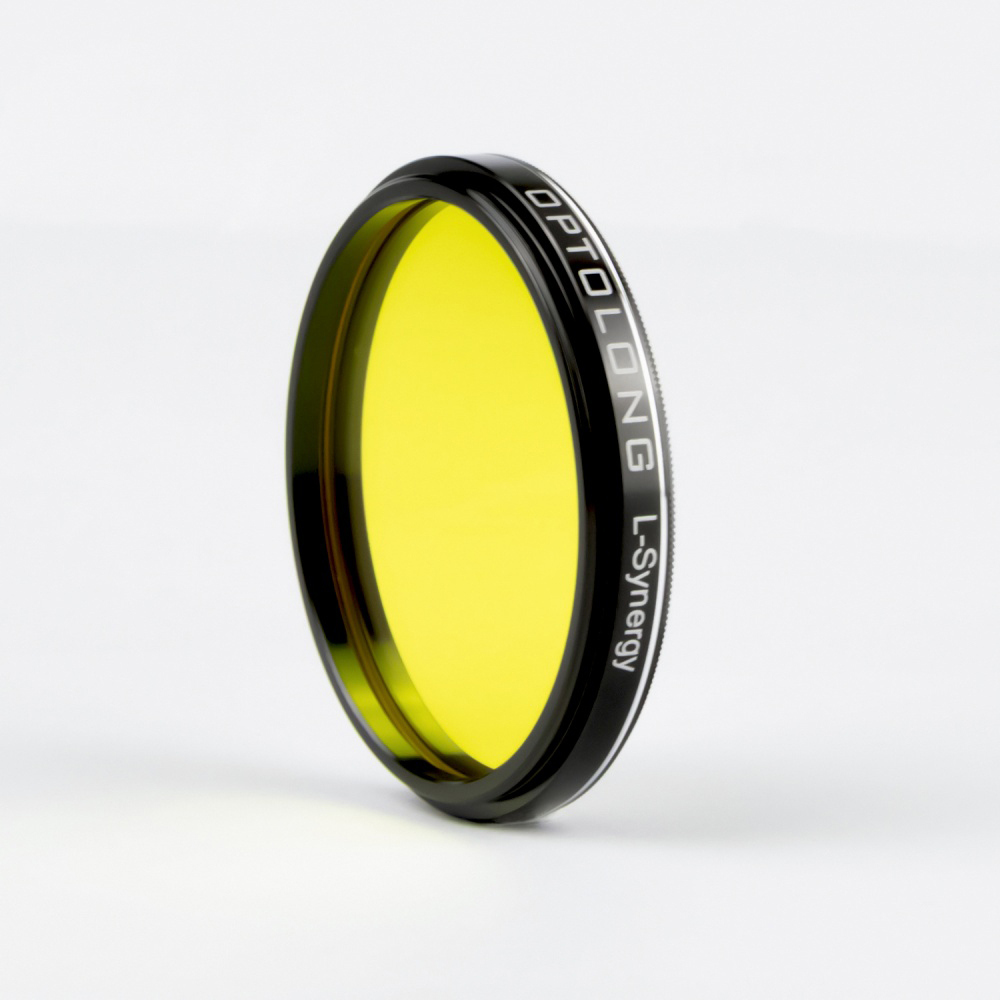
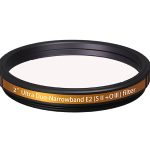
Optolong has introduced a new product to this growing category: the L-Synergy Dual Narrowband Filter. Unlike earlier dual filters that combined Hydrogen-alpha and Oxygen-III, this filter takes a different path. It is designed to pass Oxygen-III (OIII) and Sulfur-II (SII), giving astrophotographers a new way to capture emission nebulae with color cameras.
A different approach to dual narrowband
Most dual narrowband filters on the market focus on Ha and OIII. That pairing makes sense because hydrogen and oxygen dominate the emission spectra of many nebulae. However, it limits the range of data collected. Sulfur-II, another key emission line, often plays an important role in narrowband compositions, especially in the “Hubble Palette.”
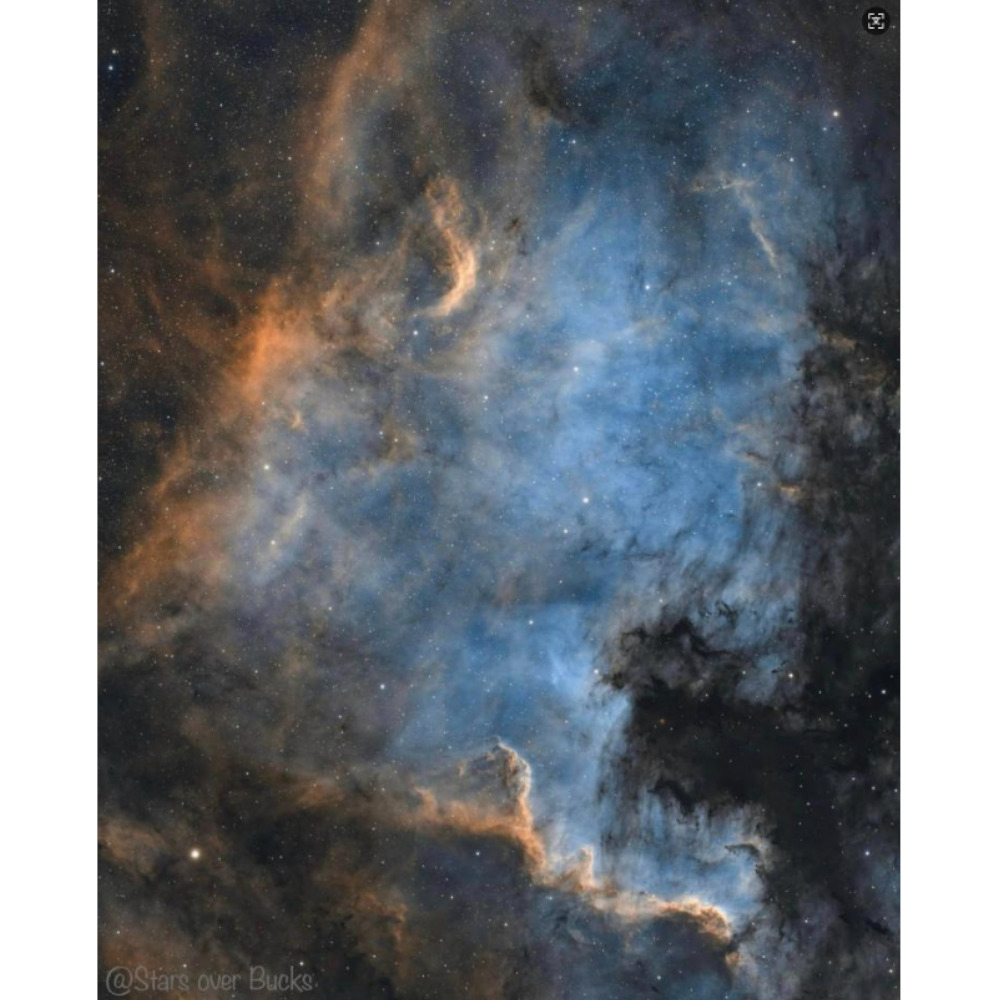
The L-Synergy filter introduces a fresh option. By passing both OIII and SII, it opens the door to capturing two distinct gases in a single exposure. For astrophotographers using color cameras, this means more data from one filter without needing to switch setups. Nebulae rich in sulfur structures can benefit from this design, as those subtle details often require dedicated attention.
This approach does not aim to replace Hydrogen-alpha imaging. Instead, it complements it. Users may choose to pair the L-Synergy with other filters to build up a more complete dataset. But as a standalone tool, it offers an uncommon combination that broadens creative choices.
Technical features and design
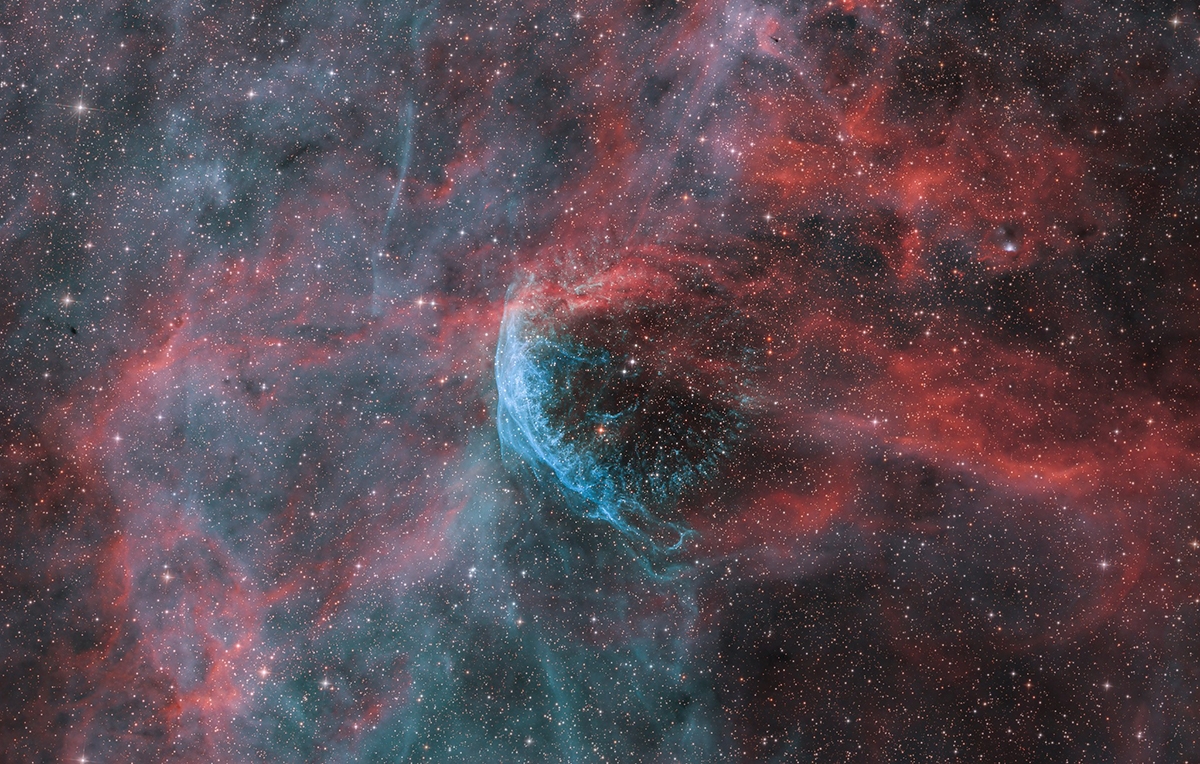
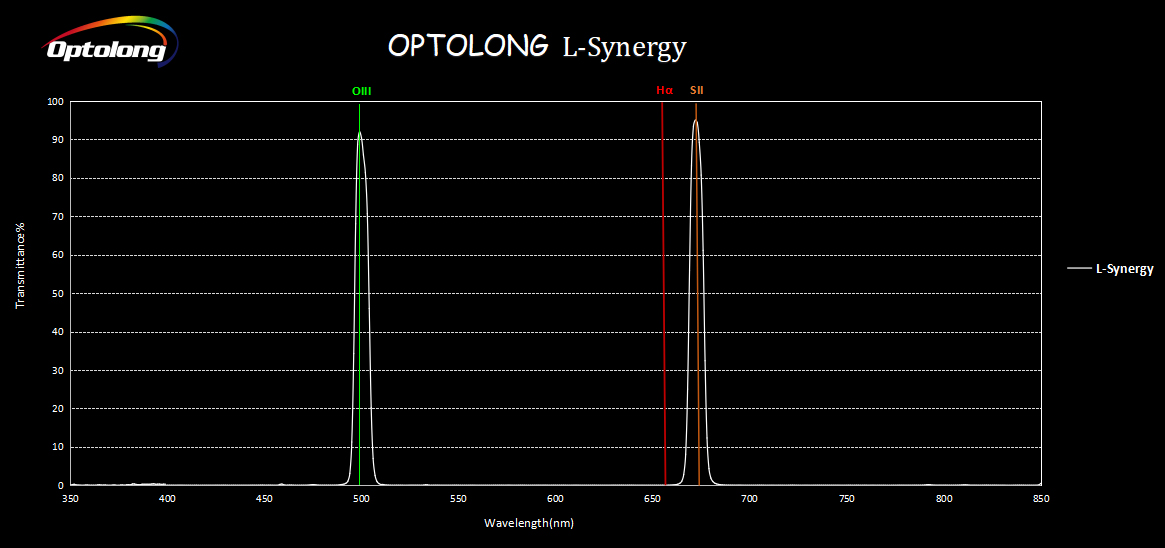
According to Optolong’s official release, the L-Synergy filter has a full width at half maximum (FWHM) of 7 nanometers. It is designed for telescopes with focal ratios of f/3.3 or slower. This specification is important because very fast systems can cause band shift, reducing transmission in the target lines. By setting a limit, Optolong ensures the filter delivers reliable results in typical setups.
The filter isolates the OIII line at 500.7 nm and the SII line at 672.4 nm. These wavelengths are critical for mapping nebulae structures. Optolong has applied multilayer coatings to maintain high transmission within these bands while blocking nearby unwanted light. The coatings are also optimized to minimize reflections and halos around bright stars. This is a recurring challenge for many narrowband filters, and the L-Synergy is engineered to keep artifacts to a minimum.
Use cases for OSC camera astrophotographers
The L-Synergy filter is explicitly targeted at color CMOS users. For this group, narrowband imaging has always been a compromise. Standard single-line filters like Ha or OIII can work with color sensors, but the Bayer matrix means that much of the signal is divided among channels. Collecting complete narrowband datasets traditionally required monochrome cameras with filter wheels.
Dual filters changed that equation. By combining two emission lines in one optic, they allow color cameras to capture more useful data in a single shot. The L-Synergy continues this trend but with a new pairing. For imagers interested in emphasizing sulfur and oxygen, this filter offers a direct route.
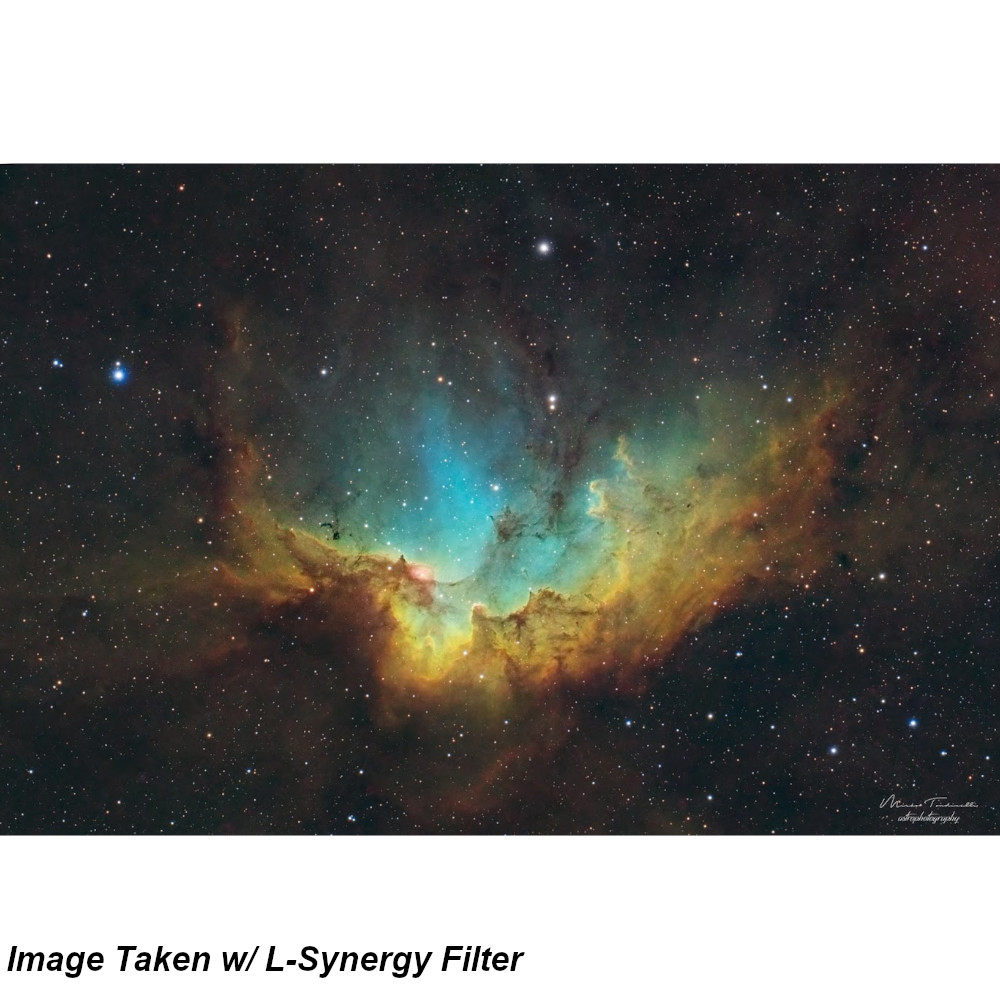
In practice, this means astrophotographers can record nebulae with enhanced structural variety. Oxygen and sulfur emissions often highlight different regions of a cloud. By combining them, the resulting images show contrasts and layers that would otherwise require multiple single filters. Processing becomes more versatile, as users can assign OIII and SII data to different color channels and experiment with palettes beyond the usual Ha-OIII combinations.
Complimenting other filters
Optolong already has a reputation for popular filters, such as the L-eNhance and L-eXtreme. Both focus on Ha and OIII, meeting the demand for dual narrowband solutions centered on hydrogen. The L-Synergy expands the brand’s lineup by offering something different. Instead of repeating the same formula, it provides a filter that captures two less commonly paired lines.
This strategy gives astrophotographers more choices. It allows them to customize their filter set according to the targets they shoot most often. For example, imagers interested in planetary nebulae or supernova remnants may find the OIII-SII combination particularly useful. In this way, the L-Synergy complements rather than replaces existing filters.
Key specifications
Here is a quick look at some of the key specifications of the filter:
| Filter Type | Dual narrowband |
| Filter Size | 50.8mm (2″) |
| Filter Shape | Round |
| Filter Insert Style | Threaded |
| Filter Wavelength (Center or Range) | 500.7 nm; 672.4 nm |
| Filter Bandwidth/Bandpass | 7nm |
| Filter Optical Thickness | 1.85 mm |
Price and availability
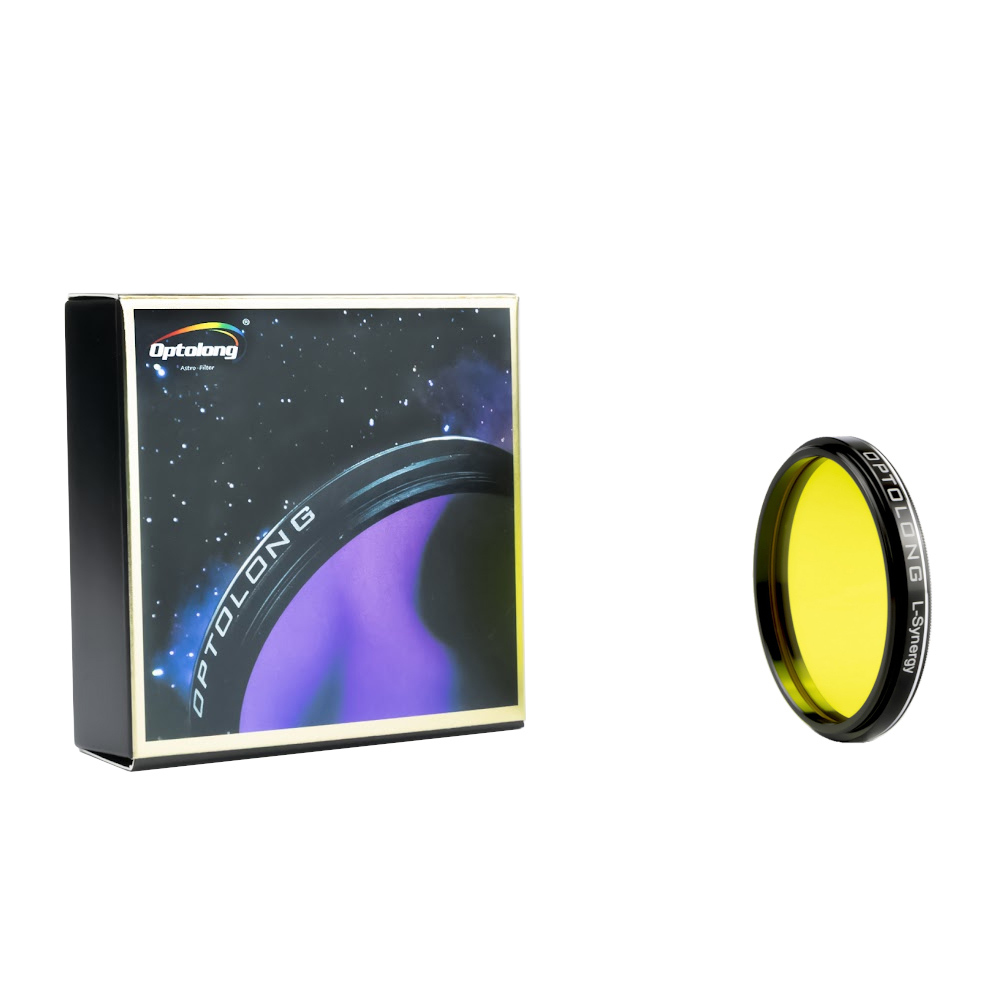
Optolong L-Synergy is priced at $279 and is available via retailers.
The Optolong L-Synergy Dual Narrowband Filter represents a thoughtful addition to the astrophotography toolkit. By focusing on OIII and SII, it provides a unique method for recording emission nebulae with color cameras. Its 7 nm passbands, optimized coatings, and compatibility with a wide range of telescopes make it a practical choice for astrophotographers looking to expand their imaging options.
Clear skies!
See more from DIYPhotography.net on Google
Add DIYPhotography.net as a trusted source. This makes
our stories more likely to appear in your Google Search results.
 Add as a preferred source on Google

Soumyadeep Mukherjee
Soumyadeep Mukherjee is an award-winning astrophotographer from India. He has a doctorate degree in Linguistics. His work extends to the sub-genres of nightscape, deep sky, solar, lunar and optical phenomenon photography. He is also a photography educator and has conducted numerous workshops. His works have appeared in over 40 books & magazines including Astronomy, BBC Sky at Night, Sky & Telescope among others, and in various websites including National Geographic, NASA, Forbes. He was the first Indian to win “Astronomy Photographer of the Year” award in a major category.

Join the Discussion
DIYP Comment Policy
Be nice, be on-topic, no personal information or flames.