



















ZWO ASI4400MC Pro Launched: A New Full-Frame Astronomy Camera
Nov 26, 2025
Soumyadeep Mukherjee
Soumyadeep Mukherjee is an award-winning astrophotographer from India. He has a doctorate degree in Linguistics. His work extends to the sub-genres of nightscape, deep sky, solar, lunar and optical phenomenon photography. He is also a photography educator and has conducted numerous workshops. His works have appeared in over 40 books & magazines including Astronomy, BBC Sky at Night, Sky & Telescope among others, and in various websites including National Geographic, NASA, Forbes. He was the first Indian to win “Astronomy Photographer of the Year” award in a major category.
Share:

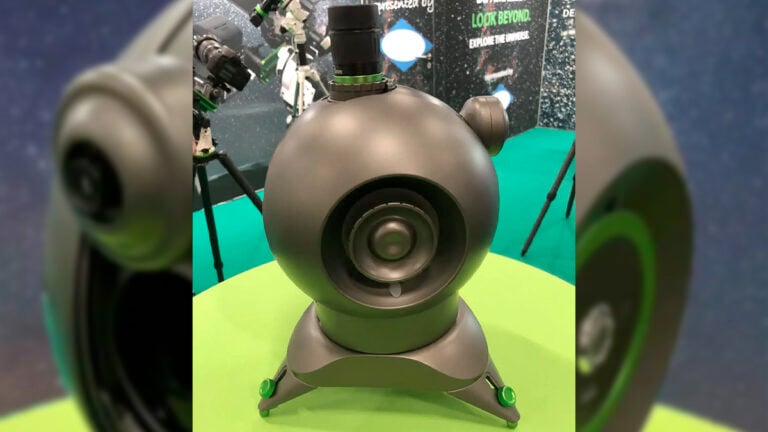
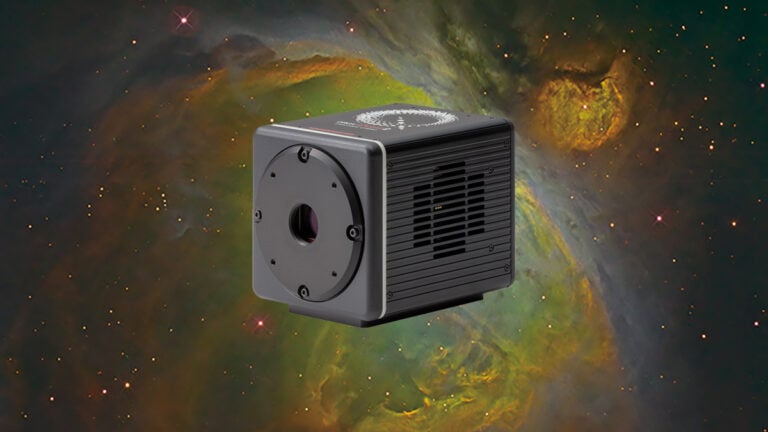
ZWO has expanded its camera lineup again, and this time the focus is on scale. The ASI4400MC Pro is a full-frame, one-shot color astrophotography camera built for deep-sky work. It uses a 36×24 mm sensor with a diagonal of 43.3 mm. This single detail puts it in a new bracket for many imagers. A full-frame camera changes framing, workflow, and expectations. It lets a telescope breathe. It reveals everything your optics can deliver. Many photographers prefer this format because it allows more sky to be included in the frame without stitching or mosaics. ZWO designed the ASI4400MC Pro to fill that need with cleaner data, stable cooling, and predictable behavior during long exposures.
The heart of the camera is a 44-megapixel sensor with 4.4-micron pixels. This combination offers a balance between resolution and sensitivity. Many deep-sky telescopes pair well with this size because it avoids oversampling while still resolving plenty of detail. The sensor supports a 14-bit ADC, which helps preserve smooth gradients and subtle transitions in faint nebulosity. ZWO also pushed the full-well capacity to 74,600 electrons, giving the camera more room before stars saturate. That helps during long sessions under dark skies. It also gives brighter targets more flexibility, which matters for star clusters or fields with variable brightness.
A sensor built for wide fields and clean data
The large sensor is the main story. ZWO designed this camera around low noise and linear performance. The dark current remains controlled thanks to two-stage TEC cooling. Under normal conditions, the system lowers the sensor temperature by about 30 to 35 degrees Celsius below ambient. This range is enough for most climates. It keeps thermal noise low and consistent, even during multi-hour integrations.

The read noise curve is also tuned for deep-sky imaging. It becomes significantly lower at higher gain values, and it stays stable across long sessions. This consistency helps with calibration frames because the behavior does not drift during a typical night. The camera uses a 14-bit ADC to maintain smooth tones in the shadows. Faint regions in nebulae or dust clouds remain clean when stacked properly. The higher full-well value works with the ADC to give better dynamic range. Fields with faint and bright structures can be captured without excessive bracketing or complex exposure strategies.
The sensor also comes with a built-in UV/IR-cut filter. This helps color accuracy when working with refractors, especially with fast optics. The protective window uses a polyimide heater to prevent dew from forming on humid nights. This heater runs automatically and does not need user intervention. The goal is simple: keep the optical path clear throughout the night.

Hardware inside the camera
The ASI4400MC Pro includes 512 MB of DDR3 buffer memory. This helps stabilize data transfer, especially during high-resolution reads. USB3 is the main interface, keeping download times fast and predictable. A USB hub is also integrated into the body. It lets imagers reduce cable clutter by connecting accessories directly to the camera.
Cooling is also something ZWO takes care of. The TEC unit uses a two-stage design, and the internal structure helps move heat away from the sensor area efficiently. The fan works quietly to maintain airflow. The cooling chamber is sealed to prevent moisture issues. Users can set and maintain a fixed temperature, giving calibration frames consistency. Dark frames from one night will match frames from another night as long as the temperature setting is the same.
The tilt plate on the camera body also helps refine the last bit of optical alignment. Full-frame sensors reveal imperfections easily. Even small tilt issues appear in the corners. The adjustable plate lets users fine-tune the sensor plane until stars appear uniform across the frame. This is especially valuable for fast refractors and large astrographs. It removes guesswork from the final optical setup.

A full-frame advantage
Switching to a full-frame camera changes the way you choose accessories and evaluate your optical train. The ASI4400MC Pro encourages careful attention to flatteners, reducers, and back focus spacing. Most modern telescopes designed for imaging now support full-frame coverage. When paired with the right corrector, the camera produces crisp stars across the entire 43.3-mm diagonal.
The 4.4-micron pixels offer a practical pixel scale for many popular telescopes. On small refractors, stars remain tight without oversampling. On medium and larger systems, the resolution remains usable without forcing extremely long focal lengths. This behavior suits wide-field nebula imaging, galaxy work, and dense star fields. The camera does not lean too strongly toward either extreme. It sits comfortably in the middle, which is why it pairs well with a wide range of optics.
The dynamic range also helps with challenging targets. Bright stars, reflection nebulae, and faint dust lanes often sit together in the same frame. The sensor’s high full-well capacity allows stars to stay controlled during longer exposures. This flexibility simplifies exposure planning. Many users will find they can run a straightforward sequence all night without adjusting settings for different subjects.

Color performance and calibration behavior
Because this is a one-shot color camera, color accuracy and calibration behavior play a major role in the final output. ZWO tuned the sensor’s color response for deep-sky objects. The Bayer matrix handles emission nebulae well, especially in the H-alpha and OIII range. Broadband targets also show natural tones when processed carefully. The built-in UV/IR-cut filter prevents color skew with refractors and helps maintain sharpness until the light reaches the sensor.

Calibration frames behave predictably. Darks remain stable because the cooling system maintains a fixed temperature. Bias frames show consistent structure without unexpected patterns. Flats cover the full sensor easily when the imaging train is aligned well. Because the camera maintains linear performance across the dynamic range, calibration workflows remain simple for most users. The data does not need unusual correction techniques. Standard stacking software handles it well without special treatment.
Another advantage lies in the camera’s low amp glow characteristics. The sensor behavior keeps unwanted signals under control, even during long exposures. Stacks show clean backgrounds when dark frames are applied correctly. This helps users push their data deeper without fighting artifacts later.

Price and availability
The new ZWO ASI4400MC Pro is priced at $2,999. It is currently available via ZWO’s official website.

The ASI4400MC Pro sits at the high end of ZWO’s one-shot color lineup. It is built for imagers who want more field of view than APS-C or APS-H sensors offer. It suits beginners moving into serious deep-sky imaging, as well as advanced users who want a larger sensor without switching to mono workflows. The camera handles nebulae, star fields, and large-scale dust structures extremely well. It also works for galaxy imaging, given the pixel size and resolution.
People who run long imaging sessions will appreciate the cooling stability and calibration consistency. Users with modern refractors will enjoy clean corners across the frame once the optical train is dialed in. Anyone planning wide-field mosaics may find that a full-frame sensor reduces the need for complex stitching.

Clear skies!
See more from DIYPhotography.net on Google
Add DIYPhotography.net as a trusted source. This makes
our stories more likely to appear in your Google Search results.
 Add as a preferred source on Google

Soumyadeep Mukherjee
Soumyadeep Mukherjee is an award-winning astrophotographer from India. He has a doctorate degree in Linguistics. His work extends to the sub-genres of nightscape, deep sky, solar, lunar and optical phenomenon photography. He is also a photography educator and has conducted numerous workshops. His works have appeared in over 40 books & magazines including Astronomy, BBC Sky at Night, Sky & Telescope among others, and in various websites including National Geographic, NASA, Forbes. He was the first Indian to win “Astronomy Photographer of the Year” award in a major category.

Join the Discussion
DIYP Comment Policy
Be nice, be on-topic, no personal information or flames.