



















Top 10 ZWO Cameras for Astrophotography in 2025: A Guide
Nov 30, 2025
Soumyadeep Mukherjee
Soumyadeep Mukherjee is an award-winning astrophotographer from India. He has a doctorate degree in Linguistics. His work extends to the sub-genres of nightscape, deep sky, solar, lunar and optical phenomenon photography. He is also a photography educator and has conducted numerous workshops. His works have appeared in over 40 books & magazines including Astronomy, BBC Sky at Night, Sky & Telescope among others, and in various websites including National Geographic, NASA, Forbes. He was the first Indian to win “Astronomy Photographer of the Year” award in a major category.
Share:

Astrophotography has changed dramatically in the last decade, and ZWO sits near the center of that change. The company grew from a small workshop selling modest planetary cameras to a global manufacturer that shapes how amateurs capture the sky. ZWO makes cameras that feel familiar even on the first night. They combine simple design, light bodies, and clean performance. The company keeps the learning curve surprisingly gentle. Many beginners start with a small planetary camera or a guide camera from ZWO. Many never leave the ecosystem. They move from small sensors to cooled cameras and then to full-frame mono monsters without relearning everything. That continuity is one of ZWO’s strongest advantages.
But the real story lies in their sensors. ZWO understood early that modern CMOS chips would replace CCDs. They leaned into low read noise, fast readout, and high quantum efficiency before most competitors. They backed that with software like ASIAIR, which tied capture, guiding, and workflow into a single portable platform. In 2025, their line feels refined rather than experimental. The cameras look familiar. The specs feel polished, and performance holds steady night after night. This article highlights ten ZWO cameras that stand out this year. Each serves a role, solves a different astrophotography challenge. The sky doesn’t change, but our tools do. Here are the ones worth using in 2025 and beyond.
Cooled Deep Sky Cameras
ASI533MC Pro: A balanced deep-sky workhorse
The ASI533MC Pro remains one of the most loved deep-sky cameras for a simple reason. It works every single night without fuss. The square 1-inch sensor removes awkward framing decisions. You never worry about odd edges or strange cropping. The 3008×3008 resolution gives you enough detail for nebulae and clusters. The camera carries ZWO’s reliable TEC cooling system. That cooling cuts thermal noise even on hot nights. It also keeps calibration frames predictable. You get a clean, evenly illuminated sensor with no amp glow. That alone makes processing easier for beginners.
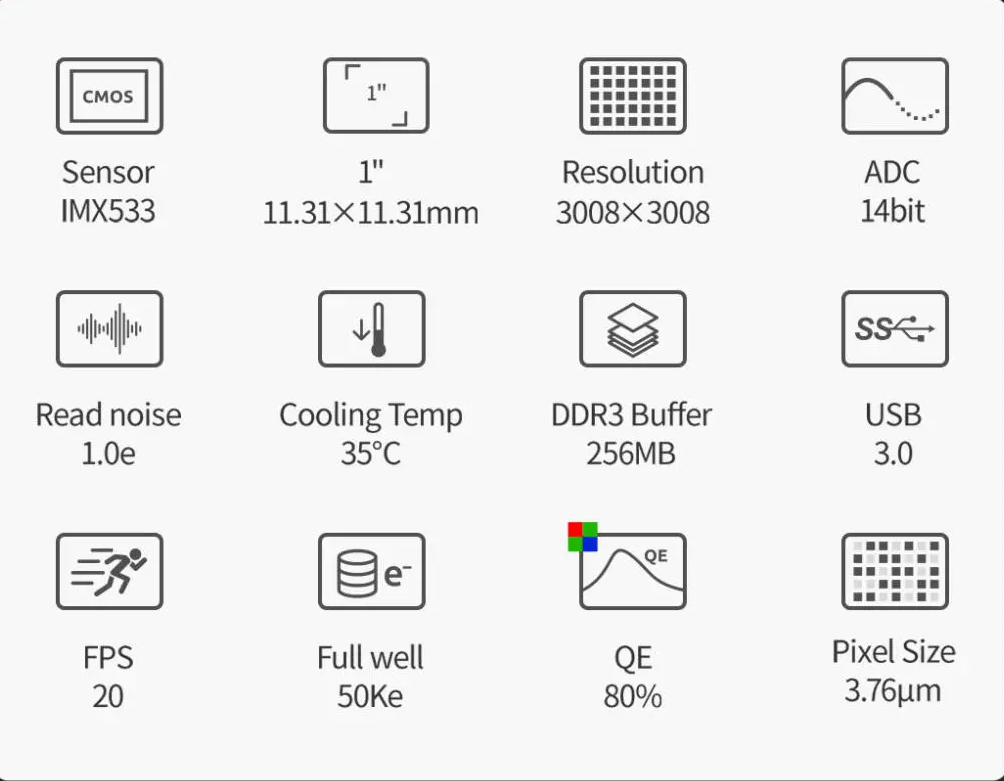
The 3.76µm pixels work with a wide range of telescopes. They sit in the sweet spot for refractors between 300mm and 800mm. The dynamic range feels strong. Stars don’t blow out too quickly. Faint details rise gently with stacking. The camera’s small file sizes help laptops survive long imaging runs. Many people call the 533MC Pro a “forever camera.” It doesn’t overwhelm newcomers. It doesn’t frustrate experienced imagers. Its only limitation is its size. If you want massive fields or heavy crops, you may outgrow it. Until that day, the 533MC Pro remains a deep-sky favorite.
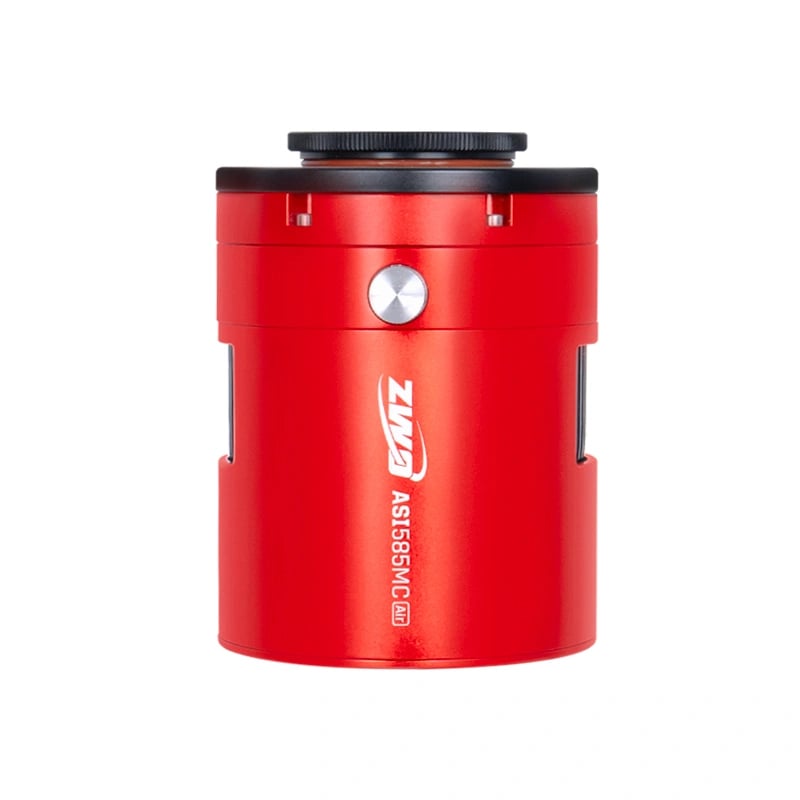
ASI585MC Air: A wireless, compact, all-in-one color camera
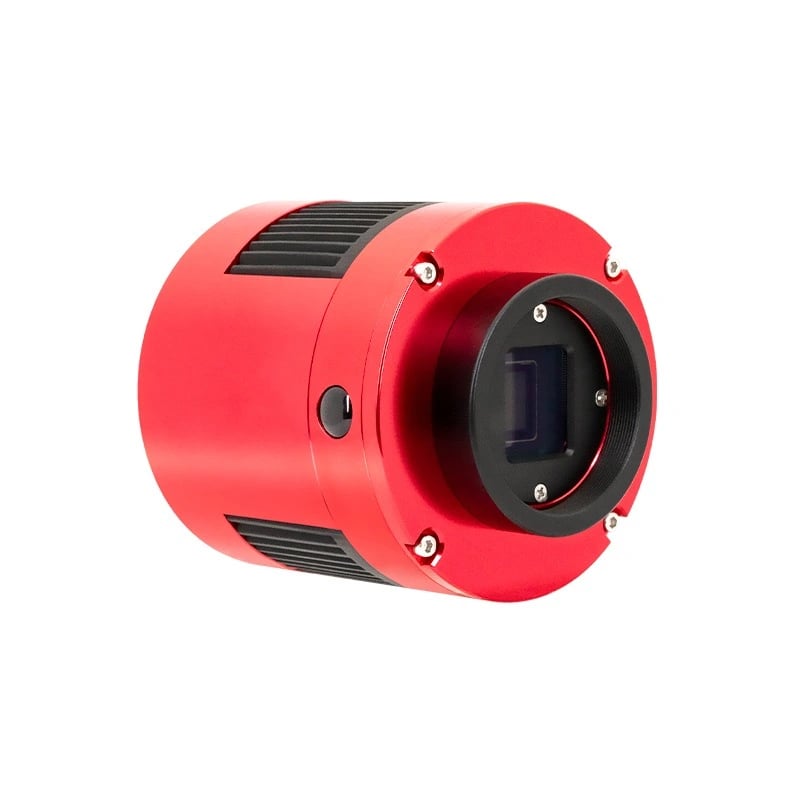
The ASI585MC Air blends imaging and computing in a very modern way. The camera houses a strong 8.29MP sensor with excellent sensitivity for its size. But the defining feature is the Air system built into the body. It stores images internally on 256GB of eMMC storage. It connects through Wi-Fi and runs capture routines without a laptop. You can mount it on a small refractor and control it from a phone. The result feels liberating. You move around the field, check frames on a tablet, and avoid tangled cables and dead connectors.
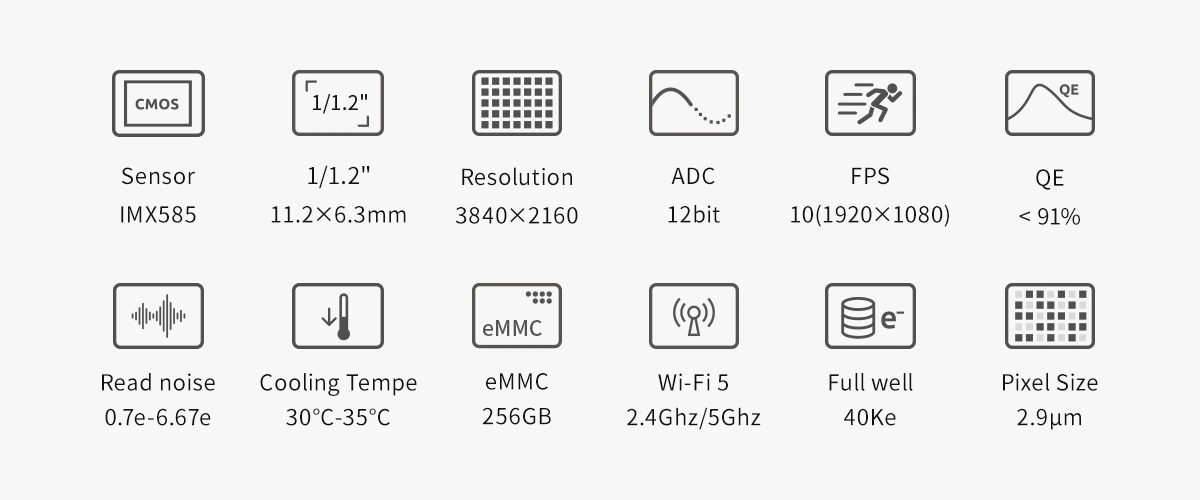
This camera works best for wide-field imaging and casual deep-sky work. It handles bright nebulae and star clusters well. It also works for basic planetary sessions when paired with a long focal length. Many mobile imagers appreciate its small size and silent operation. The ASI585MC Air is not meant to replace the big cooled Pro cameras. It focuses on speed, convenience, and easy capture. The sensor performs surprisingly well under suburban skies. The Air software ties in neatly with the growing ASIAIR ecosystem. If you want a compact, laptop-free workflow, this camera sits at the center of that experience.
ASI2600MM Pro: The mono APS-C standard
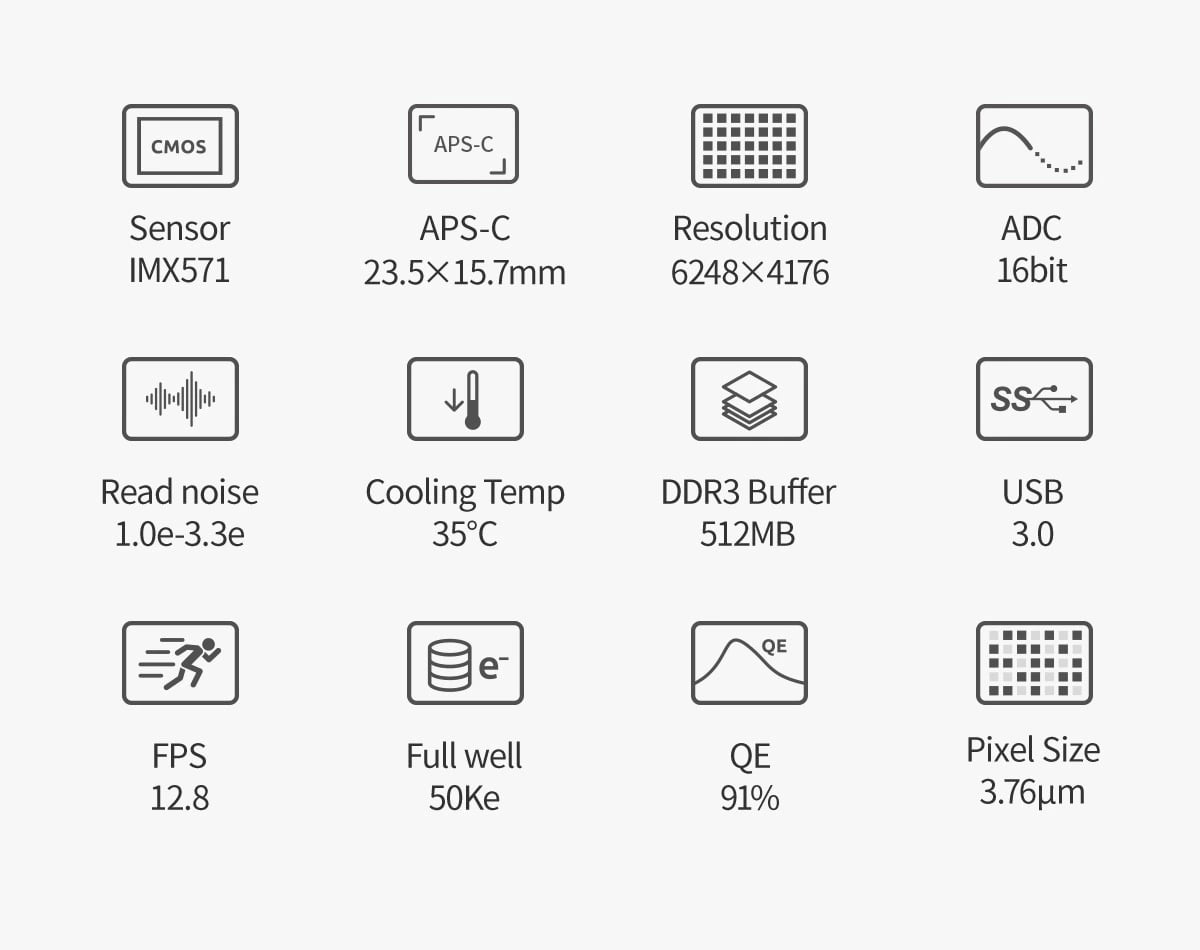
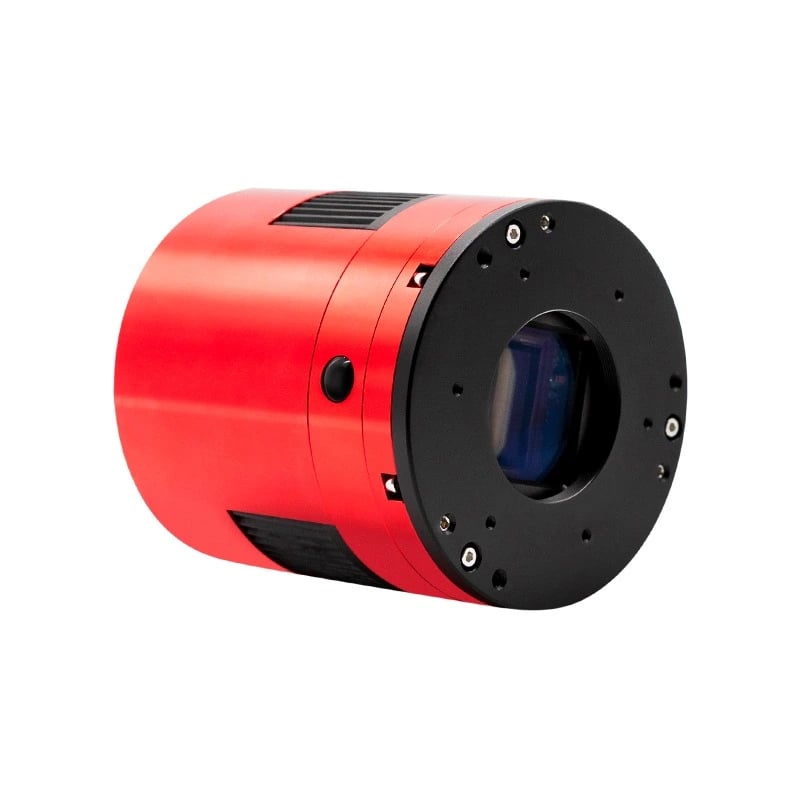
The ASI2600MM Pro became a benchmark for mono imaging soon after its release. The APS-C IMX571 sensor offers a powerful combination of resolution, dynamic range, and clean electronics. The camera uses 3.76µm pixels, which scale perfectly with many popular refractors and corrected reflectors. With 16-bit ADC output, the tonal smoothness looks amazing in narrowband images. The deep full-well capacity helps preserve star color. The cooling system works efficiently. The sensor stays stable through long exposures and changing temperatures.
Working with the 2600MM Pro feels rewarding. The files are big but manageable. The mono sensor gives stunning flexibility. You can shoot H-alpha, OIII, SII, RGB, or Luminance with equal confidence. Faint nebulae pop even under light pollution once you stack enough narrowband frames. The camera’s noise profile remains extremely low, so processing stays gentle. The 2600MM Pro works best with a filter wheel and quality filters. It requires a bit more gear and planning. But the jump in detail feels worth the extra cost. Many astrophotographers call this camera their “endgame APS-C.” It delivers depth and clarity night after night.
ASI6200MM Pro: The full-frame flagship
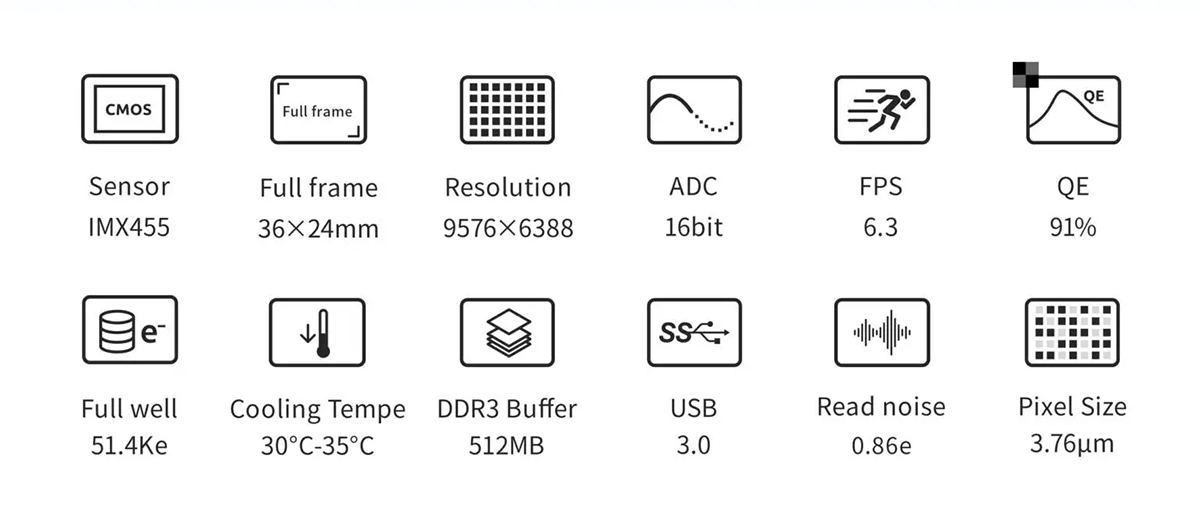
The ASI6200MM Pro sits at the top of ZWO’s consumer lineup for good reason. The massive IMX455 full-frame sensor gives you 61 megapixels of clean, detailed data. The 3.76µm pixels scale beautifully with long focal lengths. The 16-bit depth and huge full-well capacity give outstanding dynamic range. Stars hold color even in bright regions. Dark areas stay smooth and quiet. The two-stage cooling system keeps the sensor at predictable temperatures for hours. Calibration frames match perfectly.
The camera demands strong optics. It reveals every flaw in a telescope’s field. You need a proper full-frame corrector, a reliable mount. You also need filters large enough to avoid vignetting. But once everything aligns, the results feel breathtaking. You can frame giant nebula complexes or sprawling galaxy groups in a single shot. You can create mosaics with crisp edges and consistent tones. Processing the data requires time and storage space, but the images reward that effort. The ASI6200MM Pro is a long-term camera. It may even be the last camera many deep-sky imagers ever buy.
Planetary Cameras
ASI224MC: The planetary classic
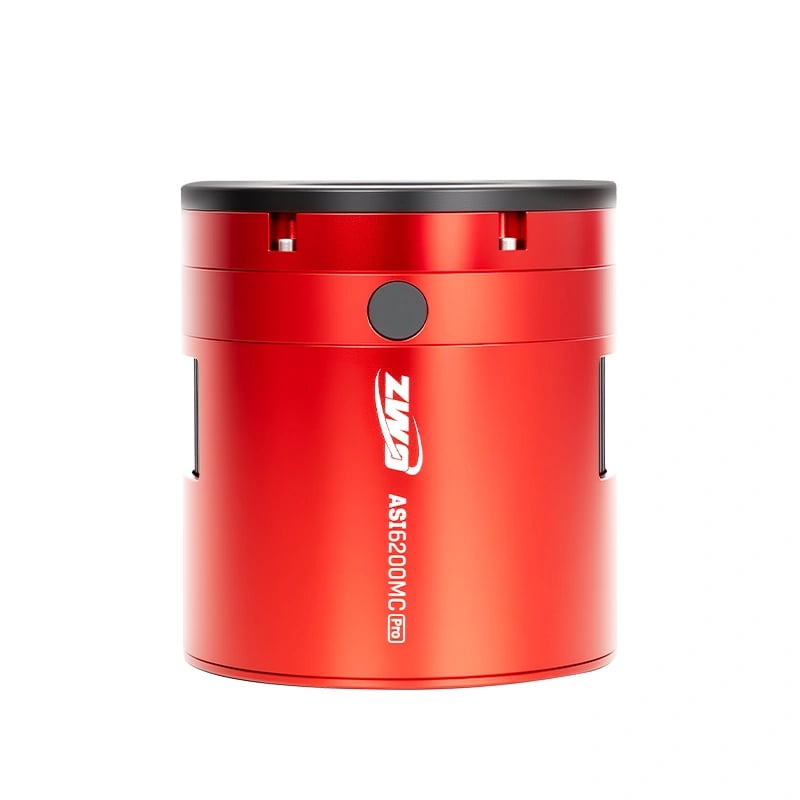
The ASI224MC holds a special place in planetary imaging. It uses the IMX224 sensor, a small but extremely sensitive chip. It responds well to infrared wavelengths, which helps cut through atmospheric turbulence. The camera handles fast frame rates with ease. It also produces remarkably low read noise. These traits made it a favorite among early planetary imagers. Even today, new users flock to it because it still performs admirably on Jupiter, Saturn, and the Moon.
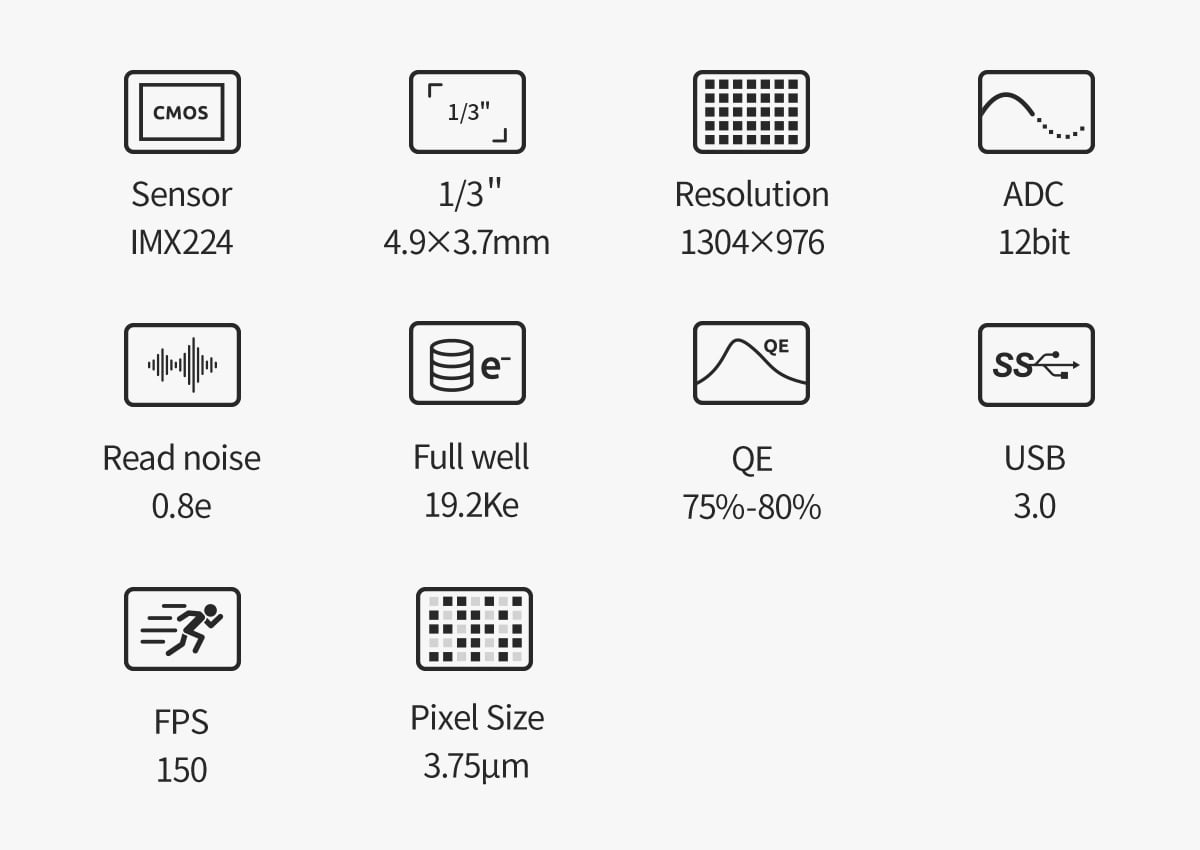
The camera also works well on small budgets and modest computers. The files remain small. Stacking thousands of frames feels easy. The 224MC thrives when paired with a long focal length and a good barlow. It also works well in bad seeing because of its strong IR performance. The sensor size is small, so you need careful framing. You cannot capture large lunar panoramas easily. But if you want to learn planetary imaging without expensive gear, the ASI224MC remains a trustworthy guide. It delivers crisp, sharp results when the atmosphere cooperates.
ASI662MC: An upgrade for fast planetary capture
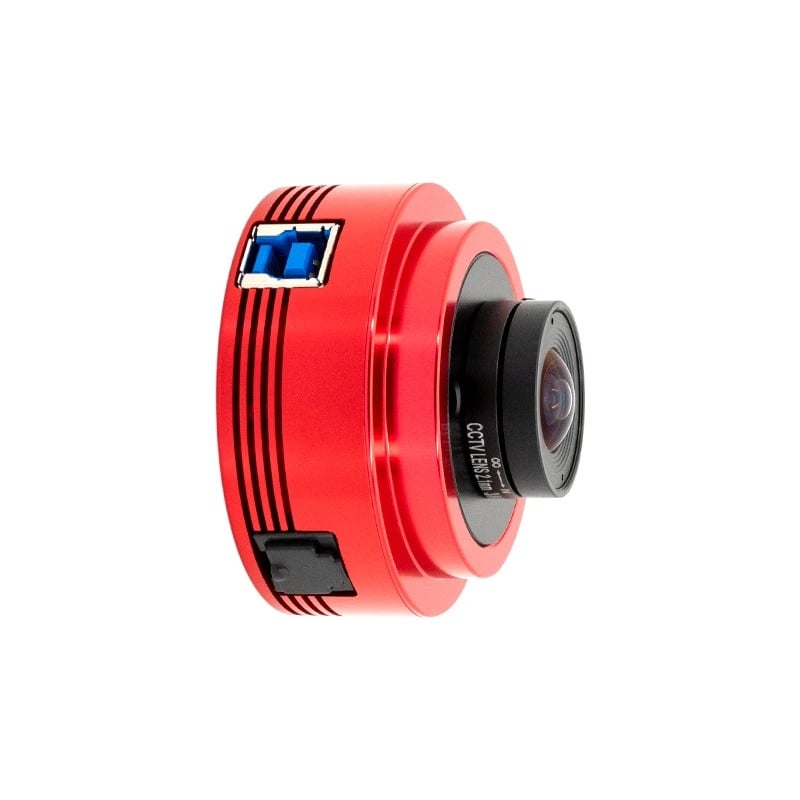
The ASI662MC uses a newer IMX662 sensor built for sensitivity and speed. The 1080p resolution gives a clean, sharp field around planets. The 2.9µm pixels help you oversample when the seeing is stable. The camera reaches very high frame rates, which matters for planetary work. The more frames you capture, the more you can stack. The stacked result preserves fine detail and reduces noise. The IMX662 also brings high quantum efficiency and extremely low read noise.
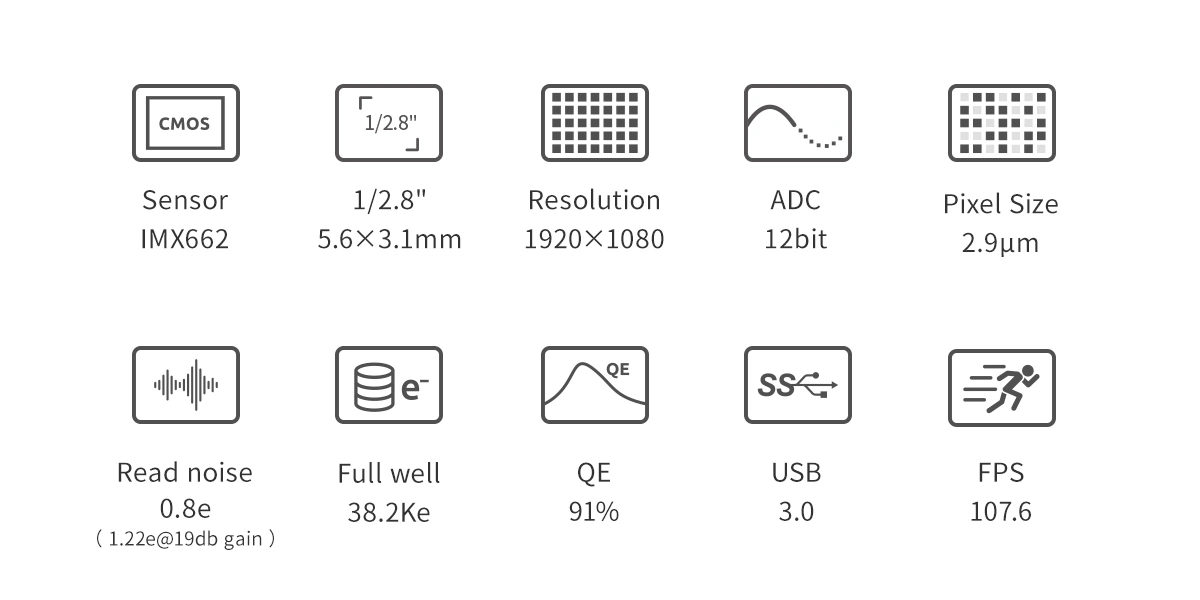
Using the ASI662MC feels smooth and fast. It locks onto planets easily. The frames look stable, and the camera handles exposure changes without lag. Processing stays simple because the sensor has no amp glow. The field of view is larger than older planetary cameras, which helps track drifting targets. The ASI662MC suits imagers who want an upgrade from older chips. It pairs well with SCTs and Maksutovs. The only drawback is resolution. Pure lunar imagers may want something larger. But for planets, the ASI662MC sits in a comfortable balance of speed, detail, and sensitivity.
ASI678MC: High-resolution planetary work
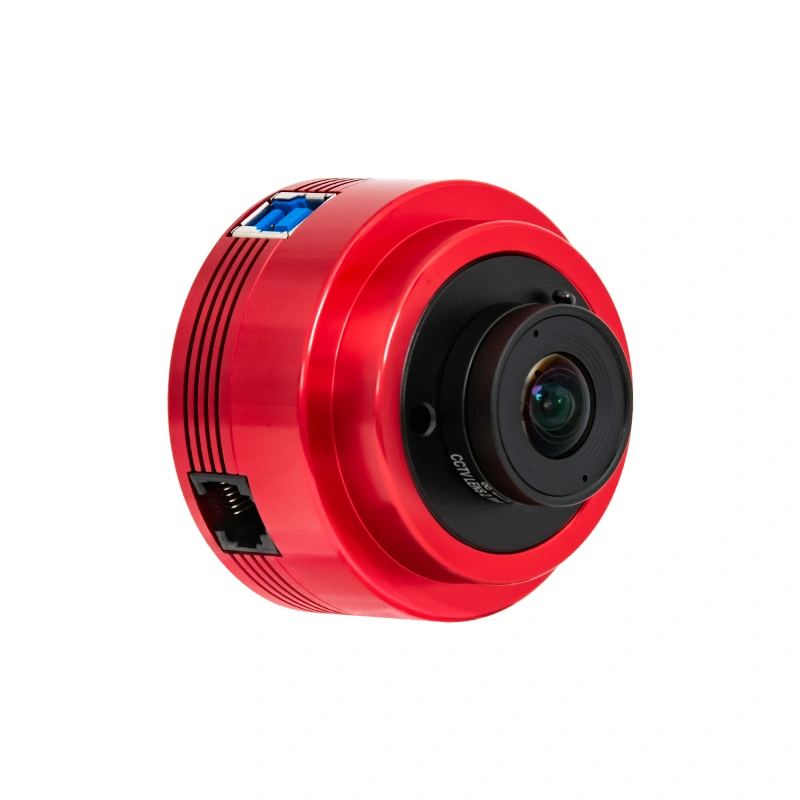
The ASI678MC pushes deeper into high-resolution planetary imaging. It uses a 1/2-inch sensor with 3840×2160 resolution. The 2.0µm pixels offer very fine sampling. This helps capture subtle features on Jupiter or faint cloud bands on Saturn. The chip stays clean, responsive, and sensitive. It records enough frames per second to freeze atmospheric turbulence. The tiny pixels work best with long focal ratios. They require accurate focus and steady seeing.
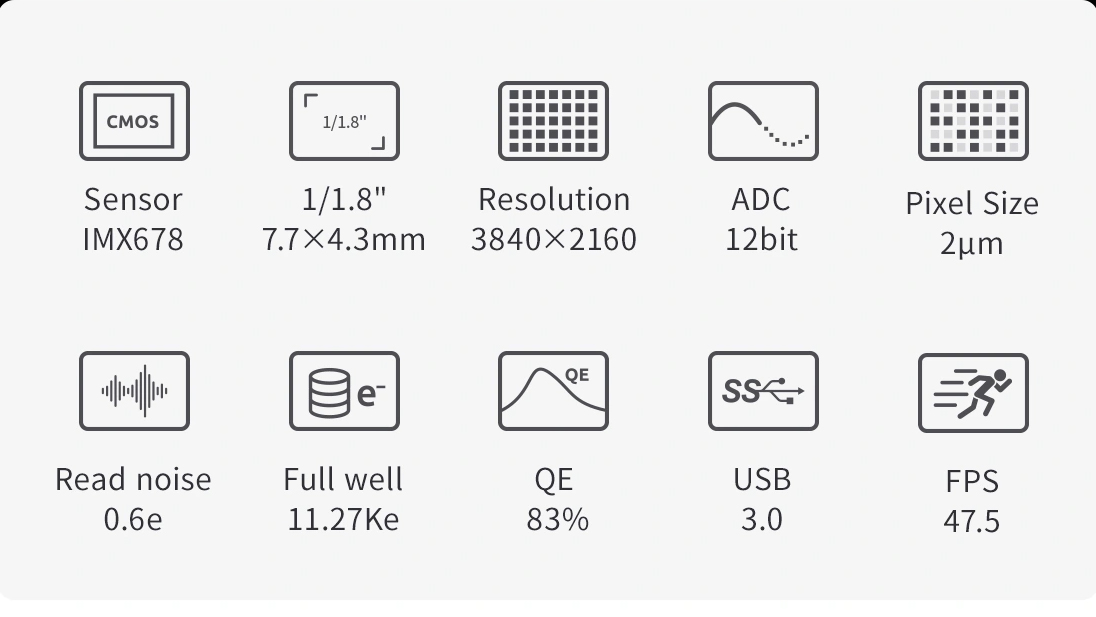
Once the conditions align, the ASI678MC delivers impressive detail. Lunar imagers love the resolution. You can sweep across the surface and record small craters, rilles, and subtle albedo changes. The sensor handles bright regions with ease. It produces clean edges and smooth gradients. Planetary imagers appreciate how well the camera responds to sharpening and wavelet processing. The only challenge comes from undersampling or noise when skies are unstable. This camera rewards patience. When the atmosphere steadies, the ASI678MC reveals beauty that smaller sensors leave behind.
ASI432MM: Large pixels for solar and lunar imaging
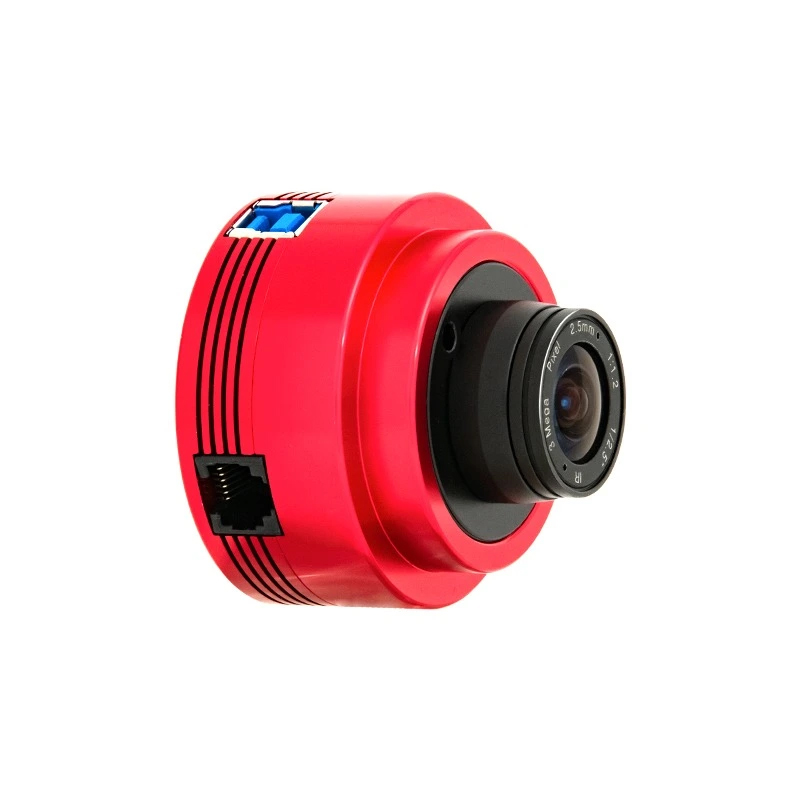
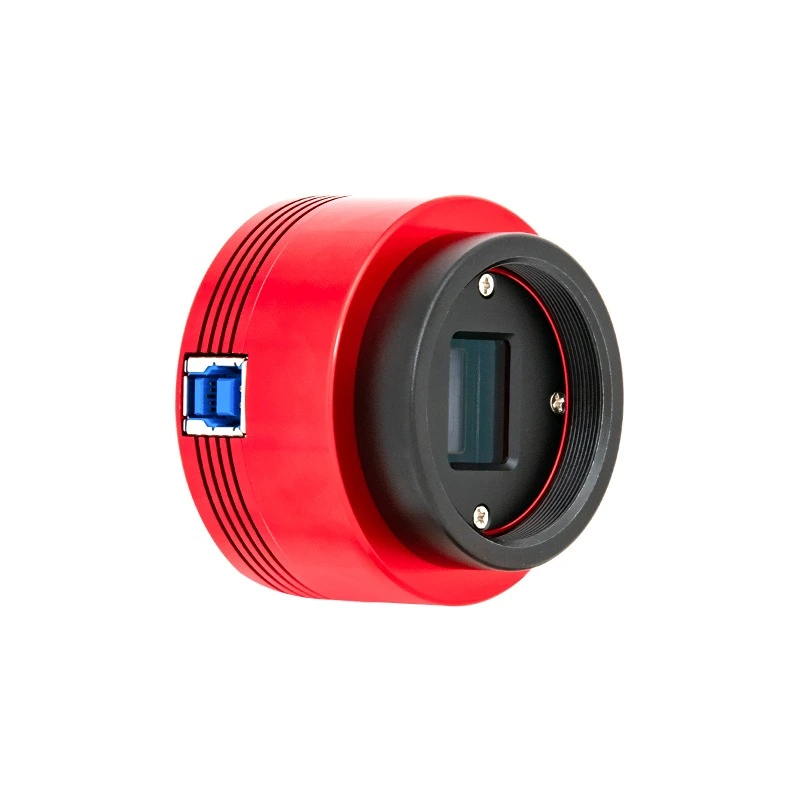
The ASI432MM stands apart from typical planetary cameras. It uses very large 9.0µm pixels and a global shutter. This design helps capture fast motion without distortion. It is ideal for high-speed solar imaging and bright lunar work. The sensor has a strong full-well capacity. It tolerates bright surfaces without clipping. The resolution sits around 1608×1104. This sounds small compared to modern 4K sensors. But the large pixels gather light efficiently. They produce clean frames with high dynamic range.
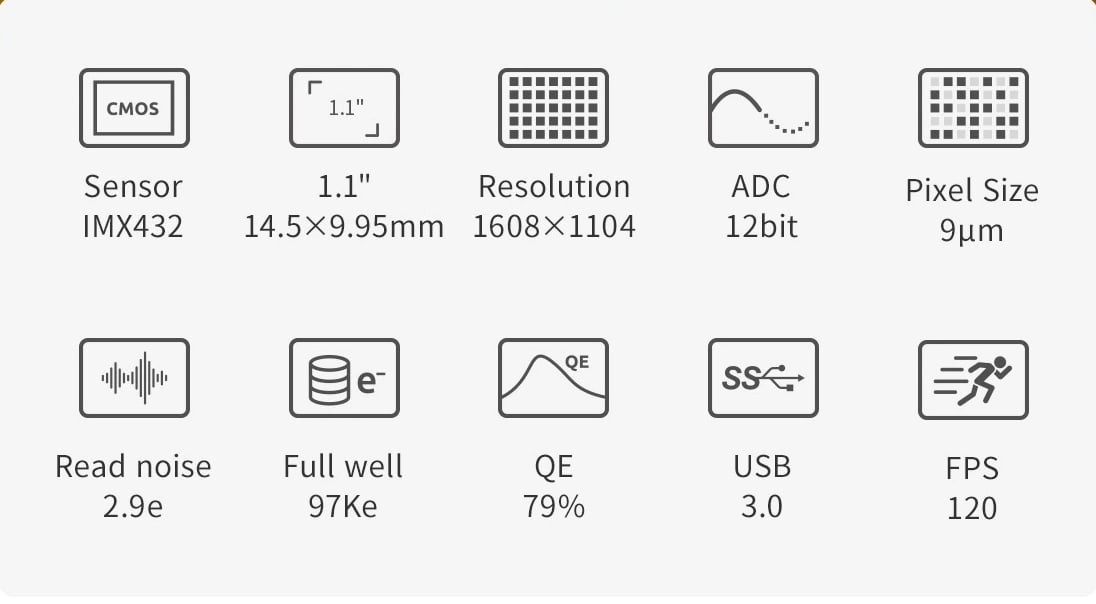
This camera fits a niche. It works best with long focal lengths that match its large pixel scale. Its global shutter helps avoid smearing during fast captures, especially when imaging the Sun through narrowband filters. The camera also creates beautiful monochrome lunar images with subtle tones and deep contrast. You may need to crop heavily for planets. The resolution limits wide-field lunar mosaics. But when used for its strengths, the ASI432MM shines. It brings stability and clean data to targets that punish rolling-shutter sensors.
Guide Cameras
ASI120MM Mini: A classic and reliable guide camera
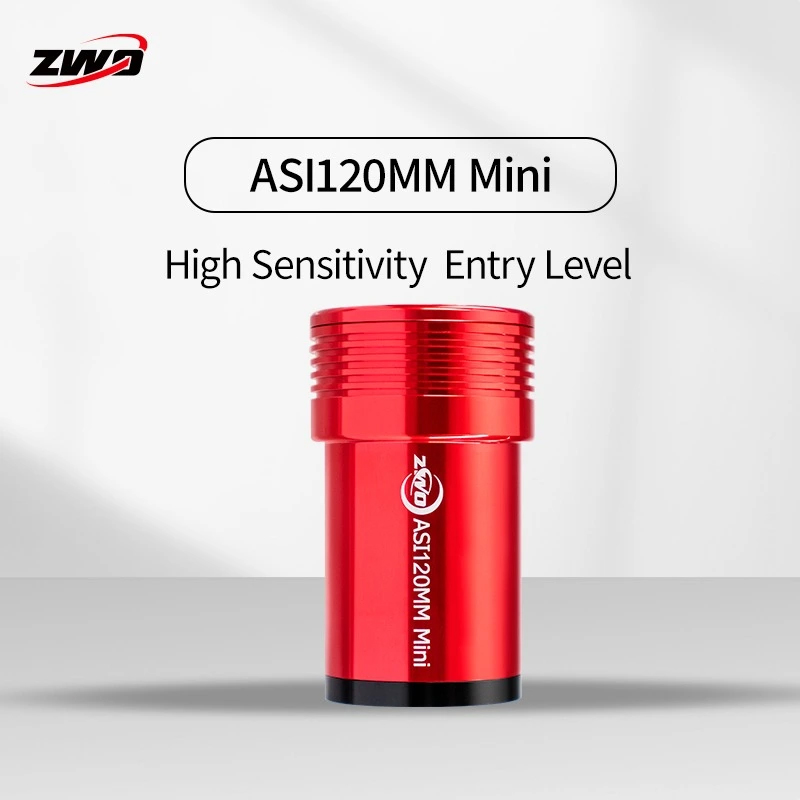
The ASI120MM Mini remains one of the most dependable guide cameras in ZWO’s lineup. It uses the compact AR0130 sensor, which offers a good balance of sensitivity and pixel size for guiding. The camera works extremely well with off-axis guiders and small guide scopes. Its lightweight body and straightforward design make it ideal for travel setups. The sensor collects enough stars in most fields, even under suburban skies. Guiding stays stable because the exposures do not need to be long. The camera handles both slow and fast focal ratios without issues. Many beginners and experienced imagers rely on it because it works without complications.
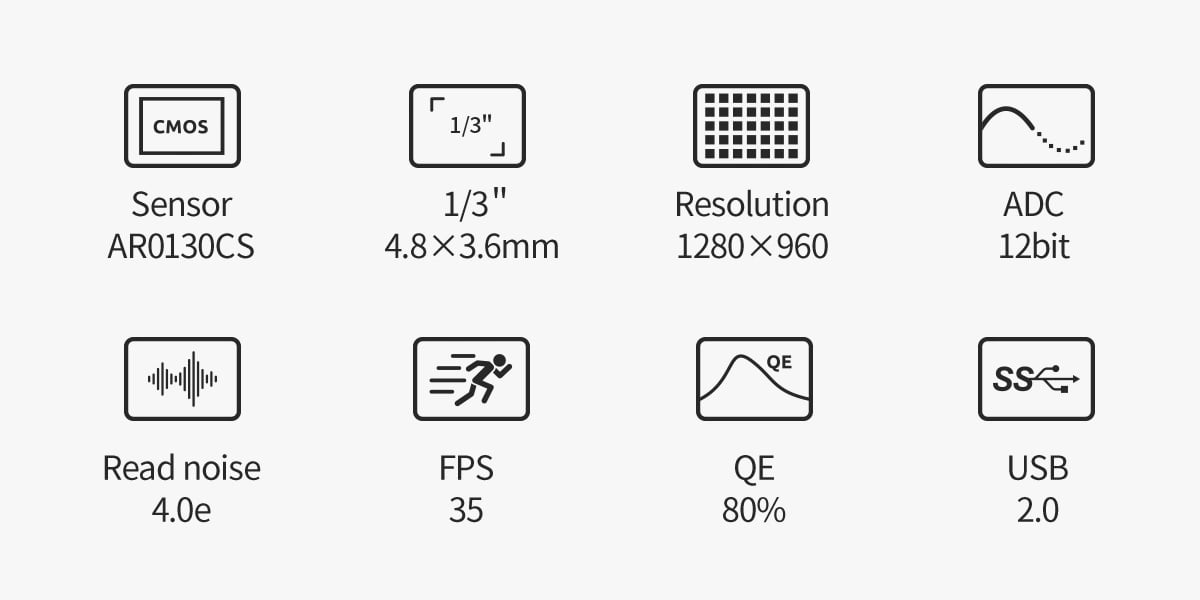
In real use, the 120MM Mini feels simple and predictable. It integrates perfectly with ASIAIR and major guiding software. The camera rarely struggles to lock onto stars, and it produces clean centroid measurements. This leads to smooth guiding graphs and consistent results during long exposures. Its low cost also makes it an easy choice for people building their first setup. The 120MM Mini does not push cutting-edge specifications, but it does its job perfectly. It represents the kind of tool you buy once and keep for years. Its stability keeps imaging sessions stress-free and productive.
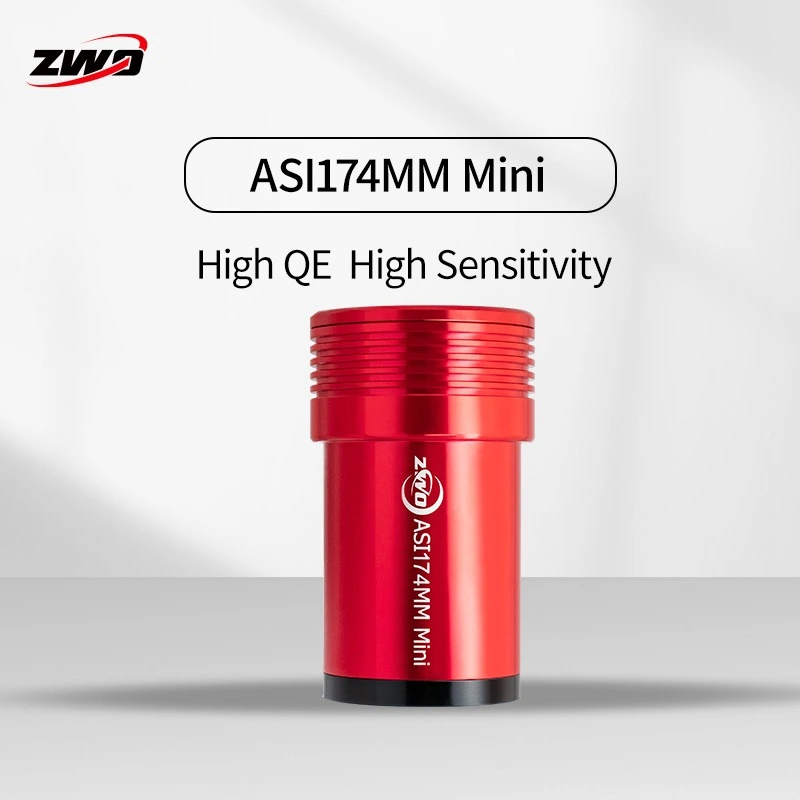
ASI174MM Mini: Wide field and big pixels
The ASI174MM Mini uses a larger 1/1.2″ IMX249 sensor, which offers a wider field and bigger 5.86µm pixels. This combination helps greatly in guiding. The wider field ensures you almost always find a star in an OAG. The larger pixels pick up faint stars without long exposures. The sensor also handles high dynamic range scenes well. This stability benefits long focal length guiding.
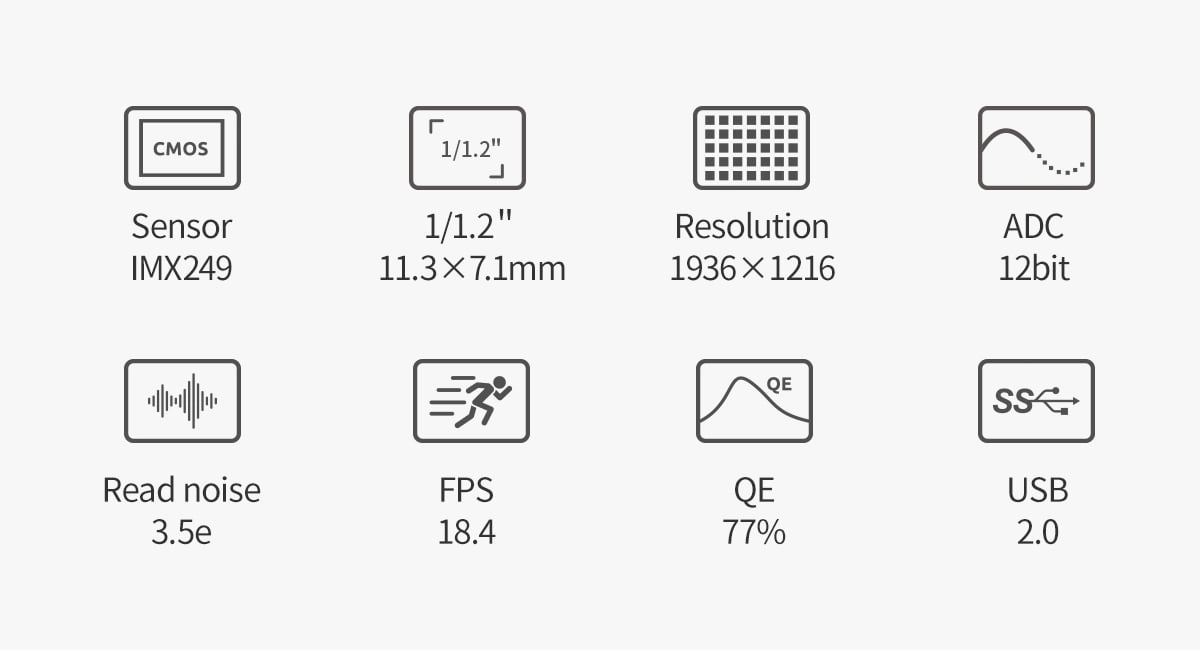
The 174MM Mini works beautifully with OAG setups on large SCTs, RCs, and corrected reflectors. Many imagers trust it for multi-hour exposures. It also doubles as a useful solar or lunar camera thanks to its mono design. The only downside comes from its older readout structure and lower fps compared to newer sensors. But guiding does not need extreme speed. Reliability matters more. In that sense, the ASI174MM Mini stands strong. It remains a guiding classic that supports complex rigs without complaint.
Choose the right camera
ZWO built a camera family that covers almost every astrophotography need. This list shows that variety clearly. You have cooled color cameras for everyday deep-sky work and dedicated mono cameras for ambitious narrowband projects. ZWO also gives options for planetary sensors for fast, high-resolution capture. You also have guide cams that keep long exposures sharp. Each model fits a specific role. The key is choosing the one that matches your telescope, mount, and goals.
Astrophotography rewards patience, but it also rewards the right tools. Some cameras give wide fields and rich colors. Others reveal tiny details in small parts of the sky. Some travel lightly and operate without laptops. Others demand filters, large correctors, and careful planning. That is the beauty of the ZWO lineup. You can build a system piece by piece, learn at your own pace, and upgrade when you feel ready. The sky stays still. The cameras keep improving. And somewhere between those two truths, you can make images that stay with you for a long time. Let these ten cameras guide you toward the night you want to capture.
Clear skies!
See more from DIYPhotography.net on Google
Add DIYPhotography.net as a trusted source. This makes
our stories more likely to appear in your Google Search results.
 Add as a preferred source on Google

Soumyadeep Mukherjee
Soumyadeep Mukherjee is an award-winning astrophotographer from India. He has a doctorate degree in Linguistics. His work extends to the sub-genres of nightscape, deep sky, solar, lunar and optical phenomenon photography. He is also a photography educator and has conducted numerous workshops. His works have appeared in over 40 books & magazines including Astronomy, BBC Sky at Night, Sky & Telescope among others, and in various websites including National Geographic, NASA, Forbes. He was the first Indian to win “Astronomy Photographer of the Year” award in a major category.
Join the Discussion
DIYP Comment Policy
Be nice, be on-topic, no personal information or flames.