





















NASA and ISRO’s NISAR Spots a Giant Hummingbird in Antarctica
Jul 25, 2026
Soumyadeep Mukherjee
Soumyadeep Mukherjee is an award-winning astrophotographer from India. He has a doctorate degree in Linguistics. His work extends to the sub-genres of nightscape, deep sky, solar, lunar and optical phenomenon photography. He is also a photography educator and has conducted numerous workshops. His works have appeared in over 40 books & magazines including Astronomy, BBC Sky at Night, Sky & Telescope among others, and in various websites including National Geographic, NASA, Forbes. He was the first Indian to win “Astronomy Photographer of the Year” award in a major category.
Share:
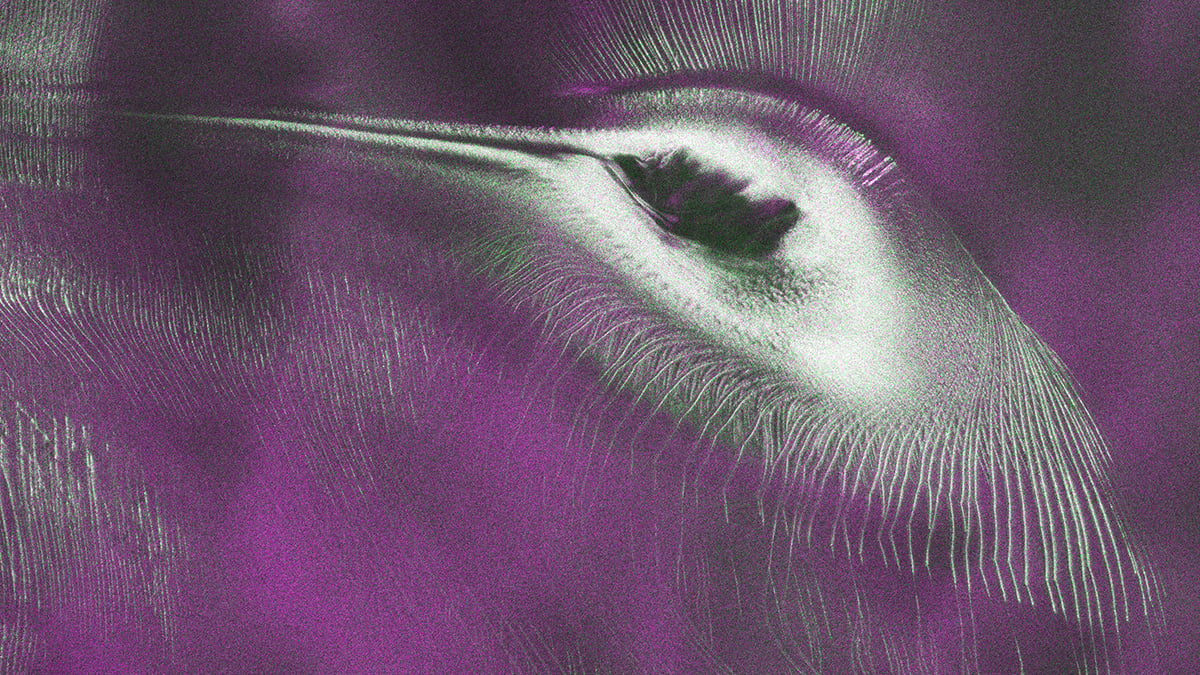
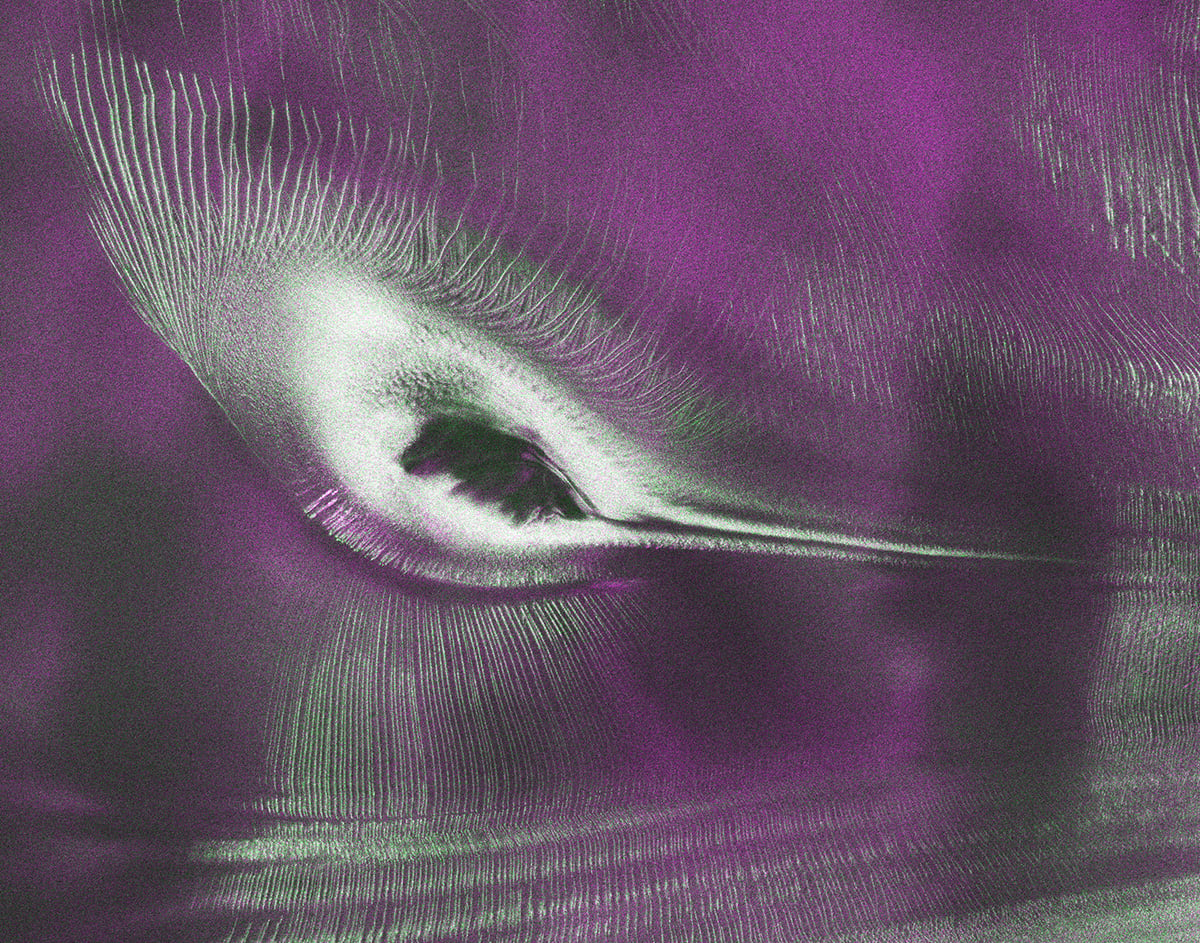
Earth is constantly changing, but many of those changes happen too slowly or in places too remote for people to notice. Glaciers creep across polar landscapes, mountain slopes shift by a few centimeters, forests expand and contract with the seasons, and the ground subtly deforms before and after earthquakes. With satellite imagery, we can now see one of the instances of a moving glacier, something that resembles a giant hummingbird.
NASA and the Indian Space Research Organisation (ISRO) have released one of the first science images from the NISAR mission. Against the vast white expanse of East Antarctica, a hummingbird seems to emerge from the ice. It marks one of the first public demonstrations of what the NASA-ISRO Synthetic Aperture Radar (NISAR) mission can accomplish.
A mountain standing against an ocean of ice
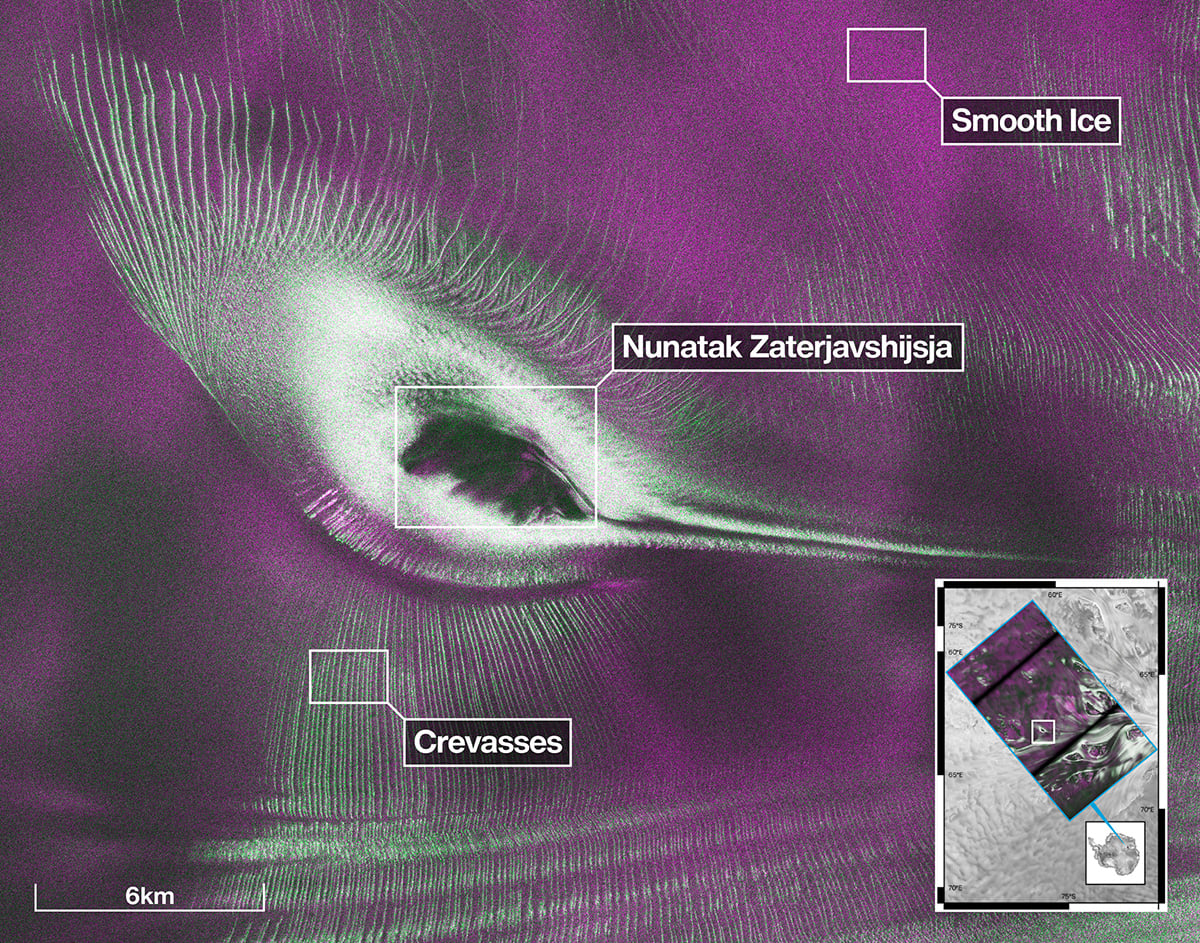
The image originates from East Antarctica, where an isolated rocky peak, known as Nunatak Zaterjavshijsja, rises above the surrounding ice sheet. The word nunatak refers to a mountain that remains exposed while glaciers surround it. Although only its summit is visible today, the mountain has spent thousands of years resisting one of nature’s slowest but most powerful forces.
Glaciers, to the naked eye, appear motionless, but they are constantly flowing under their own weight. Their movement is measured in meters each year rather than in kilometers, making the change almost impossible to notice during a human lifetime. Over centuries, however, that slow motion reshapes the entire landscape.
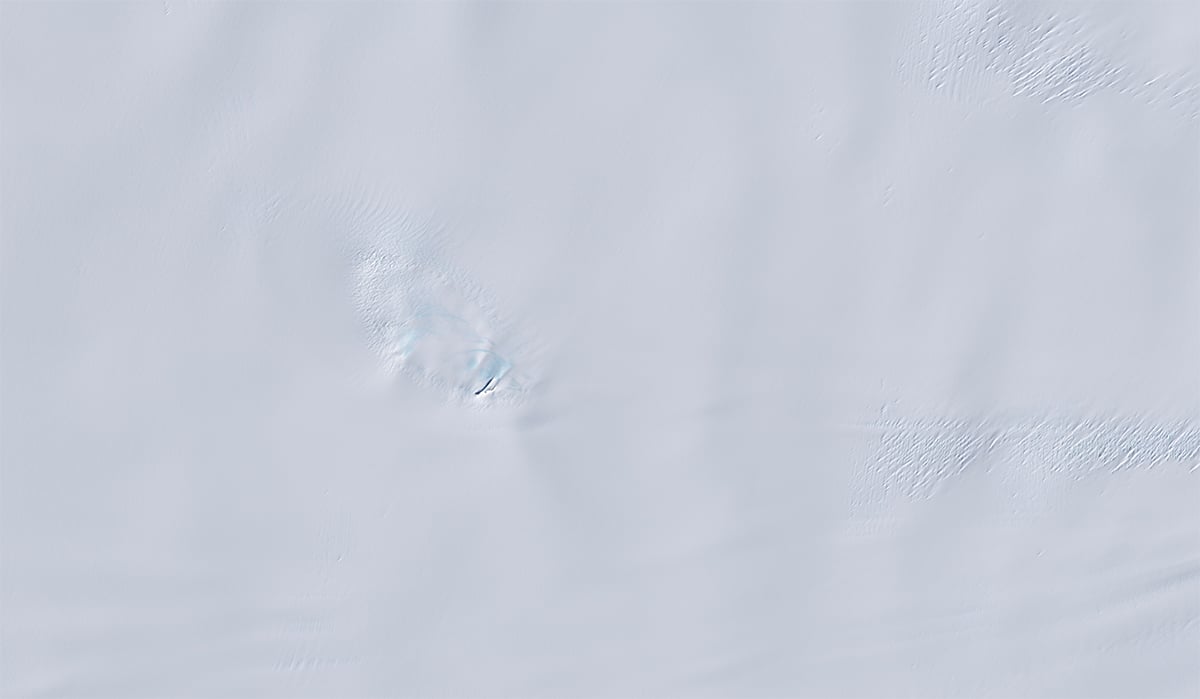
As the glacier encounters the mountain, it cannot continue in a straight line. The ice divides and flows around the rocky obstacle much like water moving around a boulder in a river. The pressure builds within the glacier, stretching the ice until it fractures. Long crevasses spread across the surface, tracing the stresses hidden within the frozen landscape.
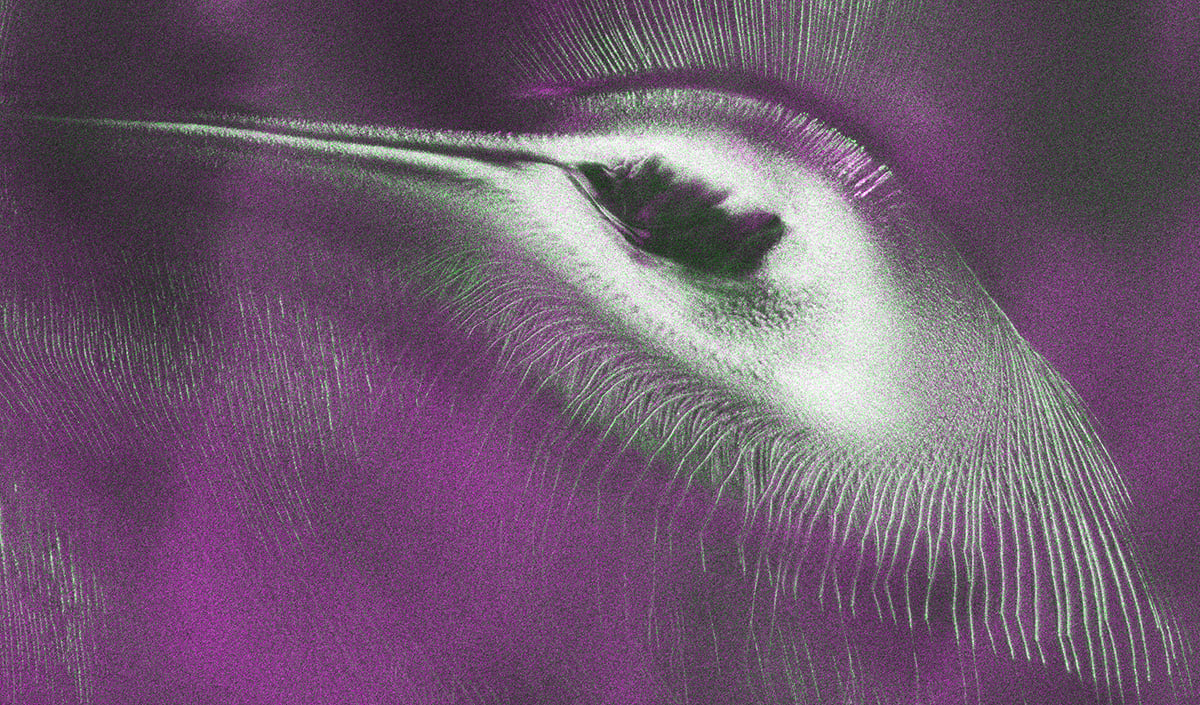
Seen from above through NISAR‘s radar, these natural features create a remarkable illusion. The mountain becomes the hummingbird’s body. The glacier flowing behind it forms what appears to be a tail, while fields of crevasses fan outward like delicate wings.
Looking beyond what the human eye can see
The vibrant greens, purples, and whites make the hummingbird image look almost like a painting. But these colors have nothing to do with the way Antarctica actually appears from space.
Unlike optical satellites, which depend on sunlight reflected from Earth’s surface, NISAR creates its own source of illumination. The spacecraft sends microwave radar pulses toward the planet and records the signals that return. Every surface interacts with those signals differently. Smooth ice reflects them one way. Rough, fractured ice scatters them in another. Bare rock produces its own distinct signature.
Scientists then translate those radar responses into color, allowing subtle differences to stand out. In the hummingbird image, smoother ice appears mainly in shades of magenta, while heavily fractured regions glow green. White highlights areas where multiple scattering processes occur together.
A partnership decades in the making
NISAR is the first Earth observation satellite jointly developed by NASA and ISRO, bringing together decades of expertise from both agencies. NASA developed the powerful L-band radar system and the mission’s enormous 12-meter deployable reflector, the largest radar antenna ever flown on a NASA Earth science mission. ISRO designed the spacecraft bus, supplied the S-band radar, and launched the satellite into orbit.
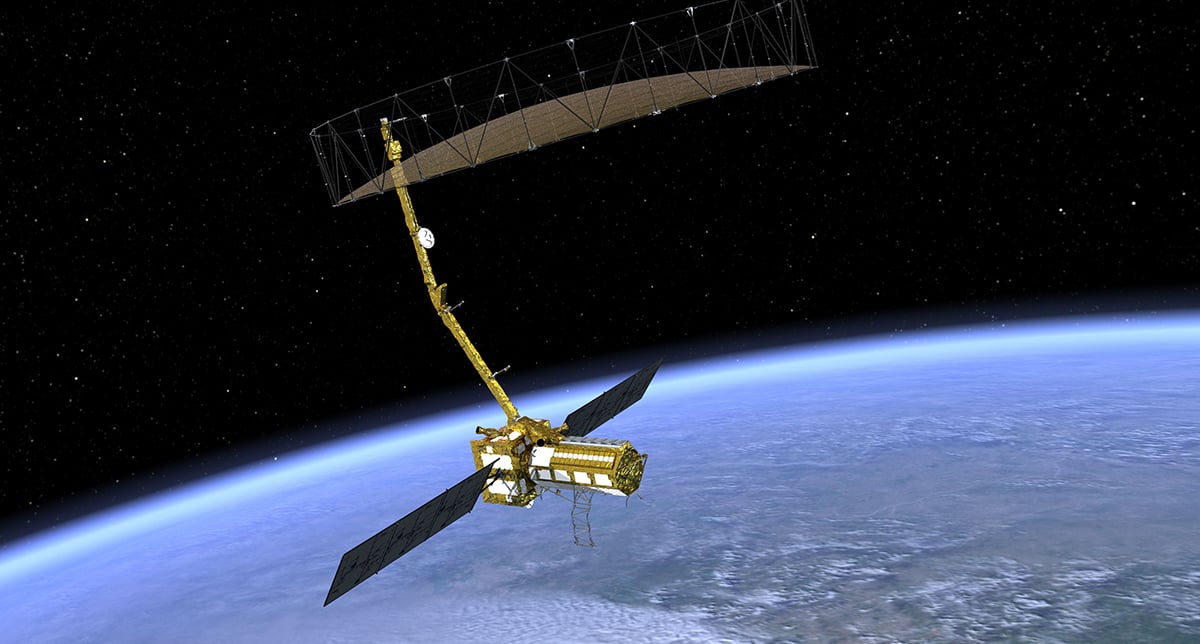
The longer-wavelength L-band radar penetrates vegetation more effectively and excels at measuring tiny changes across Earth’s surface. The S-band radar responds differently to soil, vegetation, and moisture, adding another layer of detail. By combining observations from both frequencies, scientists gain a richer understanding of the landscapes below.
The satellite circles Earth in a near-polar orbit, revisiting almost every land and ice surface every twelve days. Those repeated observations gradually build an extraordinary time-lapse record of our planet, allowing researchers to detect changes that would otherwise remain invisible.
Clear skies!
See more from DIYPhotography.net on Google
Add DIYPhotography.net as a trusted source. This makes
our stories more likely to appear in your Google Search results.
 Add as a preferred source on Google

Soumyadeep Mukherjee
Soumyadeep Mukherjee is an award-winning astrophotographer from India. He has a doctorate degree in Linguistics. His work extends to the sub-genres of nightscape, deep sky, solar, lunar and optical phenomenon photography. He is also a photography educator and has conducted numerous workshops. His works have appeared in over 40 books & magazines including Astronomy, BBC Sky at Night, Sky & Telescope among others, and in various websites including National Geographic, NASA, Forbes. He was the first Indian to win “Astronomy Photographer of the Year” award in a major category.



Join the Discussion
DIYP Comment Policy
Be nice, be on-topic, no personal information or flames.