

























Canon EF vs RF Lenses: Which Should You Choose?
Jul 21, 2026
Leonard Skapp

Alex Baker is a portrait and lifestyle driven photographer based in Valencia, Spain. She works on a range of projects from commercial to fine art and has had work featured in publications such as The Daily Mail, Conde Nast Traveller and El Mundo, and has exhibited work across Europe
Share:

If you’re buying a Canon mirrorless camera, you’ll quickly come across two different lens systems: EF and RF. At first glance, they can seem confusing, especially since many photographers continue to use both.
The good news is that you don’t have to replace your entire lens collection overnight. Canon designed the EOS R system to make the transition from DSLR to mirrorless remarkably straightforward, allowing many photographers to continue using their existing EF lenses while gradually upgrading to RF glass.
What are EF lenses?
Canon introduced the EF mount in 1987 with the EOS film camera system. Over the next three decades, it became one of the most successful lens mounts ever produced, with hundreds of lenses covering everything from affordable kit zooms to professional L-series telephoto lenses.
Third-party manufacturers, including Sigma, Tamron, Samyang, Laowa and Tokina, also produced a huge range of EF-compatible lenses, giving photographers an enormous amount of choice. Today, the second-hand EF market is one of the biggest advantages for photographers entering the Canon ecosystem.
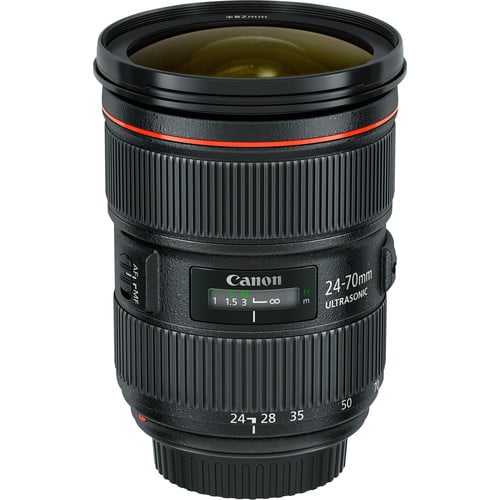
What are RF lenses?
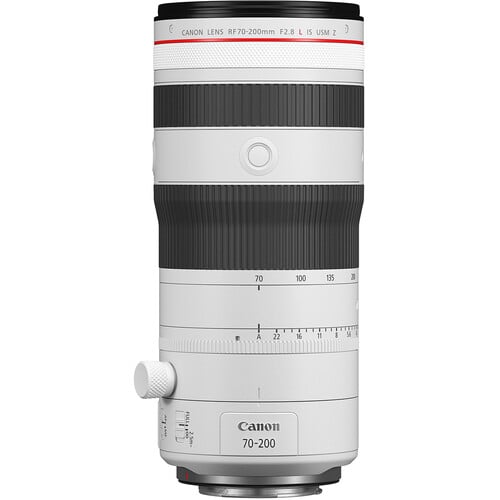
Canon launched the RF mount in 2018 alongside the original mirrorless camera, the EOS R. Because mirrorless cameras don’t require a mirror box, RF lenses sit closer to the camera’s sensor. This shorter flange distance gives lens designers much more freedom, allowing them to create lenses that are often sharper, faster, and optically superior to previous designs. They are also often considerably more compact in both size and weight compared to their EF equivalents.
It’s also why we’ve seen lenses such as the RF 28-70mm f/2L, RF 85mm f/1.2L, RF 100-300mm f/2.8L, and RF 10-20mm f/4L, all designs that would have been extremely difficult or impossible to produce for the EF mount.
Can you use EF lenses on RF cameras?
Yes, you can, and it’s one of Canon’s biggest strengths. By using Canon’s EF-EOS R mount adapter, EF and EF-S lenses work seamlessly on EOS R cameras. Autofocus remains fast and accurate, image quality is unaffected, and features such as image stabilisation continue to function normally. For photographers upgrading from a DSLR, this means there’s no pressure to replace every lens immediately.
Are RF lenses better?
In many cases, yes. RF lenses generally offer improved sharpness, faster communication with the camera body, enhanced autofocus performance, and additional features such as customisable control rings.
However, “better” doesn’t always mean necessary. Many EF L-series lenses remain outstanding performers and continue to produce professional-quality images. If you already own an excellent EF lens, upgrading simply because an RF version exists may not dramatically improve your photography.
What about third-party lenses?
One of the biggest advantages of the EF mount is the sheer number of third-party lenses available. Manufacturers such as Sigma, Tamron, Tokina, Samyang, Laowa and Zeiss produced everything from affordable prime lenses to professional telephoto zooms, giving photographers plenty of choice at almost every price point.
The RF system is a different story. While Canon has opened the mount to some third-party manufacturers for APS-C RF-S lenses, there are currently no autofocus third-party full-frame RF lenses available. That means if you’re buying a native full-frame RF lens with autofocus, your choices are limited to Canon’s own lineup.
For some photographers, this isn’t an issue. Canon’s RF lenses are among the best the company has ever produced, with outstanding image quality and autofocus performance. However, they can also be expensive, particularly the professional L-series lenses.
If you’re looking for more affordable alternatives, adapting EF lenses is often the best solution. It gives you access to decades’ worth of Canon, Sigma, Tamron, Samyang and other lenses while retaining excellent autofocus performance on EOS R cameras. It’s one of the reasons many photographers continue to build mixed EF/RF kits rather than switching entirely to RF glass.
Should you buy EF or RF lenses today?
If you’re starting from scratch and have the budget, RF lenses are the obvious long-term choice. Canon’s future lens development is firmly focused on the RF mount, and the range continues to expand every year.
If you’re building a system on a tighter budget, EF lenses represent outstanding value. Prices have fallen considerably on the used market, making it possible to assemble a professional-quality kit for a fraction of what the equivalent RF lenses would cost. Many photographers now use a mixture of both systems, adapting their EF lenses while adding RF lenses as their budget allows.
Key takeaways
EF and RF lenses are both capable of producing exceptional images. EF lenses remain an excellent choice thanks to their affordability, huge second-hand market, and seamless compatibility with Canon’s mirrorless cameras. RF lenses represent the future, offering Canon’s latest optical designs and some of the best-performing lenses the company has ever produced.
The good news is that choosing an EOS R camera doesn’t mean leaving your EF lenses behind. For many photographers, combining adapted EF lenses with newer RF glass offers the best balance of performance, flexibility, and value.
See more from DIYPhotography.net on Google
Add DIYPhotography.net as a trusted source. This makes
our stories more likely to appear in your Google Search results.
 Add as a preferred source on Google

About Leonard Skapp
Leonard “Len” Skapp is a photographer with a particular interest in cameras, lenses, accessories, camera bags, lens filters, tripods, camera straps, and, on rare occasions, photography itself. Equal parts reviewer and enthusiast, he enjoys digging into the technical details behind the latest gear and translating them into plain English for fellow photographers. He maintains that every purchase is a carefully considered investment, although his bank account and overflowing camera cupboard continue to dispute this claim.
We love it when our readers get in touch with us to share their stories. This article was contributed to DIYP by a member of our community. If you would like to contribute an article, please contact us here.




Join the Discussion
DIYP Comment Policy
Be nice, be on-topic, no personal information or flames.