























A New Supernova in NGC 7331: You Can Photograph It Too
Sep 13, 2026
Soumyadeep Mukherjee
Soumyadeep Mukherjee is an award-winning astrophotographer from India. He has a doctorate degree in Linguistics. His work extends to the sub-genres of nightscape, deep sky, solar, lunar and optical phenomenon photography. He is also a photography educator and has conducted numerous workshops. His works have appeared in over 40 books & magazines including Astronomy, BBC Sky at Night, Sky & Telescope among others, and in various websites including National Geographic, NASA, Forbes. He was the first Indian to win “Astronomy Photographer of the Year” award in a major category.
Share:
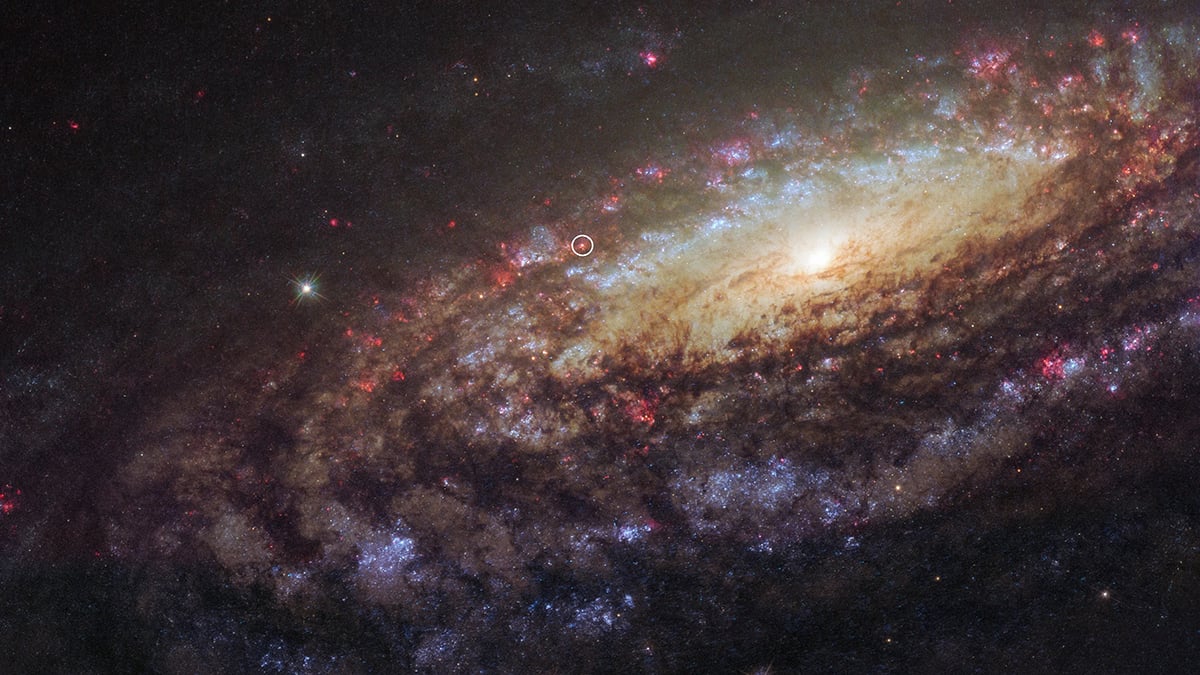
If you had photographed NGC 7331 a few weeks ago, you would have captured a familiar deep-sky scene. The galaxy‘s bright core would sit among a field of stars, with its elongated disk extending across the frame. But if you photograph it now, you will see something new.
A supernova has appeared close to the galaxy’s center. The ATLAS survey discovered the object, called SN 2026aaiv, on September 1, 2026. It was around magnitude 17.3 when first reported, making it a difficult target for many amateur setups. Follow-up observations show it is brightening, and it is now within reach of amateur astrophotographers.
A new supernova in NGC 7331
ATLAS found SN 2026aaiv during its survey of the sky for moving and changing objects. The survey detected the transient on September 1 and reported it at about magnitude 17.3. At that brightness, the supernova required a serious imaging setup.
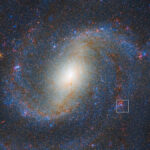
The object lies in NGC 7331, a spiral galaxy in Pegasus. NASA places the galaxy about 45 million light-years from Earth and lists it as Caldwell 30. The galaxy has a size and structure broadly similar to the Milky Way.
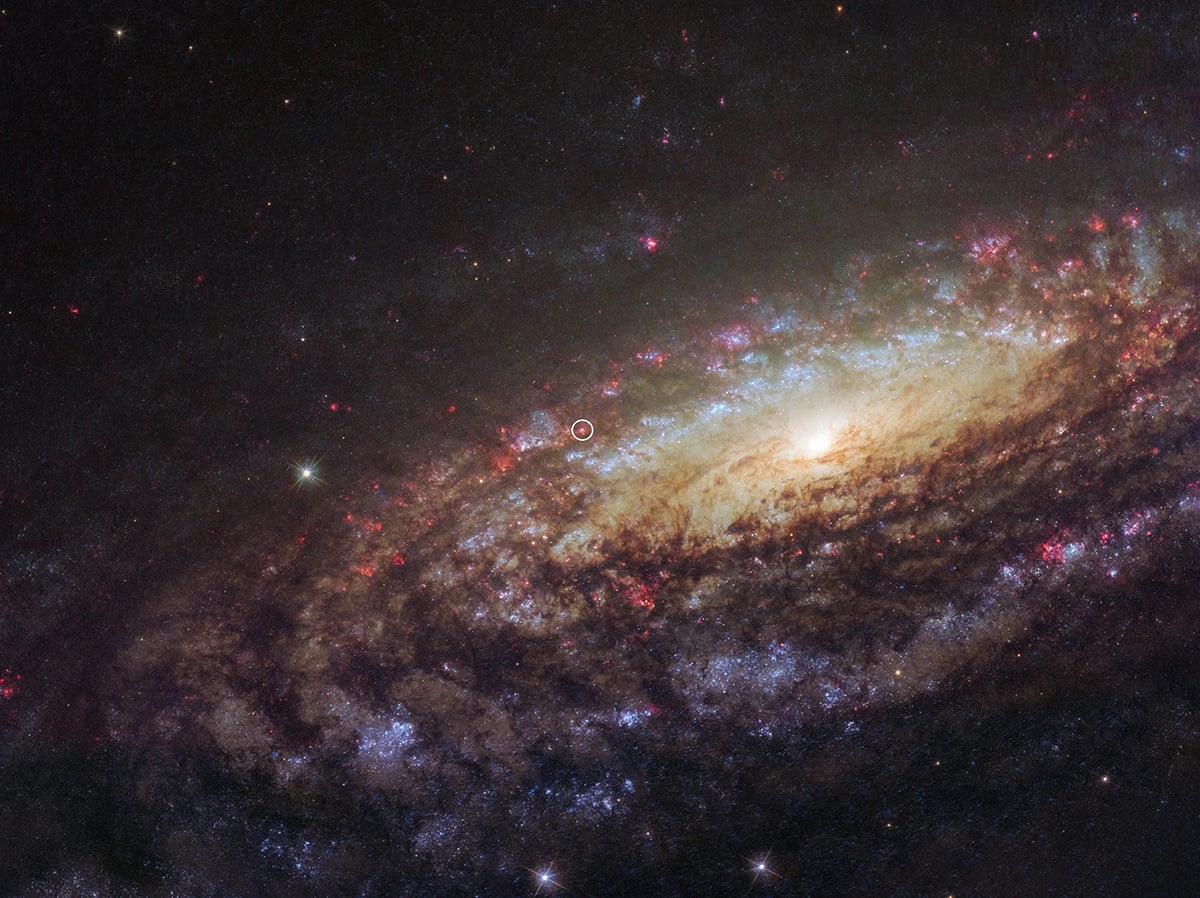
SN 2026aaiv sits close to the galaxy’s bright central region. The Transient Name Server gives its position as approximately RA 22h 37m 05.628s, Dec +34° 24′ 35.19″. Those coordinates can help observers locate the field with computerized mounts and planetarium software.
Its brightness has also made the target more interesting for amateur observers. Reports from early September put it at considerably brighter levels than its discovery measurement. A September 11 observation placed it around magnitude 15.7.
What kind of supernova is SN 2026aaiv?
SN 2026aaiv is a Type Ia supernova. These explosions involve white dwarfs, the compact remnants left after stars similar to the Sun exhaust their nuclear fuel. Astronomers study several possible routes to a Type Ia explosion, including systems where a white dwarf interacts with another star or where two white dwarfs merge.
Type Ia supernovae have a much wider importance in astronomy. Astronomers use them to measure distances because their intrinsic brightness follows a predictable relationship. By comparing that expected brightness with what reaches Earth, researchers can estimate how far away the host galaxy lies.
SN 2026aaiv therefore interests professional astronomers for reasons that go well beyond its appearance in amateur photographs. Its changing light provides data about the explosion itself. Its position inside a known galaxy also gives researchers a useful astronomical reference.
NGC 7331 is a popular deep-sky target
NGC 7331 has long been a favorite among astrophotographers. The galaxy has a bright central bulge and an elongated disk, with dust lanes running through its structure. Its appearance changes considerably as you increase the amount of exposure time.
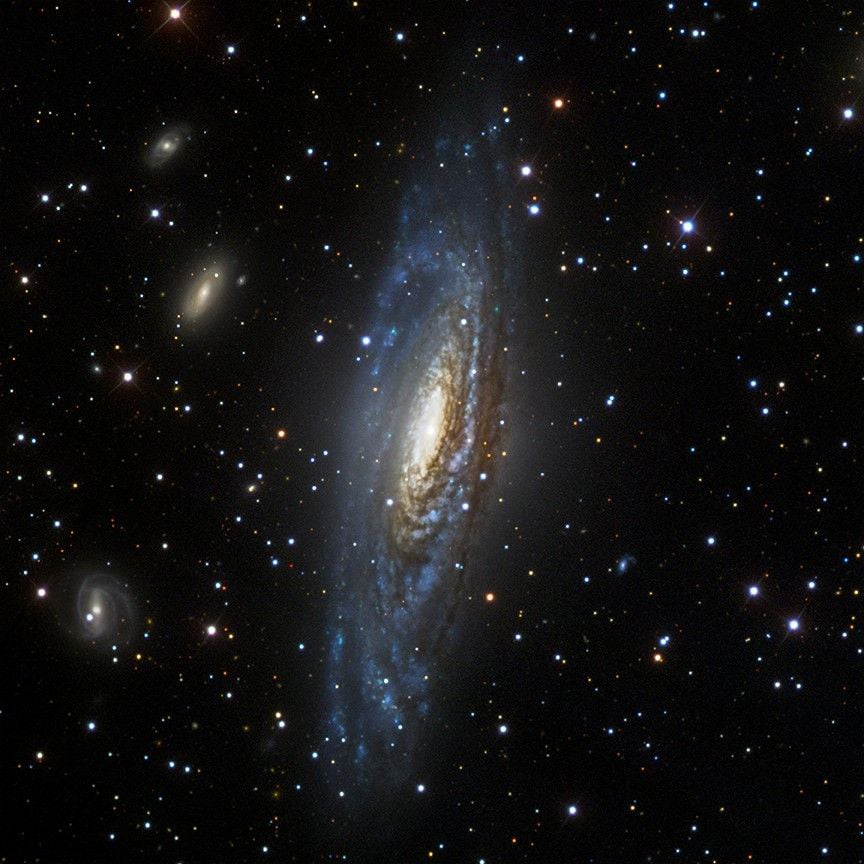
NASA’s Hubble Space Telescope has photographed the galaxy in detail. The Hubble images show the bright central region and the structure spread across its disk. NGC 7331 also sits in a busy area of the sky, with several other galaxies visible in wider images.
The galaxy lies near Stephan’s Quintet, another well-known deep-sky target. The two can appear together in a wide astrophotography frame, although they sit at very different distances. Stephan’s Quintet lies much farther away than NGC 7331.
Can you photograph the supernova?
SN 2026aaiv does not require a professional observatory. A good deep-sky imaging setup can handle the target, provided it has enough aperture, focal length, and tracking accuracy.
A small or medium astronomical telescope on a tracking mount is a good starting point. A sensitive astronomy camera can collect enough light through a sequence of exposures.
A DSLR or mirrorless camera can also work. Pairing one with a tracking mount and a suitable telescope or long telephoto lens gives you a good setup. The main limitation comes from the amount of light the system can collect and the scale at which it records the supernova.
Smart telescopes have also made this kind of target easier to approach. The Seestar S50 has already been used to photograph SN 2026aaiv. Images from amateur photographers show the supernova in images of NGC 7331.
Clear skies!
See more from DIYPhotography.net on Google
Add DIYPhotography.net as a trusted source. This makes
our stories more likely to appear in your Google Search results.
 Add as a preferred source on Google

Soumyadeep Mukherjee
Soumyadeep Mukherjee is an award-winning astrophotographer from India. He has a doctorate degree in Linguistics. His work extends to the sub-genres of nightscape, deep sky, solar, lunar and optical phenomenon photography. He is also a photography educator and has conducted numerous workshops. His works have appeared in over 40 books & magazines including Astronomy, BBC Sky at Night, Sky & Telescope among others, and in various websites including National Geographic, NASA, Forbes. He was the first Indian to win “Astronomy Photographer of the Year” award in a major category.
Join the Discussion
DIYP Comment Policy
Be nice, be on-topic, no personal information or flames.