
























James Webb Uncovers a Hidden Supernova Progenitor in NGC 1637
Feb 24, 2026
Soumyadeep Mukherjee
Soumyadeep Mukherjee is an award-winning astrophotographer from India. He has a doctorate degree in Linguistics. His work extends to the sub-genres of nightscape, deep sky, solar, lunar and optical phenomenon photography. He is also a photography educator and has conducted numerous workshops. His works have appeared in over 40 books & magazines including Astronomy, BBC Sky at Night, Sky & Telescope among others, and in various websites including National Geographic, NASA, Forbes. He was the first Indian to win “Astronomy Photographer of the Year” award in a major category.
Share:
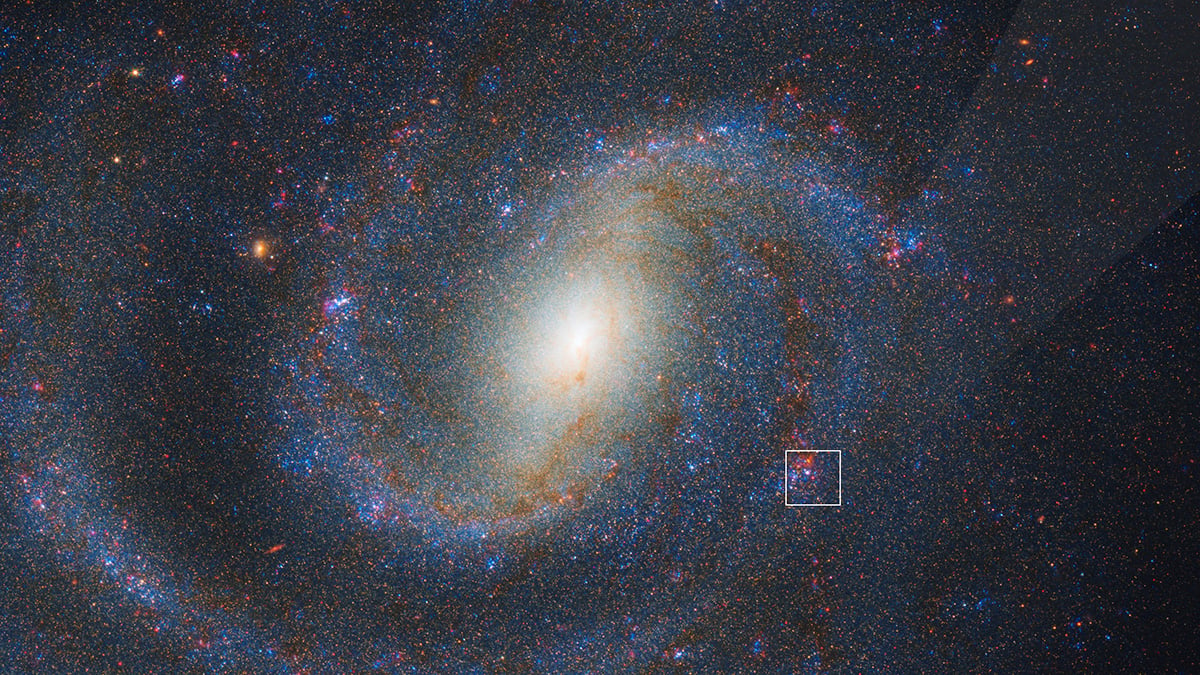
Pre-explosion identification of massive stars remains one of the most direct tests of stellar evolution theory. When astronomers detect a progenitor star before core collapse, they can constrain its mass, evolutionary state, and circumstellar environment with unusual precision. However, observational bias has long complicated this effort. Many expected progenitors, particularly dusty red supergiants, have remained undetected in optical archives.
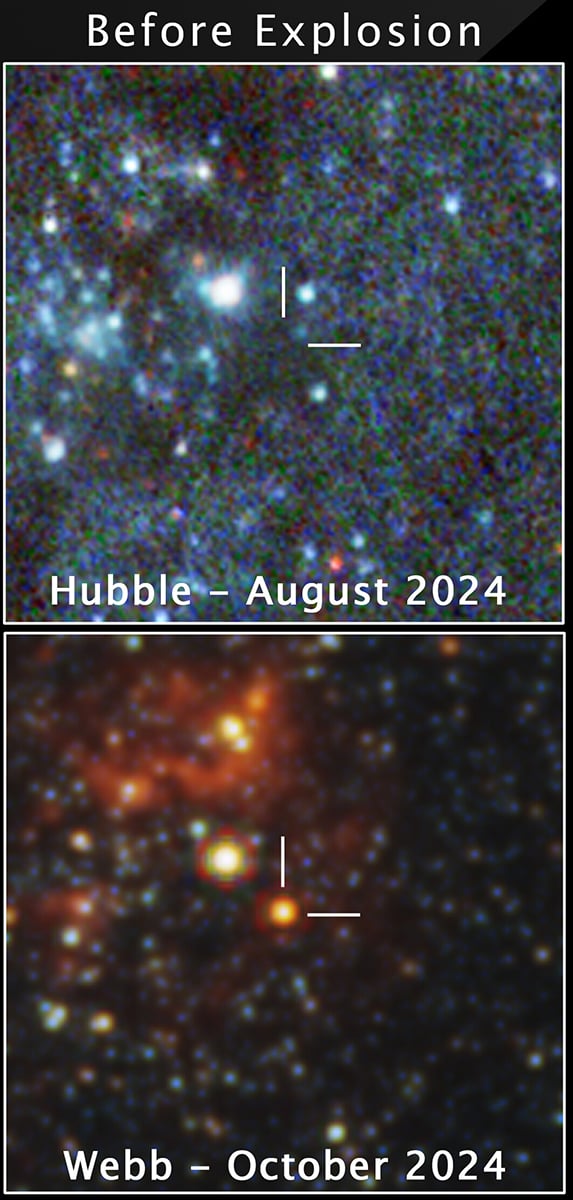
A recent analysis of archival observations from the James Webb Space Telescope has now provided a decisive clue. In the nearby spiral galaxy NGC 1637, JWST revealed a heavily reddened star that later exploded as SN 2025pht. Crucially, the star was absent in pre-explosion images from the Hubble Space Telescope.
NGC 1637: A laboratory for stellar death
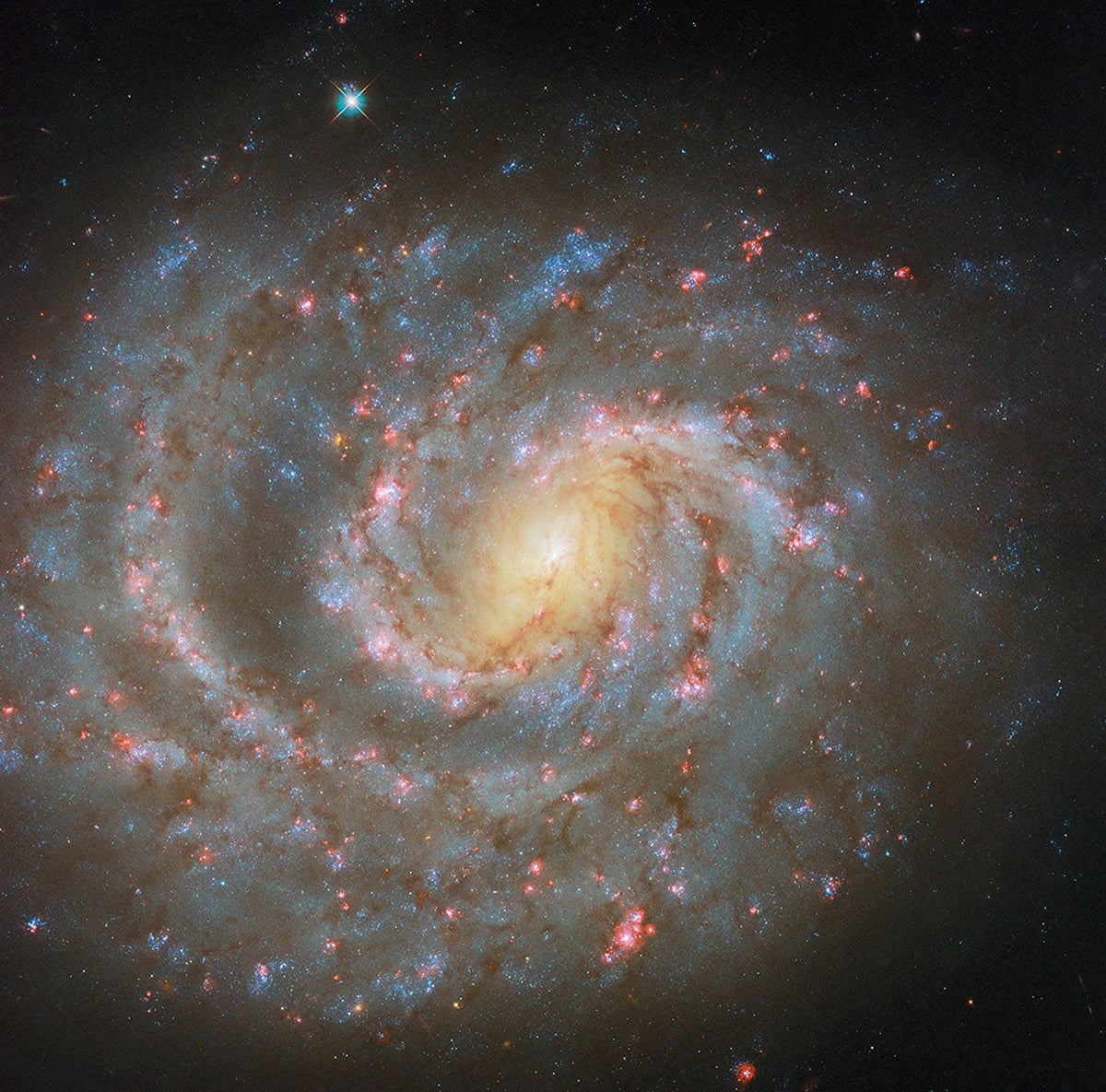
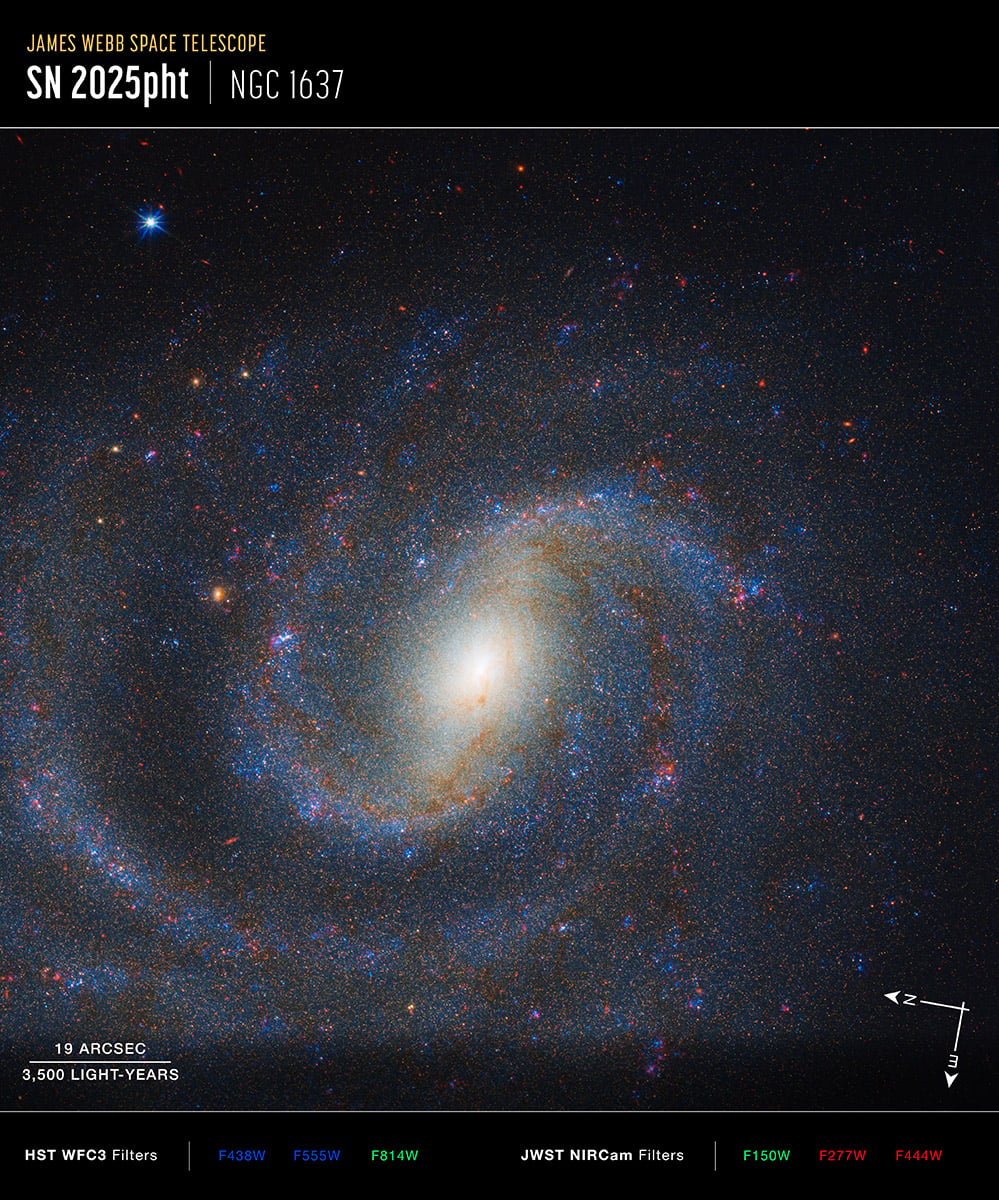
NGC 1637 lies roughly 32 million light-years away in the constellation Eridanus. It is a barred spiral galaxy with defined arms and active star-forming regions. These regions produce massive stars that evolve rapidly and end their lives as core-collapse supernovae. Because of this activity, astronomers have monitored the galaxy for decades.
The galaxy already held a place in supernova history. The well-studied Type II-P event SN 1999em occurred there and helped refine distance calibration techniques. As a result, NGC 1637 accumulated extensive archival coverage across multiple wavelengths. That depth of data later proved essential.
In 2024, JWST observed the galaxy using its NIRCam instrument. The observing program aimed to study galactic structure and star-forming environments. At the time, nothing in the data suggested an imminent stellar explosion. Yet the images quietly recorded a faint, very red point source embedded in one of the spiral arms.
Discovery of SN 2025pht
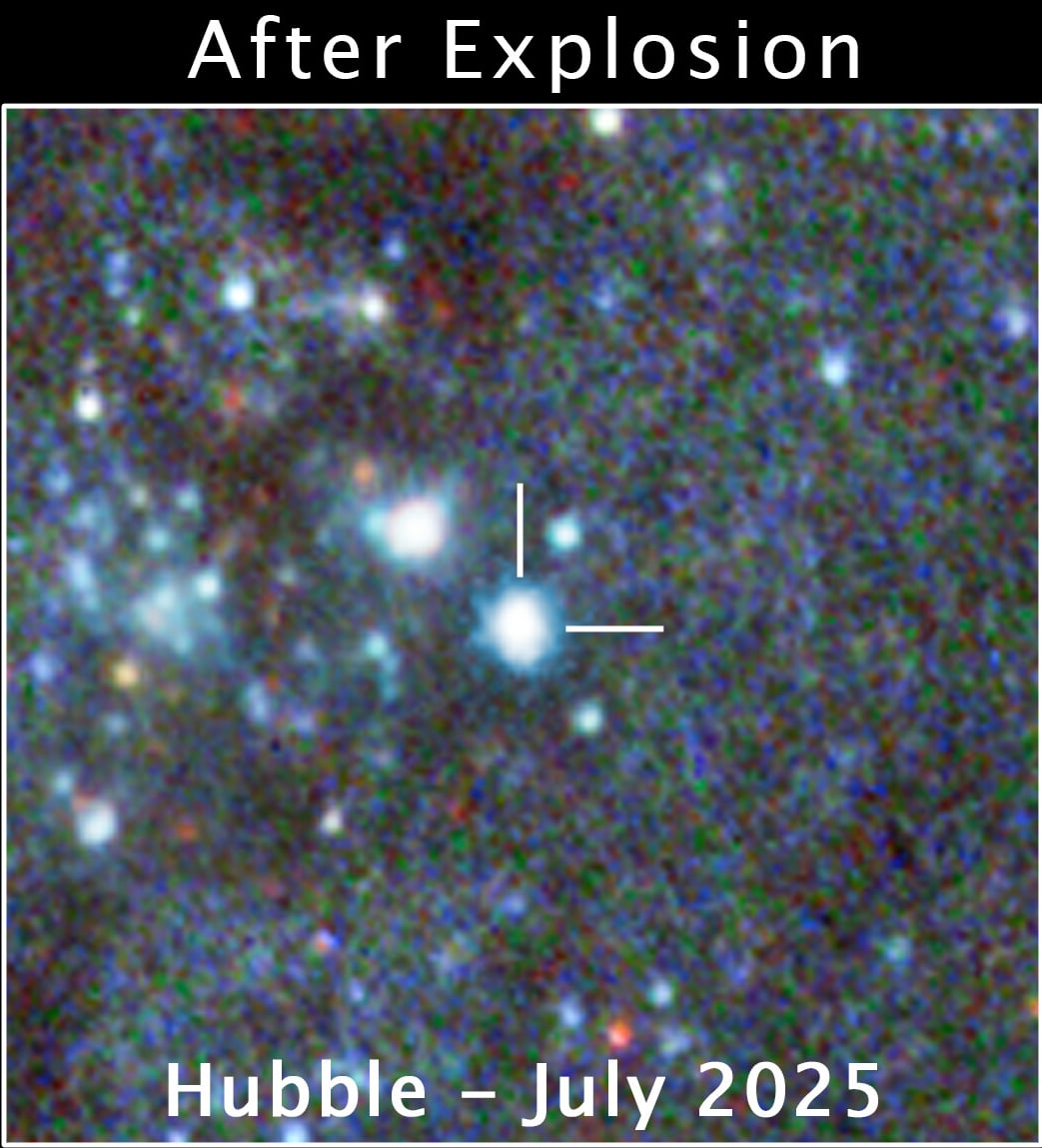
On 29 June 2025, the All-Sky Automated Survey for Supernovae reported a new transient in NGC 1637. Follow-up spectroscopy confirmed a hydrogen-rich core-collapse event, consistent with a Type II supernova. The object received the designation SN 2025pht.
Once the classification became secure, researchers began the standard progenitor search. They carefully aligned post-explosion images with archival frames to identify the pre-supernova star. This technique has produced many successes over the past two decades, largely using Hubble data.
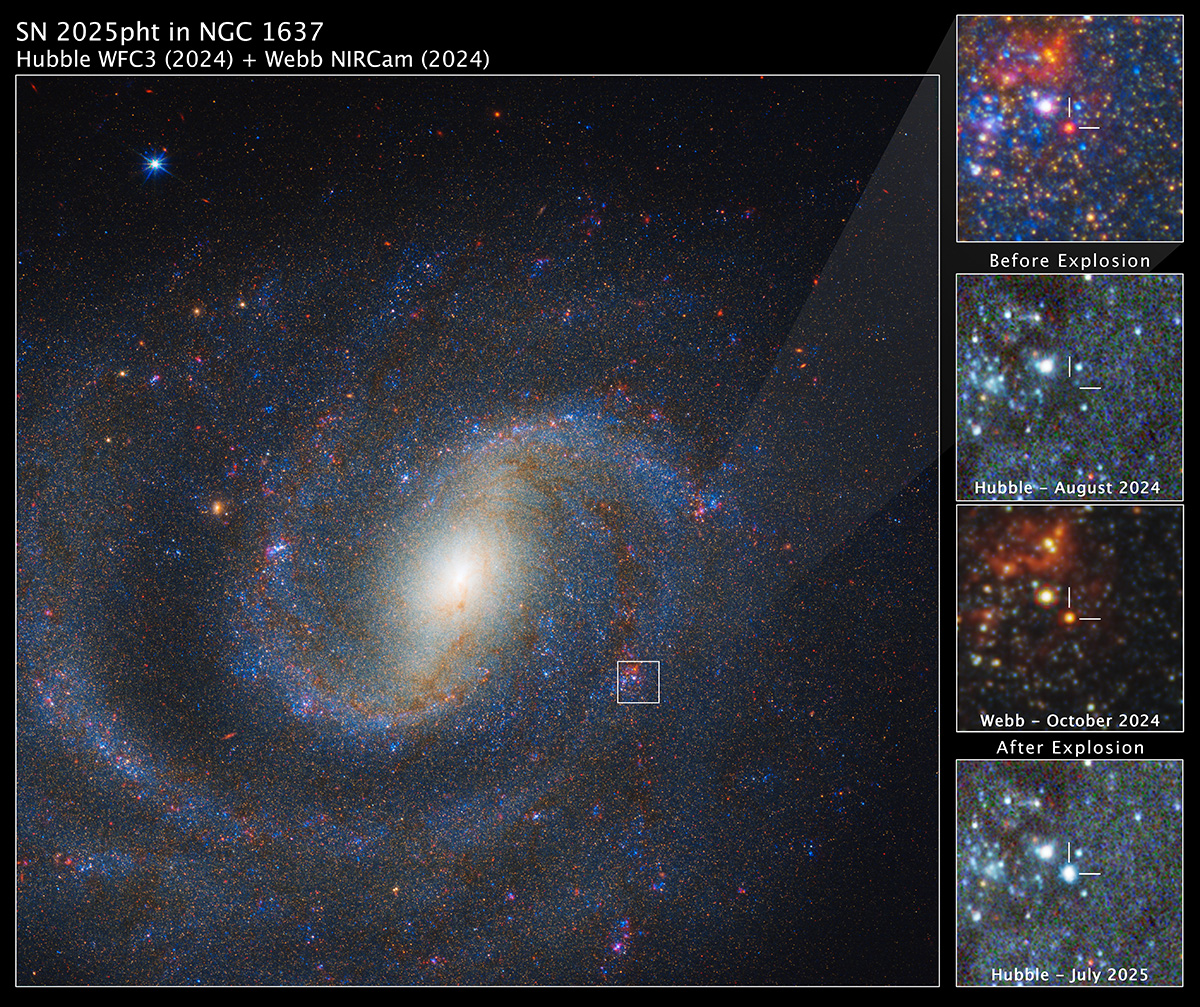
In this case, however, the optical search produced an unexpected result. Pre-explosion images from Hubble’s Wide Field Camera 3 showed no convincing source at the explosion site. The data were deep enough that a typical unobscured red supergiant should have appeared. The absence raised immediate questions.
Astronomers then turned to the JWST archive. When they overlaid the precise supernova coordinates onto the infrared frames, the situation changed dramatically. A distinct red source appeared exactly at the explosion position. The positional match fell well within the measurement uncertainties. The probability of a chance alignment was very low.
Dust extinction and wavelength dependence
The discrepancy between the two space telescopes arises from well-understood radiative transfer physics. Dust grains absorb and scatter short-wavelength radiation far more efficiently than long-wavelength radiation. As a result, optical light suffers strong extinction in dusty environments, while infrared radiation penetrates more effectively.
Hubble’s primary sensitivity lies in ultraviolet and visible wavelengths, with modest reach into the near infrared. JWST, in contrast, was designed specifically for infrared astronomy. Its detectors operate where dust opacity drops significantly.
The progenitor of SN 2025pht exhibits extremely red colors in the JWST data. This spectral energy distribution indicates heavy circumstellar extinction. The most likely scenario involves a red supergiant surrounded by a dense, dusty wind. Over time, the dust shell attenuated the star’s optical output below Hubble’s detection threshold.
JWST’s infrared capability pierced that dust envelope. The star appeared in the NIRCam images. This direct comparison provides one of the cleanest demonstrations yet of how circumstellar dust can hide massive stars before explosion.
For years, astronomers have debated the so-called “red supergiant problem.” Observational surveys appeared to show fewer high-mass red supergiant progenitors than theoretical models predicted. One proposed explanation invoked dust obscuration. The NGC 1637 result now offers strong observational support for that hypothesis.
Properties of the progenitor star
Photometric analysis of the pre-explosion JWST data points to a luminous red supergiant. These stars represent an advanced evolutionary stage of massive stars with initial masses above roughly eight solar masses. During this phase, the star expands enormously and cools at the surface. Strong stellar winds drive substantial mass loss.
Those winds often condense dust in the circumstellar environment. The resulting envelope can become optically thick at visible wavelengths. The progenitor of SN 2025pht appears to fit this pattern.
By comparing the observed infrared luminosity with stellar evolution tracks, astronomers estimate that the progenitor mass falls within the expected range for Type II supernovae. Precise values remain sensitive to the assumed extinction and dust geometry. Nevertheless, the classification as a red supergiant appears robust.
The heavy dust environment also hints at enhanced mass loss shortly before core collapse. Such behavior can influence the density structure around the star. That structure affects shock breakout, early light-curve evolution, and spectral line formation in the supernova. Each well-characterized progenitor therefore improves theoretical modeling.
Importantly, this detection demonstrates that some massive stars may spend their final evolutionary stages partially hidden from optical surveys. Without infrared data, astronomers risk undercounting such objects.
Complementary Strengths of Two Space Telescopes
The NGC 1637 study displays the scientific value of combining multi-wavelength archives. Hubble continues to deliver exceptionally sharp optical imaging. Its decades-long dataset provides a rich historical record of nearby galaxies. Many progenitor identifications still rely on those observations.
JWST extends this capability into the infrared with far greater sensitivity. It excels at detecting cool stars, embedded clusters, and dust-obscured regions. When astronomers analyze both datasets together, they obtain a far more complete view of stellar populations.
In the case of SN 2025pht, neither telescope alone would have told the full story. Hubble confirmed the absence of an unobscured progenitor. JWST revealed the hidden star. This synergy will become increasingly important. JWST’s archive is growing rapidly. Meanwhile, transient surveys now discover new supernovae at an unprecedented rate. Each new event in a James Webb-imaged galaxy offers another opportunity for progenitor studies.
Clear skies!
See more from DIYPhotography.net on Google
Add DIYPhotography.net as a trusted source. This makes
our stories more likely to appear in your Google Search results.
 Add as a preferred source on Google

Soumyadeep Mukherjee
Soumyadeep Mukherjee is an award-winning astrophotographer from India. He has a doctorate degree in Linguistics. His work extends to the sub-genres of nightscape, deep sky, solar, lunar and optical phenomenon photography. He is also a photography educator and has conducted numerous workshops. His works have appeared in over 40 books & magazines including Astronomy, BBC Sky at Night, Sky & Telescope among others, and in various websites including National Geographic, NASA, Forbes. He was the first Indian to win “Astronomy Photographer of the Year” award in a major category.
Related Posts
 James Webb telescope uncovers synchronized star formation in a breathtaking photo
 A star is born: James Webb Telescope captures supernova remnant in unprecedented detail
 Malin 2 Revealed: Deep Imaging Uncovers the Hidden Past of a Giant Spiral Galaxy
 A Dazzling Spiral and a Distant Supernova: Hubble’s Image of NGC 3285B
Join the Discussion
DIYP Comment Policy
Be nice, be on-topic, no personal information or flames.