


















A NASA Image Manipulation Trick is Now Revealing Ancient Rock Arts
Sep 8, 2026
Soumyadeep Mukherjee
Soumyadeep Mukherjee is an award-winning astrophotographer from India. He has a doctorate degree in Linguistics. His work extends to the sub-genres of nightscape, deep sky, solar, lunar and optical phenomenon photography. He is also a photography educator and has conducted numerous workshops. His works have appeared in over 40 books & magazines including Astronomy, BBC Sky at Night, Sky & Telescope among others, and in various websites including National Geographic, NASA, Forbes. He was the first Indian to win “Astronomy Photographer of the Year” award in a major category.
Share:
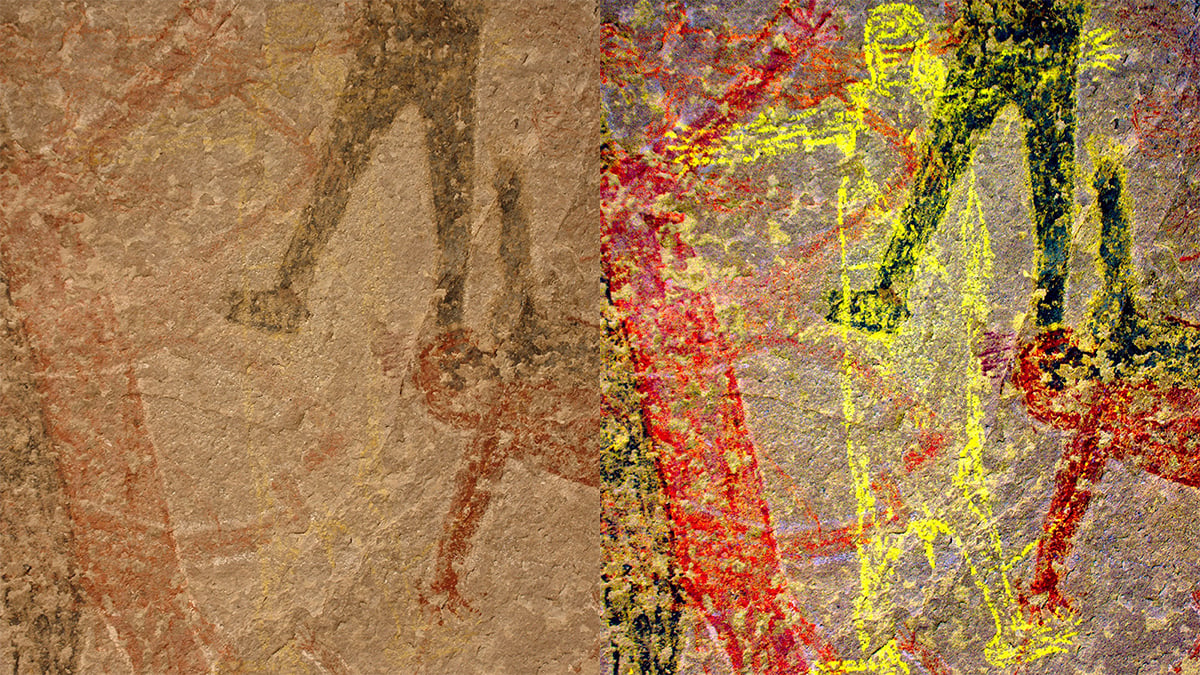
A faded painting on a rock wall can be difficult to reveal in a photograph. Centuries of weathering can leave its colors almost indistinguishable from the stone around it. Those images may still contain enough color information to reveal what the human eye can no longer see. Archaeologists have found a way to bring some of those details back into view. The method came from an unlikely source: NASA‘s work with satellite images and photographs of Mars.
The technique is called decorrelation stretch. NASA scientists developed it to bring out subtle differences in satellite imagery. It later became the basis for DStretch, an image-processing tool now used to examine ancient rock art.
A technique born from satellite photography
The story starts with ASTER, a scientific instrument carried by NASA‘s Terra satellite. ASTER stands for Advanced Spaceborne Thermal Emission and Reflection Radiometer. Unlike an ordinary camera, it records information in several spectral bands. Some of those bands cover visible light, while others extend into the infrared.
The problem is that having the data does not automatically make the differences easy to see. Satellite images contain large amounts of numerical information, and several color channels can be strongly correlated. When those channels are displayed in the usual way, small variations can get lost among the surrounding pixels.
NASA scientists began using decorrelation stretch to address that problem. The technique separates the information carried by the colour channels and then stretches the resulting values across a wider range. A feature that had only a slight colour difference from its surroundings can then become much more obvious.
Ronald Alley, a scientist at NASA’s Jet Propulsion Laboratory, developed the technique for ASTER applications. He described the method in a 1996 paper. At the time, the work had nothing to do with archaeology. Researchers were only interested in extracting more useful information from satellite observations of Earth‘s surface.
Mars images provided the clue
Around 2005, Jon Harman saw a few images of Mars processed with decorrelation stretch. The difference between the original and processed versions caught his attention because the altered images brought out details that were hard to recognize in the originals.
Harman had already spent time studying rock art and also had a background in medical imaging. He understood that photographs could contain useful information that was difficult to see in their normal form. Ancient paintings presented exactly that sort of problem.
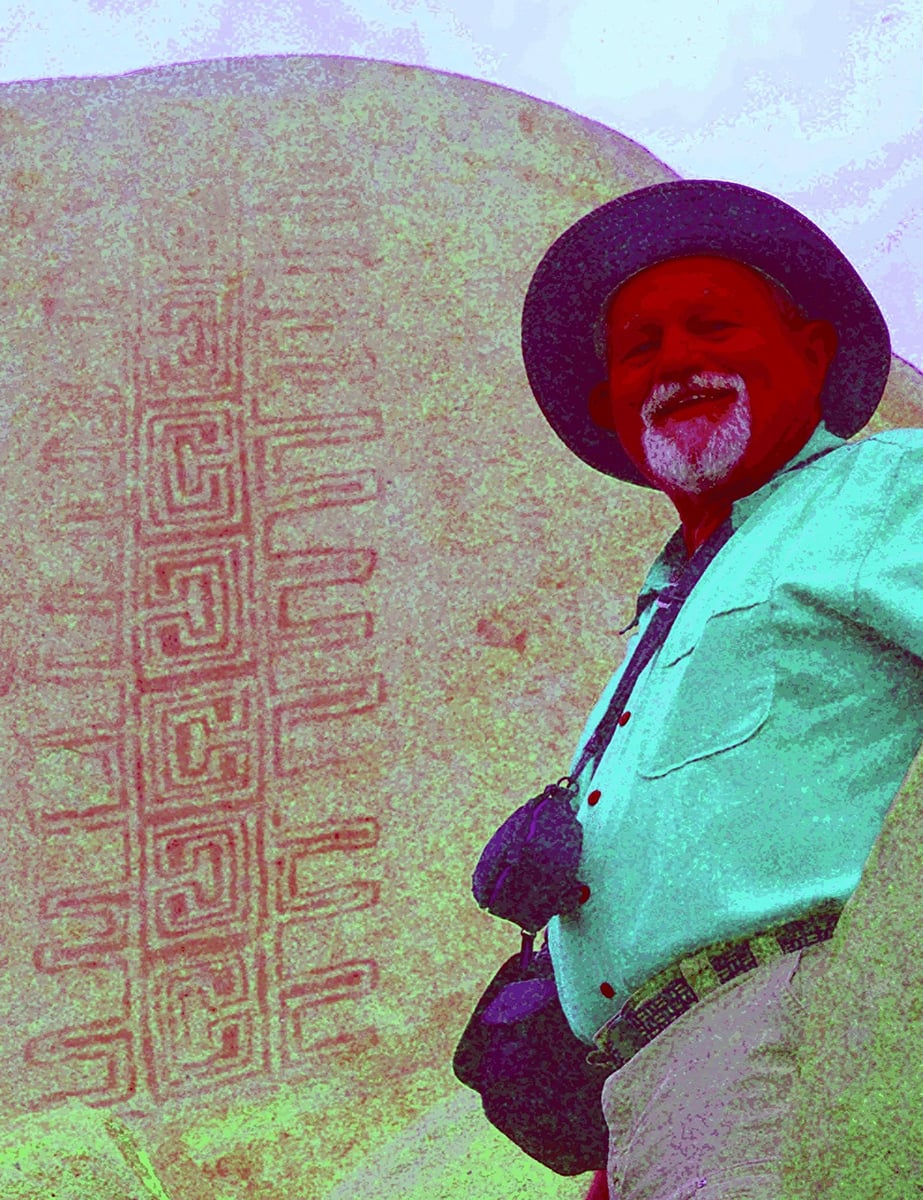
Harman began looking into the NASA method. He found Alley’s paper from 1996 and worked on adapting the technique for ordinary photographs of rock art. Harman then developed DStretch, a plug-in for ImageJ.
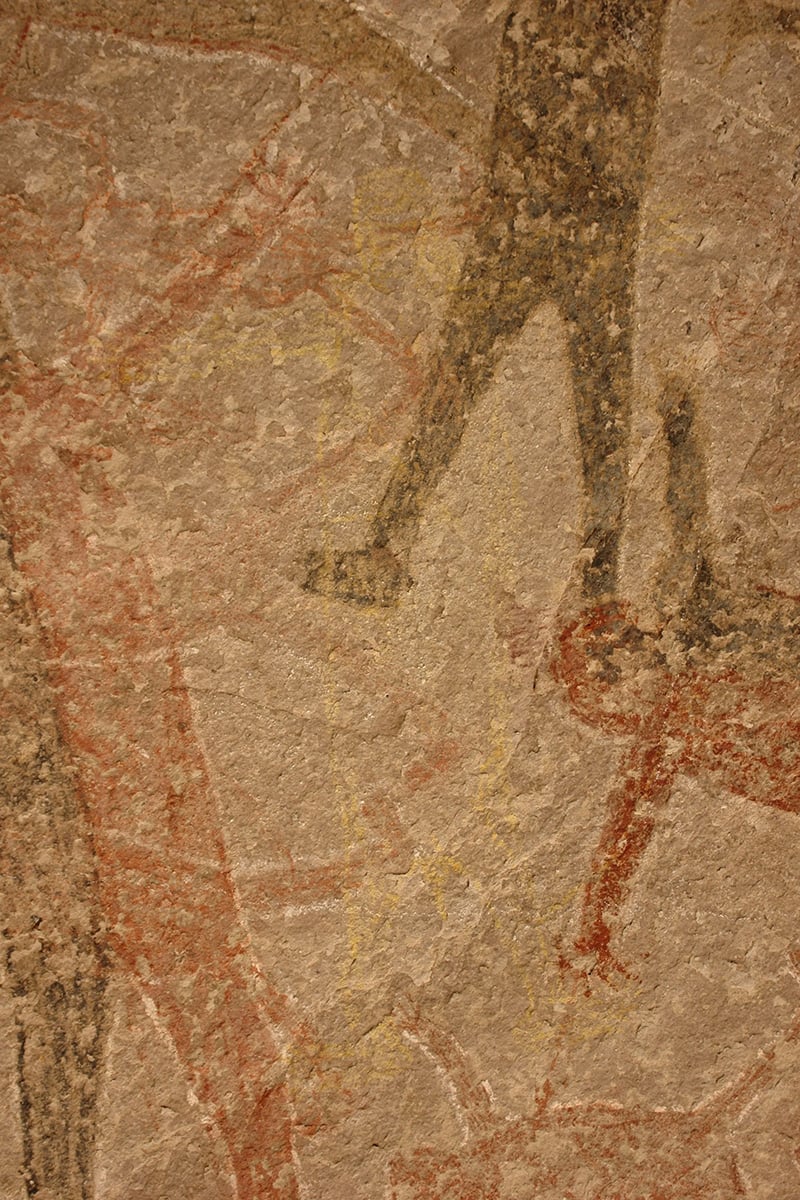
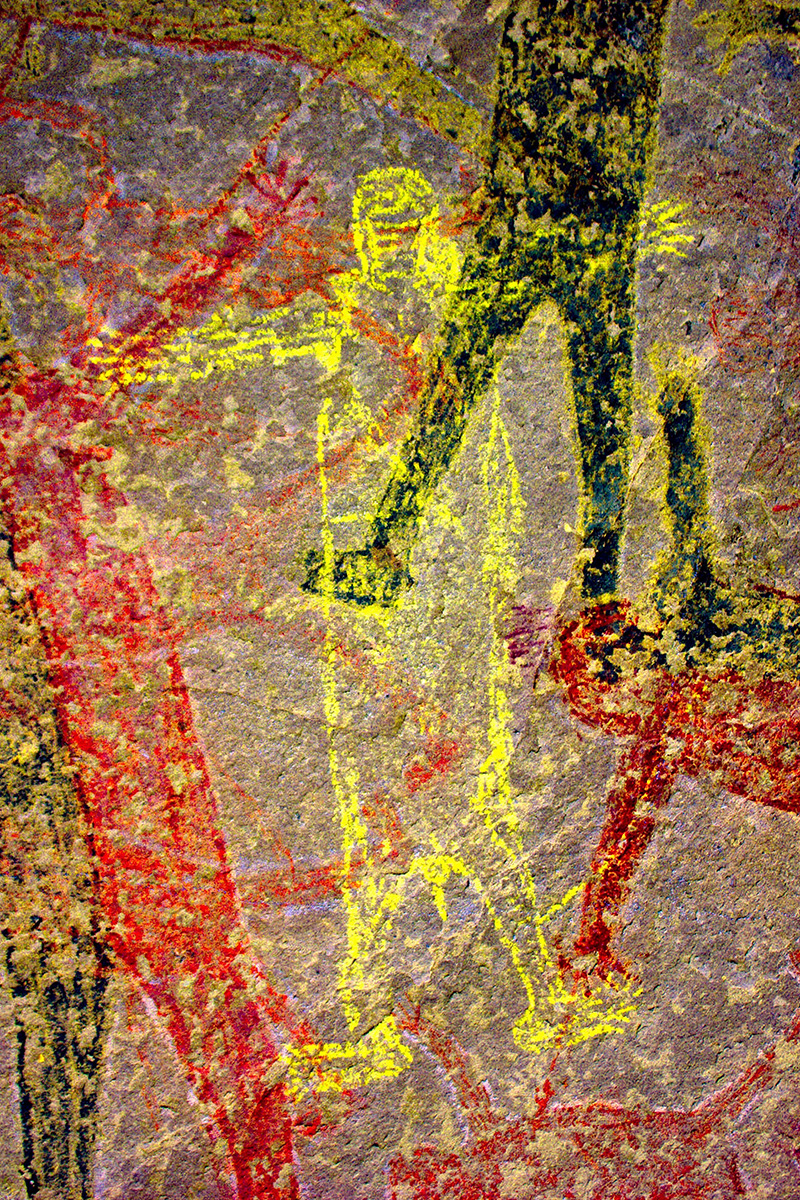
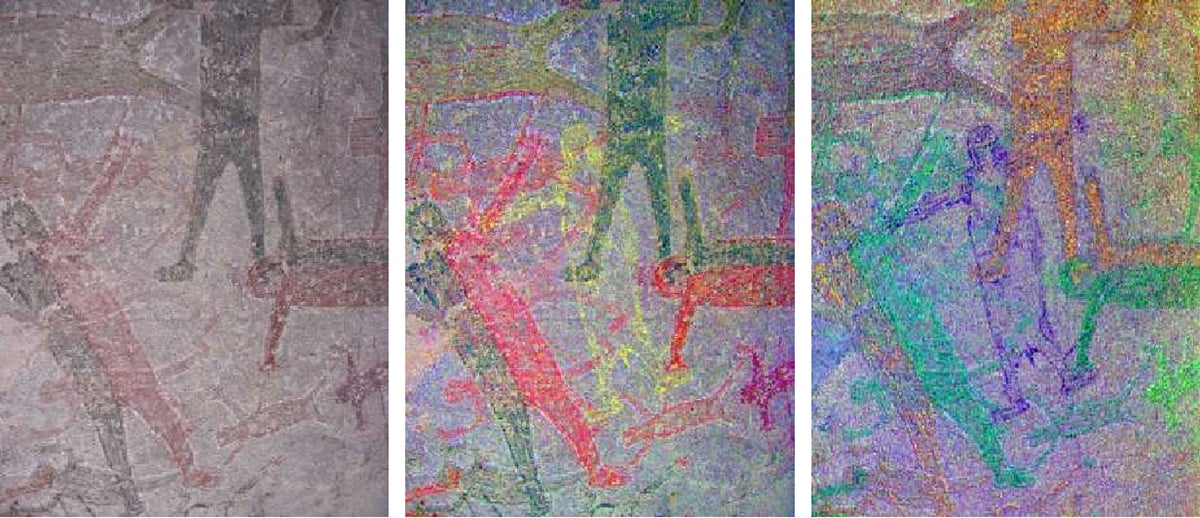
Harman processed photographs from the Cave of San Borjitas in Baja California, Mexico. The site contains large painted human figures, but some details are extremely difficult to distinguish in unprocessed photographs. After DStretch processing, a faded yellow figure became much easier to see among the other figures.
How DStretch works
Anyone seeing a DStretch image for the first time might wonder whether something has gone wrong. The colors in the images bear little resemblance to the original scene. A patch of rock can become blue or green, and a faint painted figure can appear in a color that was nowhere near its original appearance.
A conventional photo editor usually works by adjusting brightness, contrast, saturation, or individual color channels. These controls can make differences more obvious, but they do not necessarily separate two surfaces that have very similar color relationships.
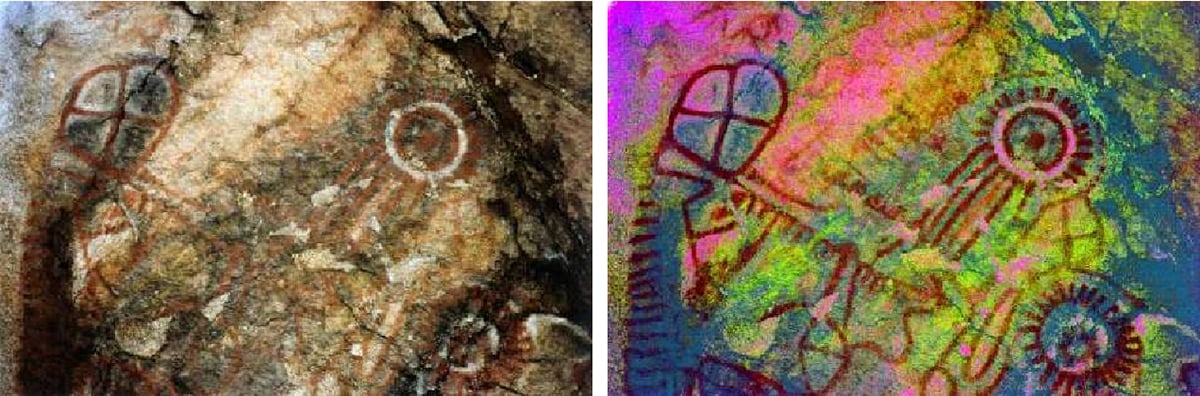
Decorrelation stretch takes a different route. It examines the statistical relationships between the channels, transforms them, and expands their differences. When the result is mapped back into a colour image, almost indistinguishable areas can take on visibly different colours.
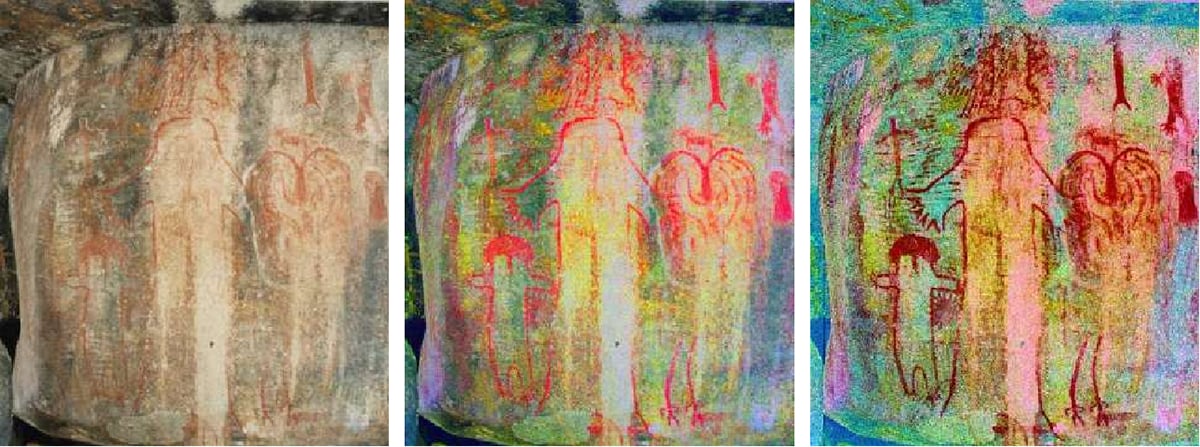
The quality of the source photograph is important too. Resolution, focus, exposure, and lighting all affect how much information reaches the software. DStretch can increase the visibility of subtle differences, but it cannot manufacture detail that was never recorded.
Clear skies!
See more from DIYPhotography.net on Google
Add DIYPhotography.net as a trusted source. This makes
our stories more likely to appear in your Google Search results.
 Add as a preferred source on Google

Soumyadeep Mukherjee
Soumyadeep Mukherjee is an award-winning astrophotographer from India. He has a doctorate degree in Linguistics. His work extends to the sub-genres of nightscape, deep sky, solar, lunar and optical phenomenon photography. He is also a photography educator and has conducted numerous workshops. His works have appeared in over 40 books & magazines including Astronomy, BBC Sky at Night, Sky & Telescope among others, and in various websites including National Geographic, NASA, Forbes. He was the first Indian to win “Astronomy Photographer of the Year” award in a major category.



Join the Discussion
DIYP Comment Policy
Be nice, be on-topic, no personal information or flames.