























NASA’s Chandra Observatory Reveals a Giant Cosmic “Treble Clef”
Oct 22, 2026
Soumyadeep Mukherjee
Soumyadeep Mukherjee is an award-winning astrophotographer from India. He has a doctorate degree in Linguistics. His work extends to the sub-genres of nightscape, deep sky, solar, lunar and optical phenomenon photography. He is also a photography educator and has conducted numerous workshops. His works have appeared in over 40 books & magazines including Astronomy, BBC Sky at Night, Sky & Telescope among others, and in various websites including National Geographic, NASA, Forbes. He was the first Indian to win “Astronomy Photographer of the Year” award in a major category.
Share:
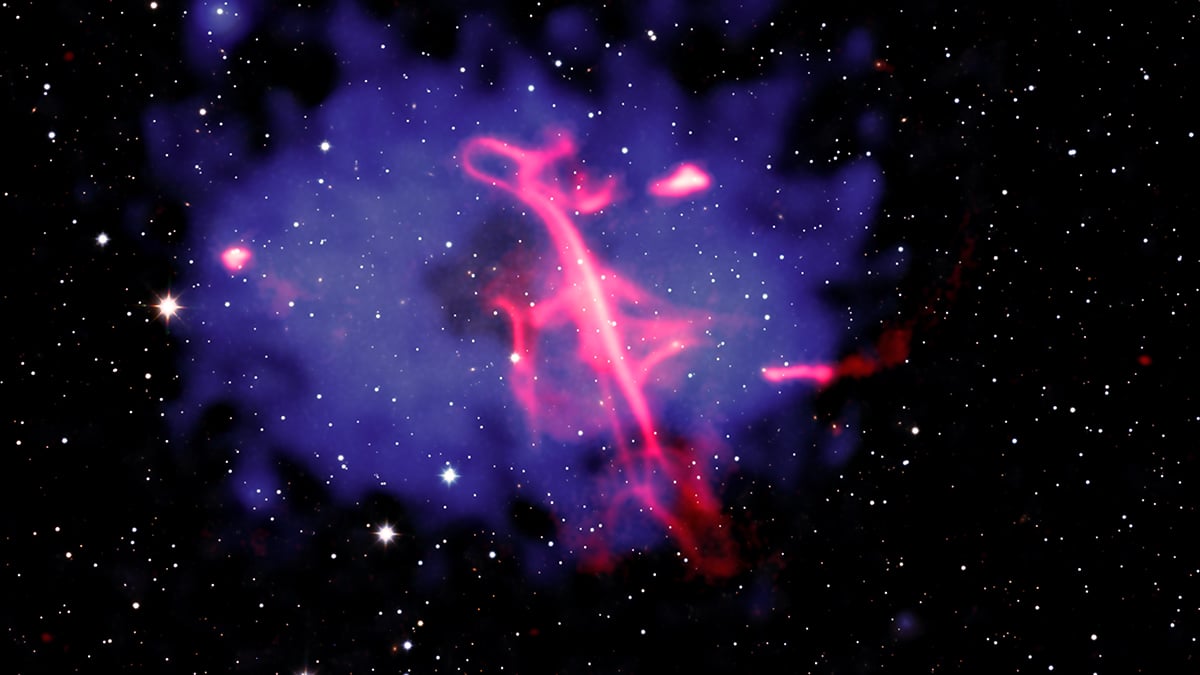
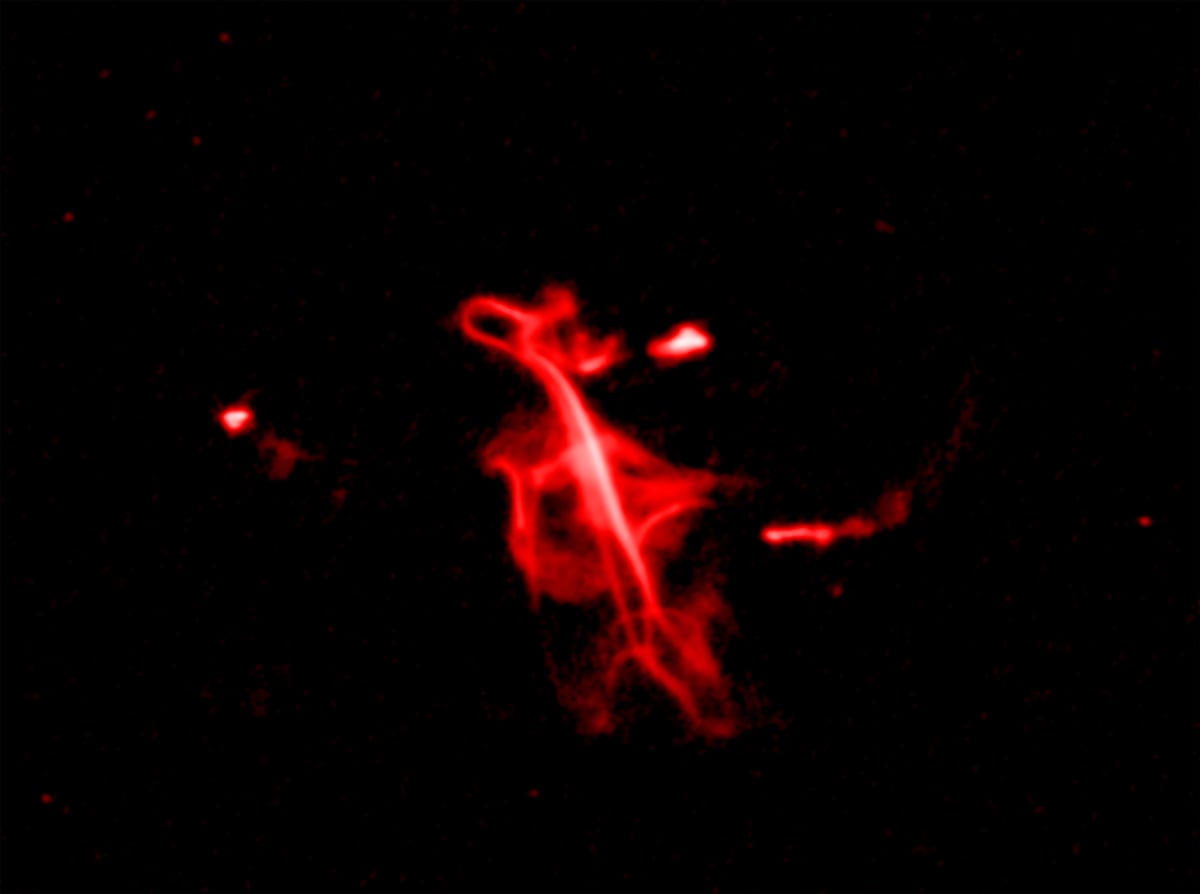
Astronomers have traced a giant radio structure resembling a musical treble clef back to two events separated by millions of years. An outburst from a supermassive black hole created the original structure. Later, two galaxy clusters collided, possibly compressing the old material and making its radio emission brighter again.
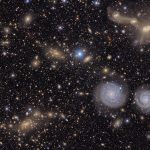
NASA has released a new composite image of the structure. The image combines X-ray observations from Chandra and the eROSITA telescope with radio data from the LOFAR network and infrared observations from the United Kingdom Infrared Telescope.
The cosmic structure resembles a musical symbol
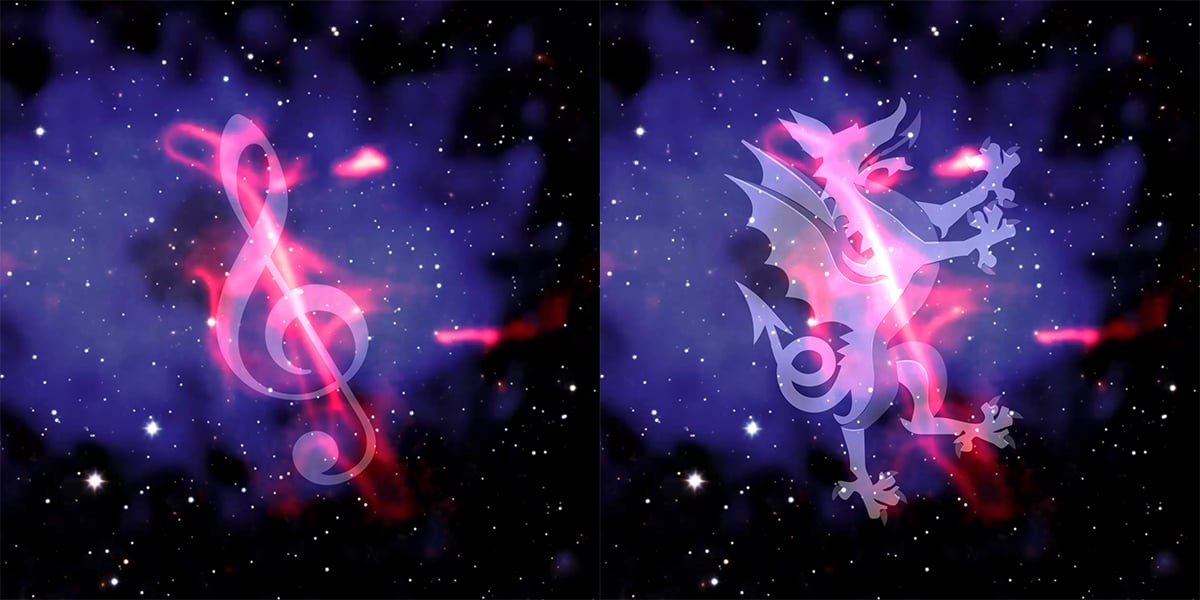
The Treble Clef carries the catalogue designation VLSS J0318.9+5755. Its radio emission forms a long, curved structure within a galaxy cluster system. Some people see a treble clef in the image, while others see a dragon.
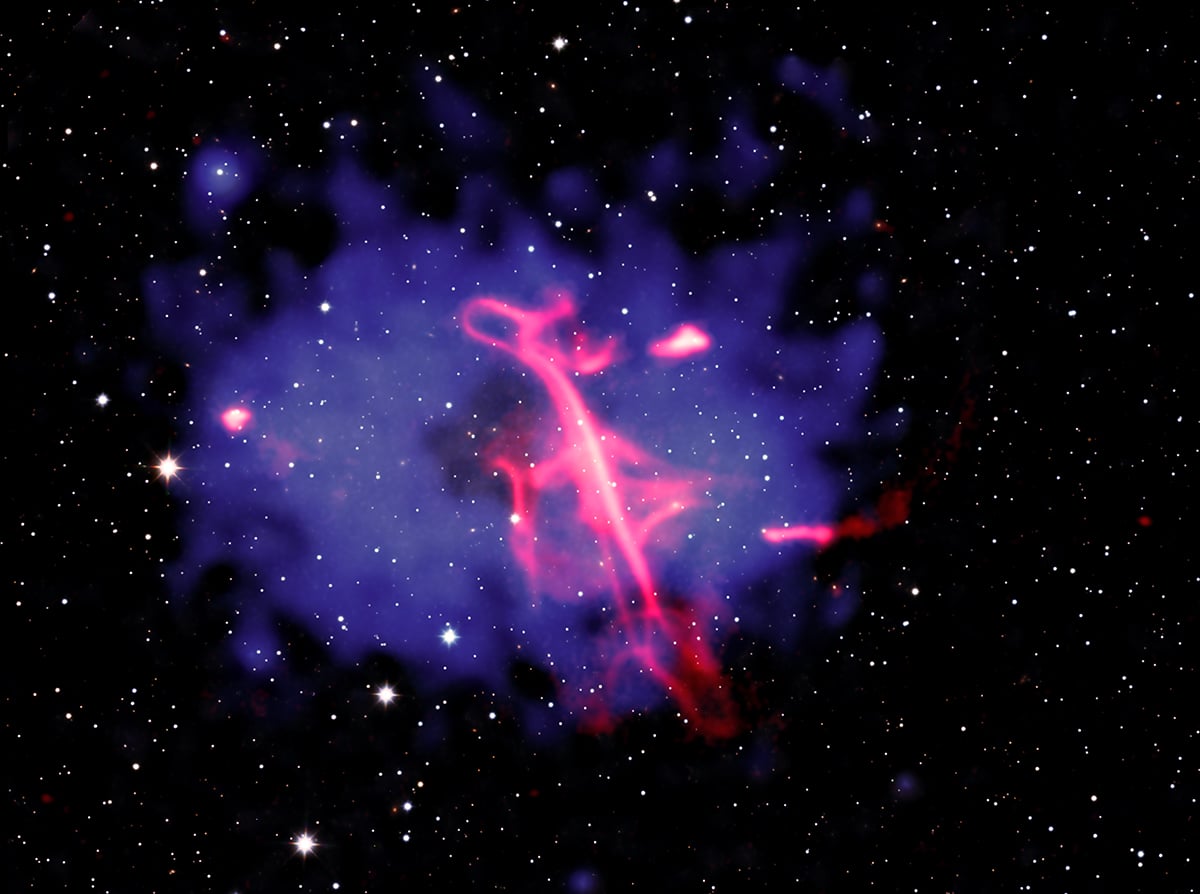
The object lies almost directly behind the Milky Way‘s plane. Stars, gas, and dust in our own galaxy crowd this region and obstruct observations of more distant objects. Astronomers call this part of the sky the Zone of Avoidance because foreground material makes galaxies and clusters harder to study there.
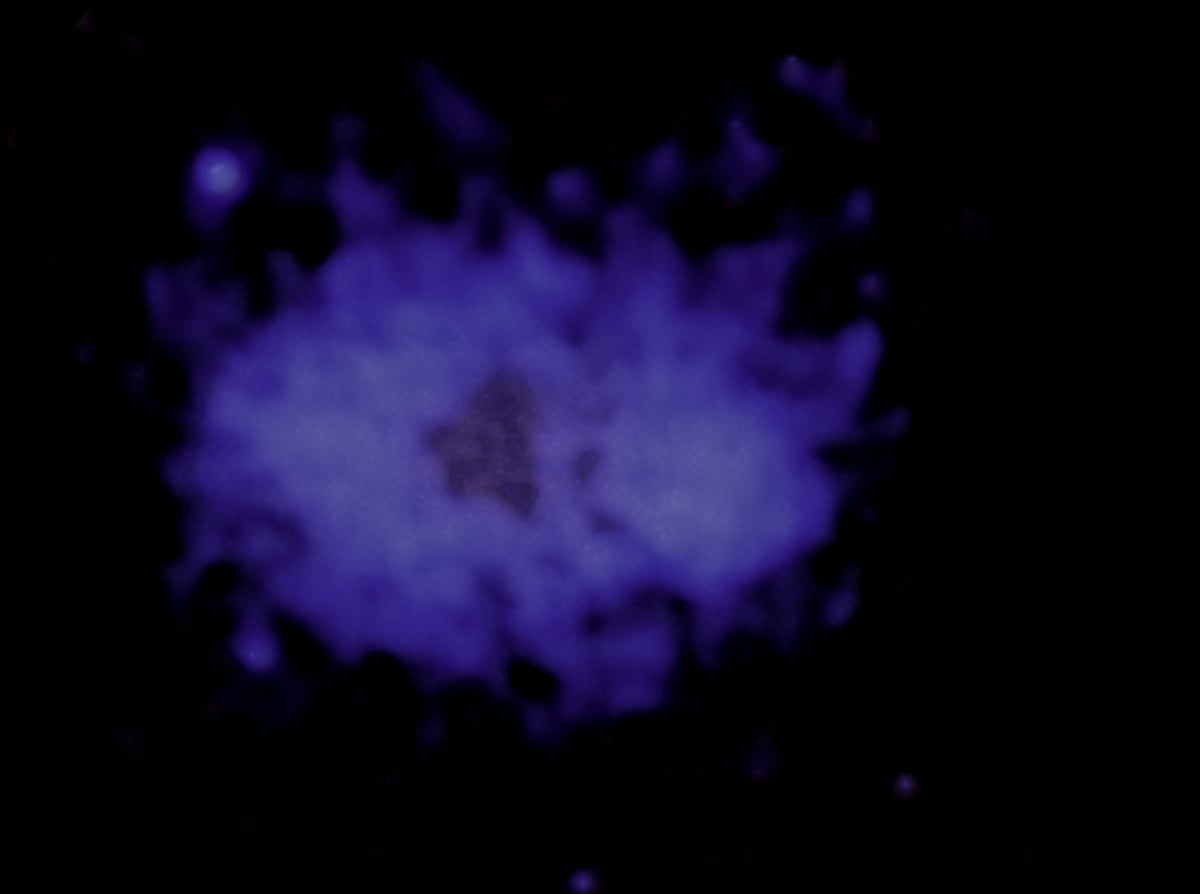
Radio observations had already revealed the unusual source, but its surroundings held important clues. Chandra and eROSITA detected diffuse, extremely hot gas at the same location. The X-ray data showed that the radio structure sits within a galaxy cluster system. Further analysis revealed that the system contains two clusters merging with each other.
A supermassive black hole set the process in motion
The first event began with a supermassive black hole in the central galaxy of the cluster system. Such black holes can release enormous amounts of energy as they draw in surrounding matter. Their activity can launch jets that carry charged particles and magnetic fields far beyond the host galaxy.
In the Treble Clef‘s case, the black hole appears to have driven clouds of particles and magnetic fields away at speeds close to the speed of light. The particles interacted with magnetic fields and produced radio waves. Over time, the expanding material developed into the extended structure that LOFAR now detects.
These radio structures can outlive the activity that created them. When a black hole’s outburst weakens, the surrounding particles continue to evolve. They gradually lose energy, and their radio emission fades. Astronomers can still detect the remaining material long after the original event has ended.
Two colliding galaxy clusters may have revived it
The galaxy cluster merger changed the environment around the Treble Clef. As the two galaxy clusters collided, their hot gas interacted and disturbed the surrounding material. Such encounters can generate shock waves that travel through the gas. The waves can compress magnetic fields and affect the energy of charged particles.
The researchers estimate that the clusters collided a few hundred million years ago. They have since moved apart. The present distribution of hot gas preserves clues to the direction of their encounter, while the radio emission reveals the structure that the collision may have revived.
The team proposes that the collision compressed or re-energized the old radio-emitting cloud. Shock waves may have helped restore its brightness. The precise contribution of each process remains uncertain, but the observations support the idea that the cluster merger changed the appearance of material left by the black hole.
Clear skies!
See more from DIYPhotography.net on Google
Add DIYPhotography.net as a trusted source. This makes
our stories more likely to appear in your Google Search results.
 Add as a preferred source on Google

Soumyadeep Mukherjee
Soumyadeep Mukherjee is an award-winning astrophotographer from India. He has a doctorate degree in Linguistics. His work extends to the sub-genres of nightscape, deep sky, solar, lunar and optical phenomenon photography. He is also a photography educator and has conducted numerous workshops. His works have appeared in over 40 books & magazines including Astronomy, BBC Sky at Night, Sky & Telescope among others, and in various websites including National Geographic, NASA, Forbes. He was the first Indian to win “Astronomy Photographer of the Year” award in a major category.
Join the Discussion
DIYP Comment Policy
Be nice, be on-topic, no personal information or flames.