














This Camera Can Measure Individual Photons: The qCMOS Sensor
Oct 19, 2026
Soumyadeep Mukherjee
Soumyadeep Mukherjee is an award-winning astrophotographer from India. He has a doctorate degree in Linguistics. His work extends to the sub-genres of nightscape, deep sky, solar, lunar and optical phenomenon photography. He is also a photography educator and has conducted numerous workshops. His works have appeared in over 40 books & magazines including Astronomy, BBC Sky at Night, Sky & Telescope among others, and in various websites including National Geographic, NASA, Forbes. He was the first Indian to win “Astronomy Photographer of the Year” award in a major category.
Share:
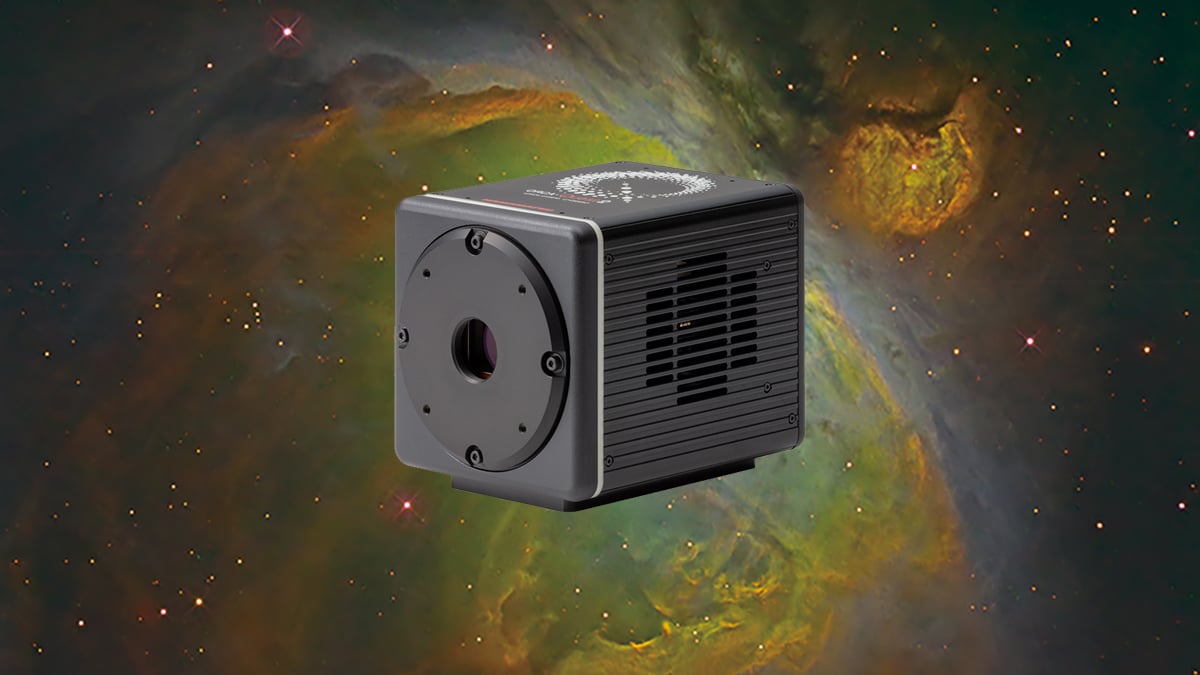
Astronomers and astrophotographers often need to measure light that barely registers on a camera sensor. A faint star may provide too few photons for a short exposure, while a longer exposure can hide rapid changes in its brightness. Hamamatsu Photonics has developed a camera that addresses some of these problems. The ORCA-Quest 2 uses quantitative CMOS, or qCMOS, technology to measure weak light signals with exceptionally low read noise.
The camera has found applications in research that demands very precise measurements. Astronomers can use it to investigate changing stars, atmospheric effects, and other phenomena that require rapid imaging.
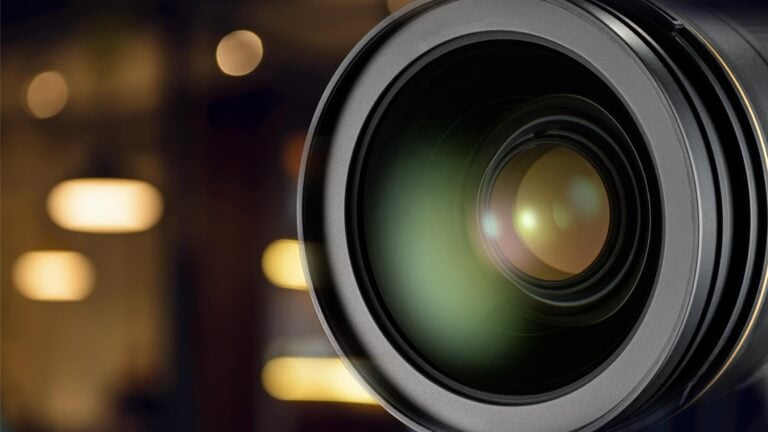
ORCA-Quest 2: The qCMOS camera
Consider a telescope recording a dim star. Only a small number of photons may reach each pixel during a brief exposure. The resulting signal can be comparable to readout noise. Researchers then have to distinguish the star’s light from fluctuations introduced by the camera itself.
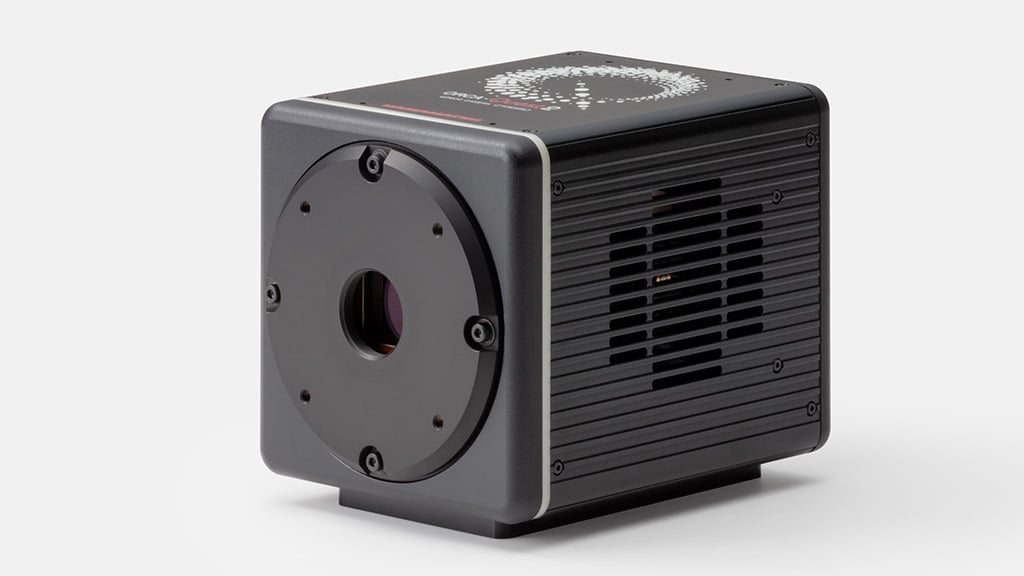
The ORCA-Quest 2 handles this with a qCMOS sensor designed for extremely low-noise measurements. Hamamatsu specifies typical read noise of 0.30 electrons RMS in ultra-quiet scan mode. The camera also supports photon-number-resolving measurements. In suitable conditions, it can estimate the number of photoelectrons contributing to a signal.
Its sensor has 4,096 × 2,304 pixels, giving it approximately 9.4 megapixels. Each pixel measures 4.6 micrometers across. It has a peak quantum efficiency of 85% at 460 nanometers. Quantum efficiency describes the proportion of incoming photons that produce detectable photoelectrons, making it an important measure for low-light imaging.
Faster readout for astronomical imaging
The original ORCA-Quest established the series’ low-noise performance, but its full-resolution mode operated at five frames per second. That rate can restrict experiments that need frequent measurements. The ORCA-Quest 2 improves the situation by increasing the frame rate in ultra-quiet mode while retaining similar low-noise performance.
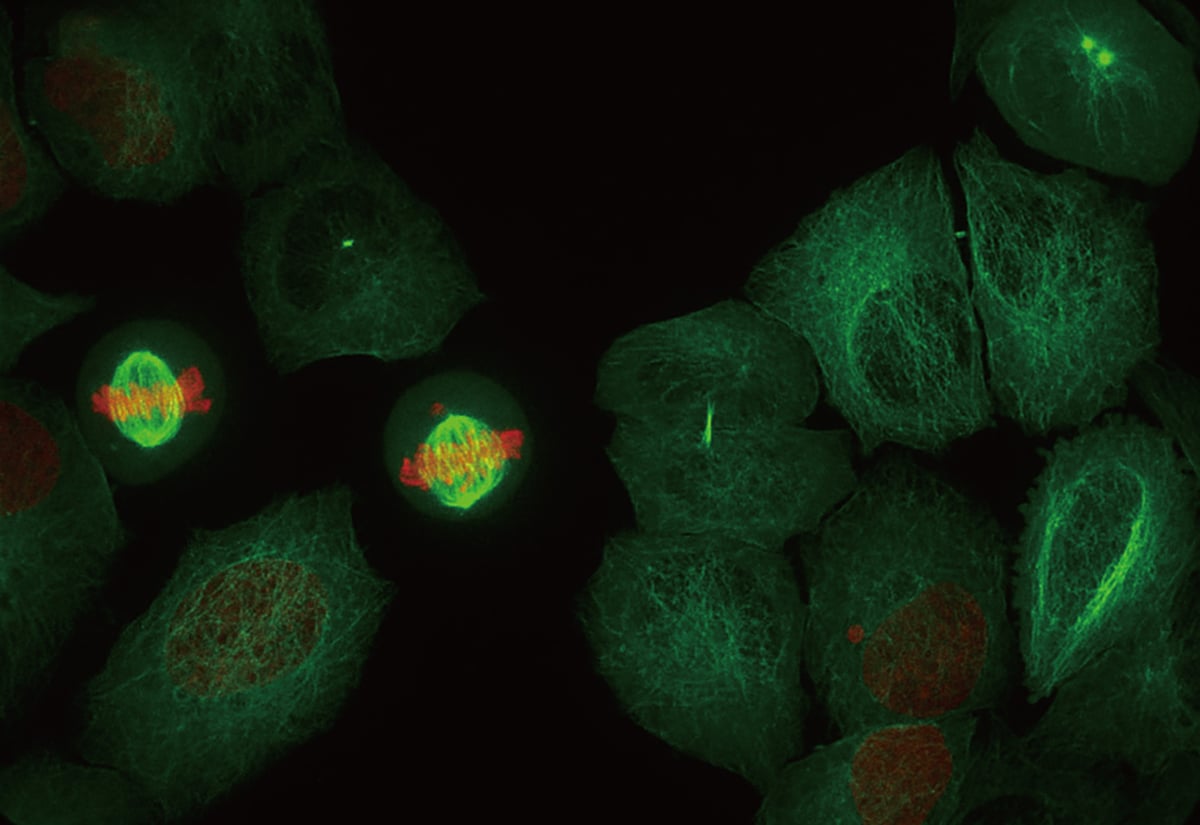
Hamamatsu reports a fivefold improvement in the frame rate of this mode compared with the original camera. The company has also improved the newer model’s ultraviolet sensitivity. These give researchers more flexibility when an experiment requires both weak-signal detection and rapid image acquisition.
The maximum frame rate depends on the readout mode and interface. The camera can record up to 120 frames per second at full resolution in standard scan mode through CoaXPress. In ultra-quiet mode, the camera reaches 25.4 frames per second at full resolution through that interface.
qCMOS for astrophotography
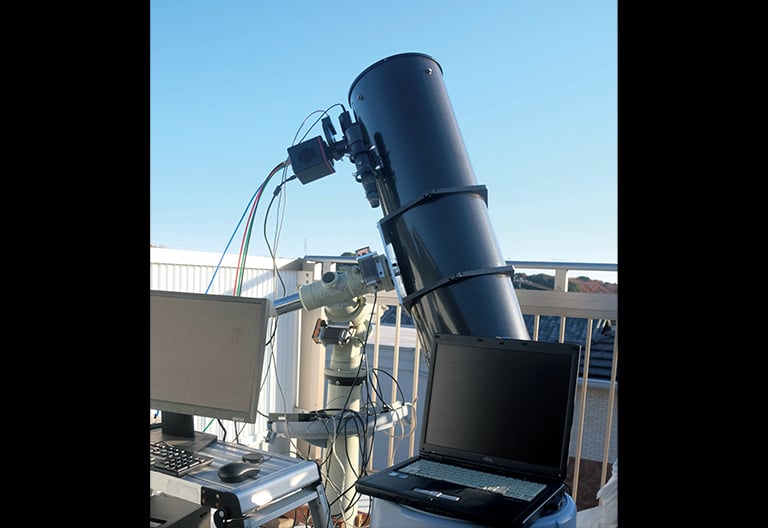
Lucky imaging offers one possible application for the ORCA-Quest 2. Earth’s atmosphere continually distorts starlight, causing stars to shift and blur in telescope images. Astronomers using lucky imaging take many short exposures, select the sharpest frames, and combine them.
The technique depends on collecting enough frames to catch brief periods of atmospheric stability. A faster camera gives astronomers more opportunities to record those moments. Low read noise also helps when short exposures produce weak signals. These advantages make qCMOS worth considering for high-resolution observations.
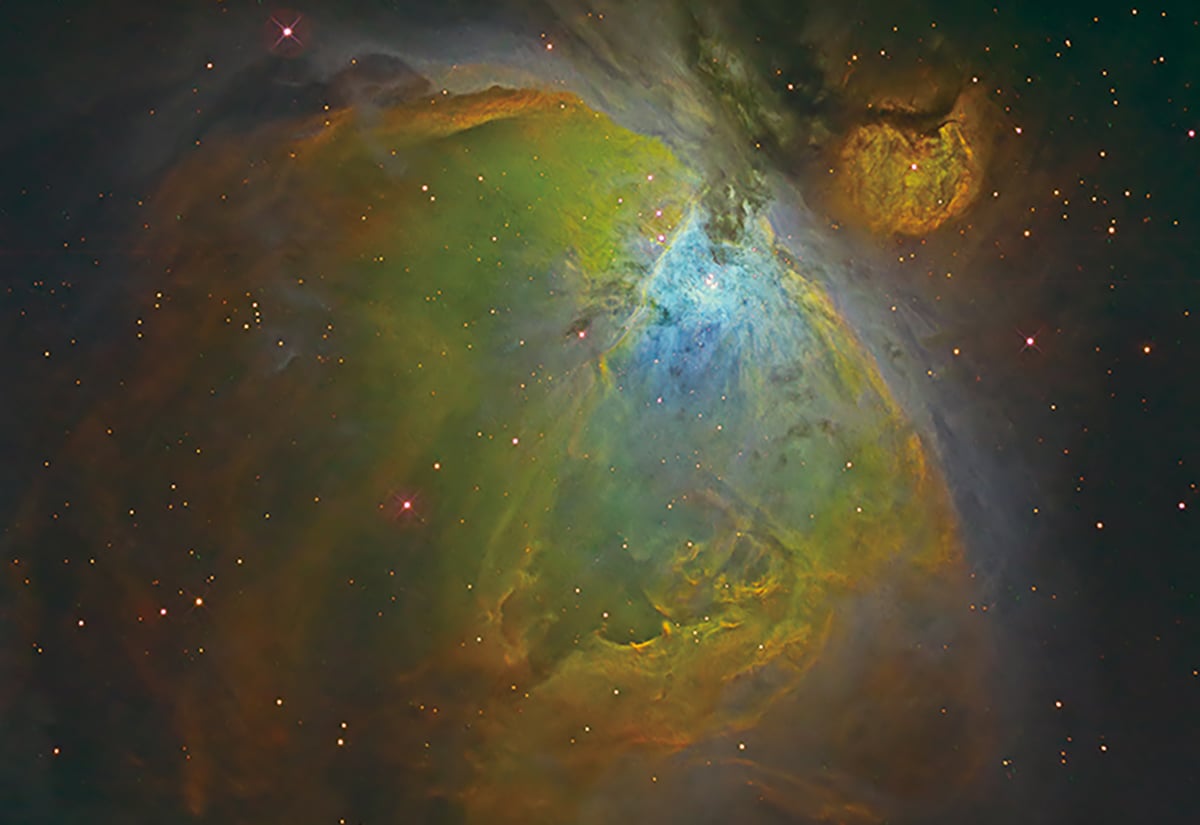
Researchers have also used the original ORCA-Quest to investigate pulsating auroras. A team at Japan’s University of Electro-Communications studied changing auroral structures with the camera. Their work needed fine spatial detail and enough sensitivity to examine faint features as the aurora changed.
For amateur astrophotographers, the ORCA-Quest 2 is unlikely to replace a conventional cooled astronomy camera. Its specialist interfaces, data requirements, and research-oriented workflow make it a different proposition. The camera’s value lies in the demanding measurements it allows scientists to investigate, not as an easy upgrade for everyday deep-sky imaging.
Clear skies!
See more from DIYPhotography.net on Google
Add DIYPhotography.net as a trusted source. This makes
our stories more likely to appear in your Google Search results.
 Add as a preferred source on Google

Soumyadeep Mukherjee
Soumyadeep Mukherjee is an award-winning astrophotographer from India. He has a doctorate degree in Linguistics. His work extends to the sub-genres of nightscape, deep sky, solar, lunar and optical phenomenon photography. He is also a photography educator and has conducted numerous workshops. His works have appeared in over 40 books & magazines including Astronomy, BBC Sky at Night, Sky & Telescope among others, and in various websites including National Geographic, NASA, Forbes. He was the first Indian to win “Astronomy Photographer of the Year” award in a major category.
Related Posts
 This app uses phone camera to measure your blood pressure
 How to measure the diameter of custom lens bokeh using a compass
 How to make Foveon sensor-like images with a traditional Bayer sensor array camera
 Sensor leak shows the Sony A7S III will see 10-Bit 4K 60FPS with a 15-megapixel Quad Bayer sensor
Join the Discussion
DIYP Comment Policy
Be nice, be on-topic, no personal information or flames.