

























James Webb Captures Strongest Evidence Yet for Black Hole Stars
Jun 25, 2026
Soumyadeep Mukherjee
Soumyadeep Mukherjee is an award-winning astrophotographer from India. He has a doctorate degree in Linguistics. His work extends to the sub-genres of nightscape, deep sky, solar, lunar and optical phenomenon photography. He is also a photography educator and has conducted numerous workshops. His works have appeared in over 40 books & magazines including Astronomy, BBC Sky at Night, Sky & Telescope among others, and in various websites including National Geographic, NASA, Forbes. He was the first Indian to win “Astronomy Photographer of the Year” award in a major category.
Share:
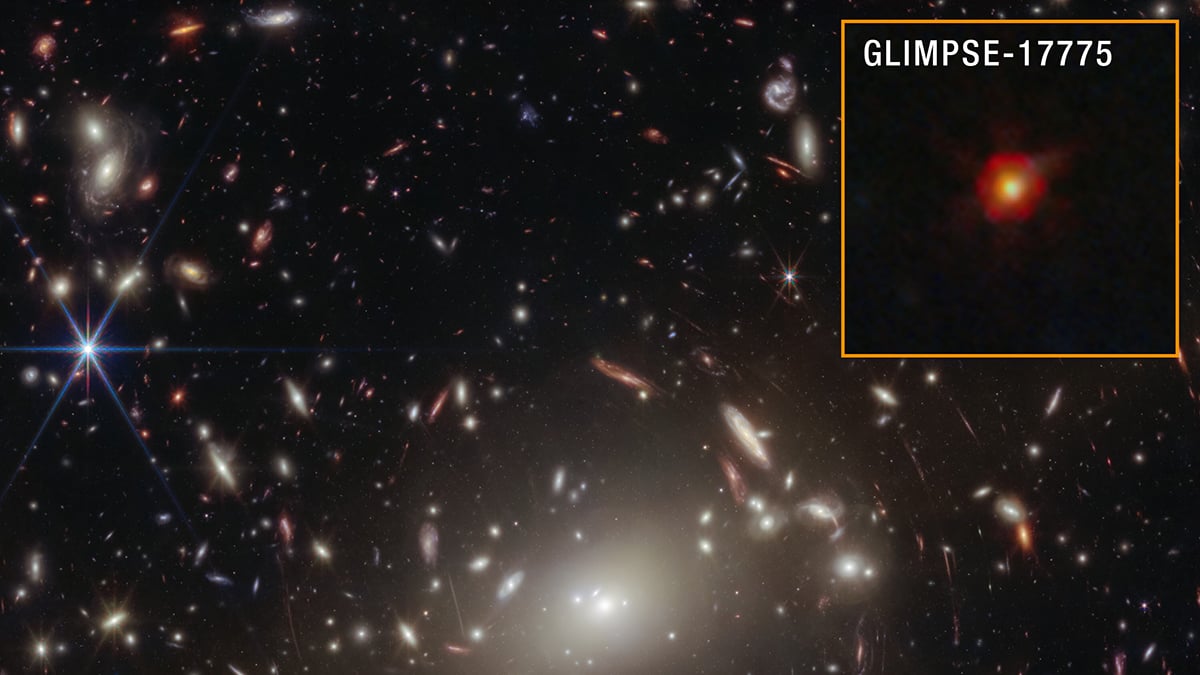
Modern age cosmology has made remarkable progress in explaining how the Universe evolved after the Big Bang. Yet one major question continues to resist a convincing answer. How did supermassive black holes become so massive when the Universe itself was still in its infancy? The James Webb Space Telescope (JWST) has provided an important clue. By studying one unusual object in extraordinary detail, JWST has uncovered the strongest observational evidence so far for a proposed class of objects known as black hole stars, or BH*.
This idea has attracted growing attention since JWST discovered hundreds of mysterious compact objects in the distant Universe. Those objects, nicknamed Little Red Dots, refused to fit comfortably into existing categories of galaxies or active black holes. Astronomers proposed several explanations, but the available observations were unable to distinguish between them.
JWST’s Little Red Dots: An Unexpected Mystery
The discovery began with an entirely different scientific goal. Soon after JWST started routine observations, astronomers began surveying some of the earliest galaxies ever formed. They expected to find young galaxies rich in newly formed stars and perhaps a few actively growing black holes.
Scattered across JWST’s deep images were hundreds of tiny, compact objects with a distinctive reddish appearance. They appeared almost point-like, yet they shone with surprising brightness. Because of their appearance, researchers simply called them Little Red Dots, or LRDs.
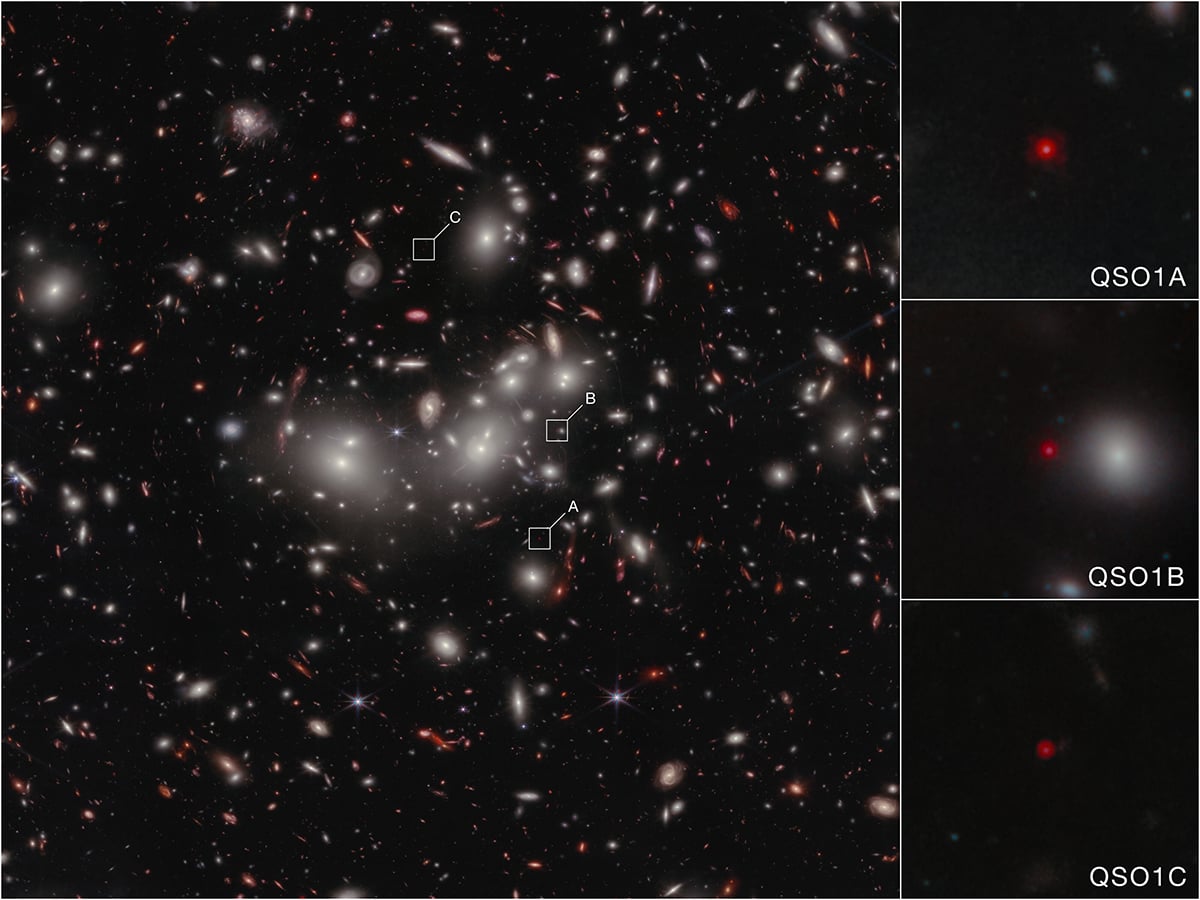
These objects existed when the Universe was only a few hundred million years old. That period marks one of the most important stages in cosmic history. The first galaxies had begun assembling, the earliest generations of stars had already formed, and the first massive black holes were beginning to shape their surroundings. Every object from this era provides valuable information about how today’s Universe came into existence.
Several research groups proposed competing explanations. One idea suggested that thick clouds of gas and dust concealed actively growing black holes. Another argued that these objects represented a completely new phase in black hole evolution. In this scenario, a rapidly growing black hole remained wrapped inside a dense cocoon of gas that absorbed much of the outgoing radiation before re-emitting it at infrared wavelengths. This became known as the black hole star model.
A natural cosmic telescope helped JWST look deeper
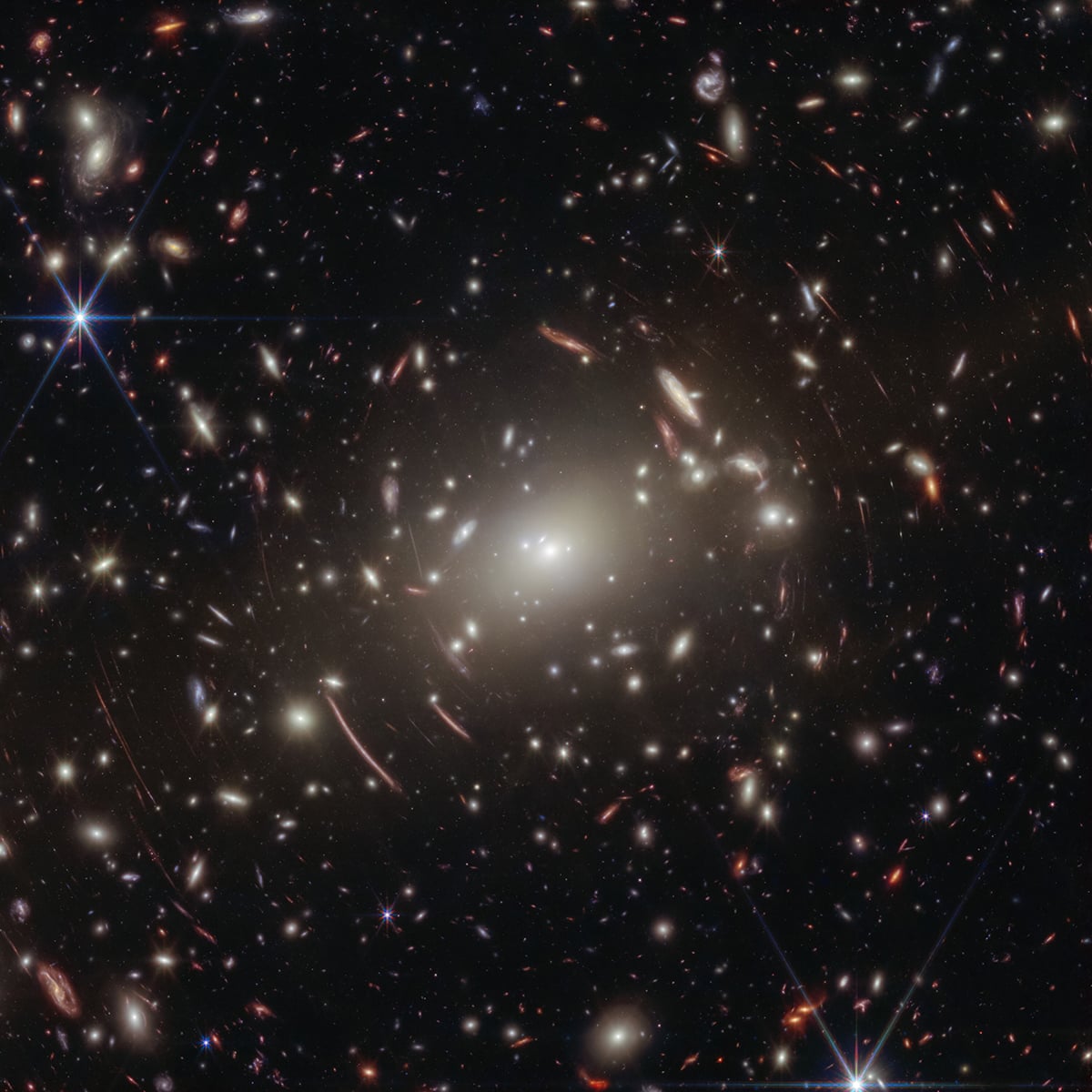
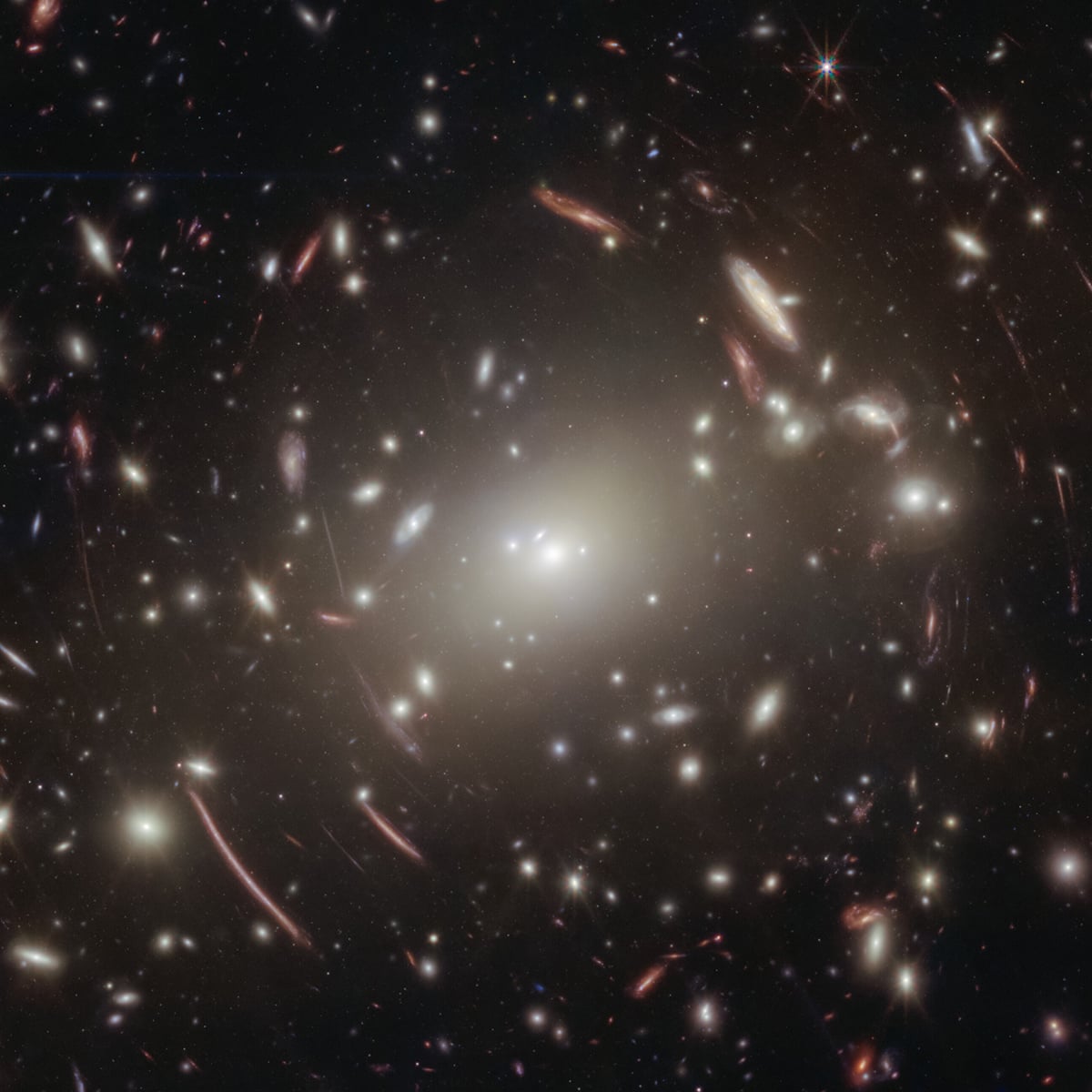
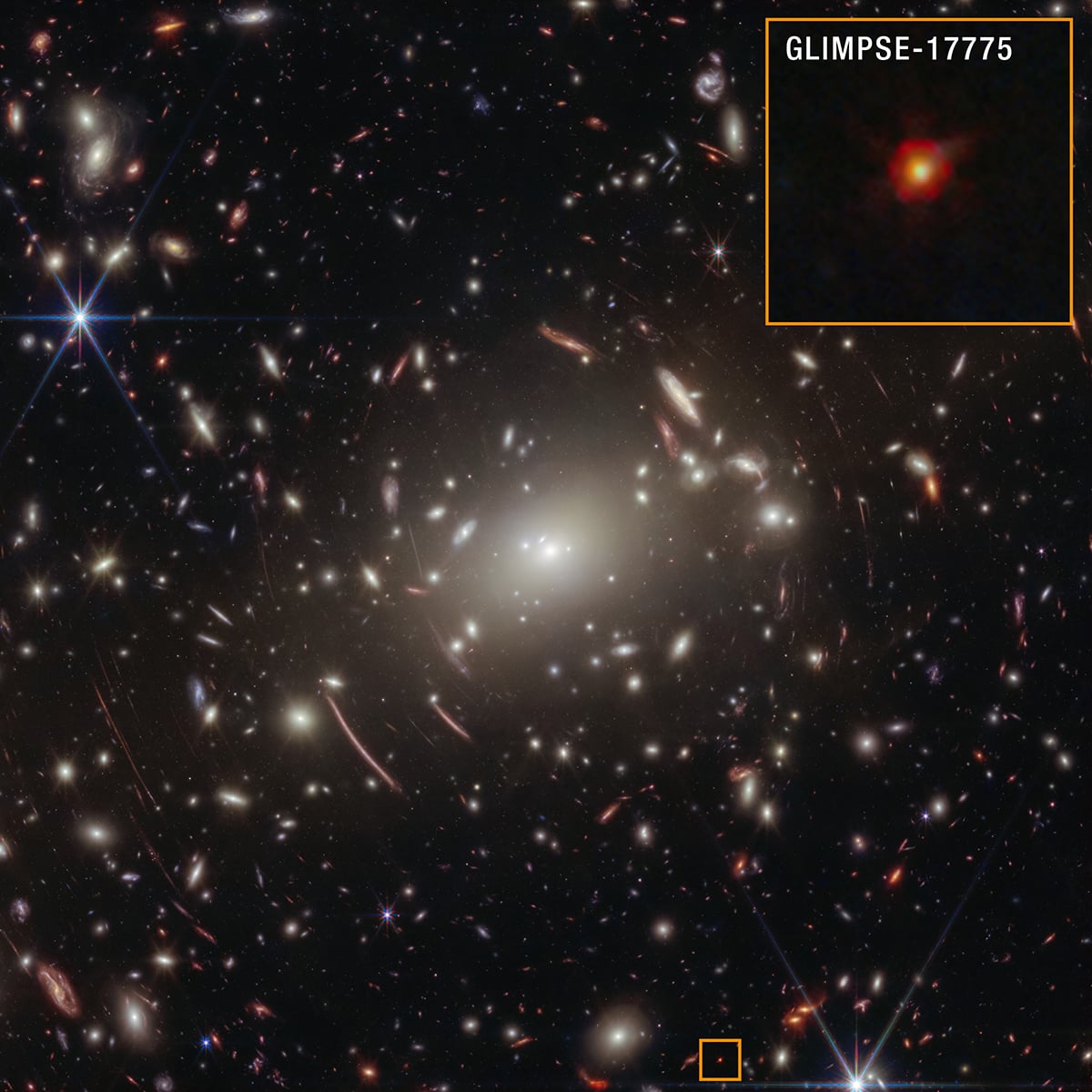
To investigate the mystery, researchers selected one particularly interesting Little Red Dot called GLIMPSE-17775. This object lies far beyond the massive galaxy cluster Abell S1063. Although the enormous distance makes the object extremely faint, nature provided astronomers with an unexpected advantage. According to Einstein’s theory of general relativity, massive objects bend the fabric of space-time. As light travels through this distorted space, its path changes. Galaxy clusters can therefore act as natural gravitational lenses, magnifying objects hidden far behind them.
The gravity of Abell S1063 magnified the light from GLIMPSE-17775 before it reached JWST. This natural magnification increased the object’s apparent brightness and allowed astronomers to collect far more detailed information than would otherwise have been possible.
The research team observed the object for almost thirty hours using JWST’s Near Infrared Spectrograph, better known as NIRSpec. Because gravitational lensing amplified the signal, those observations achieved a sensitivity equivalent to roughly eighty hours of exposure.
Unlike a photograph, a spectrum separates incoming light into thousands of individual wavelengths. Every chemical element leaves its own unique fingerprint within that spectrum. By studying these fingerprints, astronomers can identify the elements present, measure gas temperatures, estimate densities, and uncover the physical processes shaping the object.
Conditions around a growing Black Hole
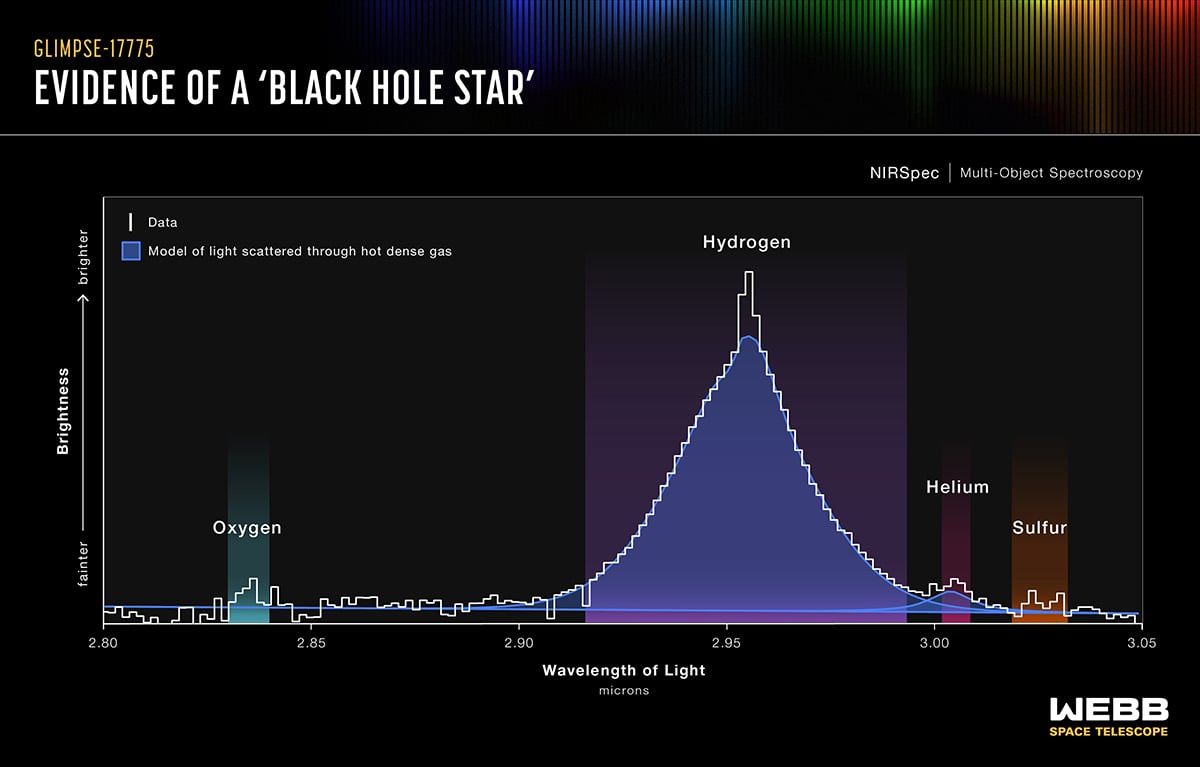
One of the first surprises came from the sheer richness of the spectrum. JWST detected more than forty emission lines produced by hydrogen, helium, oxygen, sulphur, and several other elements. Such detailed observations had never been obtained for a Little Red Dot before.
The researchers identified sixteen separate iron emission lines, creating what they described as an iron forest. Producing such a large collection of iron features requires intense radiation and extremely energetic conditions. Ordinary star-forming galaxies rarely generate such complex spectra. The iron lines pointed towards an environment dominated by a rapidly growing supermassive black hole.
The team then examined the shapes of the emission lines themselves. Gas orbiting close to a black hole normally broadens these lines because different regions move at different speeds. The researchers found strong evidence for electron scattering. In this process, photons repeatedly collide with free electrons while escaping the surrounding gas.
This process occurs only when enormous numbers of free electrons fill the surrounding environment. In other words, the gas must be both extremely dense and highly ionised. Those conditions agree remarkably well with predictions made by the black hole star model.
Clear skies!
See more from DIYPhotography.net on Google
Add DIYPhotography.net as a trusted source. This makes
our stories more likely to appear in your Google Search results.
 Add as a preferred source on Google

Soumyadeep Mukherjee
Soumyadeep Mukherjee is an award-winning astrophotographer from India. He has a doctorate degree in Linguistics. His work extends to the sub-genres of nightscape, deep sky, solar, lunar and optical phenomenon photography. He is also a photography educator and has conducted numerous workshops. His works have appeared in over 40 books & magazines including Astronomy, BBC Sky at Night, Sky & Telescope among others, and in various websites including National Geographic, NASA, Forbes. He was the first Indian to win “Astronomy Photographer of the Year” award in a major category.


Join the Discussion
DIYP Comment Policy
Be nice, be on-topic, no personal information or flames.