



















Mars Express Captures a Martian Landscape Shaped by Ancient Lava and Wind
Oct 23, 2026
Soumyadeep Mukherjee
Soumyadeep Mukherjee is an award-winning astrophotographer from India. He has a doctorate degree in Linguistics. His work extends to the sub-genres of nightscape, deep sky, solar, lunar and optical phenomenon photography. He is also a photography educator and has conducted numerous workshops. His works have appeared in over 40 books & magazines including Astronomy, BBC Sky at Night, Sky & Telescope among others, and in various websites including National Geographic, NASA, Forbes. He was the first Indian to win “Astronomy Photographer of the Year” award in a major category.
Share:
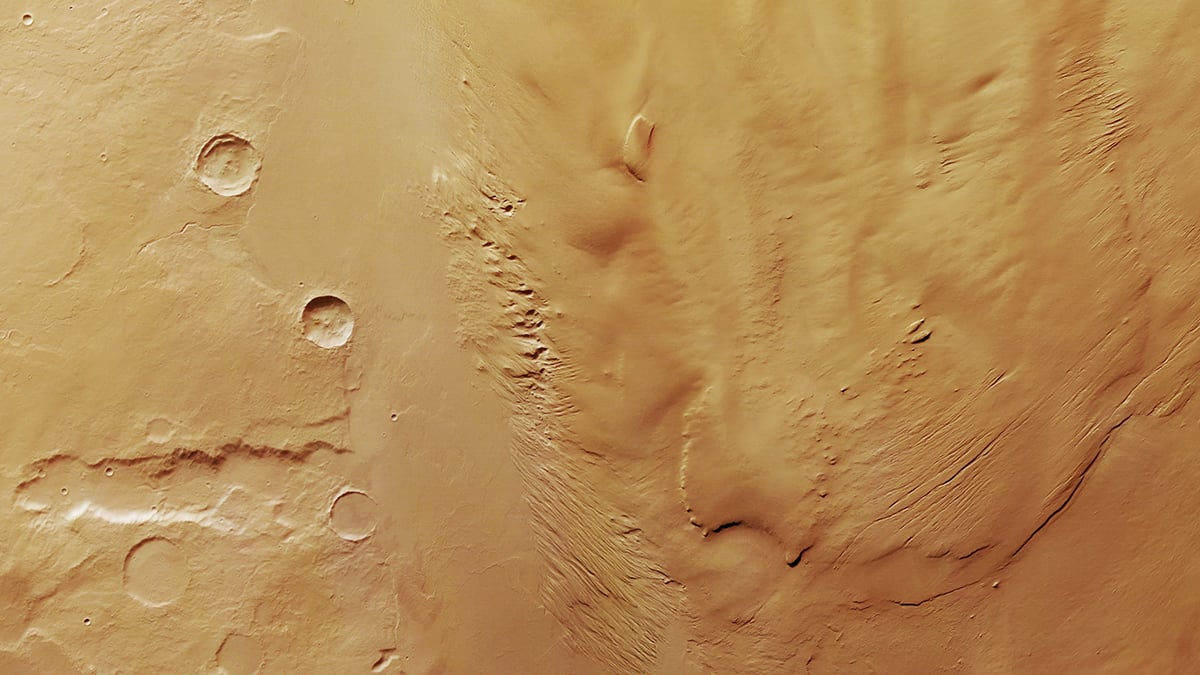
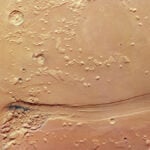
A new image from the European Space Agency’s Mars Express spacecraft shows a vast, flat-topped mountain surrounded by impact craters, valleys, and long ridges. The mountain, called Amazonis Mensa, rises about three kilometers above the surrounding plains. Its exposed slopes and neighboring terrain preserve evidence of volcanic activity and wind erosion over billions of years.
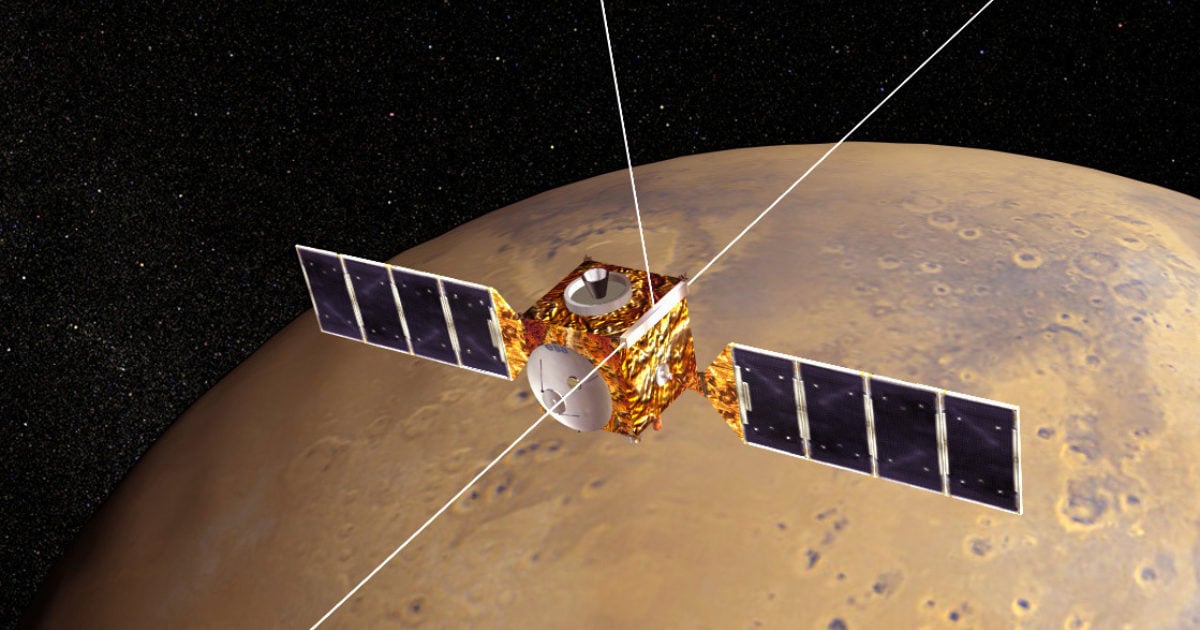
Mars Express recorded the scene on 14 June with its High Resolution Stereo Camera (HRSC). The image covers part of a region where ancient lava flows changed the surface, and winds gradually wore away exposed material. Several impact craters are also visible, although later deposits have partly filled or buried some of them.
Amazonis Mensa towers above ancient volcanic region
Amazonis Mensa occupies the center-right of the image. The mountain stretches for more than 400 kilometers, although Mars Express photographed only part of it during this observation. Its highest points stand approximately three kilometers above the surrounding plains. That makes it around three times as tall as South Africa’s Table Mountain.
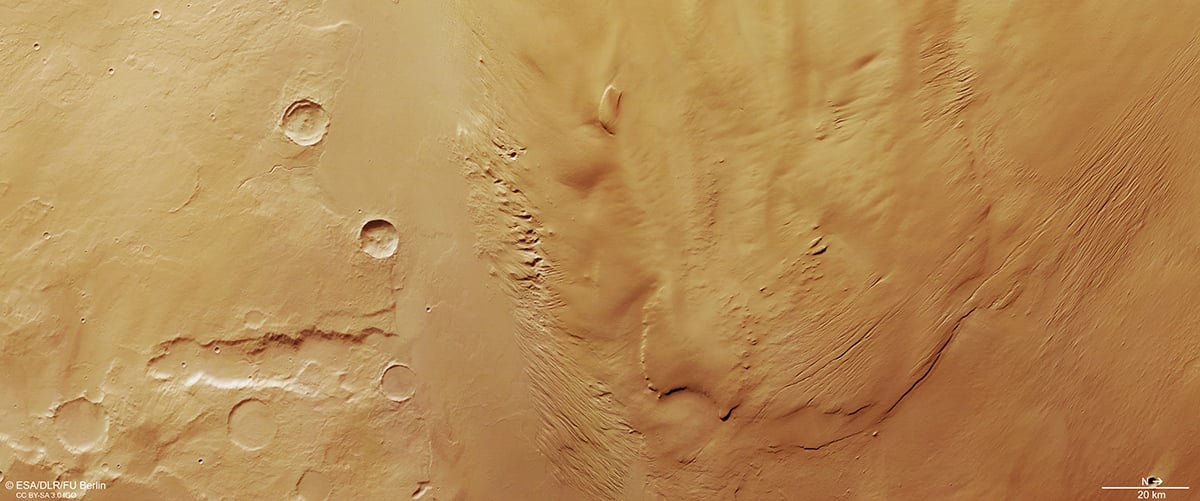
In planetary geology, mensa describes a flat-topped mountain or mesa. Amazonis Mensa has an irregular outline, with several projections along its southern edge. Its long, elevated structure gradually slopes towards the surrounding lowlands.
Two other elongated landforms occupy the same region. Gordii Dorsum lies to the east, while Eumenides Dorsum lies to the west. All three extend across the transition between Daedalia Planum and Amazonis Planitia.
Ancient lava flows covered parts of the landscape
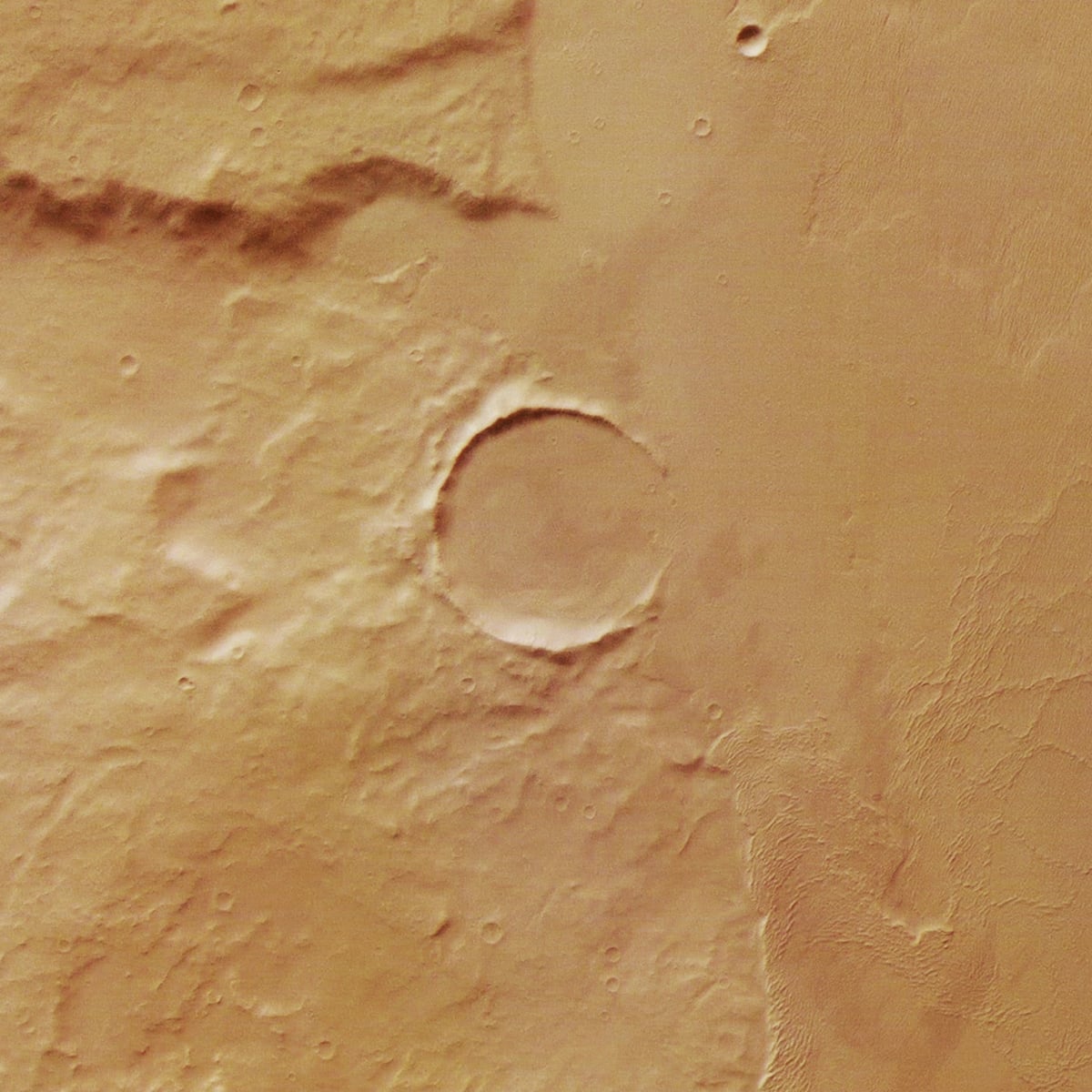
Looking towards the left side of the image, we find smooth areas contrasted with rougher ground. These patches are identified as probable remnants of lava flows that crossed the region around three billion years ago.
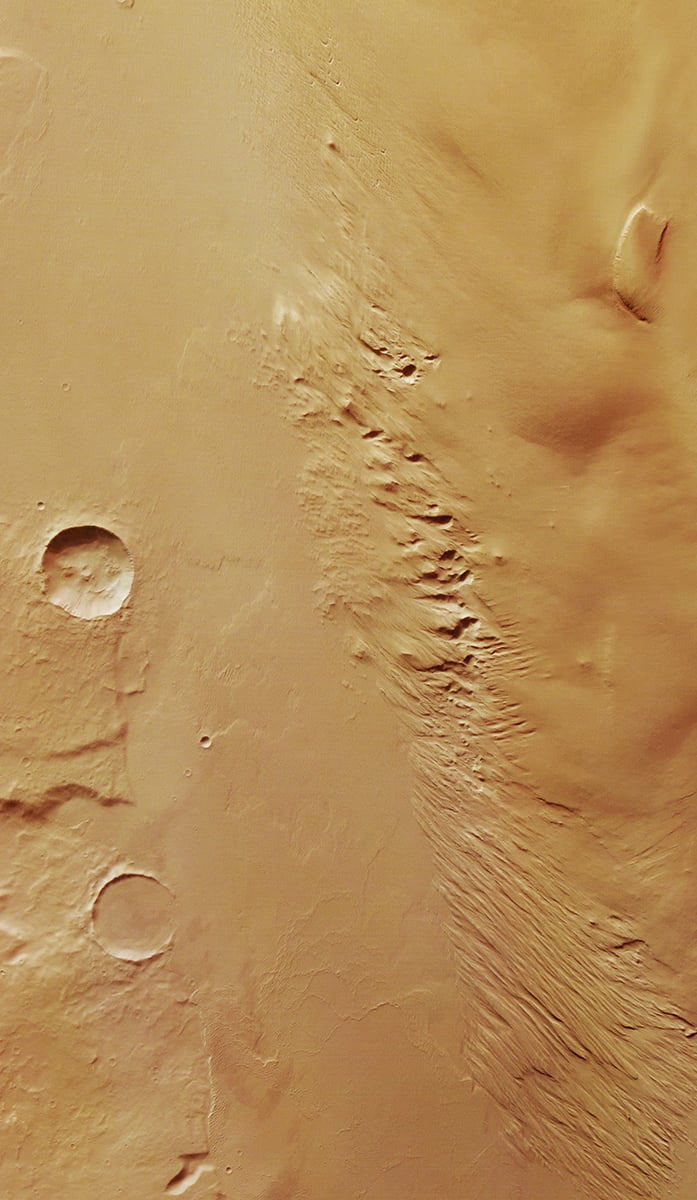
Lava can travel across low ground and fill existing depressions. Once it cools and solidifies, it leaves a new surface over the older landscape. On Mars, these deposits can preserve evidence of earlier geological features while hiding other parts from view.
Several impact craters in the image show this process. Some retain recognizable rims and interiors. Others contain smooth material that partly fills their depressions. One crater has almost disappeared beneath later deposits, leaving only its rim exposed.
Wind erosion carved ridges around the mountain
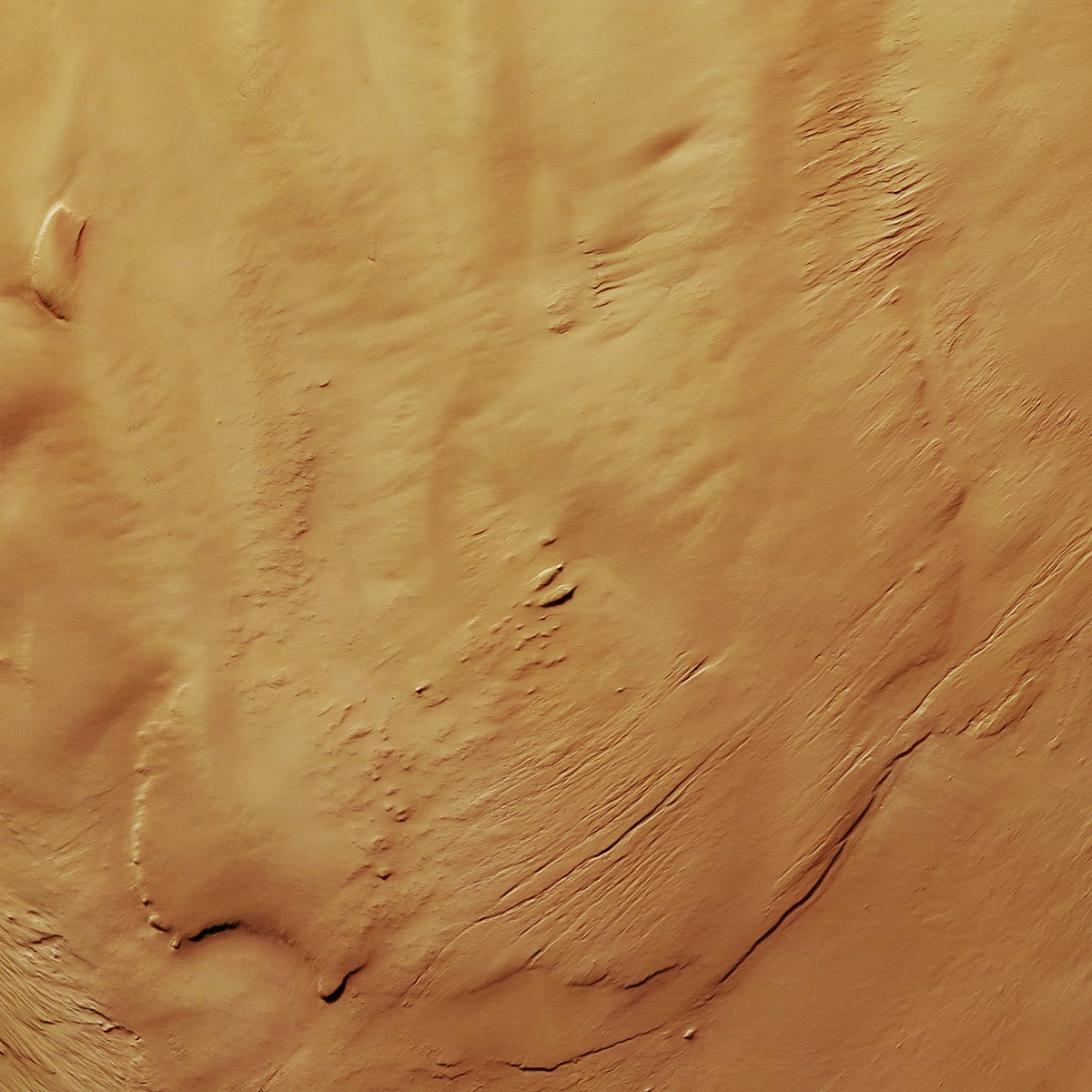
Across the central and right-hand portions of the image, long, narrow ridges form patterns around Amazonis Mensa. These structures, known as yardangs, develop when wind carries sand particles across exposed ground and gradually erodes the surface.
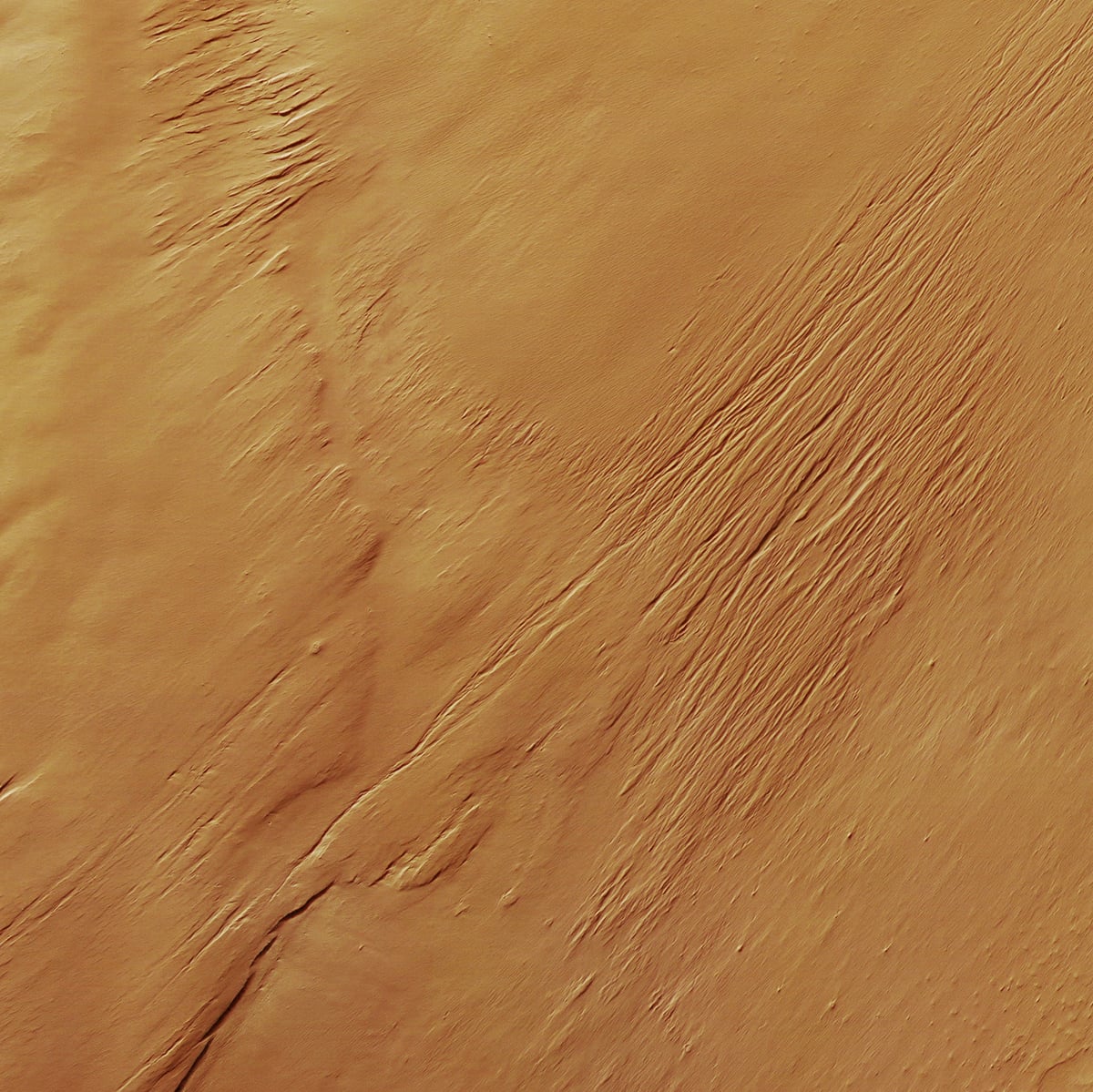
The process resembles sandblasting. Wind lifts and transports loose grains, which strike rock and sediment as they move. Over long periods, the particles wear away weaker material and leave elongated ridges behind.
Mars Express reveals two groups of yardangs around Amazonis Mensa. The ridges follow different directions, reflecting changes in the wind patterns that shaped them. The mountain appears to influence those patterns by redirecting airflow around its slopes.
Clear skies!
See more from DIYPhotography.net on Google
Add DIYPhotography.net as a trusted source. This makes
our stories more likely to appear in your Google Search results.
 Add as a preferred source on Google

Soumyadeep Mukherjee
Soumyadeep Mukherjee is an award-winning astrophotographer from India. He has a doctorate degree in Linguistics. His work extends to the sub-genres of nightscape, deep sky, solar, lunar and optical phenomenon photography. He is also a photography educator and has conducted numerous workshops. His works have appeared in over 40 books & magazines including Astronomy, BBC Sky at Night, Sky & Telescope among others, and in various websites including National Geographic, NASA, Forbes. He was the first Indian to win “Astronomy Photographer of the Year” award in a major category.

Join the Discussion
DIYP Comment Policy
Be nice, be on-topic, no personal information or flames.