























Chandra Reveals a Possible Supernova Remnant in Galactic Center
Jun 22, 2026
Soumyadeep Mukherjee
Soumyadeep Mukherjee is an award-winning astrophotographer from India. He has a doctorate degree in Linguistics. His work extends to the sub-genres of nightscape, deep sky, solar, lunar and optical phenomenon photography. He is also a photography educator and has conducted numerous workshops. His works have appeared in over 40 books & magazines including Astronomy, BBC Sky at Night, Sky & Telescope among others, and in various websites including National Geographic, NASA, Forbes. He was the first Indian to win “Astronomy Photographer of the Year” award in a major category.
Share:
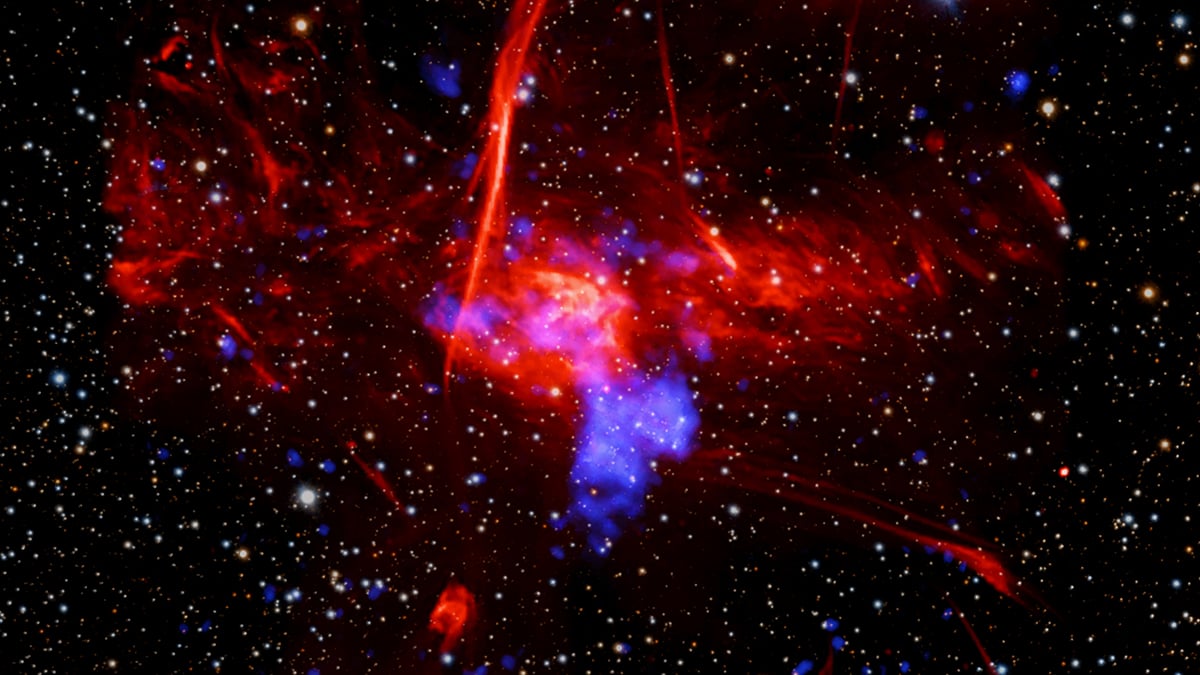
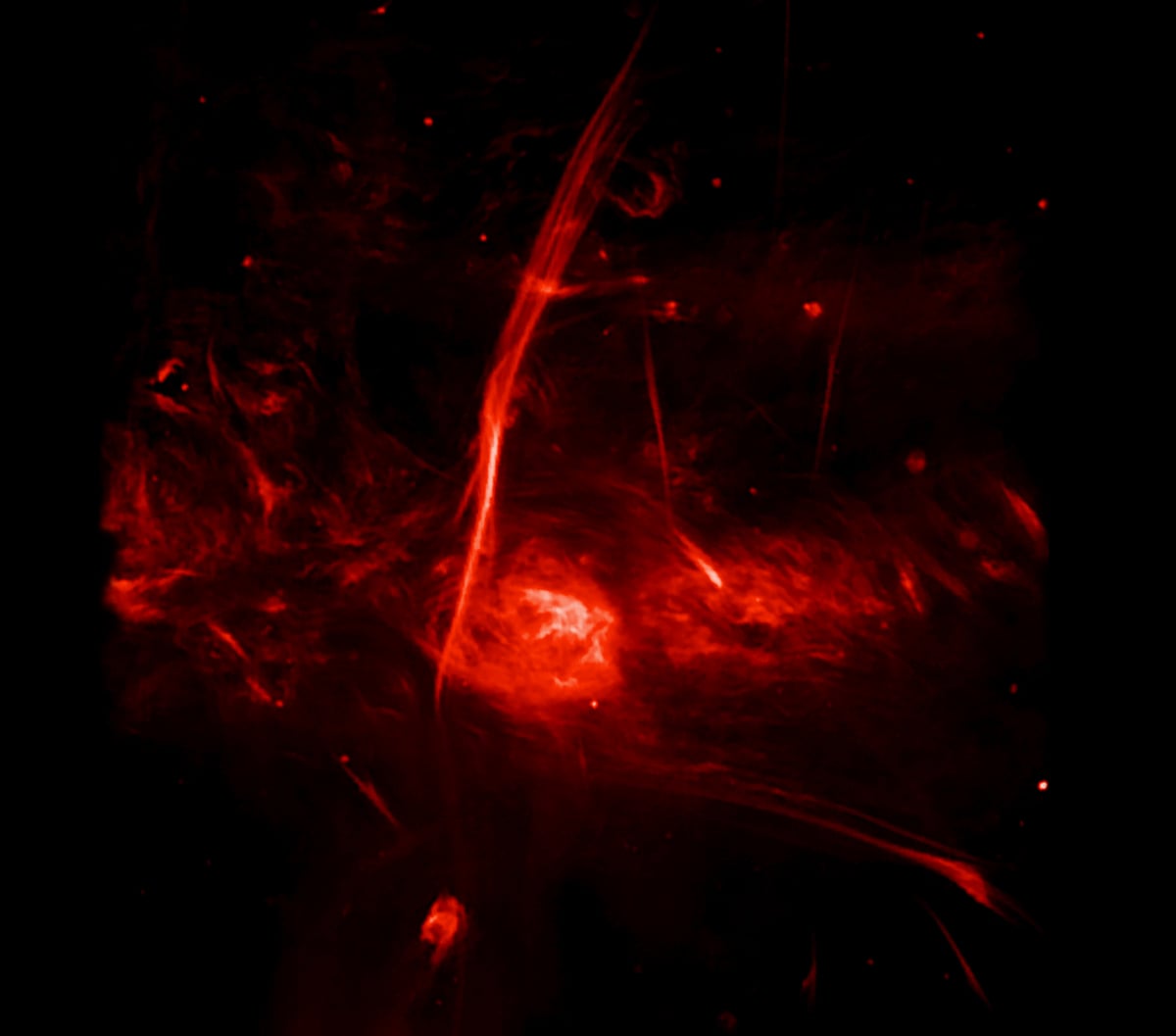
The Galactic Center remains notoriously difficult to observe. Thick clouds of interstellar dust absorb visible light, hiding much of the region from conventional telescopes. To probe these hidden structures, astronomers rely on observations at longer wavelengths and in high-energy bands such as X-rays. Over the past two decades, these observations have revealed giant magnetic filaments, clusters of massive stars, expanding bubbles of hot gas, and evidence of past activity from the central black hole.
A new study based on observations from NASA‘s Chandra X-ray Observatory and ESA‘s XMM-Newton telescope has uncovered an intriguing object buried within this crowded environment. Researchers have identified what appears to be a previously unknown supernova remnant in Sagittarius C, a prominent star-forming complex near the Galactic Center. If confirmed, the object would represent one of the closest known supernova remnants to Sagittarius A*.
A closer look at Sagittarius C
Sagittarius C, often abbreviated as Sgr C, forms part of the Central Molecular Zone, a vast reservoir of gas and dust that surrounds the Galactic Center. This region contains enormous quantities of molecular material and serves as one of the galaxy’s most active stellar nurseries. Massive stars continue to form there, while strong magnetic structures thread through the surrounding environment.
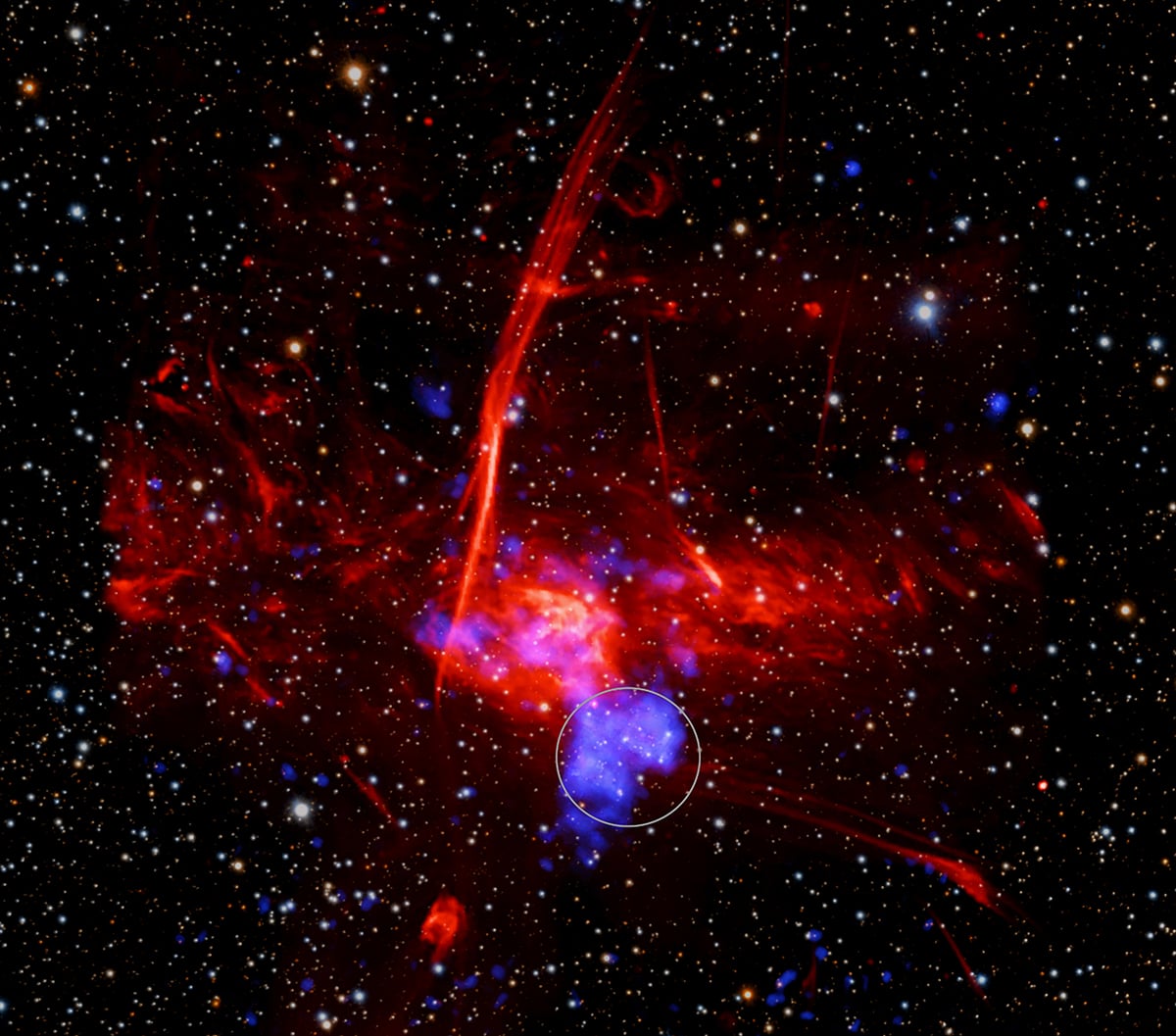
Due to its complexity, Sagittarius C has captured the attention of astronomers for decades. Radio observations have mapped large clouds of ionized gas and revealed unusual filamentary structures. Infrared telescopes have detected embedded star-forming regions hidden behind thick curtains of dust. Meanwhile, X-ray observatories have uncovered pockets of hot gas scattered throughout the region.
The discovery emerged from a detailed analysis of archival X-ray observations. Researchers examined data collected by Chandra and XMM-Newton and searched for unusual sources that might reveal previously unknown activity within the region. During that investigation, they identified a compact concentration of X-ray emission embedded within a much larger shell-like structure.
Signs of an ancient explosion
When a massive star exhausts its nuclear fuel, gravity eventually overwhelms the internal pressure supporting the star. The core collapses within seconds, triggering a supernova explosion that releases an enormous amount of energy into space.
The explosion launches shock waves outward at tremendous speeds. As those shock waves sweep through the surrounding gas, they heat the material to millions of degrees. This hot plasma emits X-rays that astronomers can detect long after the original explosion fades from view.
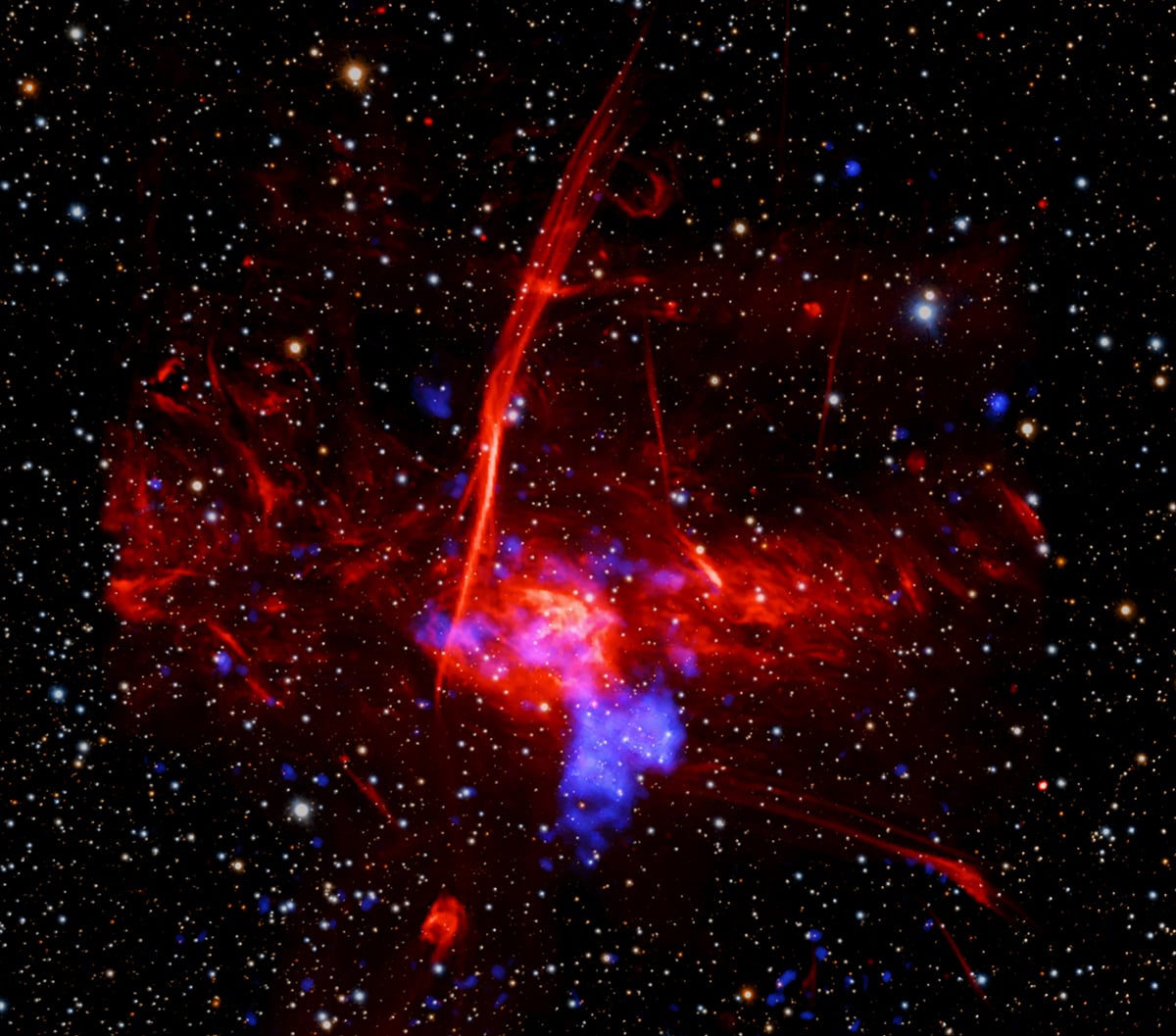
The newly discovered object in Sagittarius C appears to match this scenario. According to the team’s analysis, the source may be approximately 1,700 years old. Although that sounds ancient from a human perspective, it makes the object relatively young in astronomical terms. Many known supernova remnants have ages measured in tens of thousands of years.
The estimated age also places the event within a particularly interesting period of Galactic history. Around the time this star exploded, civilizations on Earth were recording astronomical observations, yet the explosion itself remained hidden behind the dense dust clouds that obscure the Galactic Center. Even if the supernova produced a brilliant flash, observers on Earth would likely never have seen it.
Unraveling the discovery through multi-wavelength astronomy
The foundation of the study came from X-ray observations obtained by Chandra and XMM-Newton. These observatories revealed the hot, energetic gas associated with the candidate remnant. However, the X-ray data alone could not explain the object’s surroundings.
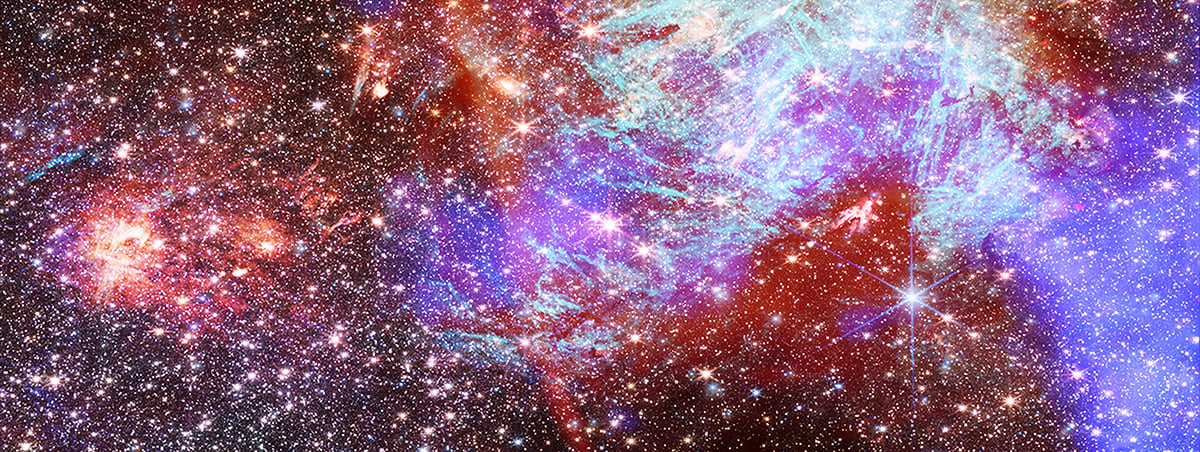
To understand the broader environment, astronomers incorporated radio observations from the MeerKAT radio telescope in South Africa. These observations traced ionized gas and magnetic structures throughout the region. The team also used optical data from the Pan-STARRS survey to place the object within its larger Galactic context.
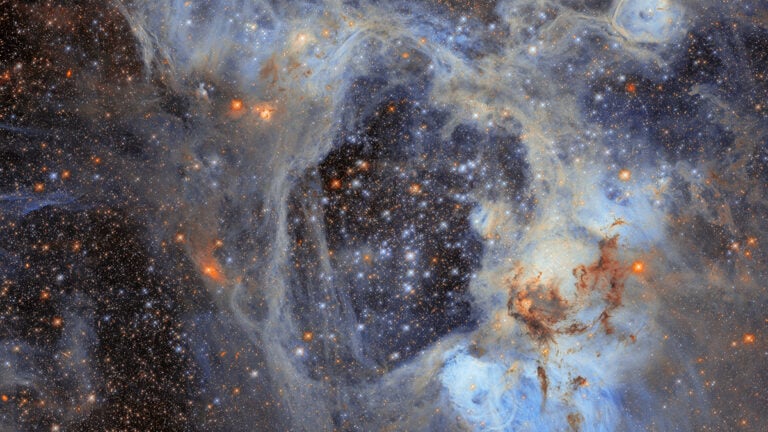
The candidate remnant sits within a large bubble associated with an H II region. Such regions form when intense ultraviolet radiation from young massive stars strips electrons from surrounding hydrogen gas. These glowing clouds often indicate active star formation.
The arrangement raises intriguing possibilities. The exploded star may have formed within the same environment that continues to produce new stars today. If so, the discovery captures two stages of stellar evolution occurring within the same region. One generation of stars is still forming, while another has already reached the end of its life.
Clear skies!
See more from DIYPhotography.net on Google
Add DIYPhotography.net as a trusted source. This makes
our stories more likely to appear in your Google Search results.
 Add as a preferred source on Google

Soumyadeep Mukherjee
Soumyadeep Mukherjee is an award-winning astrophotographer from India. He has a doctorate degree in Linguistics. His work extends to the sub-genres of nightscape, deep sky, solar, lunar and optical phenomenon photography. He is also a photography educator and has conducted numerous workshops. His works have appeared in over 40 books & magazines including Astronomy, BBC Sky at Night, Sky & Telescope among others, and in various websites including National Geographic, NASA, Forbes. He was the first Indian to win “Astronomy Photographer of the Year” award in a major category.

Join the Discussion
DIYP Comment Policy
Be nice, be on-topic, no personal information or flames.