



















Very Large Telescope Captures 44 Nysa: A Strange Three-Lobed Asteroid
Aug 6, 2026
Soumyadeep Mukherjee
Soumyadeep Mukherjee is an award-winning astrophotographer from India. He has a doctorate degree in Linguistics. His work extends to the sub-genres of nightscape, deep sky, solar, lunar and optical phenomenon photography. He is also a photography educator and has conducted numerous workshops. His works have appeared in over 40 books & magazines including Astronomy, BBC Sky at Night, Sky & Telescope among others, and in various websites including National Geographic, NASA, Forbes. He was the first Indian to win “Astronomy Photographer of the Year” award in a major category.
Share:
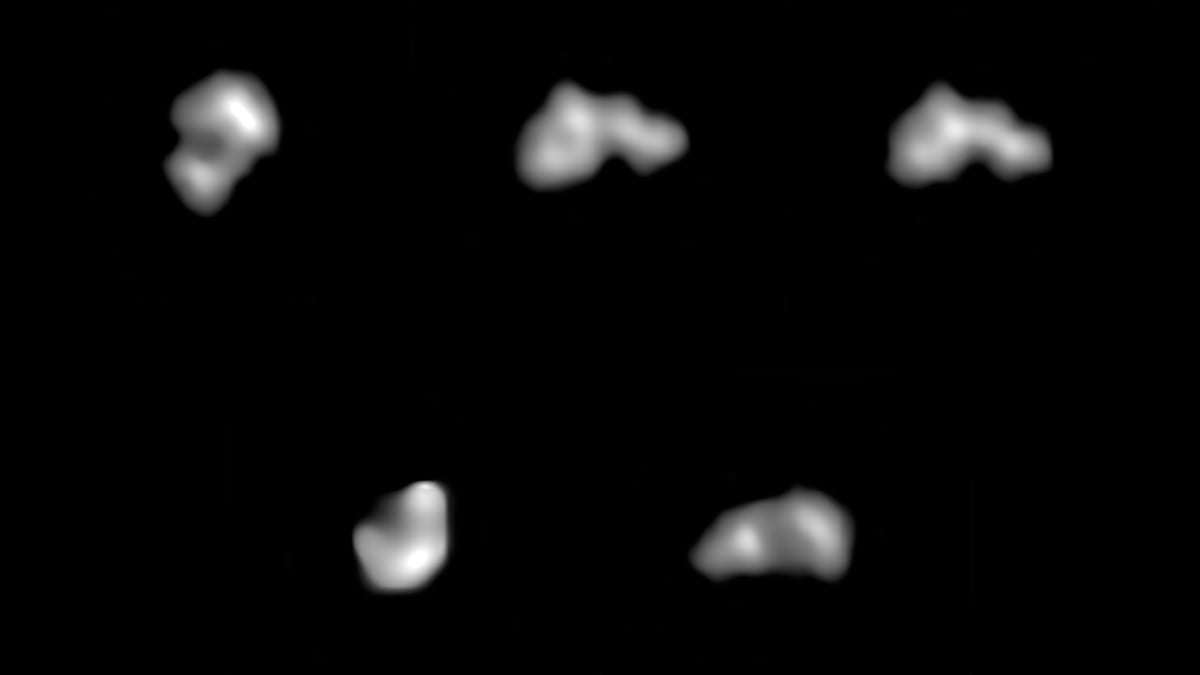
Asteroid 44 Nysa has spent nearly 170 years as an entry in the main-belt catalogue: bright, rocky, and difficult to resolve from Earth. Its diameter is only about 80 kilometers, and at its distance from Earth, that entire width occupies a tiny fraction of an arcsecond on the sky. For most of its observational history, astronomers could measure Nysa’s orbit and reflected light, but not its actual outline.
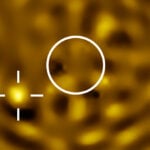
Earlier this month, using adaptive-optics imaging at the European Southern Observatory’s Very Large Telescope in Chile and the Large Binocular Telescope in Arizona, astronomers resolved surface-scale structure on the asteroid with unusual clarity. The images indicate a body composed of three broad lobes, connected by two much narrower regions.
44 Nysa: A difficult world to see
Nysa is about 80 kilometers across. Although that sounds large, it is tiny against the scale of the Solar System. From Earth, it sits at such a distance that even powerful telescopes have struggled to show anything more than a blurred patch of light. Astronomers can learn a great deal from that light. They can track an asteroid’s orbit, measure its brightness, and study the wavelengths it reflects.
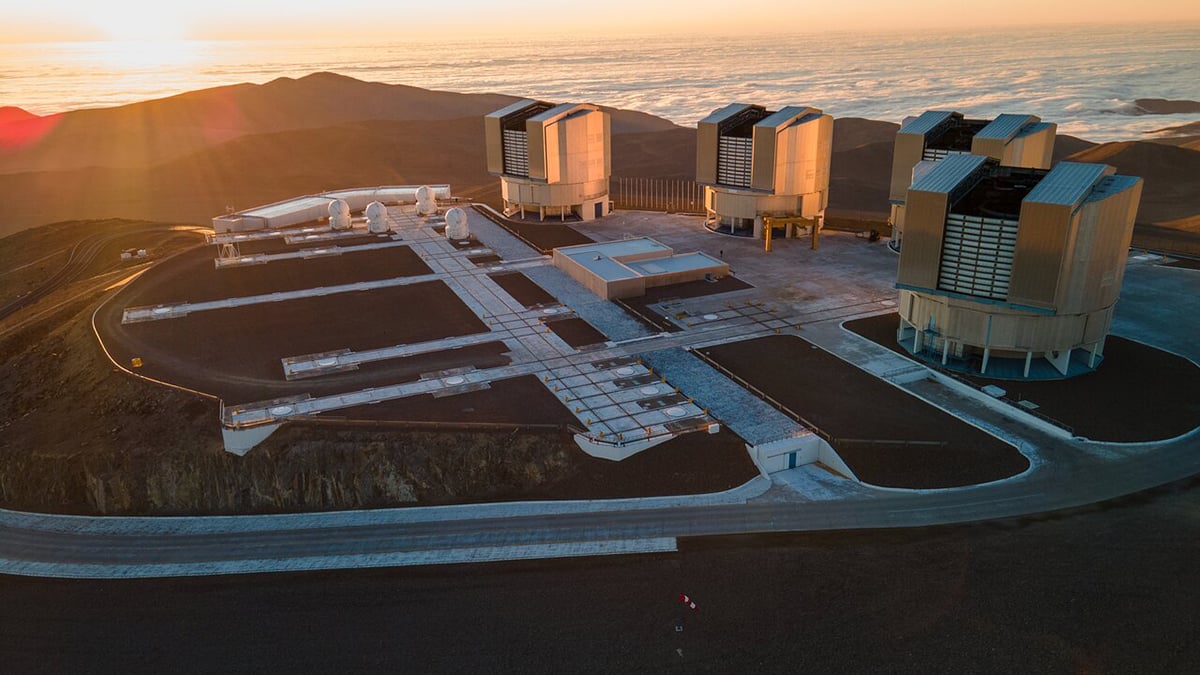
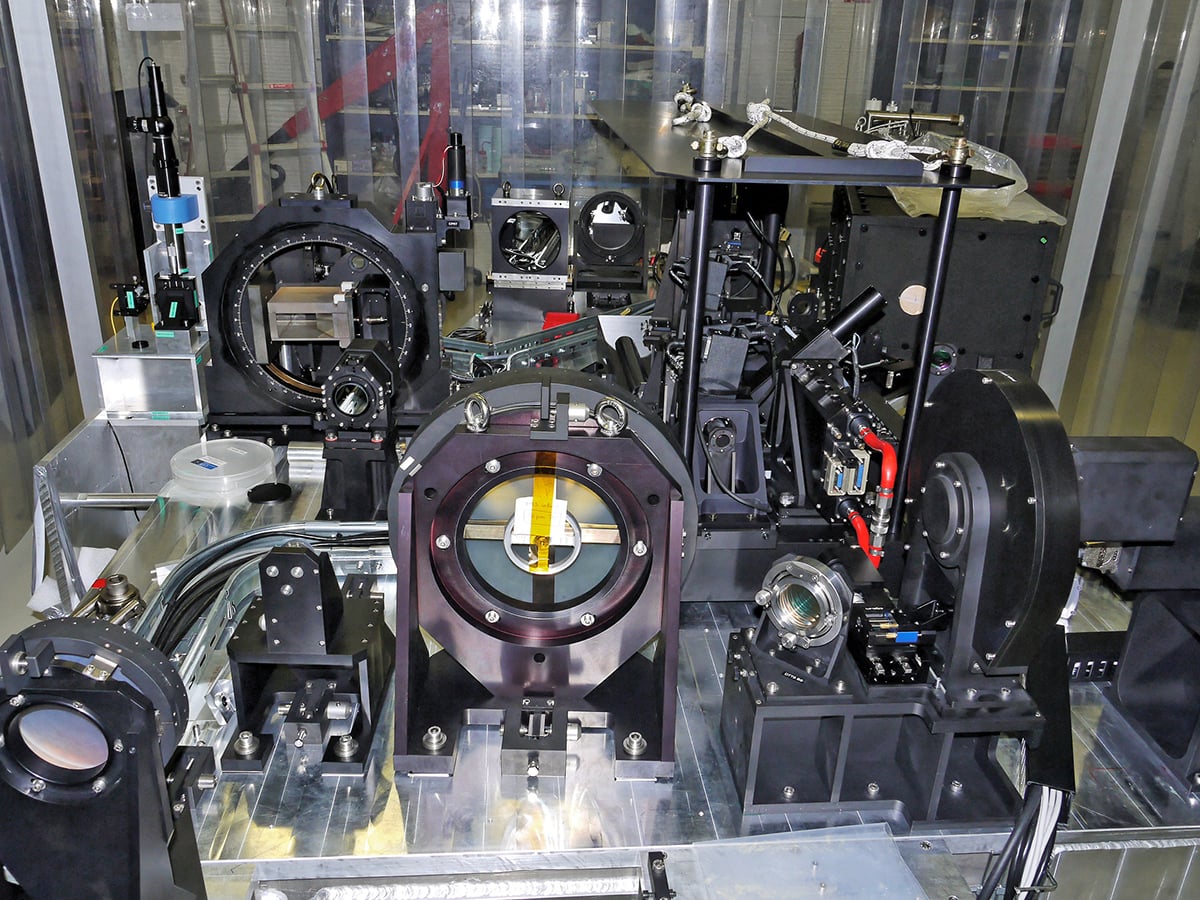
The research team used SPHERE/ZIMPOL on the European Southern Observatory’s Very Large Telescope in Chile. They also used SHARK-VIS on the Large Binocular Telescope in Arizona. Both instruments are designed to address a familiar problem: the Earth’s atmosphere. Air moves constantly above every observatory. It bends and distorts light from space, making stars twinkle and small targets look soft around the edges.
Adaptive optics measures the distortion and corrects for it while the telescope is observing. The technique does not turn a ground telescope into a spacecraft, but it comes remarkably close for some targets. In Nysa’s case, it gave researchers enough detail to see the asteroid as a real object.
Did three asteroids merge?
The images suggest that Nysa has three broad, rounded sections. Two narrow necks appear to connect them. The asteroid does not look like a sphere, a rough lump, or even a simple two-part object. It looks as though several pieces of a larger story remain visible on its surface. Odd shapes are common among asteroids. Most of these worlds are too small for gravity to pull them into neat spheres.
A few are contact binaries. These are pairs of bodies that met at low speed and stuck together. If its shape is confirmed, it may be a contact trinary. That would mean three major bodies became one asteroid. Scientists have not identified another asteroid with this structure.
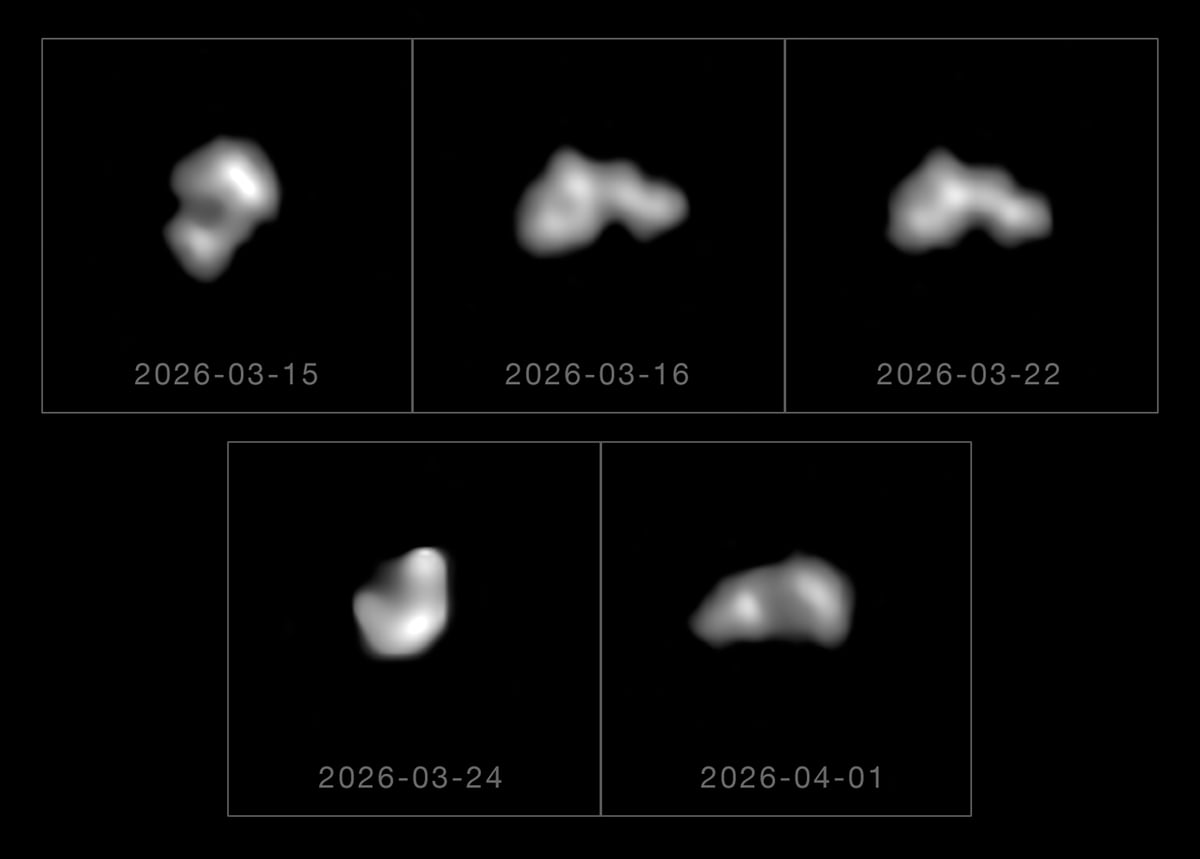
There are two competing explanations. The first is that Nysa really did form through mergers. The second explanation is that Nysa may have started as one solid asteroid. Major impacts could have gouged out deep regions of its surface, leaving behind three large bulges.
The team saw the same general shape in data from both observatories, which gives the finding weight. Still, the researchers are not treating the case as closed. Images of distant asteroids remain difficult to interpret. Different viewing angles, better models, and more observations will be needed before anyone can state exactly what Nysa is.
The tiny moon that could settle the debate
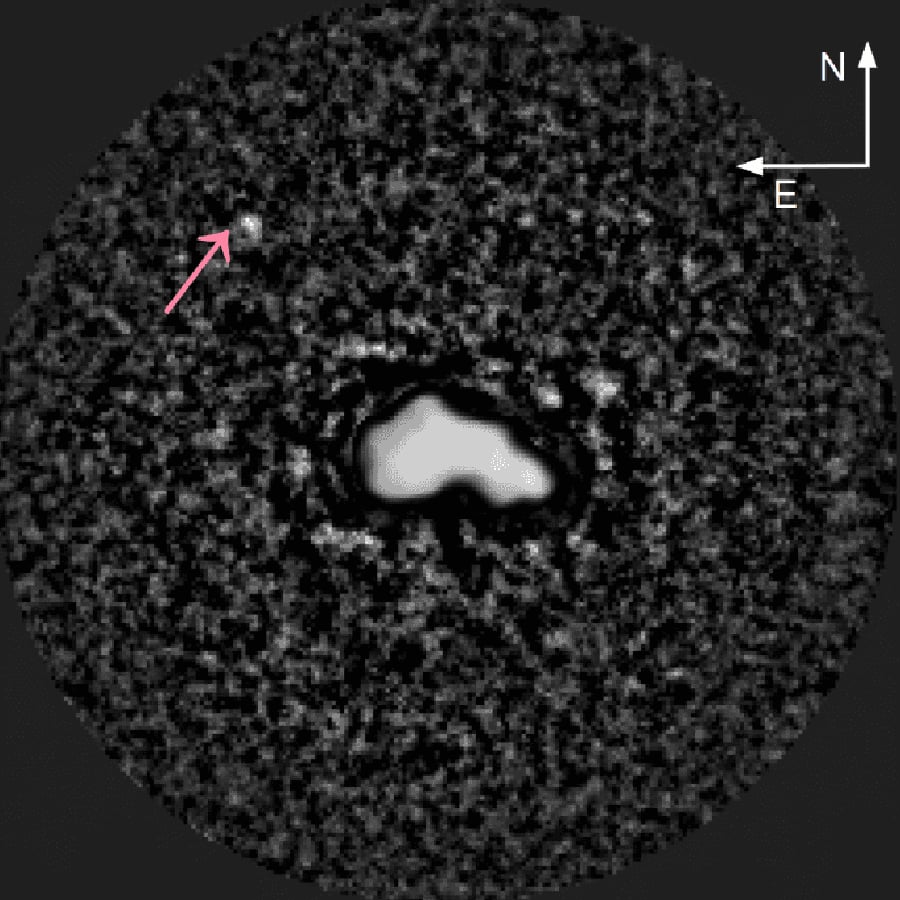
The discovery of a moon around Nysa gives astronomers a way to investigate further. The satellite is thought to be only around one kilometer across. It circles roughly 170 kilometers from the asteroid. As the small satellite travels around Nysa, it responds to the asteroid’s gravity. By measuring the shape and timing of its orbit, researchers can calculate how massive Nysa is.
With both mass and size in hand, astronomers can calculate the density of 44 Nysa. A high density might suggest a compact, mostly solid body. A low density might point to a rubble pile, filled with cracks and empty spaces. Many asteroids are not solid rocks at all. They are loose collections of fragments, held together by their own weak gravity.
Nysa’s density could help researchers decide between the merger and impact scenarios. A porous body may fit a history of slow assembly. A dense and coherent one may suit an object that endured large impacts.
Clear skies!
See more from DIYPhotography.net on Google
Add DIYPhotography.net as a trusted source. This makes
our stories more likely to appear in your Google Search results.
 Add as a preferred source on Google

Soumyadeep Mukherjee
Soumyadeep Mukherjee is an award-winning astrophotographer from India. He has a doctorate degree in Linguistics. His work extends to the sub-genres of nightscape, deep sky, solar, lunar and optical phenomenon photography. He is also a photography educator and has conducted numerous workshops. His works have appeared in over 40 books & magazines including Astronomy, BBC Sky at Night, Sky & Telescope among others, and in various websites including National Geographic, NASA, Forbes. He was the first Indian to win “Astronomy Photographer of the Year” award in a major category.
Join the Discussion
DIYP Comment Policy
Be nice, be on-topic, no personal information or flames.