




















MOTHRA Telescope Array Unveiled: The 1,140-Lens Observatory
Mar 12, 2026
Soumyadeep Mukherjee
Soumyadeep Mukherjee is an award-winning astrophotographer from India. He has a doctorate degree in Linguistics. His work extends to the sub-genres of nightscape, deep sky, solar, lunar and optical phenomenon photography. He is also a photography educator and has conducted numerous workshops. His works have appeared in over 40 books & magazines including Astronomy, BBC Sky at Night, Sky & Telescope among others, and in various websites including National Geographic, NASA, Forbes. He was the first Indian to win “Astronomy Photographer of the Year” award in a major category.
Share:
Astronomers describe the universe as a large-scale network of matter shaped by gravity and cosmic expansion. Cosmological simulations show that galaxies assemble along elongated filaments of dark matter and gas. These filaments intersect at dense nodes that host galaxy clusters. The entire pattern forms what scientists call the cosmic web. Observational evidence for this structure has accumulated over several decades through galaxy surveys and absorption studies of distant quasars. However, direct imaging of the diffuse gas that traces the web remains extremely challenging. The emission from this material is extraordinarily faint and often buried beneath the sky background and scattered light.
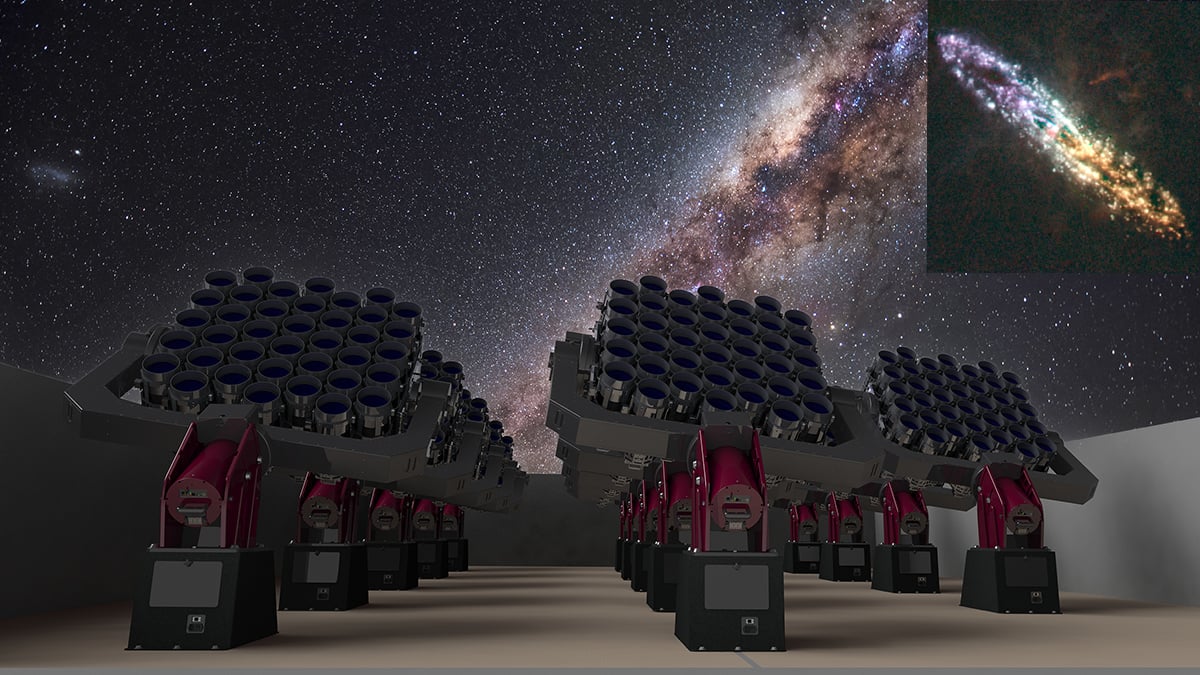
For this reason, researchers continue to search for new observing techniques that can detect such weak signals. A new telescope called MOTHRA, short for Modular Optical Telephoto Hyperspectral Robotic Array, represents one of the most ambitious attempts to solve this problem. Instead of using a traditional mirror-based design, the telescope relies on a large array of telephoto lenses working together as a single instrument. When completed, the system will consist of 1,140 individual lenses, making it the largest all-lens astronomical telescope ever constructed. The project aims to detect faint hydrogen emission between galaxies and thereby reveal portions of the cosmic web. If successful, the telescope could open a new observational window on the large-scale structure of the universe.
A telescope built from 1,140 lenses
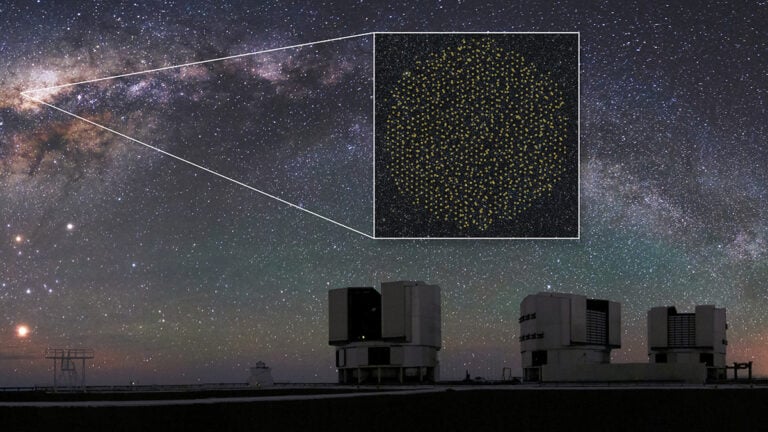
MOTHRA departs from the conventional design of most astronomical observatories. Large telescopes usually rely on a single mirror or lens to collect light. In contrast, MOTHRA combines the output of many smaller lenses. Engineers will install 1,140 high-quality Canon telephoto lenses on 30 robotic mounts. Each mount will carry 38 lenses, all pointed toward the same patch of sky.
During observations, every lens records images simultaneously. Astronomers later combine those images using computational techniques. When merged, the data behave as if they were collected by a much larger optical system.
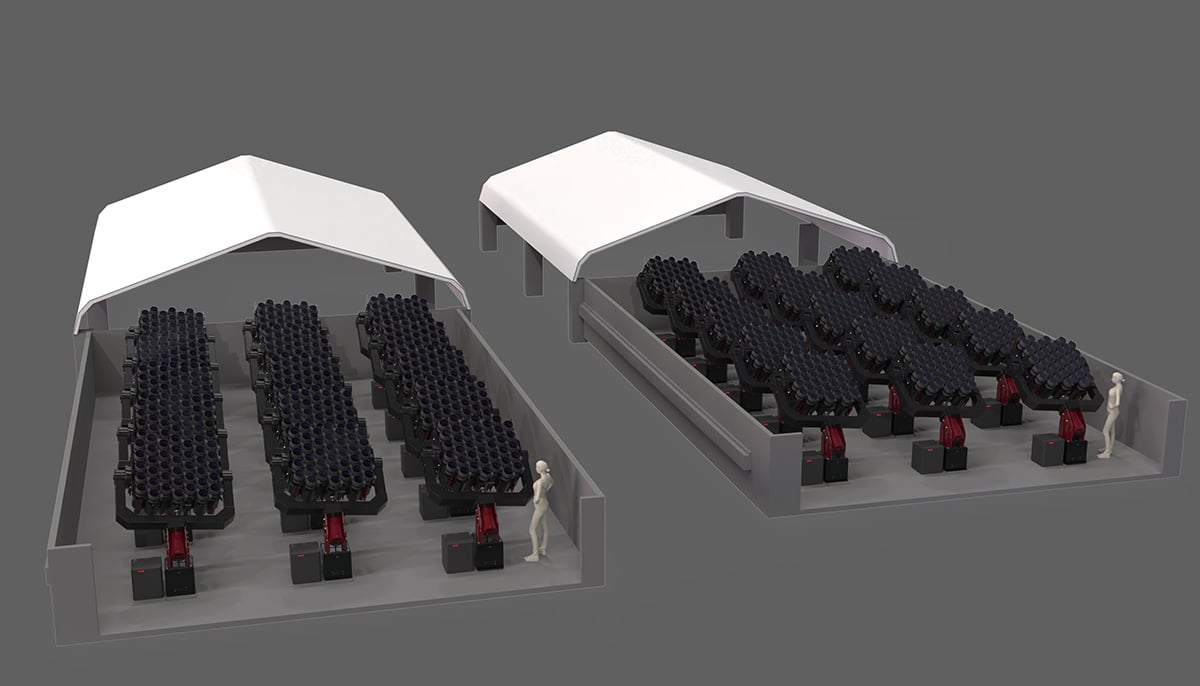
This method effectively produces the light-gathering power of a telescope with an aperture close to 4.7 meters. Such an aperture places the instrument in the range of mid-size research telescopes. At the same time, the distributed design preserves a very wide field of view.
The entire system will operate robotically. Computer software will control the mounts, coordinate exposures, and manage data acquisition. Observations will run automatically during clear nights, while dedicated pipelines will process the resulting data.
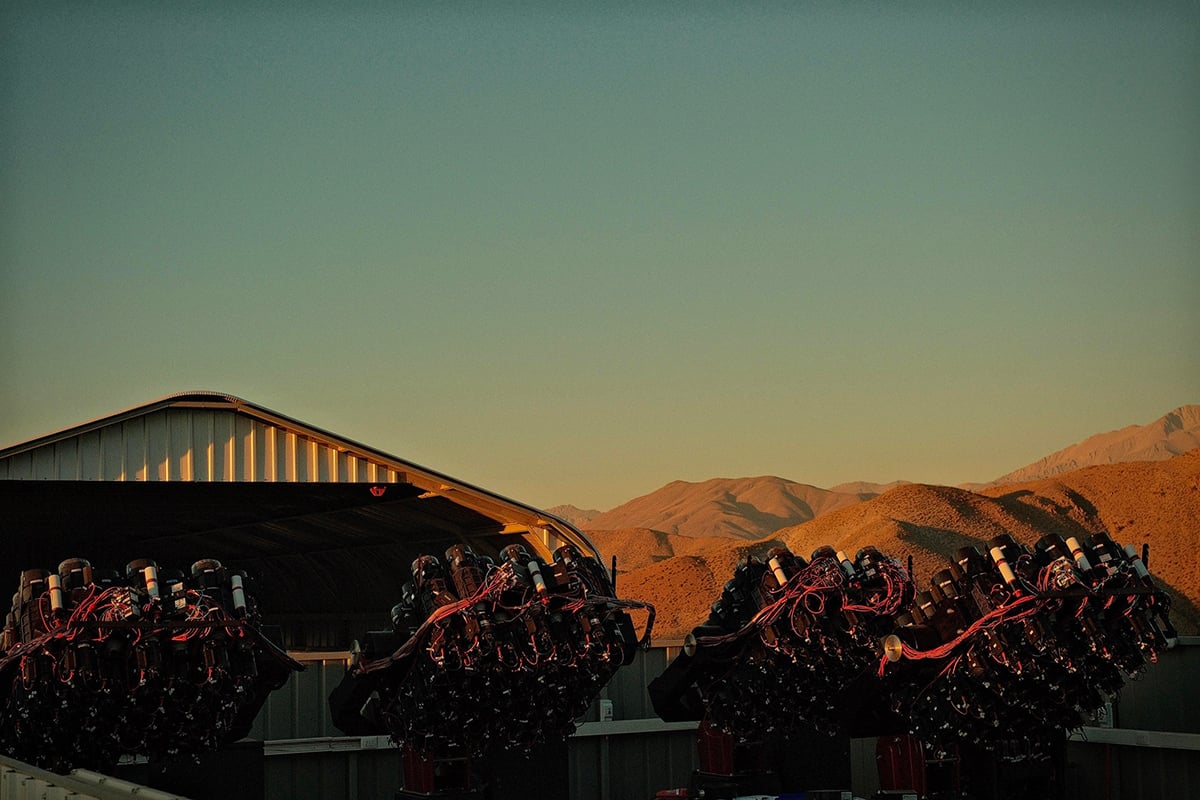
Researchers are constructing the telescope at El Sauce Observatory in Chile’s Rio Hurtado Valley. The region offers dark skies and stable atmospheric conditions, both essential for observing extremely faint astronomical sources. Construction began in 2025, and the team expects the observatory to begin full operations around 2026.
When completed, MOTHRA will represent the largest telescope ever built entirely from camera lenses.
The Dragonfly project that inspired MOTHRA
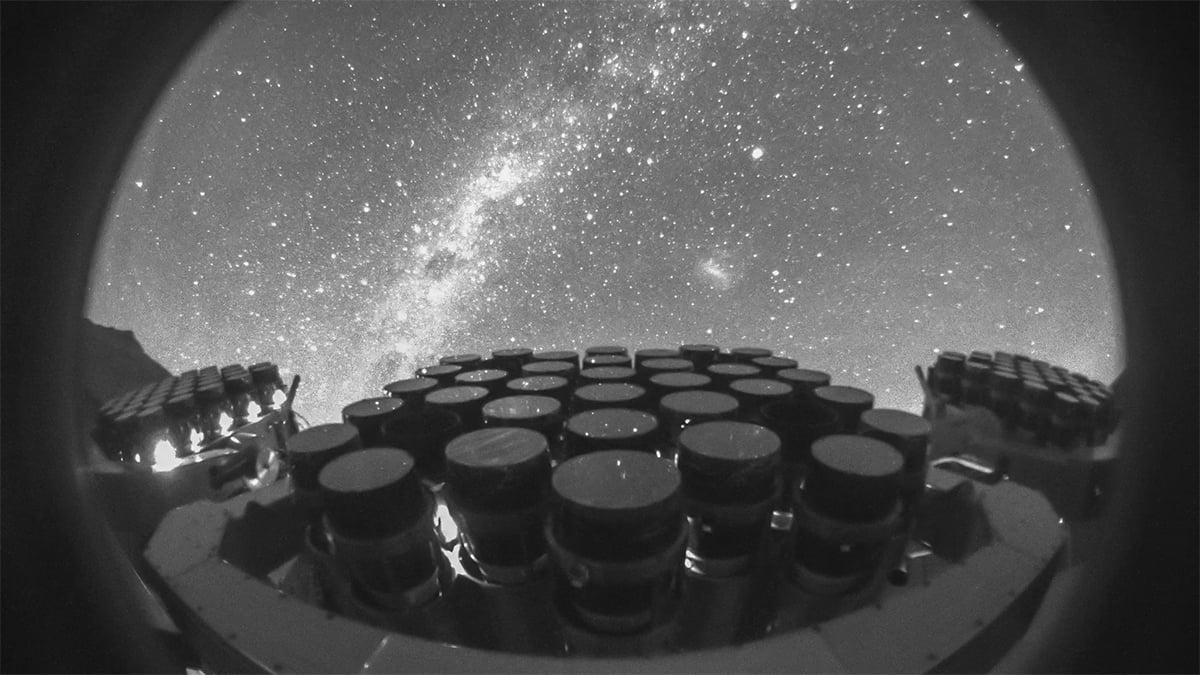
The idea behind MOTHRA did not emerge suddenly. It developed from an earlier instrument known as the Dragonfly Telephoto Array. Astronomers Pieter van Dokkum of Yale University and Roberto Abraham of the University of Toronto created that system to explore very faint structures around galaxies.
Dragonfly began operations in 2013 with only a small number of telephoto lenses. Nevertheless, the instrument quickly demonstrated that such lenses could perform remarkably well in certain areas of astronomical research. The telescope specialized in detecting ultra-low surface brightness objects, which are extremely faint features spread over large regions of sky.
Traditional telescopes often struggle with these observations. Mirrors and internal structures scatter small amounts of light across the image plane. That scattered light can obscure faint signals. Telephoto lenses, however, include advanced anti-reflection coatings that reduce internal reflections and glare.
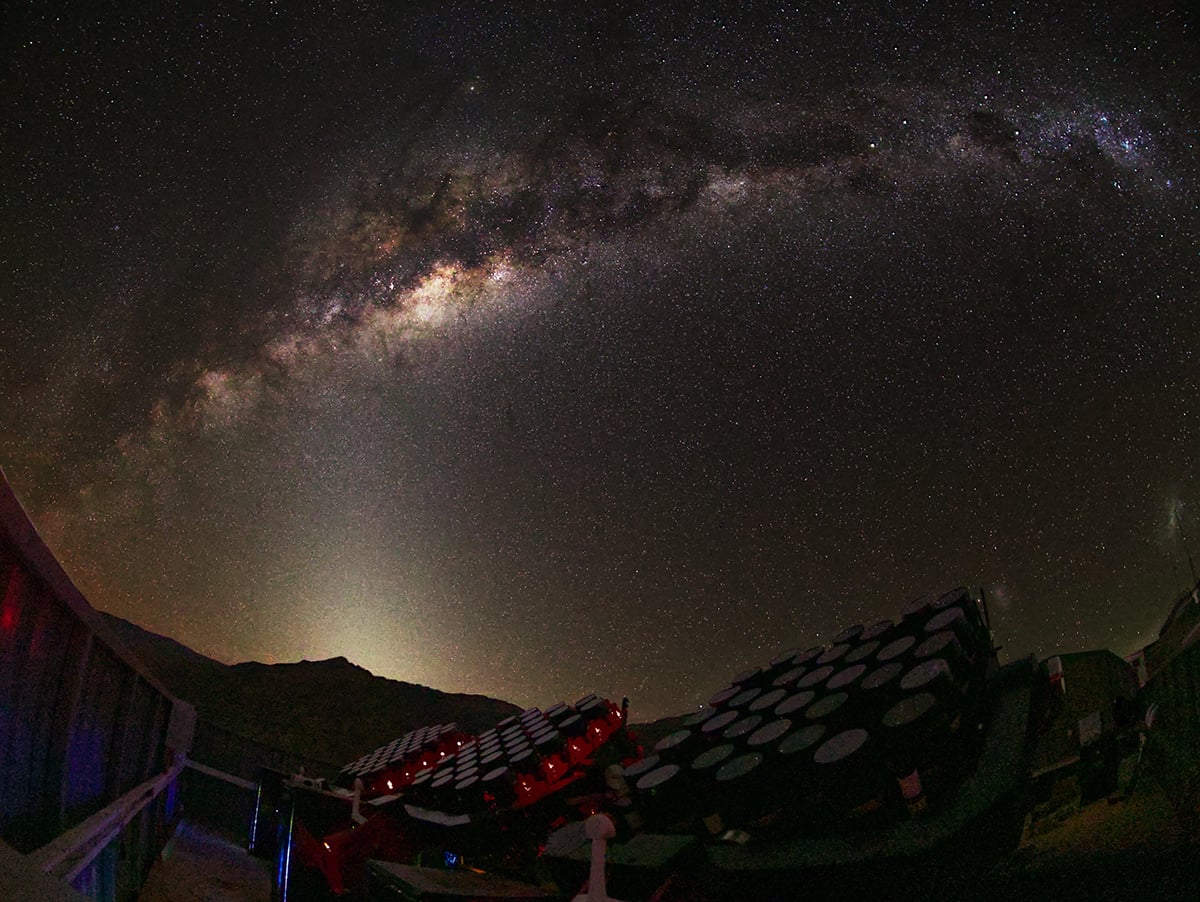
Because of this property, the Dragonfly telescope produced exceptionally clean images. Astronomers used the system to study extended stellar halos surrounding galaxies. They also discovered several populations of ultra-diffuse galaxies, which had remained hidden in earlier surveys.
These results proved that arrays of camera lenses could function as powerful astronomical instruments. As the project expanded, researchers began to imagine a much larger system capable of detecting even fainter signals. This line of thinking eventually led to the development of MOTHRA.
In many ways, MOTHRA represents the next stage of the Dragonfly concept. The new telescope simply scales the original design to a much larger size while adding new optical filters and improved data processing.
Observing the cosmic web
The primary scientific goal of MOTHRA is to detect and map the faint gas that outlines the cosmic web. According to modern cosmology, most matter in the universe resides in a network of filaments composed mainly of dark matter. Ordinary gas falls into these gravitational structures and gradually forms galaxies.
Computer simulations reproduce this process with remarkable accuracy. They show galaxies forming along elongated filaments that stretch across tens of millions of light-years. At the intersections of these filaments lie massive clusters of galaxies. Although the theoretical picture is well established, observing the web remains difficult. The gas within these filaments is extremely diffuse. As a result, it emits only weak radiation.

Astronomers have detected this gas indirectly through absorption lines in the spectra of distant quasars. When light from a quasar passes through intergalactic gas, specific wavelengths are absorbed. Those absorption features reveal the presence of matter between galaxies. However, such observations do not provide direct images of the structure itself.
MOTHRA attempts to detect the gas in emission rather than absorption. The telescope will focus on faint radiation produced by ionized hydrogen. When hydrogen atoms lose electrons and later recombine, they emit light at specific wavelengths. One of the most important lines occurs in the red part of the spectrum.
By isolating this emission with narrowband filters, astronomers hope to measure the faint glow of gas stretching between galaxies. Mapping that emission could reveal the outlines of cosmic filaments and show how matter flows through the universe.

Clear skies!
See more from DIYPhotography.net on Google
Add DIYPhotography.net as a trusted source. This makes
our stories more likely to appear in your Google Search results.
 Add as a preferred source on Google

Soumyadeep Mukherjee
Soumyadeep Mukherjee is an award-winning astrophotographer from India. He has a doctorate degree in Linguistics. His work extends to the sub-genres of nightscape, deep sky, solar, lunar and optical phenomenon photography. He is also a photography educator and has conducted numerous workshops. His works have appeared in over 40 books & magazines including Astronomy, BBC Sky at Night, Sky & Telescope among others, and in various websites including National Geographic, NASA, Forbes. He was the first Indian to win “Astronomy Photographer of the Year” award in a major category.
Related Posts
 The Dragonfly Telephoto Array is expanding to have 168 Canon 400mm f/2.8L IS USM II lenses pointed at the sky
 New SD card standard unveiled offering up to 985MB/sec transfer speeds and 128TB capacity
 SanDisk just unveiled a massive 1 Terabyte SD memory card
 Nikon Z6 III unveiled: Speed demon with a new stacked sensor
Join the Discussion
DIYP Comment Policy
Be nice, be on-topic, no personal information or flames.