





















ESO Astronomer captures Extremely Large Telescope against Sun and Moon over 4 years
Sep 17, 2025
Soumyadeep Mukherjee
Soumyadeep Mukherjee is an award-winning astrophotographer from India. He has a doctorate degree in Linguistics. His work extends to the sub-genres of nightscape, deep sky, solar, lunar and optical phenomenon photography. He is also a photography educator and has conducted numerous workshops. His works have appeared in over 40 books & magazines including Astronomy, BBC Sky at Night, Sky & Telescope among others, and in various websites including National Geographic, NASA, Forbes. He was the first Indian to win “Astronomy Photographer of the Year” award in a major category.
Share:

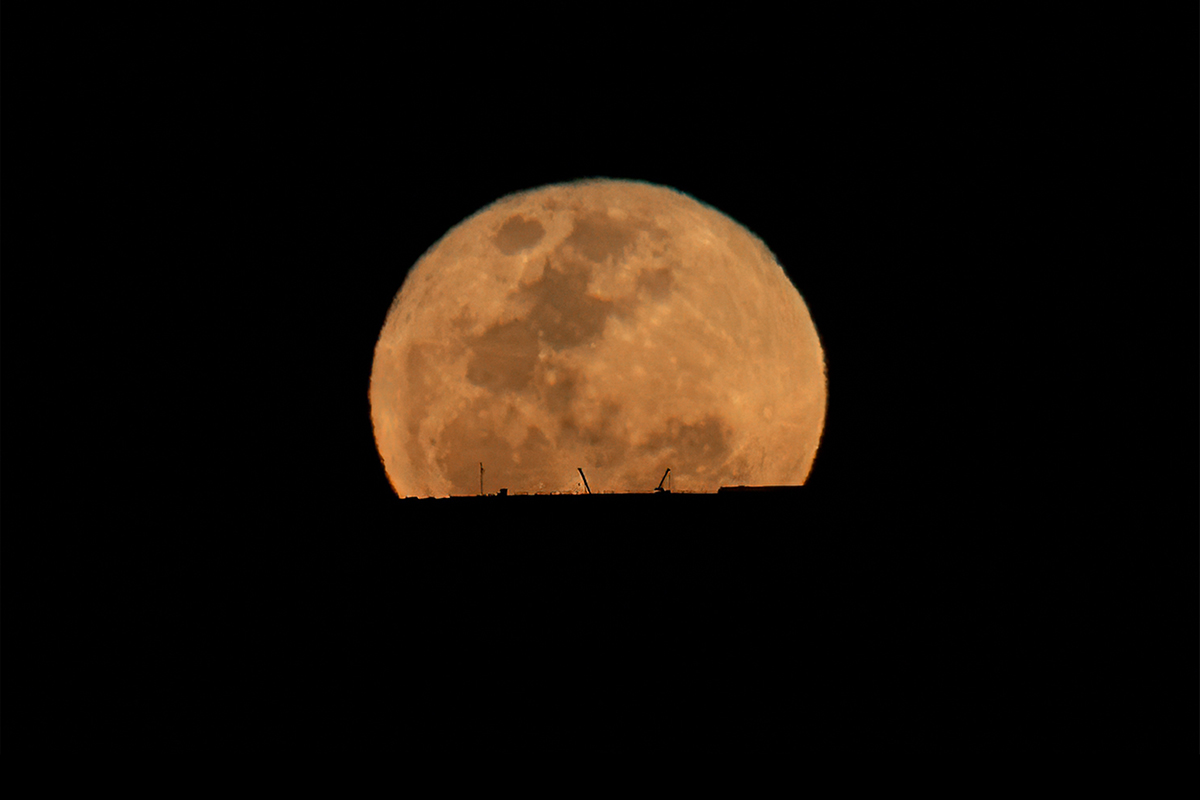
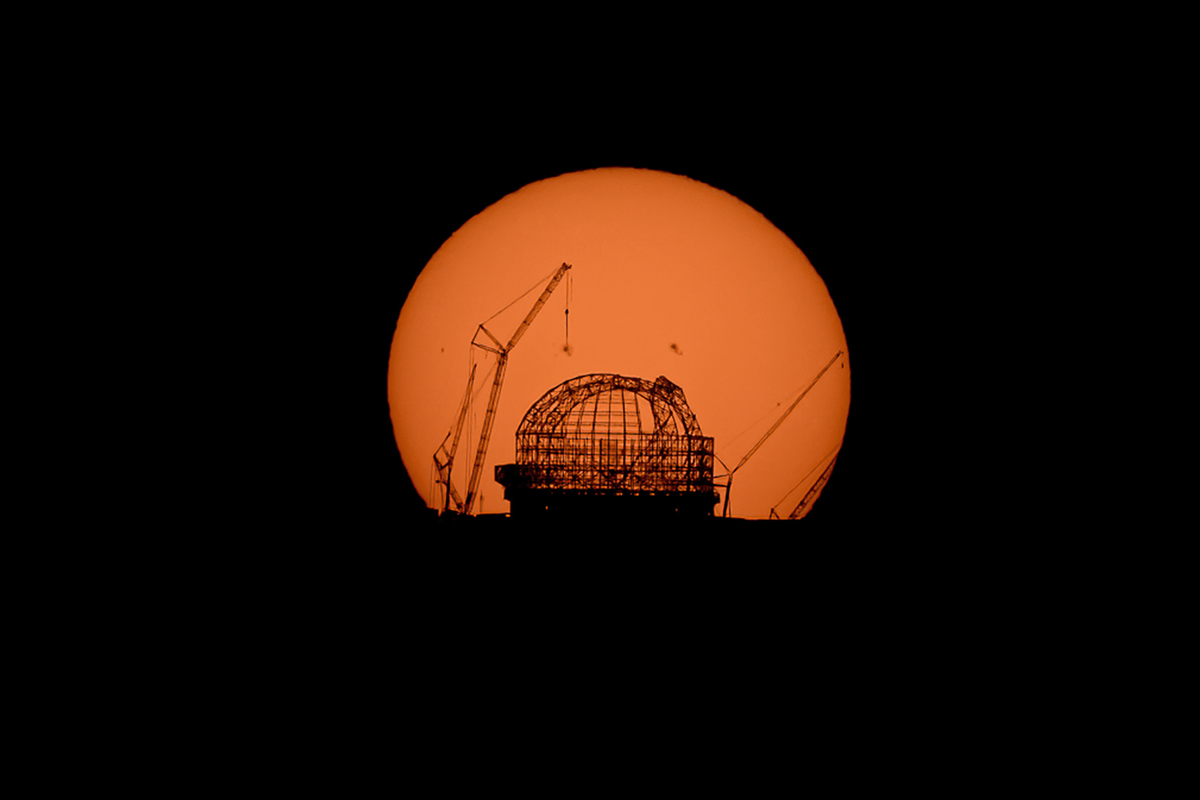
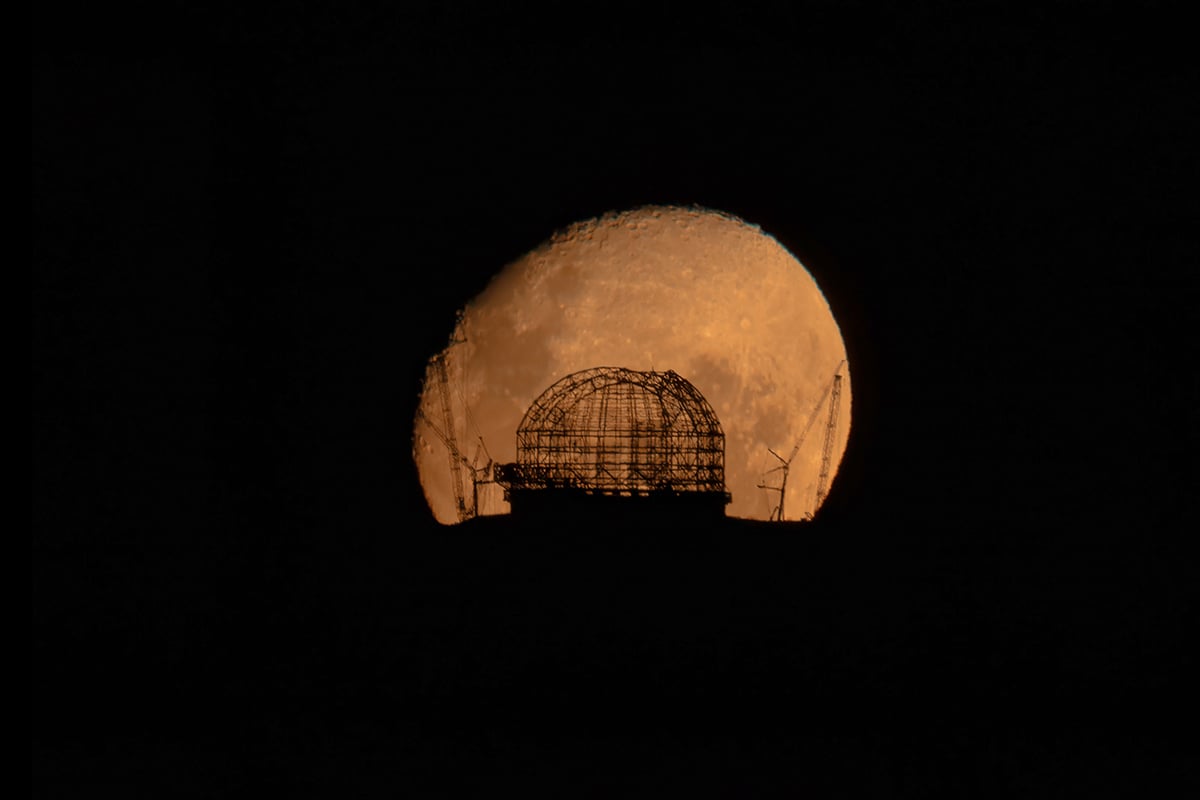
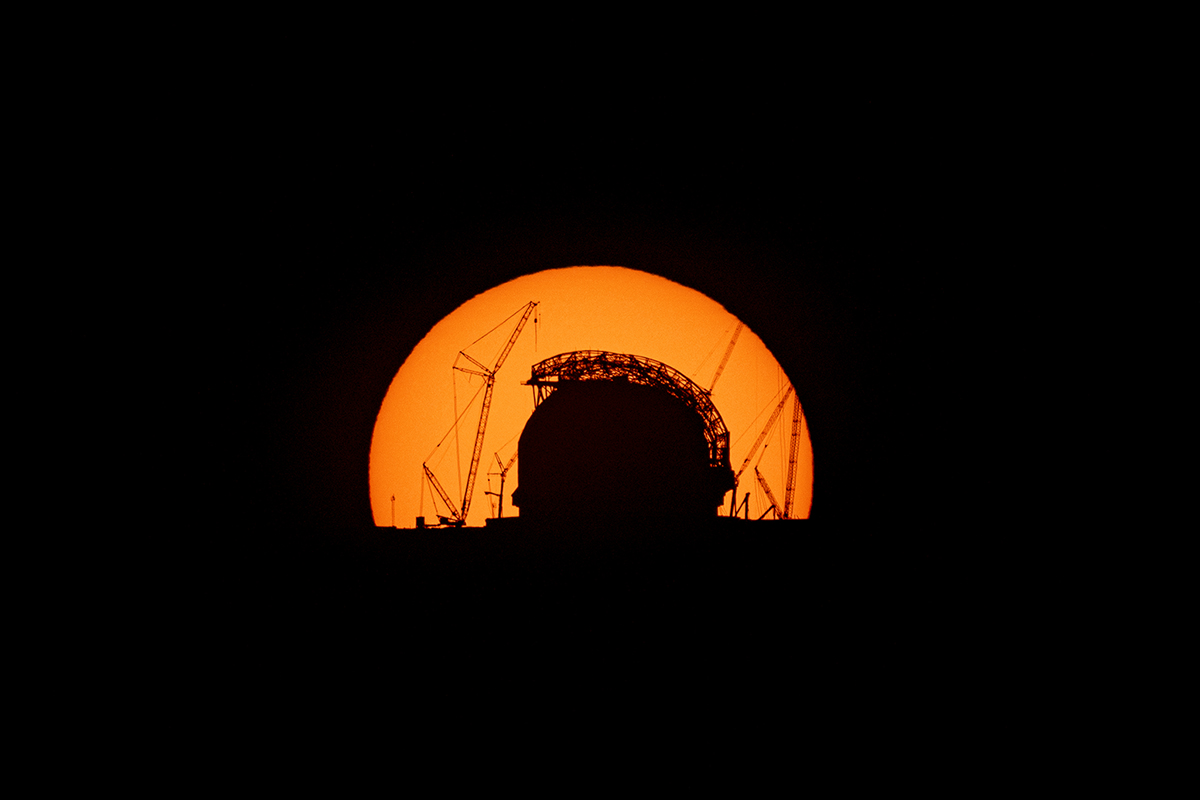
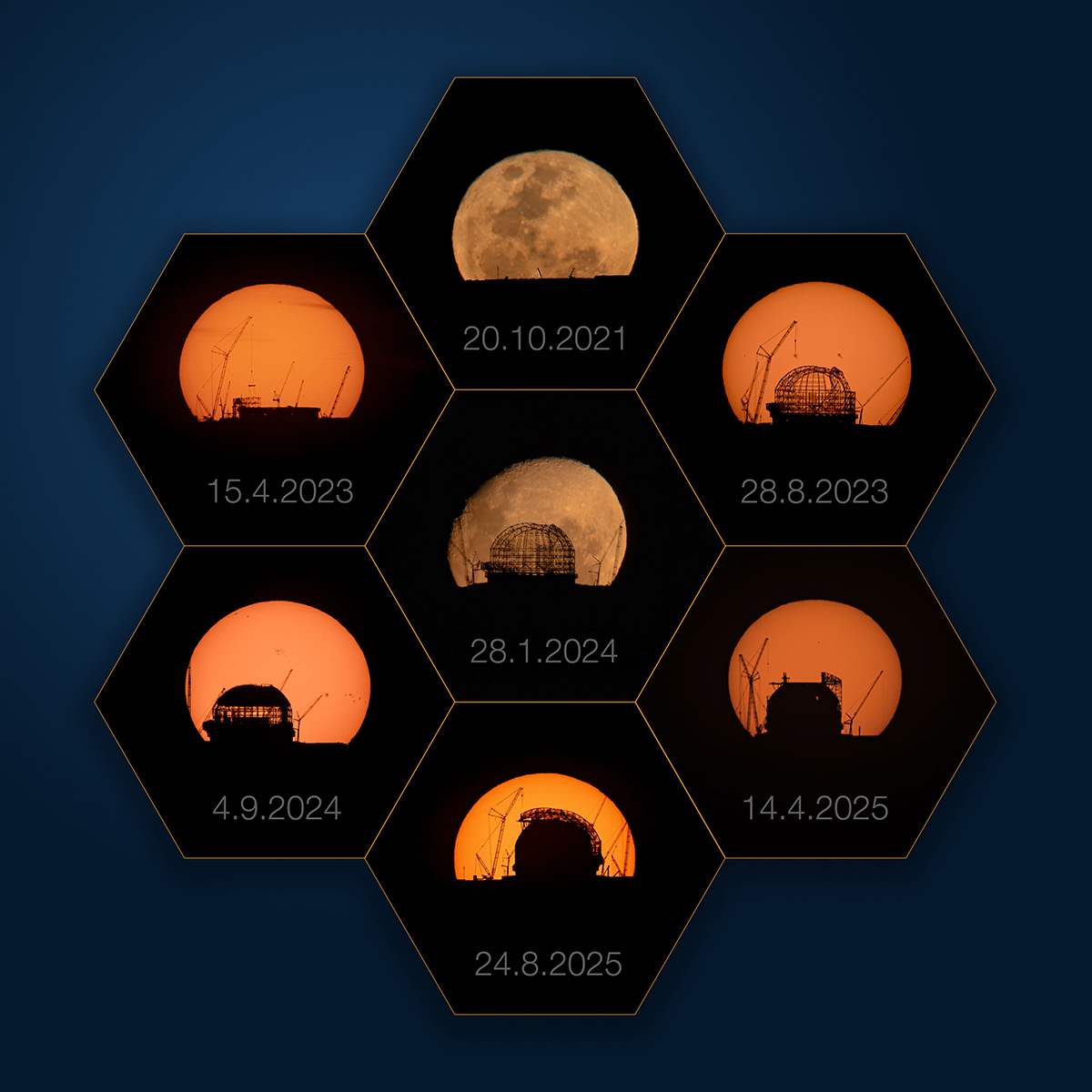
The European Southern Observatory (ESO) has released a striking new image. It shows the Extremely Large Telescope (ELT) on Cerro Armazones in northern Chile, framed against the Sun and the Moon. The image is a montage of seven hexagonal photographs, each taken between October 2021 and August 2025. Together, they document both the sky and the steady progress of the world’s largest optical telescope.
The photographs were taken by ESO astronomer Boris Häußler from Cerro Paranal, about twenty kilometres away from Armazones. From this vantage point, the ELT can be seen on the horizon, its silhouette standing out as the Sun or Moon rises directly behind it. Each frame captures a different stage of construction, turning the montage into a visual record of four years of engineering milestones.
Capturing seven alignments
The sequence was not created by chance. The Sun and Moon do not rise at the same position each day. Their paths shift slightly along the horizon depending on the season and lunar cycle. Aligning them with the telescope dome requires precise calculation. Häußler planned each photograph carefully, choosing dates when the geometry lined up with the ELT’s location on Armazones.
From Cerro Paranal, the two peaks appear aligned across a distance of about twenty kilometres. On selected mornings and evenings, Häußler waited for the Sun or Moon to rise directly behind the growing structure. Over four years, he returned to the site to repeat the process. Each time, the telescope had advanced in construction. The result is a montage that shows the rising discs of the Sun and Moon against the changing silhouette of the ELT.
A timeline of construction
The seven frames form a timeline of the ELT’s development. The earliest images show the base and skeletal support of the dome. Steel arches rise in later photographs as the framework expands. In the following years, cladding panels appear on the dome, gradually enclosing the structure.
By mid-2023, ESO reported that the ELT was more than halfway complete. The montage reflects this milestone, with images showing the dome’s shell in place. The most recent photographs, taken in 2025, reveal the large sliding doors that will one day open to the night sky. The montage, therefore, doubles as a record of engineering progress. Each stage is visible, from bare steel to near-finished enclosure.
The world’s largest optical telescope
The ELT will be the largest ground-based optical and infrared telescope ever built. Its main feature is the 39-metre primary mirror. No single piece of glass could reach that size, so the design uses 798 hexagonal segments. Each segment is about 1.5 metres wide and only a few centimetres thick. Actuators beneath each piece will keep the entire mirror aligned with nanometre precision.
The mirror will collect more light than all current eight to ten-metre telescopes combined. Its collecting area of more than 900 square metres will allow astronomers to study faint and distant objects with unmatched sensitivity. The ELT will reveal details in exoplanet atmospheres, distant galaxies, and the first generation of stars. The photographs show the protective shell of the telescope taking shape, but they also point to the power of the instrument being built inside.
The dome and its functions
The dome of the ELT is a major engineering project on its own. At nearly 80 metres in diameter, it is the largest ever built for a telescope. It is designed not just to shield the optics from weather but also to reduce the effects of turbulence inside the enclosure.
Astronomers call this turbulence “dome seeing.” It occurs when warm and cool air mix around the telescope, distorting images. The ELT dome includes large ventilation openings and a windscreen to control airflow. Two giant sliding doors will open during observations, allowing the telescope to access the sky while keeping internal and external air temperatures balanced.
Countdown to first light
ESO has updated the project timeline. The current plan is for the ELT to see its first light in March 2029. Full scientific operations are expected to begin by December 2030. Between those milestones, teams will test the mirror segments, install instruments, and calibrate the adaptive optics systems.
The telescope’s science goals are broad. It will study planets around other stars, measure the properties of dark energy, and look for the earliest galaxies formed after the Big Bang. Its scale and sensitivity will push astronomy far beyond current limits. The photographs document the path toward discoveries that will define astronomy for decades.
Clear skies!
See more from DIYPhotography.net on Google
Add DIYPhotography.net as a trusted source. This makes
our stories more likely to appear in your Google Search results.
 Add as a preferred source on Google

Soumyadeep Mukherjee
Soumyadeep Mukherjee is an award-winning astrophotographer from India. He has a doctorate degree in Linguistics. His work extends to the sub-genres of nightscape, deep sky, solar, lunar and optical phenomenon photography. He is also a photography educator and has conducted numerous workshops. His works have appeared in over 40 books & magazines including Astronomy, BBC Sky at Night, Sky & Telescope among others, and in various websites including National Geographic, NASA, Forbes. He was the first Indian to win “Astronomy Photographer of the Year” award in a major category.



Join the Discussion
DIYP Comment Policy
Be nice, be on-topic, no personal information or flames.