


















Chasing the Sun: The Solarcan Revolution in Solargraphy
Jul 22, 2025
Soumyadeep Mukherjee
Soumyadeep Mukherjee is an award-winning astrophotographer from India. He has a doctorate degree in Linguistics. His work extends to the sub-genres of nightscape, deep sky, solar, lunar and optical phenomenon photography. He is also a photography educator and has conducted numerous workshops. His works have appeared in over 40 books & magazines including Astronomy, BBC Sky at Night, Sky & Telescope among others, and in various websites including National Geographic, NASA, Forbes. He was the first Indian to win “Astronomy Photographer of the Year” award in a major category.
Share:
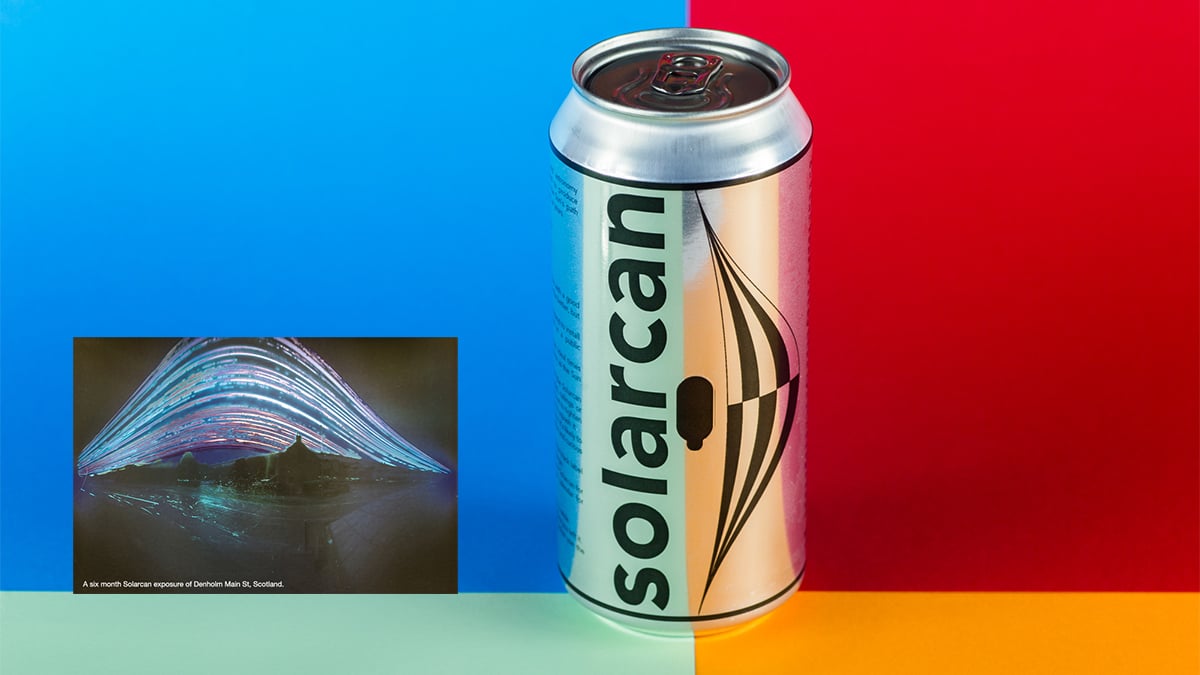
Solar photography has never been this simple. The Solarcan has brought a new wave of creativity to long-exposure photography. It’s a camera, a science experiment, and a piece of art. And it looks like a soda can. The Solarcan is a unique pinhole camera. It captures the path of the Sun over days, weeks, and even months. It’s designed for everyone—beginners, artists, teachers, students, and photographers.
The birth of Solarcan
The Solarcan was created by Sam Cornwell, a photographer and educator. He wanted to make solargraphy accessible to everyone. After years of experimenting, he launched Solarcan through Kickstarter in 2017. It was a success. The idea was simple. Package a pinhole camera with photographic paper. Make it durable. Make it easy. And make it fun. Today, Solarcan is sold in over 40 countries. It’s used in schools, workshops, backyards, and observatories.
What exactly is a Solarcan?
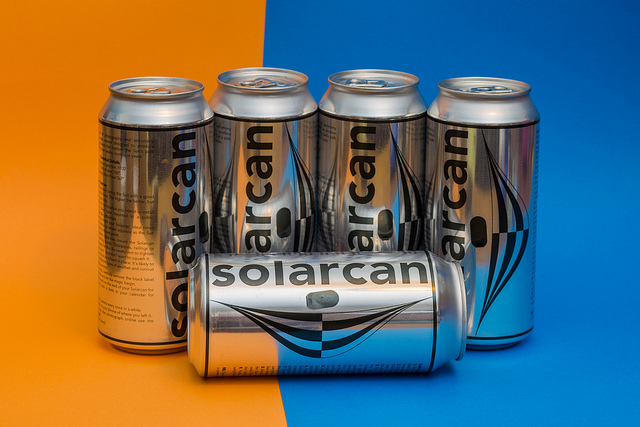
At first glance, the Solarcan looks like a soft drink can. But it’s not. It’s a fully assembled pinhole camera. Inside is a sheet of 5×7-inch black and white photographic paper. On the side, a tiny laser-drilled pinhole lets in light. The aperture is f/132. There’s no lens. No electronics. No batteries. You peel off the sticker covering the pinhole to start the exposure. Then you leave it alone for days, weeks, and even months. The longer you leave it, the more sunlight it records.
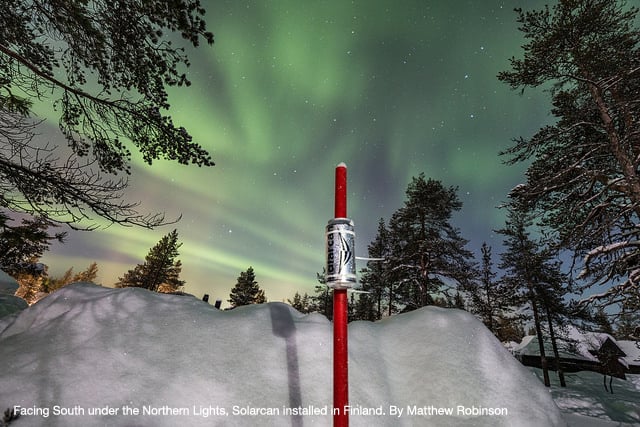
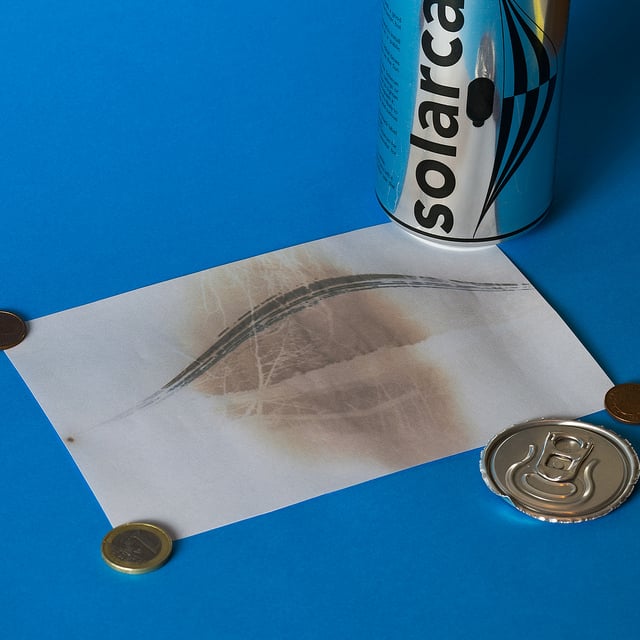
The can is made from sturdy aluminium. It’s waterproof and weatherproof. It comes with zip ties for easy mounting on fences, poles, or posts. Once the exposure is complete, you open the can and remove the photo paper. You then scan or photograph it. Invert the image digitally. And voilà—you’ve captured the path of the Sun across the sky.
How does it work?
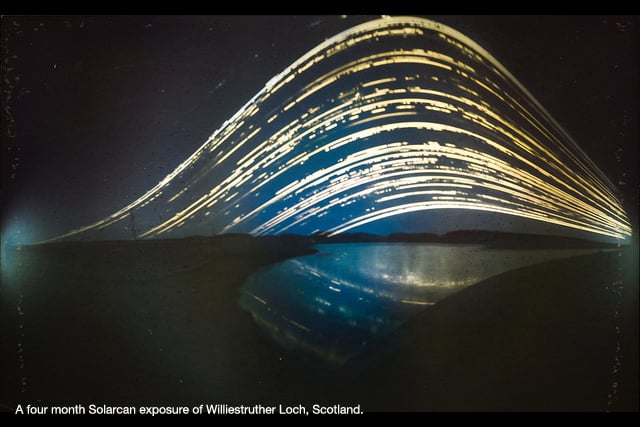
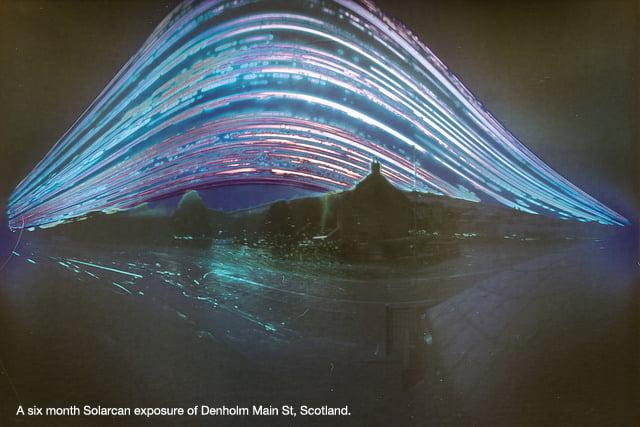
Solarcan works using the principles of pinhole photography and solargraphy. A pinhole camera uses a tiny hole instead of a lens. Light passes through the pinhole and projects onto photographic paper. But Solarcan does more than just capture light. It captures time. Each day, the Sun traces an arc across the sky. As Earth orbits, this arc changes. Over weeks or months, the paper collects hundreds of these arcs. The result? A stunning image of the Sun’s journey across the sky. If the Sun is blocked by clouds on some days, the arc appears broken. That gives a natural weather record too. Trees, buildings, and the horizon often appear ghostlike in the background.
Unique features
No darkroom needed: You don’t need chemicals. You don’t need a darkroom. Once the paper is exposed, it doesn’t degrade quickly. You can open it in daylight. Just scan it and invert the colors on a computer.
Zero experience required: It’s a great entry point for photography. Children, teachers, and curious minds love it. There’s no focusing, no timing, no tech stress.
Weatherproof: You can leave it in rain, sun, or snow. The metal body protects the paper inside. Some users have successfully left Solarcan outside for over a year.
Beautiful results: The final images are surreal. Hundreds of Sun trails appear across the sky. You see seasons changing. You see nature’s rhythm in action.
Educational power: Teachers use it to explain the Earth’s rotation and orbit. It’s hands-on science and art in one.
The step-by-step process
- Choose a location. Find a place with a clear view of the sky. Avoid trees or buildings that may block the Sun.
- Mount the can. Use the included zip ties to secure it. Make sure it won’t move.
- Start the exposure. Peel off the pinhole sticker. Mark the date.
- Wait. Leave it for as long as you like. One month gives good results. Six months will give magic.
- End the exposure. Cover the pinhole. Bring the can inside.
- Retrieve the paper. Open the can in low light. Remove the photo paper.
- Scan and process. Use a flatbed scanner or take a high-res photo. Invert the image. Adjust contrast. Save your solargraph.
Tips for best results
- Point it toward the Sun’s path. South-facing in the Northern Hemisphere works well.
- Keep it stable. Use multiple zip ties. Avoid windy spots.
- Avoid too much moisture near the opening.
- Mark the date and direction. It helps when analyzing the image.
- Try different durations. One week, one month, three months; all produce different effects.
Price and availability
The Solarcan Classic is priced at $27 (pack of one), $68 (pack of three), and $102 (pack of five). All the variants are available to order via the official website.
Solarcan combines photography, astronomy, and time. It captures not just light, but change. No two images are alike. Each one tells a story of the Sun, the sky, and the Earth’s dance through space. For students, it’s a science project. For artists, it’s a creative tool. And for dreamers, it’s a message written in sunlight. Solarcan has transformed how we see the Sun. It’s simple, clever, and deeply poetic. You don’t need a telescope. You don’t need a DSLR. All you need is a can, a bit of time, and the sky. It’s rare to find a product that mixes science, photography, and emotion so effortlessly. The Solarcan does all three. And it does them beautifully.
Clear skies!
See more from DIYPhotography.net on Google
Add DIYPhotography.net as a trusted source. This makes
our stories more likely to appear in your Google Search results.
 Add as a preferred source on Google

Soumyadeep Mukherjee
Soumyadeep Mukherjee is an award-winning astrophotographer from India. He has a doctorate degree in Linguistics. His work extends to the sub-genres of nightscape, deep sky, solar, lunar and optical phenomenon photography. He is also a photography educator and has conducted numerous workshops. His works have appeared in over 40 books & magazines including Astronomy, BBC Sky at Night, Sky & Telescope among others, and in various websites including National Geographic, NASA, Forbes. He was the first Indian to win “Astronomy Photographer of the Year” award in a major category.


Join the Discussion
DIYP Comment Policy
Be nice, be on-topic, no personal information or flames.