




















NASA’s IXPE Reveals 2,000-Year-Old Supernova Remnant RCW 86
Mar 26, 2026
Soumyadeep Mukherjee
Soumyadeep Mukherjee is an award-winning astrophotographer from India. He has a doctorate degree in Linguistics. His work extends to the sub-genres of nightscape, deep sky, solar, lunar and optical phenomenon photography. He is also a photography educator and has conducted numerous workshops. His works have appeared in over 40 books & magazines including Astronomy, BBC Sky at Night, Sky & Telescope among others, and in various websites including National Geographic, NASA, Forbes. He was the first Indian to win “Astronomy Photographer of the Year” award in a major category.
Share:
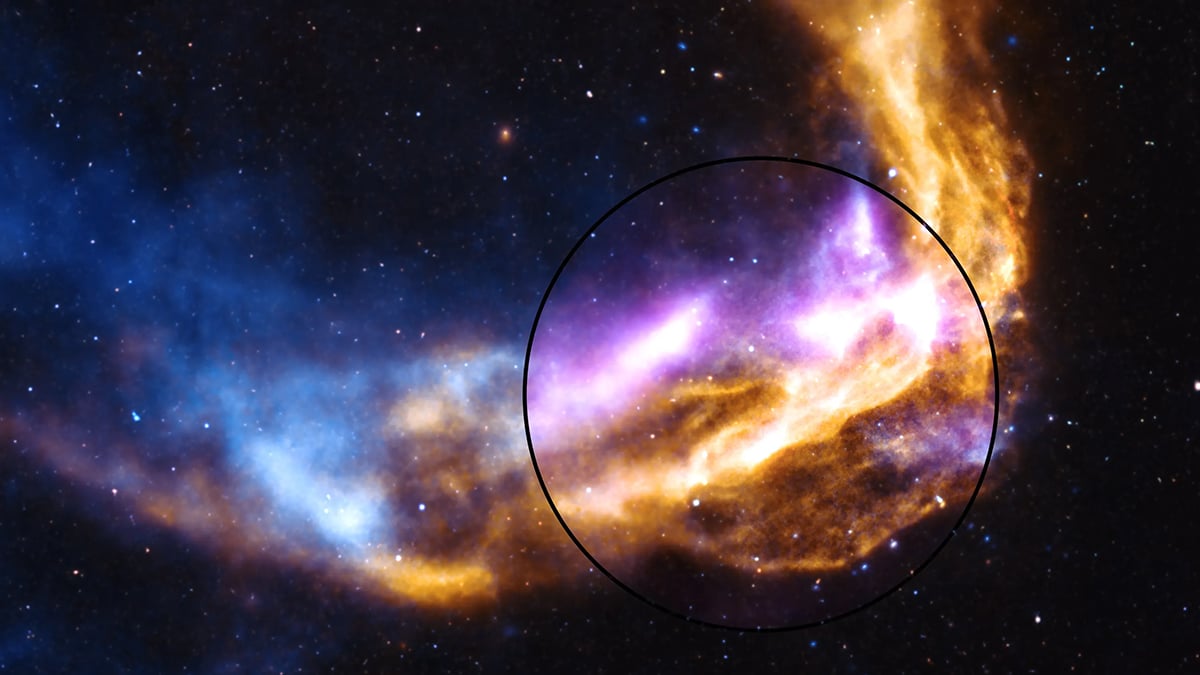
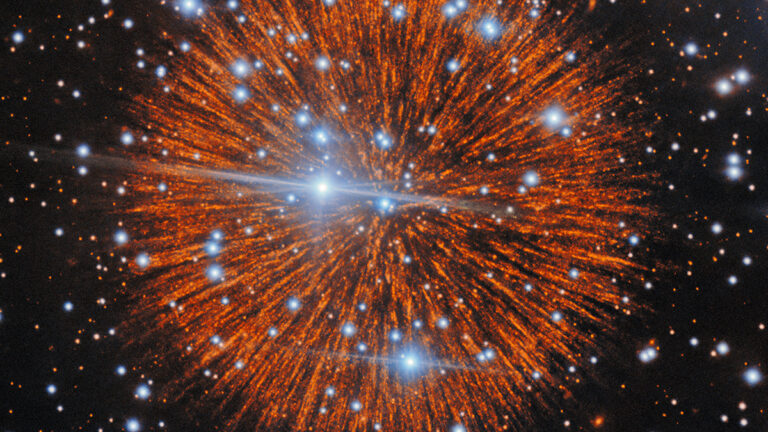
Supernova remnants preserve the physical record of stellar explosions long after the original event fades from view. They trace the interaction between expanding shock waves and the surrounding interstellar medium. In some rare cases, they also connect directly with historical observations made by early astronomers. The supernova remnant RCW 86 represents one of the most important examples of such a connection. Researchers widely associate this object with the “guest star” recorded in the year 185 AD.
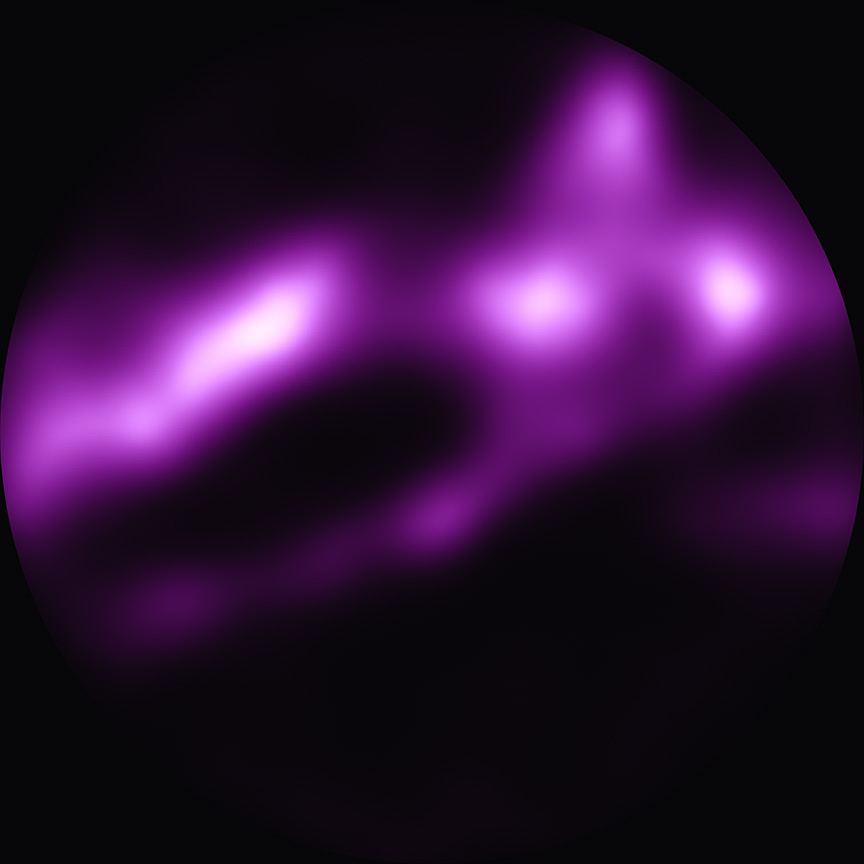
Recent observations by NASA’s Imaging X-ray Polarimetry Explorer (IXPE) now provide new insight into the structure of this remnant and its surrounding environment. By measuring X-ray polarization along the outer rim of RCW 86, astronomers have identified signatures of a reflected shock that formed after the blast wave reached the boundary of a pre-existing cavity.
Historical observations and the identification of the supernova
Ancient Chinese astronomers documented a bright guest star in the southern sky during the year 185 AD. Their records describe a stationary object that remained visible for several months. Modern interpretations strongly support the conclusion that this event was a supernova rather than a nova. The duration of visibility alone suggests a powerful stellar explosion.
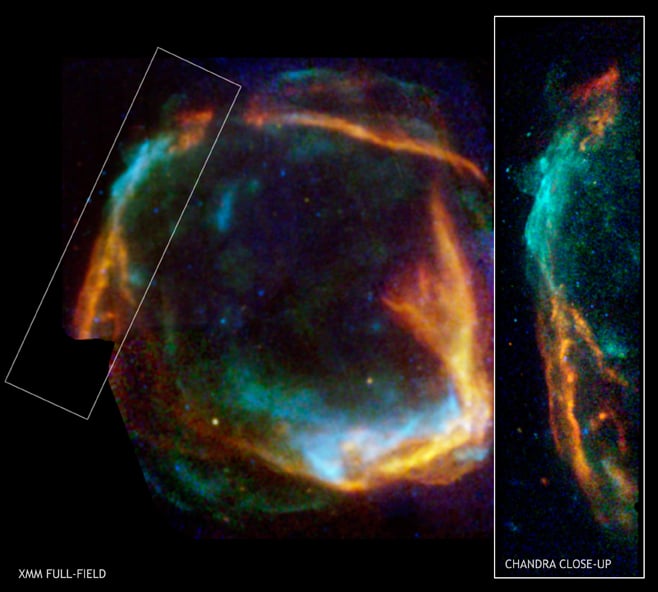
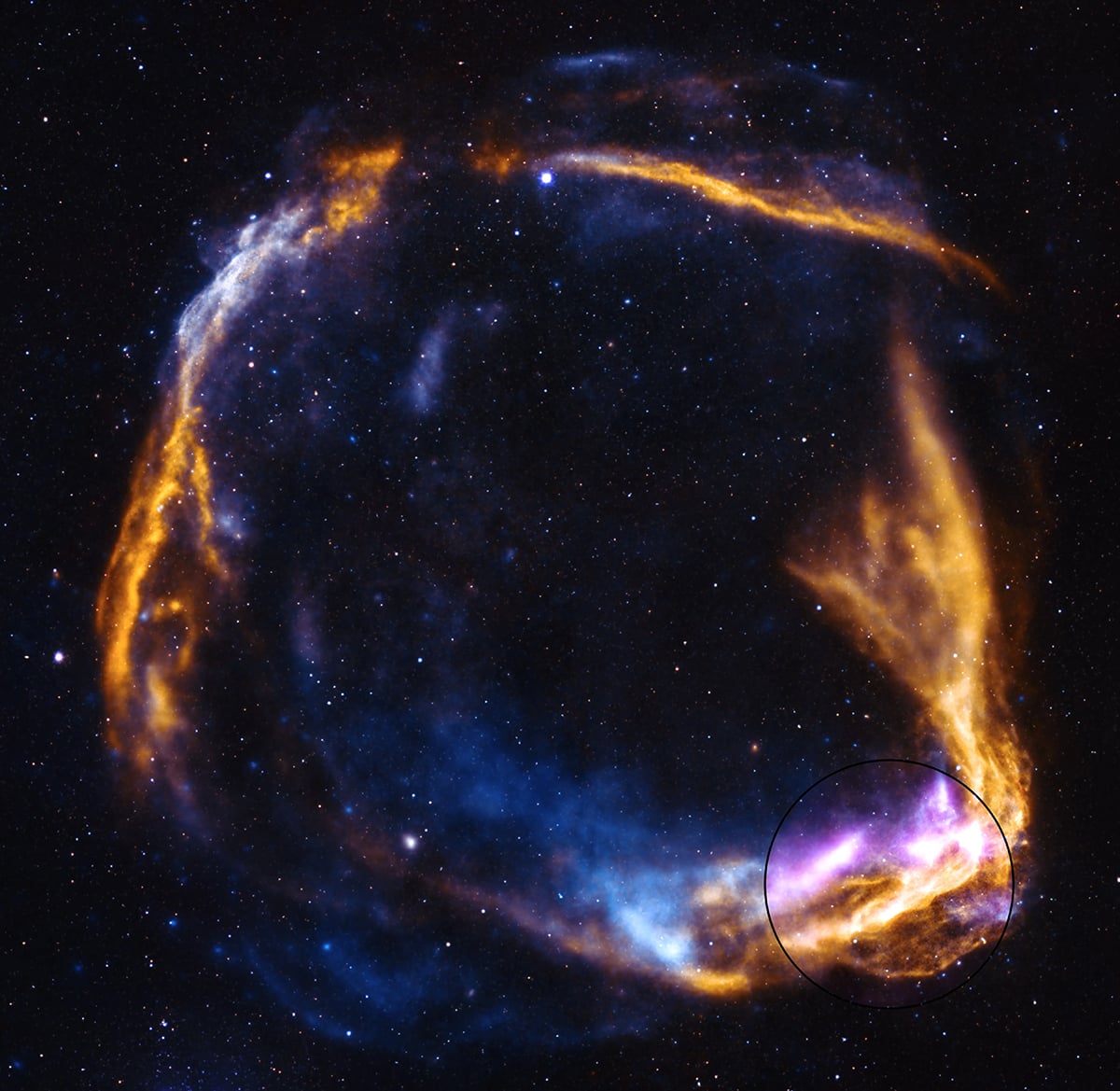
Astronomers later identified the expanding debris associated with this event as RCW 86. The remnant appears today as a large shell of hot gas that emits strongly in X-ray wavelengths. Its angular size across the sky immediately attracted attention because it seemed unusually large for a remnant only about two thousand years old.
This apparent inconsistency motivated detailed observational campaigns across multiple wavelengths. Researchers used optical spectroscopy, radio mapping, and X-ray imaging to measure expansion speeds and temperature structures across the shell. These efforts gradually revealed that the surrounding environment played a decisive role in shaping the remnant’s present appearance.
The expansion history of RCW 86
Supernova remnants expand as shock waves sweep through the interstellar medium. However, the expansion rate depends strongly on the density of the surrounding gas. When a shock propagates through a low-density region, it travels farther before slowing down. Conversely, dense environments quickly reduce the expansion speed.
Measurements of RCW 86 showed that the remnant must have expanded rapidly during its early evolution. This conclusion followed directly from its present size. A remnant produced in a uniform medium could not have reached such dimensions within two millennia.
Astronomers therefore proposed that the explosion occurred inside a low-density cavity. Stellar winds from the progenitor system likely created this cavity before the supernova event itself. These winds displaced surrounding interstellar gas and formed a bubble around the star.
Once the explosion occurred, the blast wave propagated quickly through this hollow region. Only later did it encounter the dense material at the cavity boundary. This transition produced strong heating and enhanced X-ray emission along parts of the outer rim. Consequently, the cavity scenario provided a consistent explanation for both the remnant’s size and its asymmetric structure.
IXPE observations and the detection of a reflected shock
Although earlier X-ray observations already supported the cavity model, astronomers still required additional evidence about the interaction between the blast wave and the surrounding medium. The Imaging X-ray Polarimetry Explorer offered a new approach to this problem.
Unlike traditional X-ray observatories, IXPE measures the polarization of incoming radiation. Polarization carries information about magnetic-field geometry and particle motion near shock fronts. Therefore, IXPE observations can reveal details that remain inaccessible through imaging and spectroscopy alone.
Researchers directed IXPE toward the southwestern rim of RCW 86, where previous observations had identified strong nonthermal emission. The polarization measurements obtained from this region indicate that the forward shock has already reached the edge of the cavity. As the outward-moving blast wave encountered denser material, part of its energy propagated back toward the interior of the remnant.
This inward-moving disturbance formed a reflected shock. The presence of this reflected shock explains both the enhanced emission observed along the rim and the complex structure visible in high-resolution X-ray images. Moreover, the detection provides strong support for the idea that the remnant evolved inside a pre-existing stellar-wind bubble.
A connection between historical astronomy and modern space observations
RCW 86 occupies a unique position among Galactic supernova remnants because it links a documented historical observation with modern high-energy measurements. Ancient observers recorded the appearance of the guest star without understanding its physical origin. Today, orbiting observatories measure the expanding debris using instruments sensitive to X-ray polarization.
This connection provides an unusually precise time reference for studying remnant evolution. Because the explosion date is known within a narrow historical range, astronomers can compare theoretical models directly with observations. Few other remnants offer this advantage.
The combination of IXPE polarization data with imaging from Chandra and spectroscopy from XMM-Newton now presents a coherent picture of the remnant’s evolution. The outward-moving blast wave expanded rapidly through a low-density cavity before encountering its boundary and generating a reflected shock. This sequence explains the remnant’s present size, structure, and emission pattern.
Clear skies!
See more from DIYPhotography.net on Google
Add DIYPhotography.net as a trusted source. This makes
our stories more likely to appear in your Google Search results.
 Add as a preferred source on Google

Soumyadeep Mukherjee
Soumyadeep Mukherjee is an award-winning astrophotographer from India. He has a doctorate degree in Linguistics. His work extends to the sub-genres of nightscape, deep sky, solar, lunar and optical phenomenon photography. He is also a photography educator and has conducted numerous workshops. His works have appeared in over 40 books & magazines including Astronomy, BBC Sky at Night, Sky & Telescope among others, and in various websites including National Geographic, NASA, Forbes. He was the first Indian to win “Astronomy Photographer of the Year” award in a major category.

Join the Discussion
DIYP Comment Policy
Be nice, be on-topic, no personal information or flames.