


















Do You Really Need a Full-Frame Camera for Wedding Photography?
Sep 10, 2026
Alysa Gavilan
Alysa Gavilan has spent years exploring photography through photojournalism and street scenes. She enjoys working with both film and mirrorless cameras, and her fascination with the craft has grown over the decades. Inspired by Vivian Maier, she is drawn to capturing everyday moments that often go unnoticed.
Share:
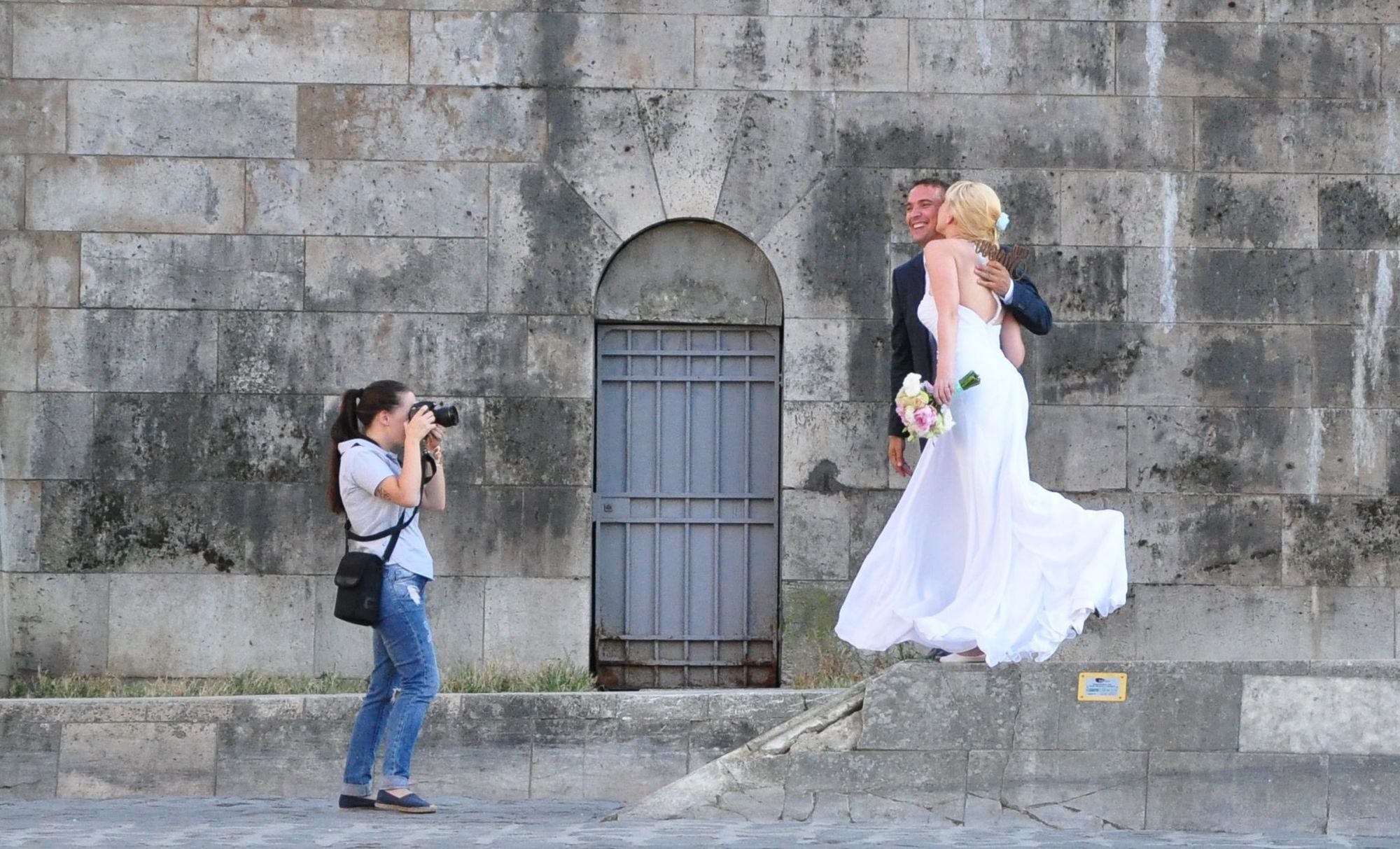
For years, photographers have been told that serious wedding photography starts with a full frame camera. John Branch has spent about a decade shooting weddings with Fujifilm APS C cameras, and his experience suggests that the bigger limitation is often the photographer’s approach, not the sensor size.
In a recent YouTube video, Branch breaks down the Fujifilm lenses he relies on for professional wedding work. His current setup is notably less focused on long telephoto lenses than the typical wedding kit, with wider prime lenses playing a much bigger role in how he documents a wedding day.
Branch builds around wider focal lengths
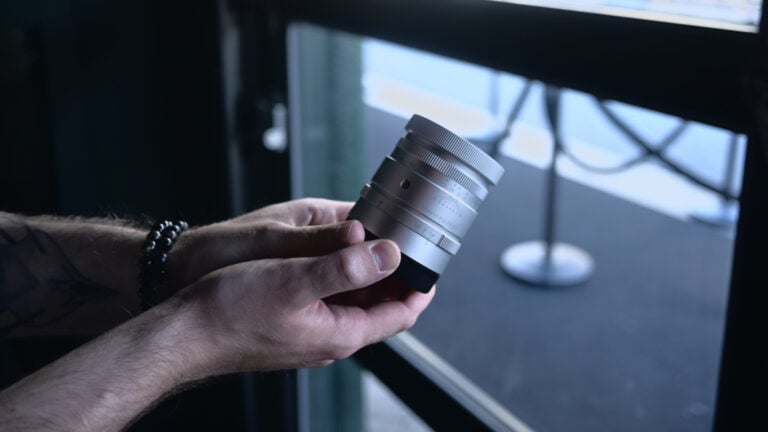
Branch’s current core kit centers on three lenses: the Fujifilm XF 18mm F1.4, XF 33mm F1.4, and XF 50mm F1.0. He also keeps the XF 90mm F2 as a backup for situations that require more reach.
His move to the 18mm F1.4 changed the way he approaches the wider end of his kit. Previously, he carried both the 16mm and 23mm lenses, but the 18mm sits between those focal lengths and lets him cover much of the day without switching lenses as often.
That matters for weddings, where moments can move quickly and photographers are often working in cramped hotel rooms, busy reception spaces, and crowded dance floors.
Branch previously used the XF 16mm F2.8, which he likes for its small size, low weight and sharpness. Its F2.8 aperture, however, became limiting for him during darker receptions. The 18mm F1.4 gives him an extra stop and a focal length he finds more versatile.
The XF 23mm F1.4 remains another lens he considers excellent, particularly for getting ready photos, ceremonies and situations where he wants a moderately wide perspective. He simply uses it less since adopting the 18mm.
Seeing the wedding matters more than blurring it away
Branch’s preference for wider lenses comes from how he wants his wedding photographs to look.
Rather than relying heavily on long lenses and wide apertures to isolate couples from their surroundings, he prefers to show the environment around them. A wedding is not just about the bride and groom, he argues. The people, venue and activity surrounding them are part of the story.
That philosophy also shapes how he uses the XF 33mm F1.4. When shooting with two cameras, he can use a wider lens to establish a scene before switching to the 33mm for a tighter view of the same moment.
The XF 50mm F1.0 provides another option when he needs more compression and subject separation. Branch likes its rendering and sharpness even at F1.0, although he often stops down slightly to F1.2.
His other telephoto option, the XF 90mm F2, sees considerably less use. He mainly brings it for ceremonies in large churches or situations where he needs to photograph from a distance.
Zooms still have a place
Although Branch strongly prefers primes, he does not dismiss zoom lenses. His main zoom is the Fujifilm XF 16 55mm F2.8 II, which he uses for both photography and some basic wedding video work.
The flexibility becomes particularly useful when he wants to avoid carrying multiple cameras and lenses throughout a reception. He also uses the XF 18 135mm for video, especially when photographing or recording ceremonies from farther away.
For photographers building a Fujifilm wedding kit on a budget, Branch also recommends the smaller F2 primes. Lenses such as the 16mm F2.8 and 23mm F2 offer a compact way to build a lightweight system without immediately spending on Fujifilm’s faster, larger lenses.
Branch’s setup ultimately makes a useful point about wedding photography: there is no single required camera format or lens kit. His choices are shaped by how he sees a wedding, how much gear he wants to carry and which focal lengths he actually uses.
For photographers still wondering if an APS C Fujifilm system is enough for weddings, his decade of experience offers a pretty compelling answer.
See more from DIYPhotography.net on Google
Add DIYPhotography.net as a trusted source. This makes
our stories more likely to appear in your Google Search results.
 Add as a preferred source on Google

Alysa Gavilan
Alysa Gavilan has spent years exploring photography through photojournalism and street scenes. She enjoys working with both film and mirrorless cameras, and her fascination with the craft has grown over the decades. Inspired by Vivian Maier, she is drawn to capturing everyday moments that often go unnoticed.




Join the Discussion
DIYP Comment Policy
Be nice, be on-topic, no personal information or flames.