






















This is the Deepest Image Yet of Cloud-9: Almost No Stars Found
Sep 13, 2026
Soumyadeep Mukherjee
Soumyadeep Mukherjee is an award-winning astrophotographer from India. He has a doctorate degree in Linguistics. His work extends to the sub-genres of nightscape, deep sky, solar, lunar and optical phenomenon photography. He is also a photography educator and has conducted numerous workshops. His works have appeared in over 40 books & magazines including Astronomy, BBC Sky at Night, Sky & Telescope among others, and in various websites including National Geographic, NASA, Forbes. He was the first Indian to win “Astronomy Photographer of the Year” award in a major category.
Share:
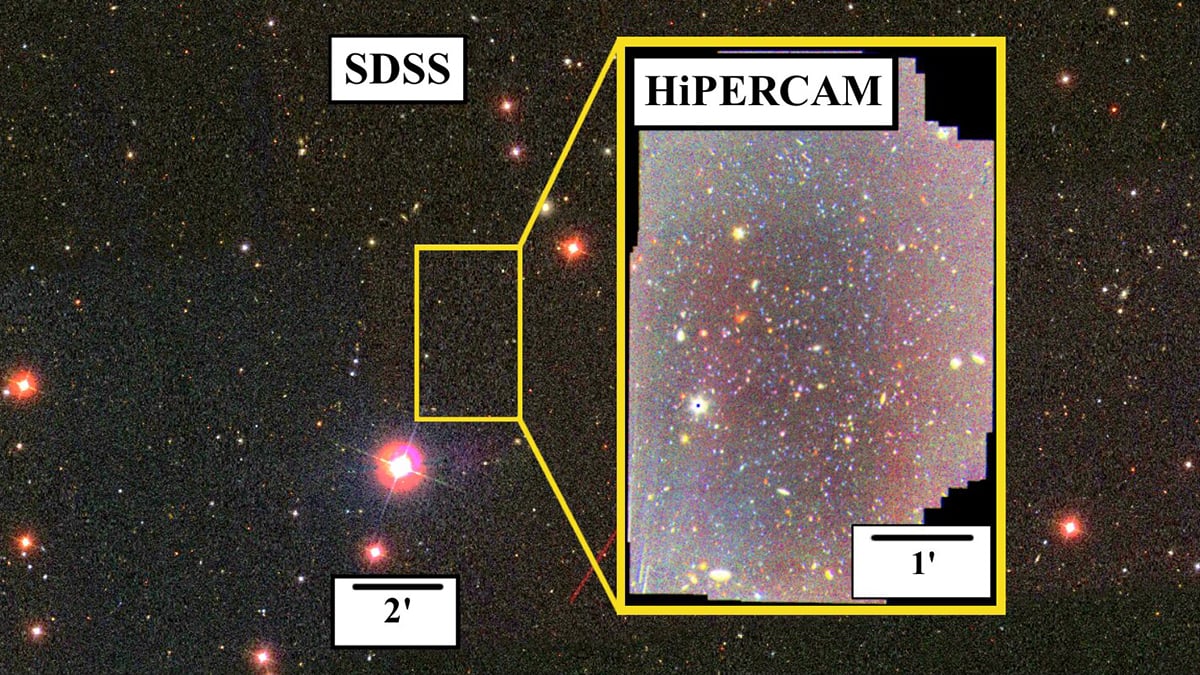
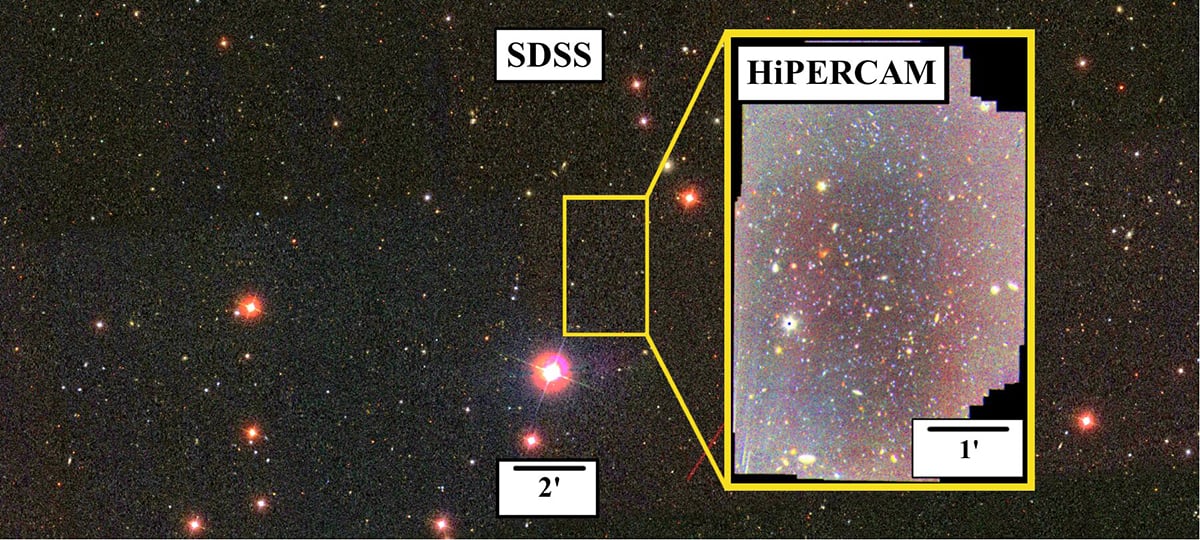
Astronomers have pointed one of the world’s largest optical telescopes at Cloud-9 and pushed an extremely faint target to the limits of deep imaging. The new observations reach roughly ten times deeper than previous optical images of the object. Even at that depth, the researchers could not find a convincing trace of starlight.
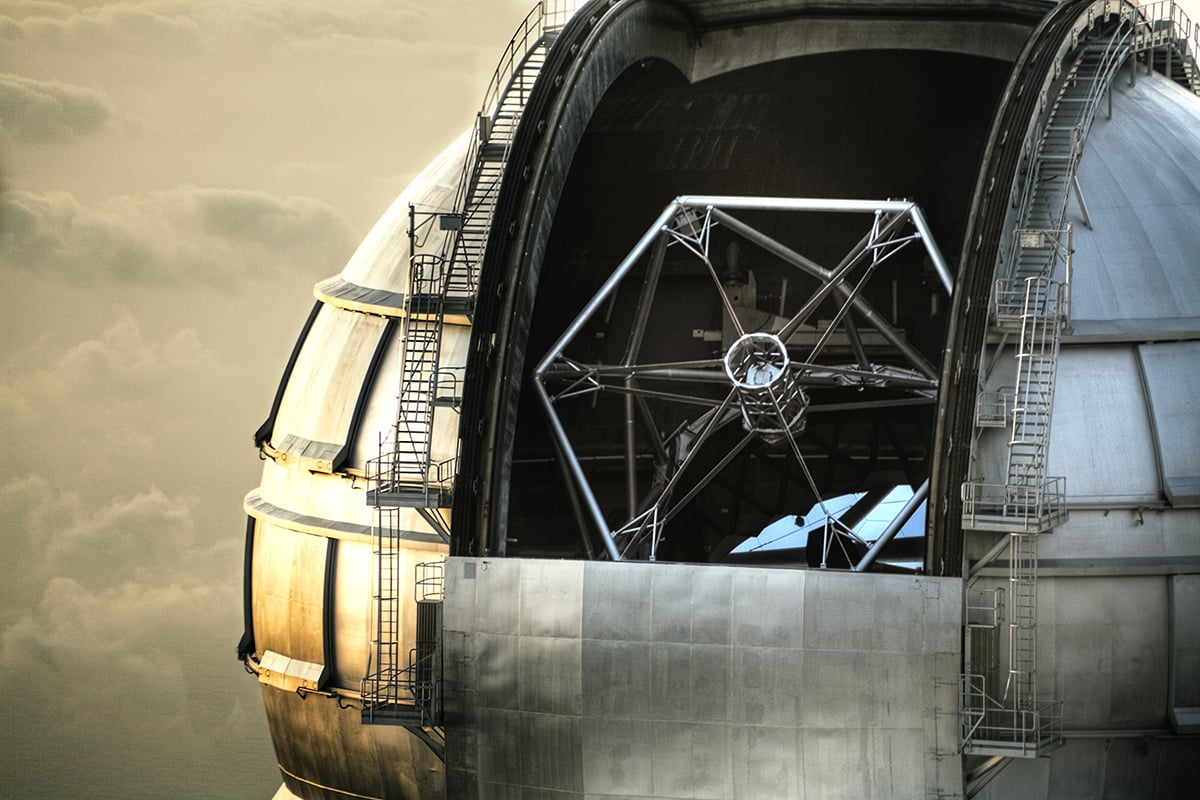
Cloud-9 lies near the spiral galaxy Messier 94, about 14–15 million light-years from Earth. A team led by Ignacio Trujillo of the Instituto de Astrofísica de Canarias used HiPERCAM on the 10.4-metre Gran Telescopio Canarias to capture it.
HiPERCAM goes deeper than earlier images
Cloud-9 is extremely faint and diffuse, so ordinary background light from the sky can overwhelm the signal astronomers are trying to measure.
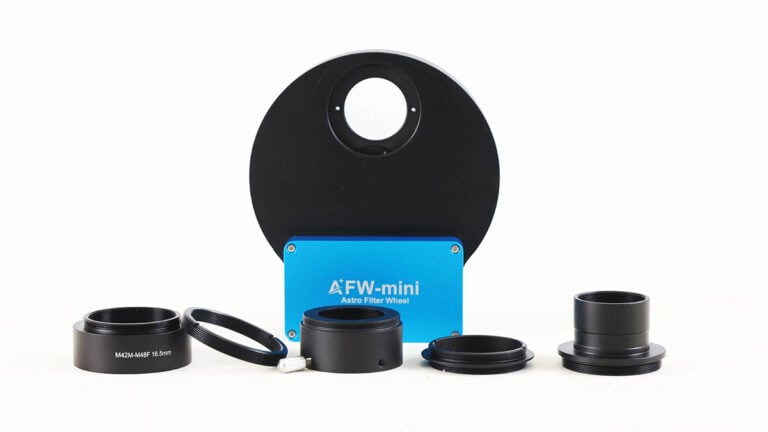
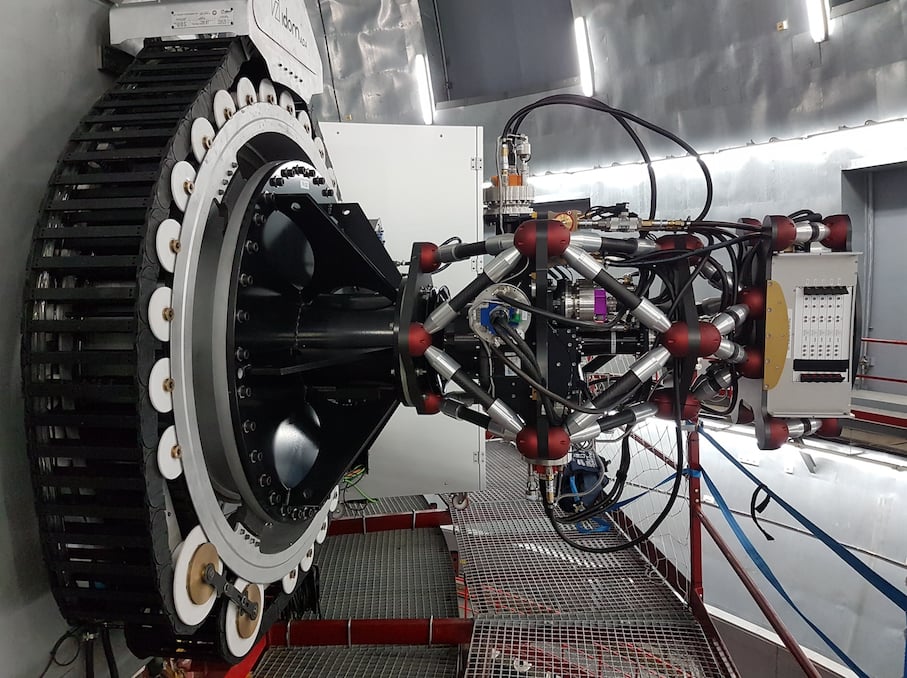
HiPERCAM instrument is a five-channel optical camera installed on the Gran Telescopio Canarias. Its beam-splitting system allows it to record u, g, r, i, and z images at the same time, covering a broad range of visible and near-infrared wavelengths. The camera can also make long exposures suitable for deep imaging.
The researchers accumulated 2.36 hours of exposure time in each filter at the center of the target. They also shifted the telescope between exposures. This dithering pattern helps remove detector artefacts and makes it possible to construct a cleaner final image from many individual frames.
The final images reached surface-brightness limits of 30.1 mag/arcsec² in u, 31.4 in g, 31.0 in r, 30.4 in i, and 29.6 in z. The g-band result is about ten times deeper than previous deep optical imaging of Cloud-9.
The deepest image still shows no stellar light
The team searched the central one-arcminute-square region of Cloud-9. At the estimated distance of M94, that area corresponds to about 1.3 by 1.3 kiloparsecs, or roughly 4,200 by 4,200 light-years. Surprisingly, they could not find diffuse stellar emission within that region at the sensitivity reached by the observations.
That absence allows the researchers to put a numerical limit on how many stars Cloud-9 could contain. Assuming an old, metal-poor stellar population, they estimate a stellar surface mass density below roughly 0.01 solar masses per square parsec. The total stellar mass comes out to no more than about 16,000 solar masses.
This is a remarkably small amount of stellar material for an object containing around one million solar masses of neutral hydrogen. It is also worth noting that the observations do not prove that Cloud-9 contains exactly zero stars. And this is why the researchers will continue to describe Cloud-9 as a candidate starless galaxy.
Cloud-9: Radio telescopes and Hubble
The cloud was first identified through radio observations and later studied with facilities including the Green Bank Telescope and the Very Large Array. Radio observations can detect the 21-centimetre emission from neutral hydrogen, allowing astronomers to map gas even when there are few or no stars producing visible light.
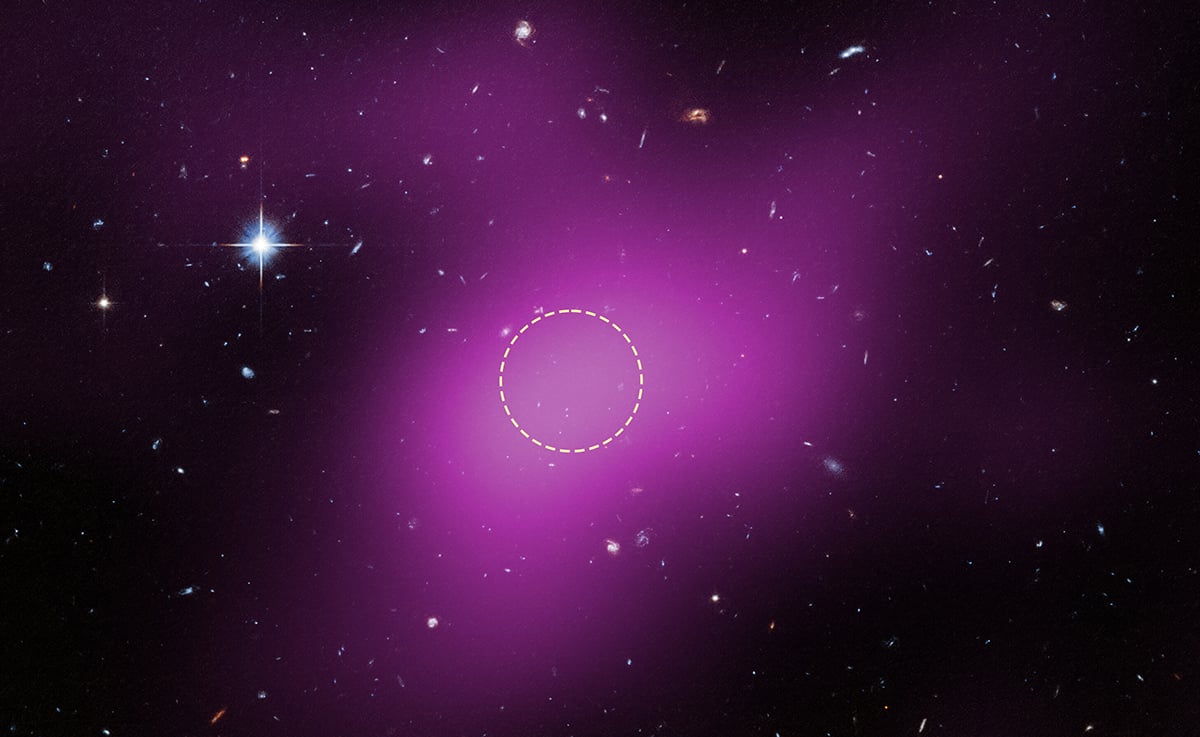
Those observations revealed roughly one million solar masses of hydrogen in Cloud-9. The cloud also lies close to M94, making a physical association between the two systems plausible.
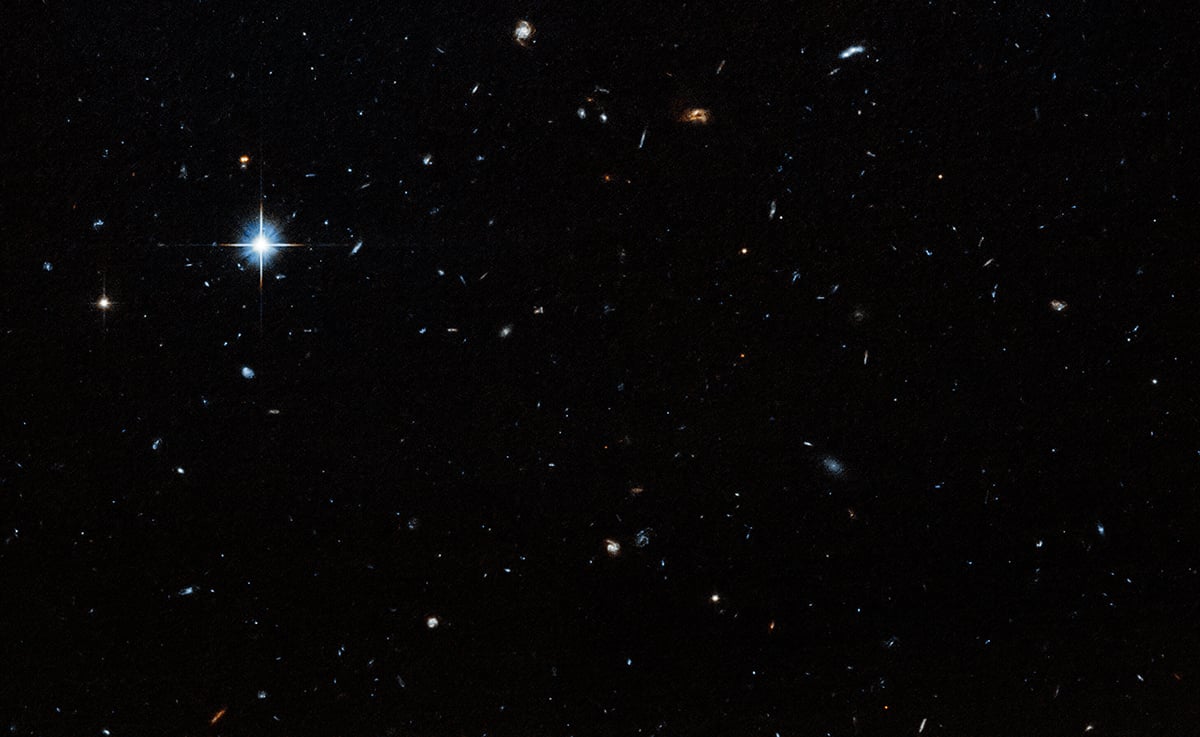
Cloud-9 was also captured by the Hubble Space Telescope. Those observations found no convincing population of stars inside the cloud. Hubble‘s high resolution allowed astronomers to search for individual faint stars.
Clear skies!
See more from DIYPhotography.net on Google
Add DIYPhotography.net as a trusted source. This makes
our stories more likely to appear in your Google Search results.
 Add as a preferred source on Google

Soumyadeep Mukherjee
Soumyadeep Mukherjee is an award-winning astrophotographer from India. He has a doctorate degree in Linguistics. His work extends to the sub-genres of nightscape, deep sky, solar, lunar and optical phenomenon photography. He is also a photography educator and has conducted numerous workshops. His works have appeared in over 40 books & magazines including Astronomy, BBC Sky at Night, Sky & Telescope among others, and in various websites including National Geographic, NASA, Forbes. He was the first Indian to win “Astronomy Photographer of the Year” award in a major category.
Join the Discussion
DIYP Comment Policy
Be nice, be on-topic, no personal information or flames.