





















A New View of Orion: VLA Maps Hidden Hydrogen around the Nebula
Jul 13, 2026
Soumyadeep Mukherjee
Soumyadeep Mukherjee is an award-winning astrophotographer from India. He has a doctorate degree in Linguistics. His work extends to the sub-genres of nightscape, deep sky, solar, lunar and optical phenomenon photography. He is also a photography educator and has conducted numerous workshops. His works have appeared in over 40 books & magazines including Astronomy, BBC Sky at Night, Sky & Telescope among others, and in various websites including National Geographic, NASA, Forbes. He was the first Indian to win “Astronomy Photographer of the Year” award in a major category.
Share:
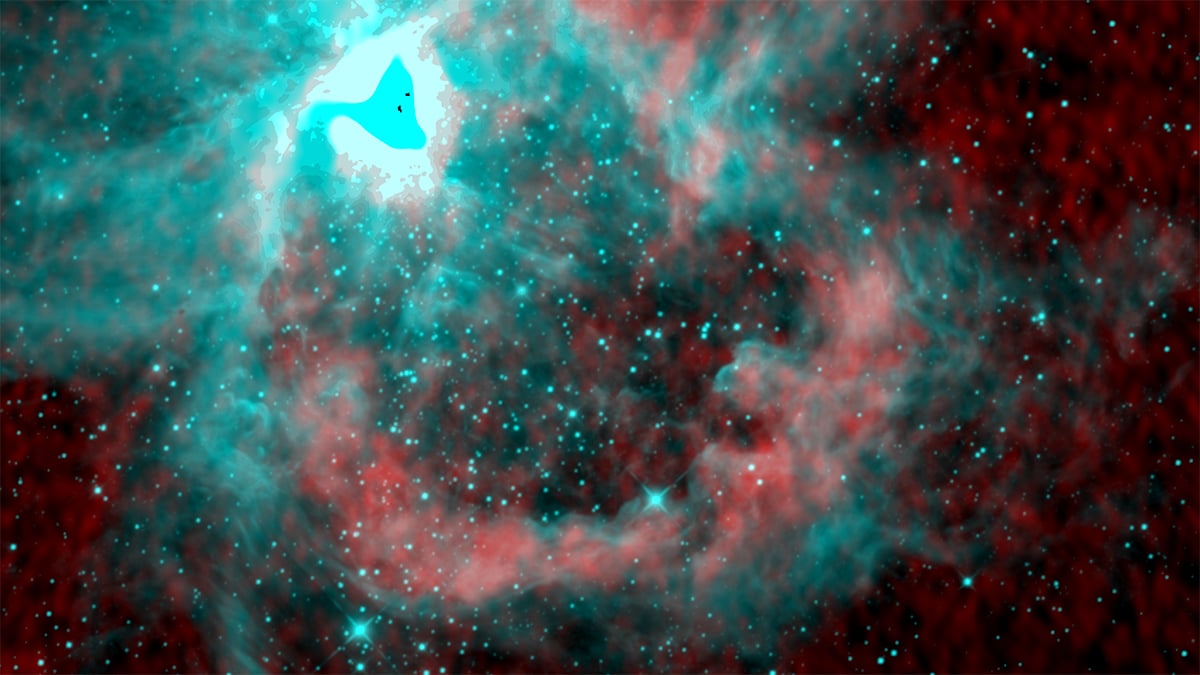
The Orion Nebula has long served as the ideal laboratory for studying star-forming processes. Located about 1,350 light-years from Earth, it is the closest region where massive stars are actively forming. Its proximity allows astronomers to examine individual stars, gas clouds, and protoplanetary disks in remarkable detail. As a result, observations of Orion have shaped much of what scientists know about stellar nurseries across the Milky Way.
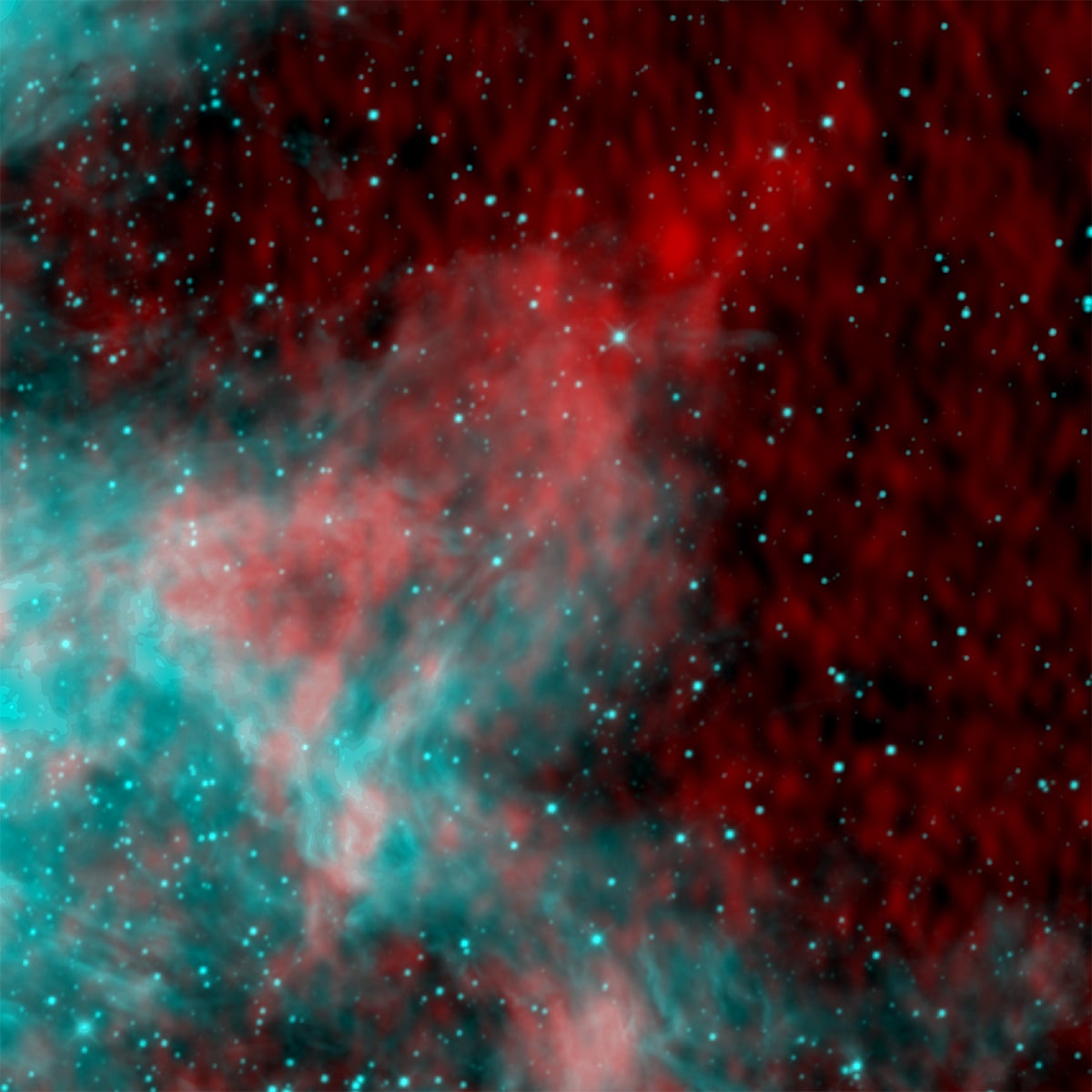
A new study has uncovered one of those hidden pieces by mapping the distribution of neutral atomic hydrogen around the nebula with unprecedented detail. The research combines observations from the Karl G. Jansky Very Large Array (VLA) in the United States and China’s Five-hundred-meter Aperture Spherical Telescope (FAST). Together, these facilities have produced the most complete view yet of the hydrogen surrounding the Orion Nebula, revealing an intricate network of shells, cavities, and filaments that remained invisible in optical observations.
Looking beyond Orion’s brilliant glow
The Orion Nebula is one of the brightest deep-sky objects visible from Earth. Even a small telescope reveals a glowing cloud surrounding a compact group of young stars known as the Trapezium Cluster. Larger telescopes expose a spectacular landscape of luminous gas, dark dust lanes, and newborn stars emerging from their natal cloud.
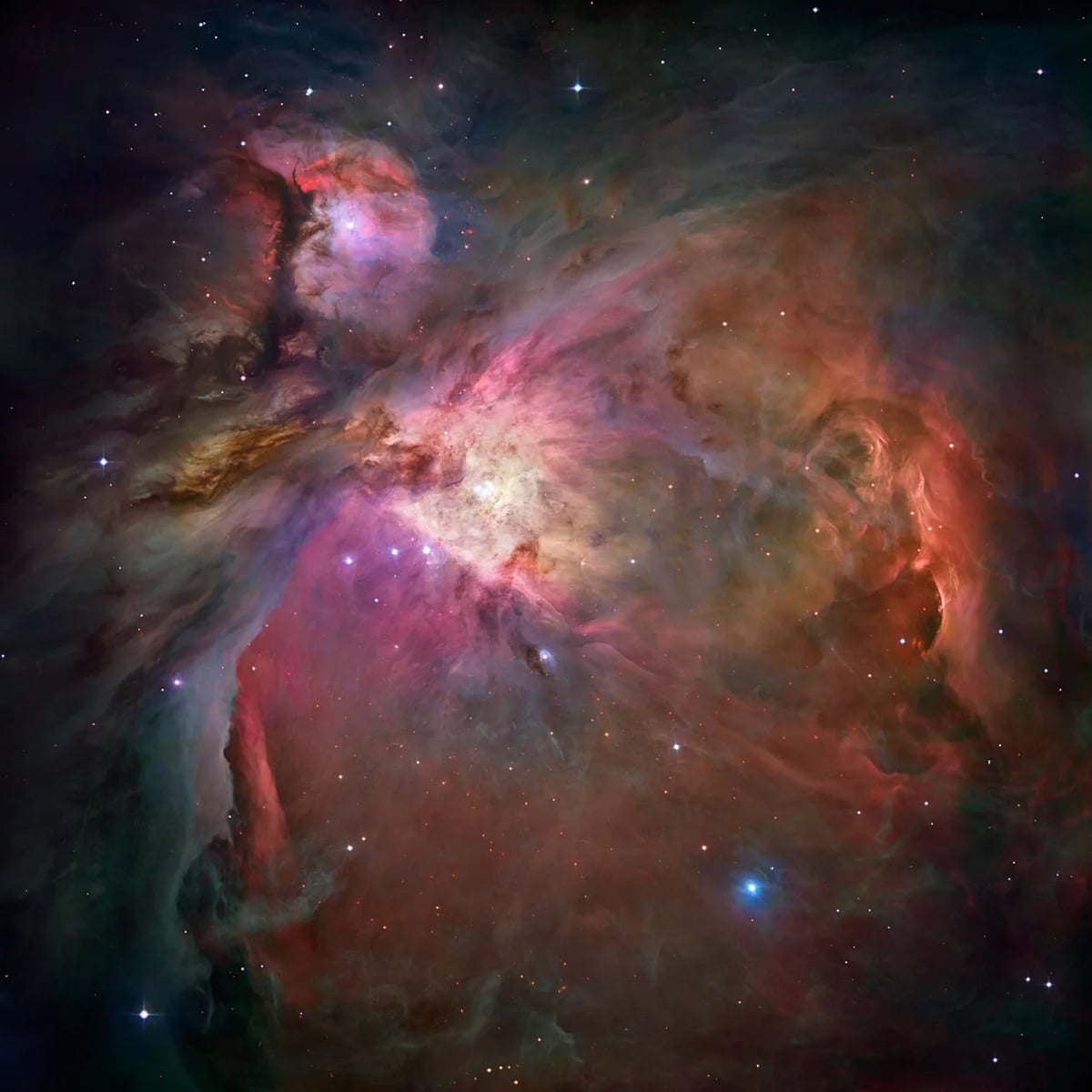
Most visible-light photographs capture ionized hydrogen. Ultraviolet radiation from the Trapezium stars strips electrons from nearby hydrogen atoms, creating an ionized region that emits the characteristic red hydrogen-alpha glow. Other emission lines from oxygen and sulfur contribute additional colours, producing the spectacular appearance that has made Orion one of the most photographed objects in the night sky.
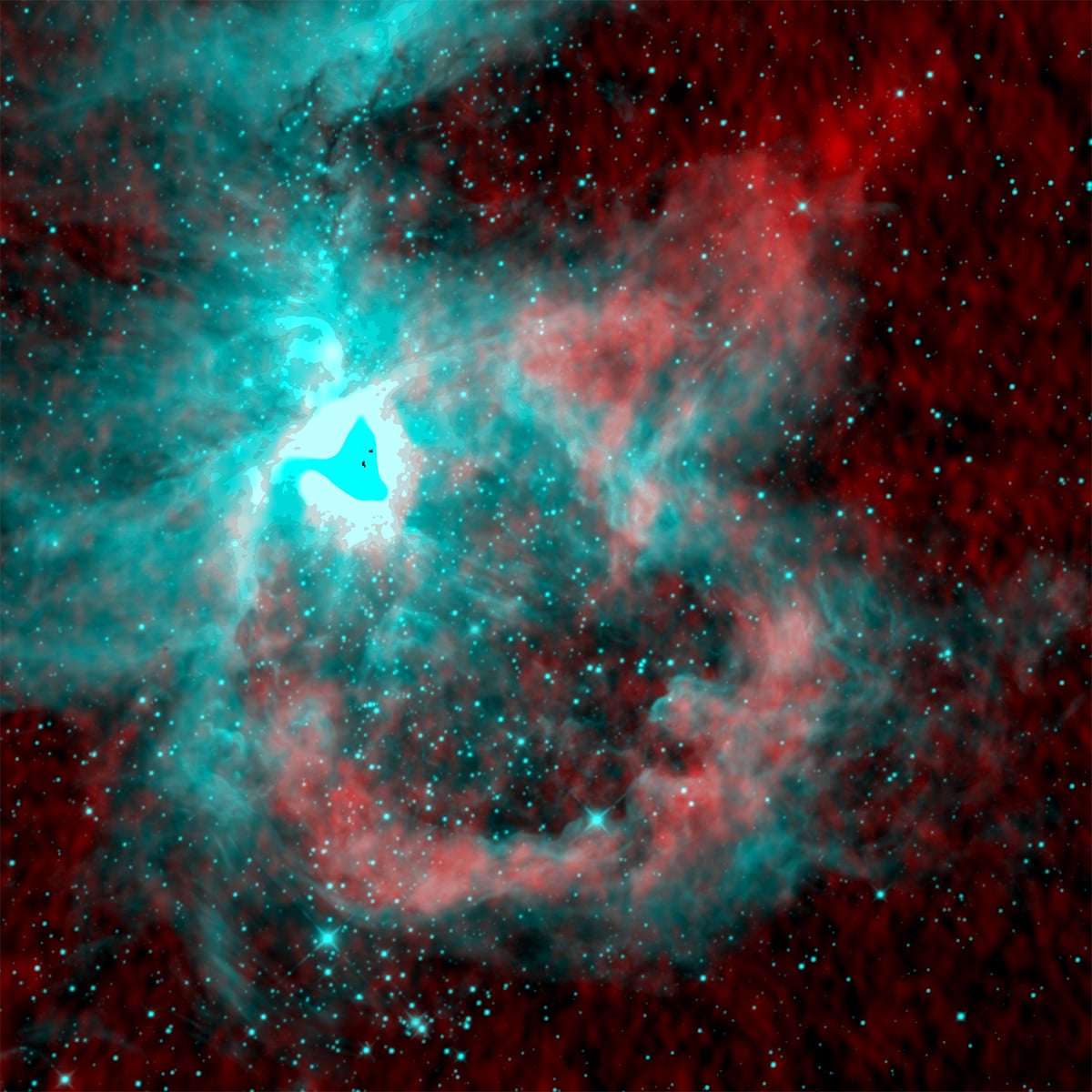
Beyond the bright emission lies an extensive reservoir of neutral atomic hydrogen, commonly known as HI. Unlike ionized gas, neutral hydrogen remains largely invisible at optical wavelengths. It emits radio waves at a wavelength of 21 centimeters. This emission allows astronomers to trace cold interstellar gas that cannot be detected with conventional optical telescopes.
Combining two radio giants to reveal the invisible
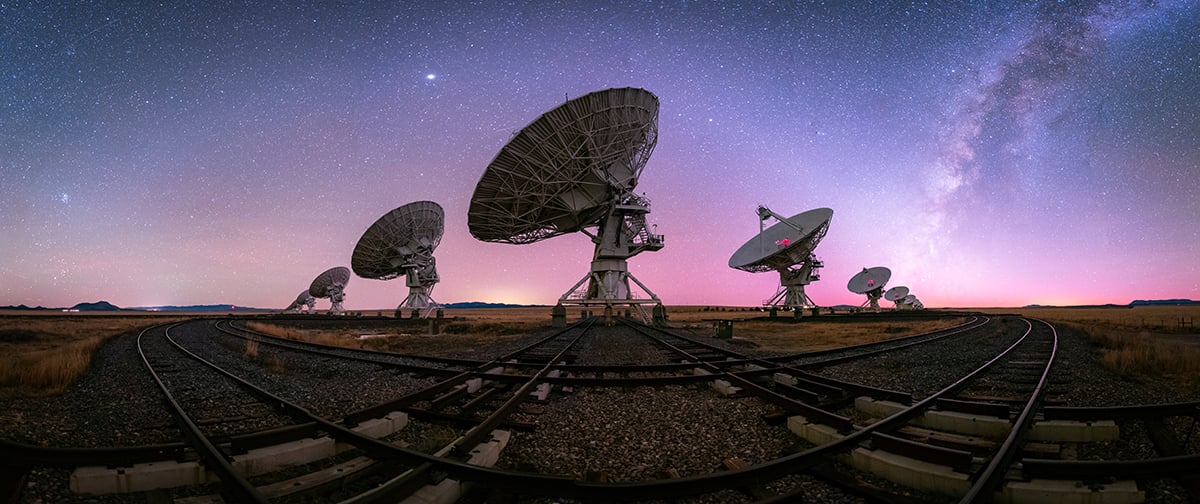
To produce a detailed map of Orion’s hidden hydrogen, the research team combined data from two radio observatories. The Karl G. Jansky Very Large Array, located on the Plains of San Agustin in New Mexico, consists of 27 movable radio antennas arranged in a giant Y-shaped configuration. Working together as an interferometer, the antennas function like a much larger telescope. This provides exceptional angular resolution, allowing astronomers to distinguish extremely small structures within astronomical objects.
The second observatory that helped to uncover Orion was the Five-hundred-meter Aperture Spherical Radio Telescope (FAST). Built within a natural depression in Guizhou Province, FAST is the world’s largest single-dish radio telescope. Its enormous 500-metre aperture gives it extraordinary sensitivity to faint radio signals extending over vast regions of space.
The researchers merged observations from both facilities into a single dataset. The resulting maps preserve the VLA‘s sharp detail while incorporating FAST’s ability to detect diffuse hydrogen across the extended Orion complex. This combination produced the most comprehensive view yet of the region’s neutral hydrogen distribution.

The Hydrogen map: A story of Orion’s past
For many years, researchers pictured the Orion Nebula as a relatively simple system. In that view, the massive stars at its center produced strong ultraviolet radiation and stellar winds that pushed the surrounding gas outward, creating a large expanding shell. While that explanation matched several observations, it could not account for every feature detected around the nebula.
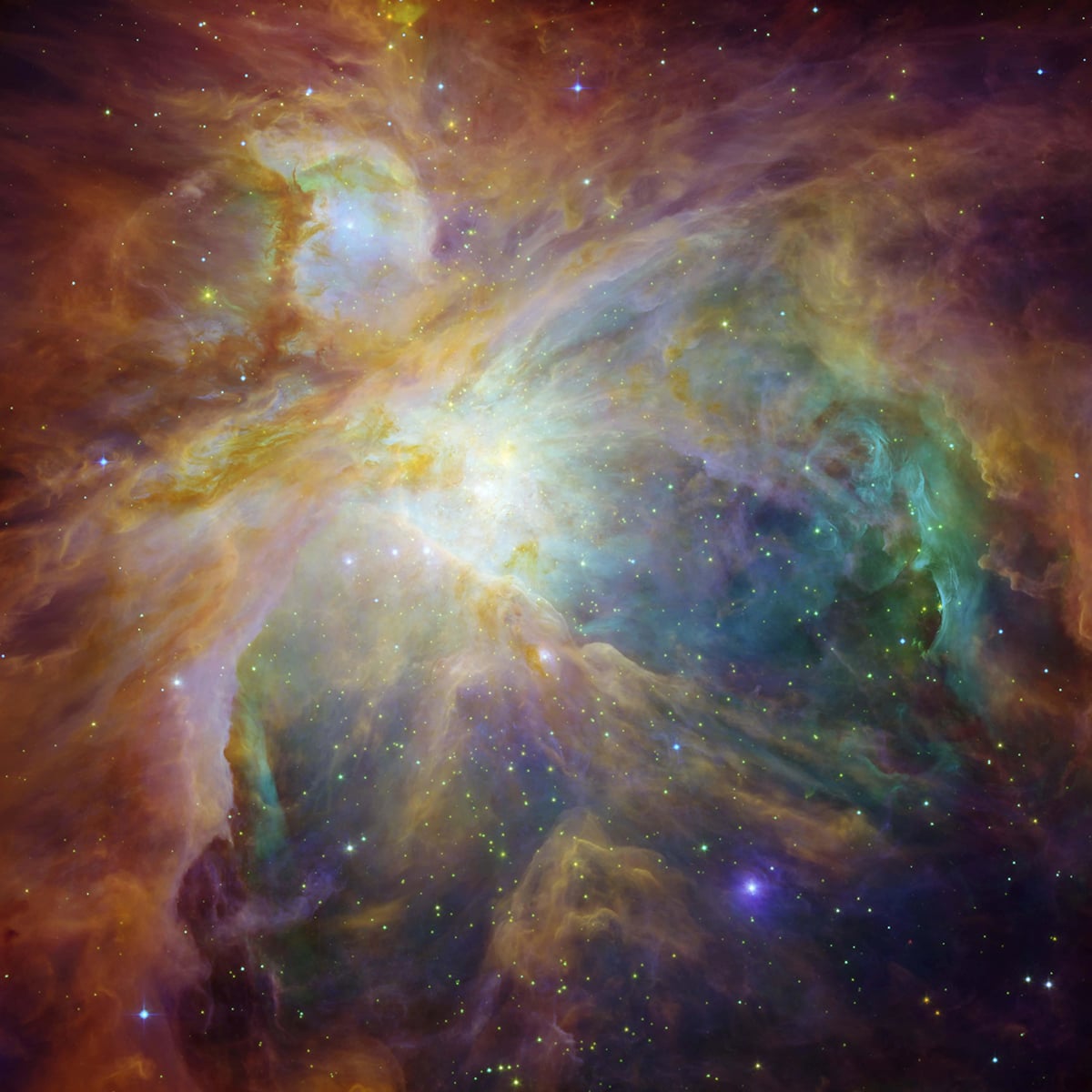
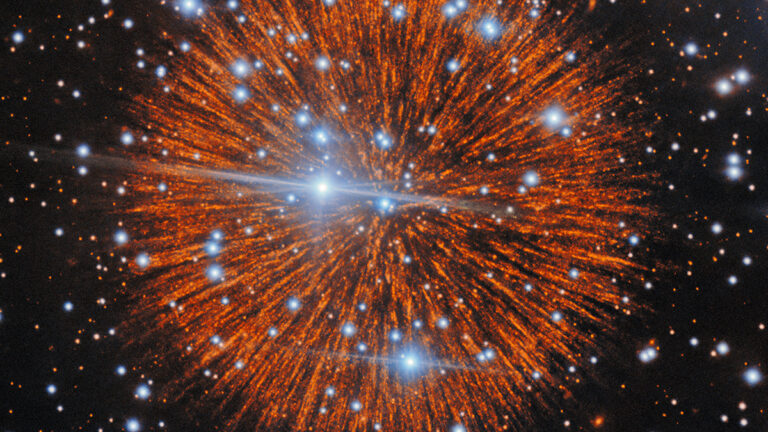
In the new image of the Orion Nebula, hydrogen appears as a collection of overlapping structures with different shapes and sizes. Some arcs curve around the nebula, while others extend into the wider Orion complex. Several cavities appear to have formed at different times rather than during a single event. These features suggest that the region has experienced multiple episodes of stellar feedback over an extended period.
This finding is significant as the massive stars do not remain limited to illuminating their surroundings. Throughout their lives, they continuously inject energy into the interstellar medium. As different generations of massive stars formed and evolved, each one altered the cloud in its own way. Their combined influence gradually built the intricate hydrogen landscape visible today.
Clear skies!
See more from DIYPhotography.net on Google
Add DIYPhotography.net as a trusted source. This makes
our stories more likely to appear in your Google Search results.
 Add as a preferred source on Google

Soumyadeep Mukherjee
Soumyadeep Mukherjee is an award-winning astrophotographer from India. He has a doctorate degree in Linguistics. His work extends to the sub-genres of nightscape, deep sky, solar, lunar and optical phenomenon photography. He is also a photography educator and has conducted numerous workshops. His works have appeared in over 40 books & magazines including Astronomy, BBC Sky at Night, Sky & Telescope among others, and in various websites including National Geographic, NASA, Forbes. He was the first Indian to win “Astronomy Photographer of the Year” award in a major category.

Join the Discussion
DIYP Comment Policy
Be nice, be on-topic, no personal information or flames.