

























Gemini North Captures the Remains of a Supernova Seen in 1181
Oct 7, 2026
Soumyadeep Mukherjee
Soumyadeep Mukherjee is an award-winning astrophotographer from India. He has a doctorate degree in Linguistics. His work extends to the sub-genres of nightscape, deep sky, solar, lunar and optical phenomenon photography. He is also a photography educator and has conducted numerous workshops. His works have appeared in over 40 books & magazines including Astronomy, BBC Sky at Night, Sky & Telescope among others, and in various websites including National Geographic, NASA, Forbes. He was the first Indian to win “Astronomy Photographer of the Year” award in a major category.
Share:
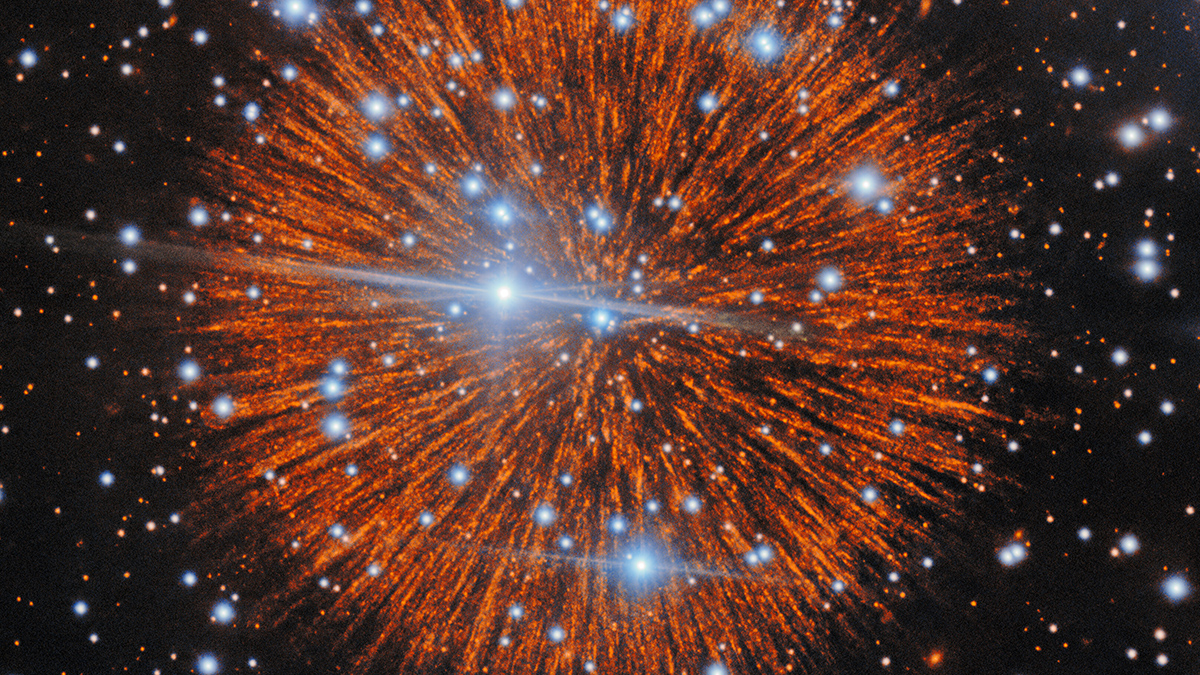
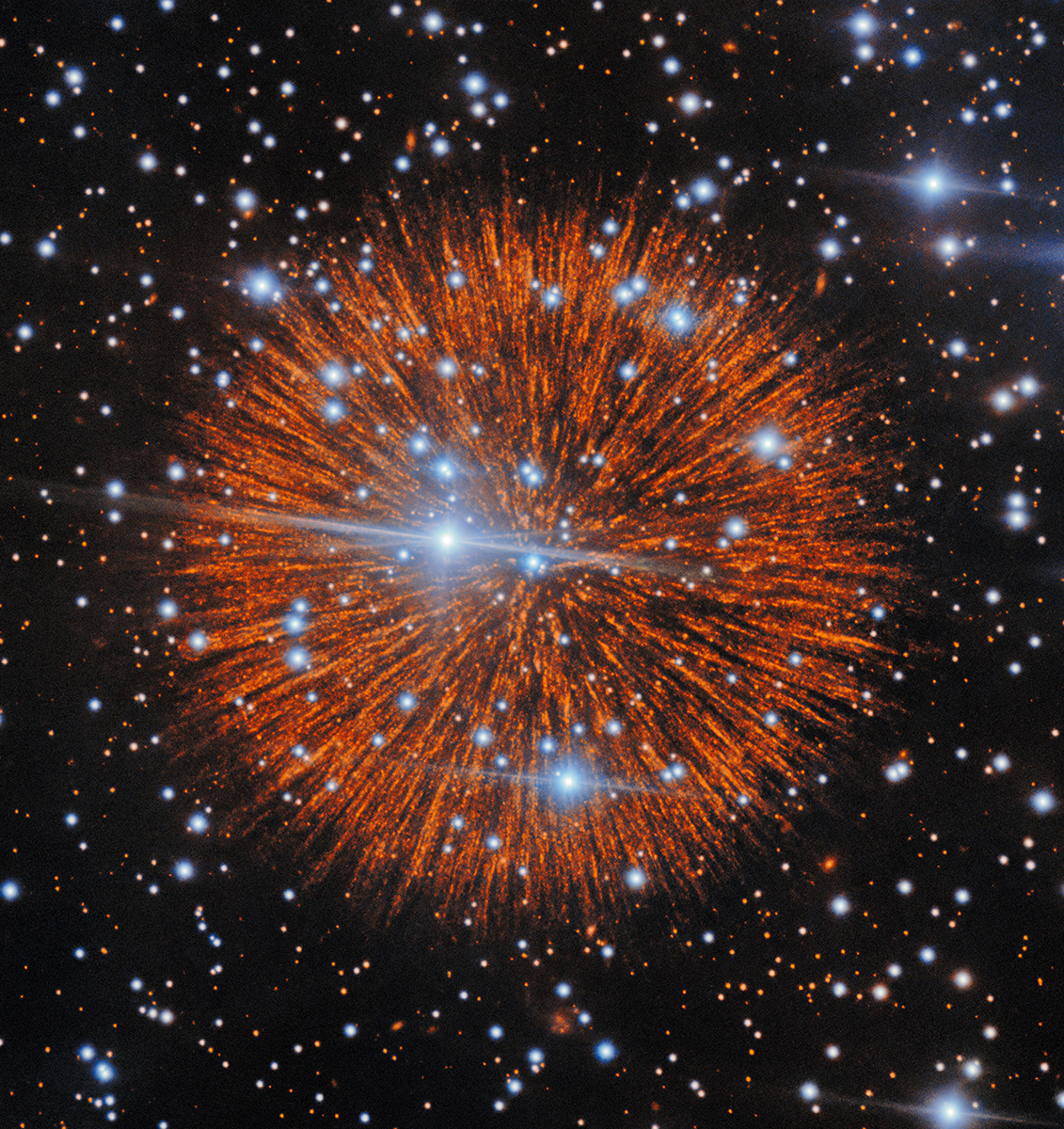
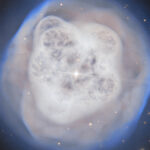
We have got a new “firework” image! A new observation from the Gemini North telescope has revealed fine details inside the remains of a supernova that appeared in the sky in 1181. The object, known as Pa 30, has been studied for years because of its unusual shape and its connection to that historical event. A closer look from Gemini North shows that its long filaments contain hundreds of smaller knots.
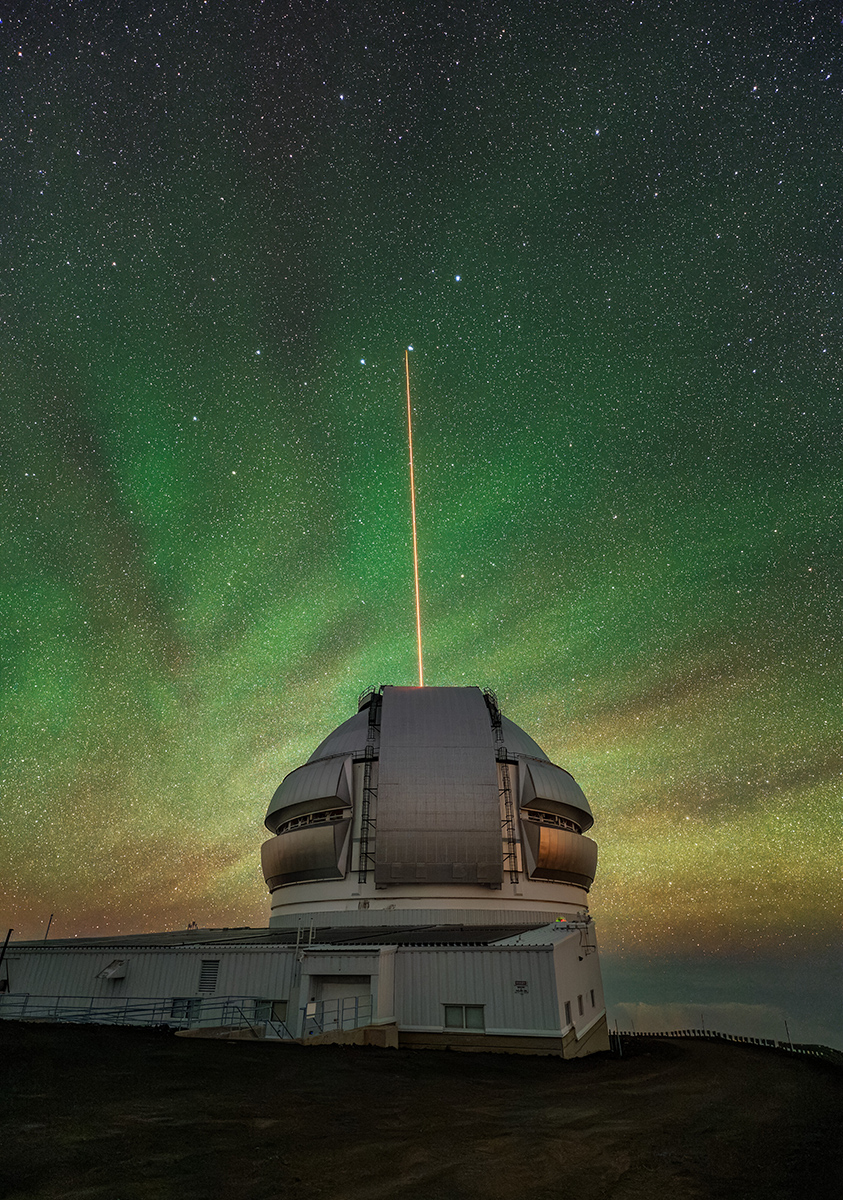
Pa 30 lies about 7,500 light-years from Earth in the constellation Cassiopeia. Its main structure consists of hot gas expanding away from a central star. Earlier images showed long filaments extending outward from the center. The new Gemini North observations resolve much smaller structures within those filaments. Astronomers used the Gemini Multi-Object Spectrograph, or GMOS, to make the observations.
Remnants of an ancient supernova
The story of Pa 30 began long before astronomers discovered the object. In August 1181, observers in China, Japan, and the Arab world recorded a bright new object in the night sky. It appeared in the region of Cassiopeia and remained visible for roughly 185 days.
People at the time had no way to know that they were watching a stellar explosion. They could only record its position and changing brightness. Modern astronomers later recognized the event as a supernova, but for centuries they had no confirmed remnant to associate with the historical records.
The object was discovered in 2013 when American amateur astronomer Dana Patchick found Pa 30 in data from NASA‘s Wide-field Infrared Survey Explorer. Patchick was searching through infrared observations as part of a citizen science project focused on planetary nebulae.
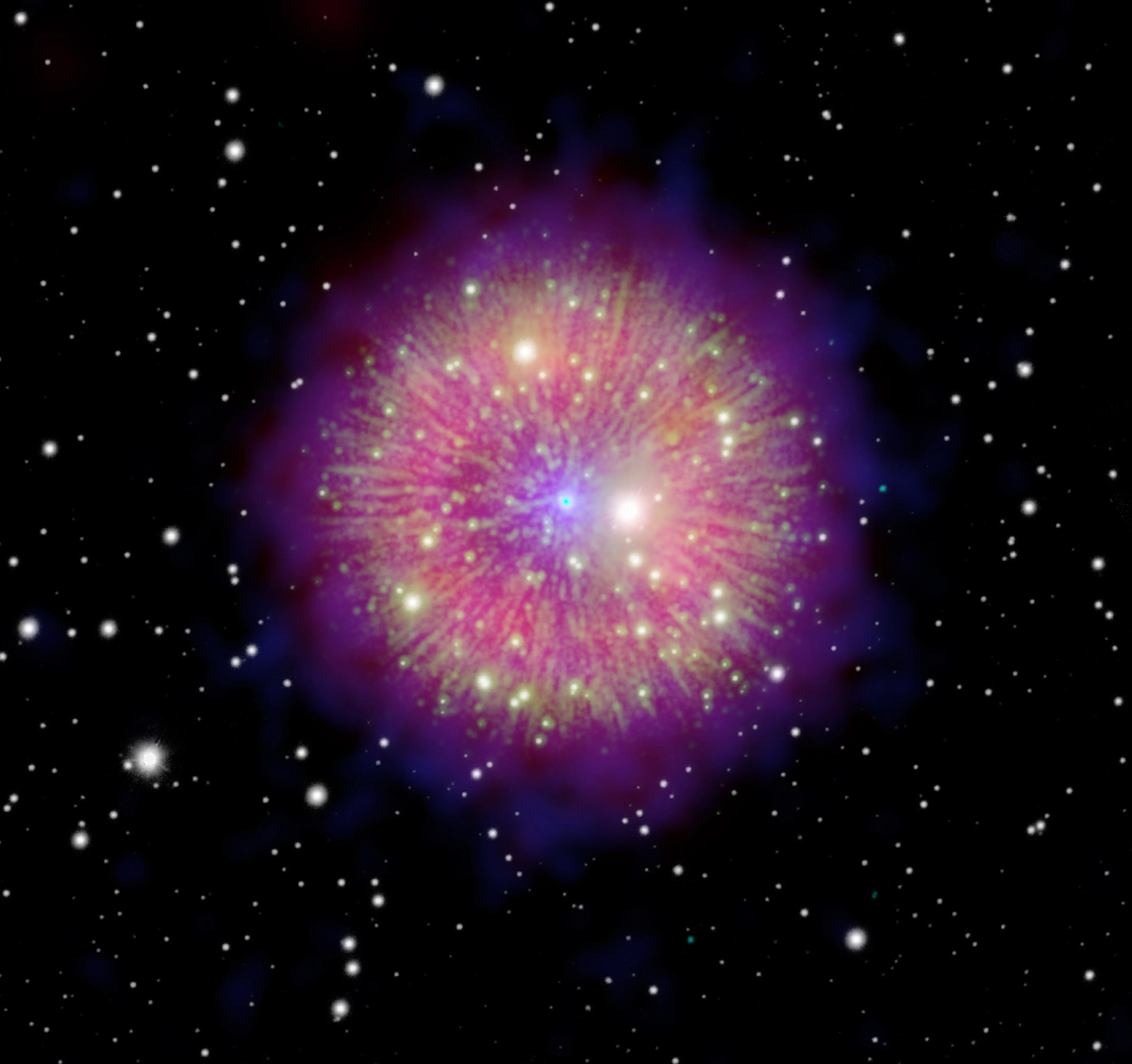
Follow-up observations showed that Pa 30 contained a hot central star surrounded by a roughly spherical shell. Long filaments extended through the surrounding gas, creating the unusual structure that now makes the object easy to recognise. The historic supernova was named SN 1181.
Gemini North finds knots inside the filaments
Images of Pa 30 have shown its radial filaments before, but the new Gemini North observations reveal a different level of detail.
The team used GMOS to observe the remnant through narrowband filters. These filters isolate particular wavelengths produced by ionised elements in the expanding gas. This enabled astronomers to pick out faint structures that would be difficult to separate in a broad visible-light image.
The sulfur observations show the knots particularly well. The team used [S II] emission to trace the filamentary material and found much more structure than earlier observations had revealed. The researchers report roughly ten times more filamentary detail than previous studies.
The oxygen data provide another view of the same material. The team detected [O III] emission from the filaments, confirming that oxygen emission follows the structures seen in sulfur.
These tiny knots are enormous
The knots may look small in the image, but their actual scale is difficult to imagine. The researchers estimate that the structures have characteristic sizes of around 10¹⁶ centimetres, or roughly 670 astronomical units.
An astronomical unit is the average distance between Earth and the Sun. Neptune orbits the Sun at an average distance of about 30 astronomical units. A single knot in Pa 30 can therefore span a region many times larger than Neptune’s orbit.
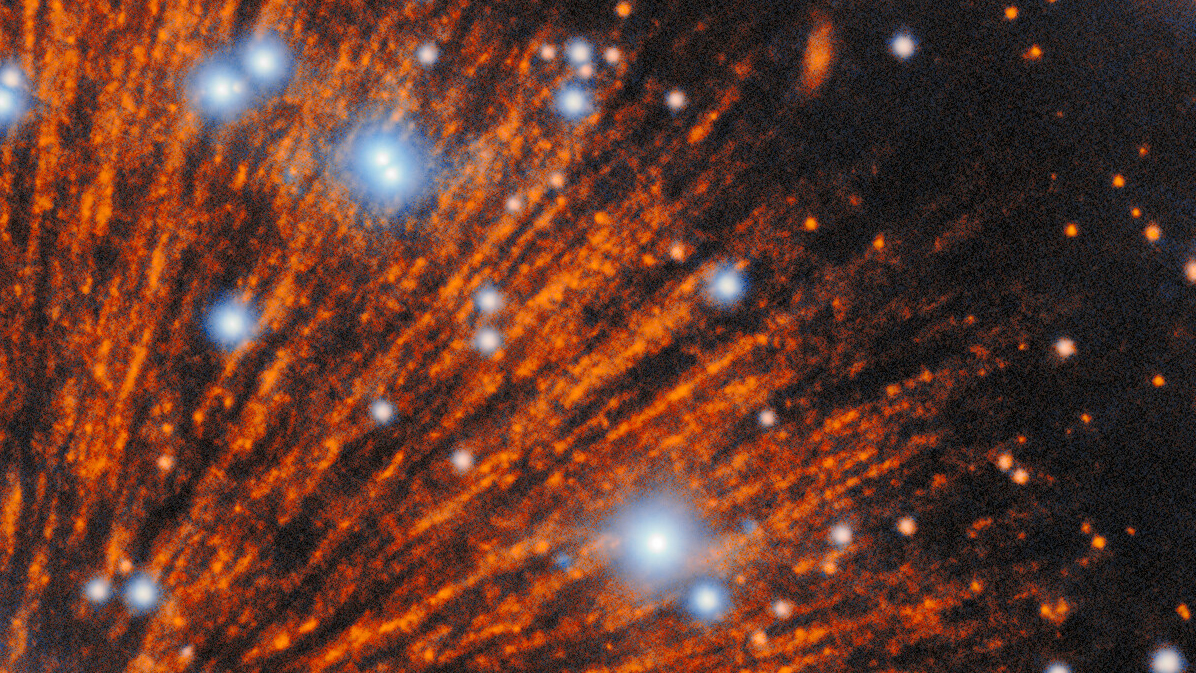
The structures have also caught the researchers’ attention because of their relatively consistent sizes. The explosion produced a large amount of material, yet many of the knots appear to fall within a similar range of dimensions.
That regularity could help explain how the filaments formed. If the knots resulted from random turbulence alone, astronomers might expect a wider range of sizes. The fairly consistent structures suggest that conditions within the expanding material may have controlled their formation.
Clear skies!
See more from DIYPhotography.net on Google
Add DIYPhotography.net as a trusted source. This makes
our stories more likely to appear in your Google Search results.
 Add as a preferred source on Google

Soumyadeep Mukherjee
Soumyadeep Mukherjee is an award-winning astrophotographer from India. He has a doctorate degree in Linguistics. His work extends to the sub-genres of nightscape, deep sky, solar, lunar and optical phenomenon photography. He is also a photography educator and has conducted numerous workshops. His works have appeared in over 40 books & magazines including Astronomy, BBC Sky at Night, Sky & Telescope among others, and in various websites including National Geographic, NASA, Forbes. He was the first Indian to win “Astronomy Photographer of the Year” award in a major category.

Join the Discussion
DIYP Comment Policy
Be nice, be on-topic, no personal information or flames.