






















Gemini North Reveals Green Glow in Interstellar Comet 3I/ATLAS
Dec 23, 2025
Soumyadeep Mukherjee
Soumyadeep Mukherjee is an award-winning astrophotographer from India. He has a doctorate degree in Linguistics. His work extends to the sub-genres of nightscape, deep sky, solar, lunar and optical phenomenon photography. He is also a photography educator and has conducted numerous workshops. His works have appeared in over 40 books & magazines including Astronomy, BBC Sky at Night, Sky & Telescope among others, and in various websites including National Geographic, NASA, Forbes. He was the first Indian to win “Astronomy Photographer of the Year” award in a major category.
Share:

Observations of small bodies on hyperbolic orbits provide direct evidence of material formed outside the solar system. Comet 3I/ATLAS is one such object. Identified through its excess inbound velocity and unbound trajectory, the comet has been confirmed as interstellar in origin. Recent optical observations obtained with the Gemini North telescope show that the object remains chemically active after perihelion. The new image reveals strong gas emission in the coma, including visible signatures of carbon-bearing molecules, offering a rare opportunity to examine cometary chemistry from another planetary system under solar irradiation.
An interstellar origin confirmed
Comet 3I/ATLAS was discovered in early July 2025 by the ATLAS survey system. Almost immediately, orbital calculations showed something unusual. The comet’s velocity and trajectory could not be explained by solar gravity alone. Its orbit was hyperbolic, not elliptical.
That geometry confirmed an interstellar origin. The comet did not form in the Oort Cloud or Kuiper Belt. It formed around another star and was later ejected into interstellar space. After drifting for millions or billions of years, it passed briefly through our planetary system.
Only two such objects had been confirmed before. ʻOumuamua showed no clear cometary activity. 2I/Borisov did. 3I/ATLAS now strengthens the case that interstellar comets can resemble familiar solar system comets in both structure and chemistry.
Gemini North and the observation
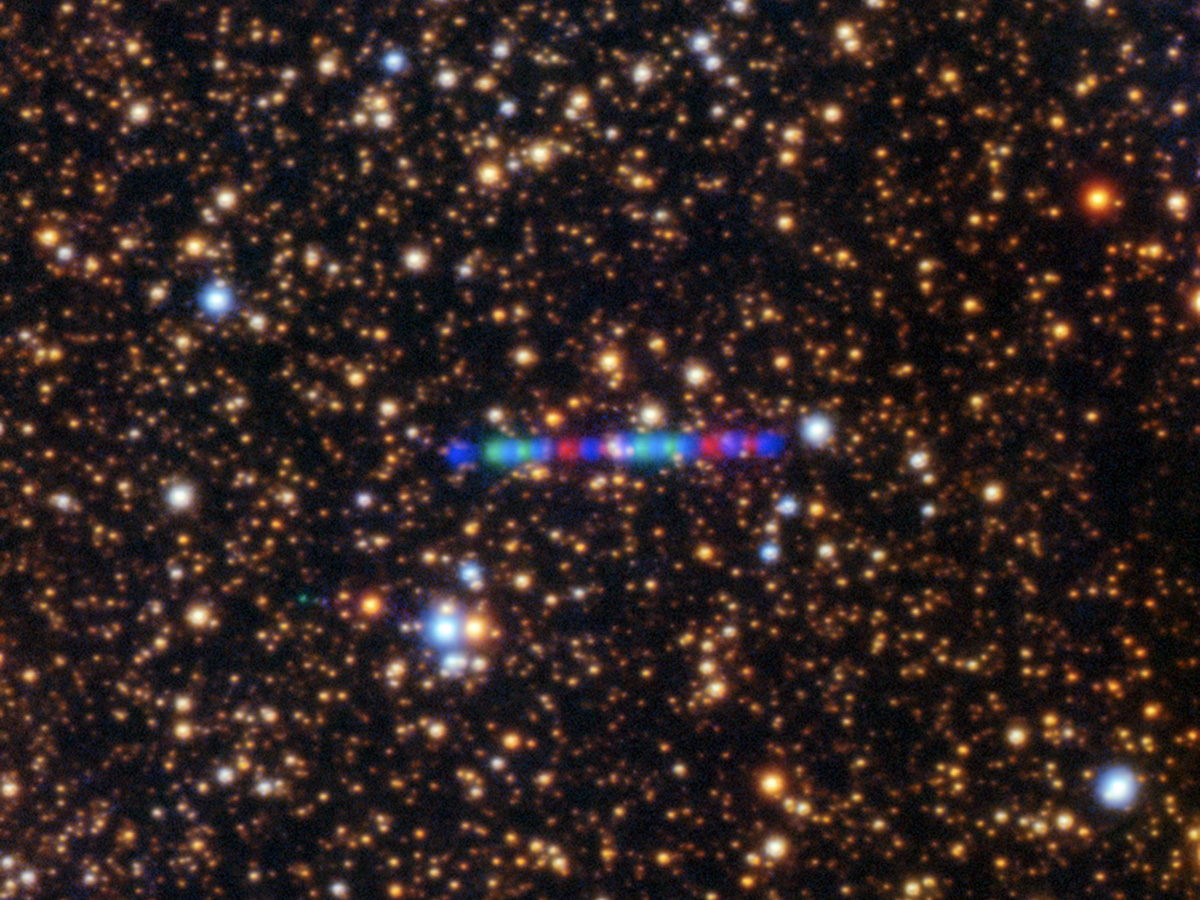
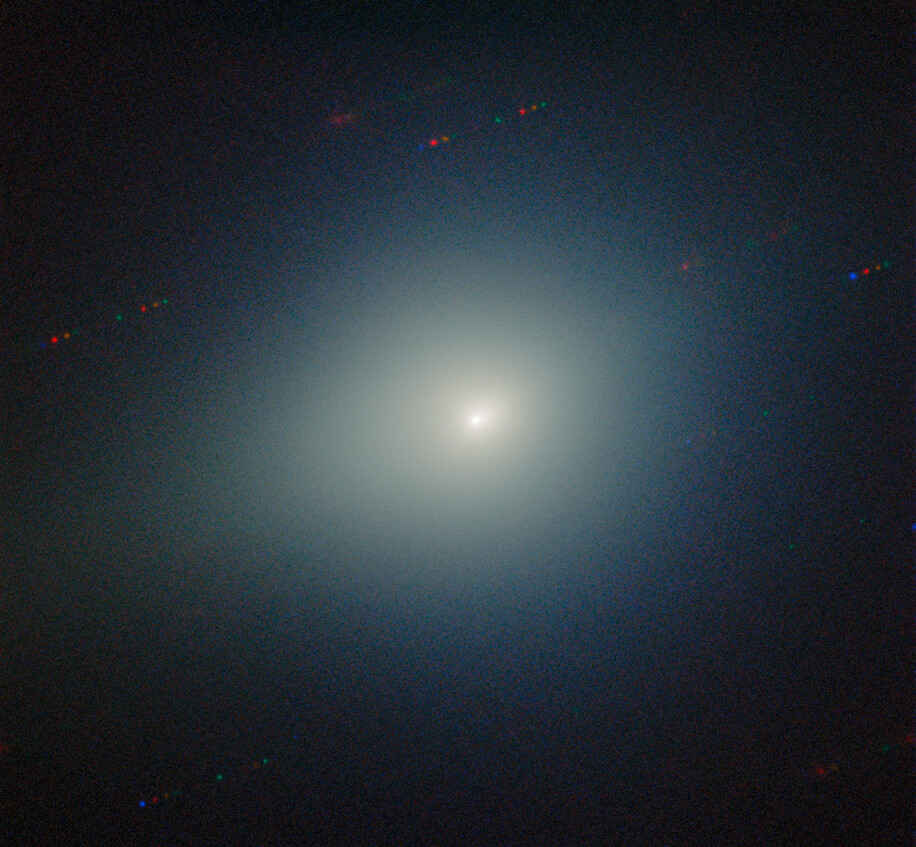
The new image was captured by the Gemini North telescope on Maunakea, Hawaii. Gemini North is one of the most capable optical observatories on Earth. Its altitude and atmospheric stability allow it to record faint structures that smaller telescopes cannot detect. Astronomers used the Gemini Multi-Object Spectrograph, or GMOS. The instrument recorded multiple exposures through blue, green, orange, and red filters. These exposures were later combined to produce a color composite. The telescope tracked the comet’s motion, which caused background stars to trail across the frame.

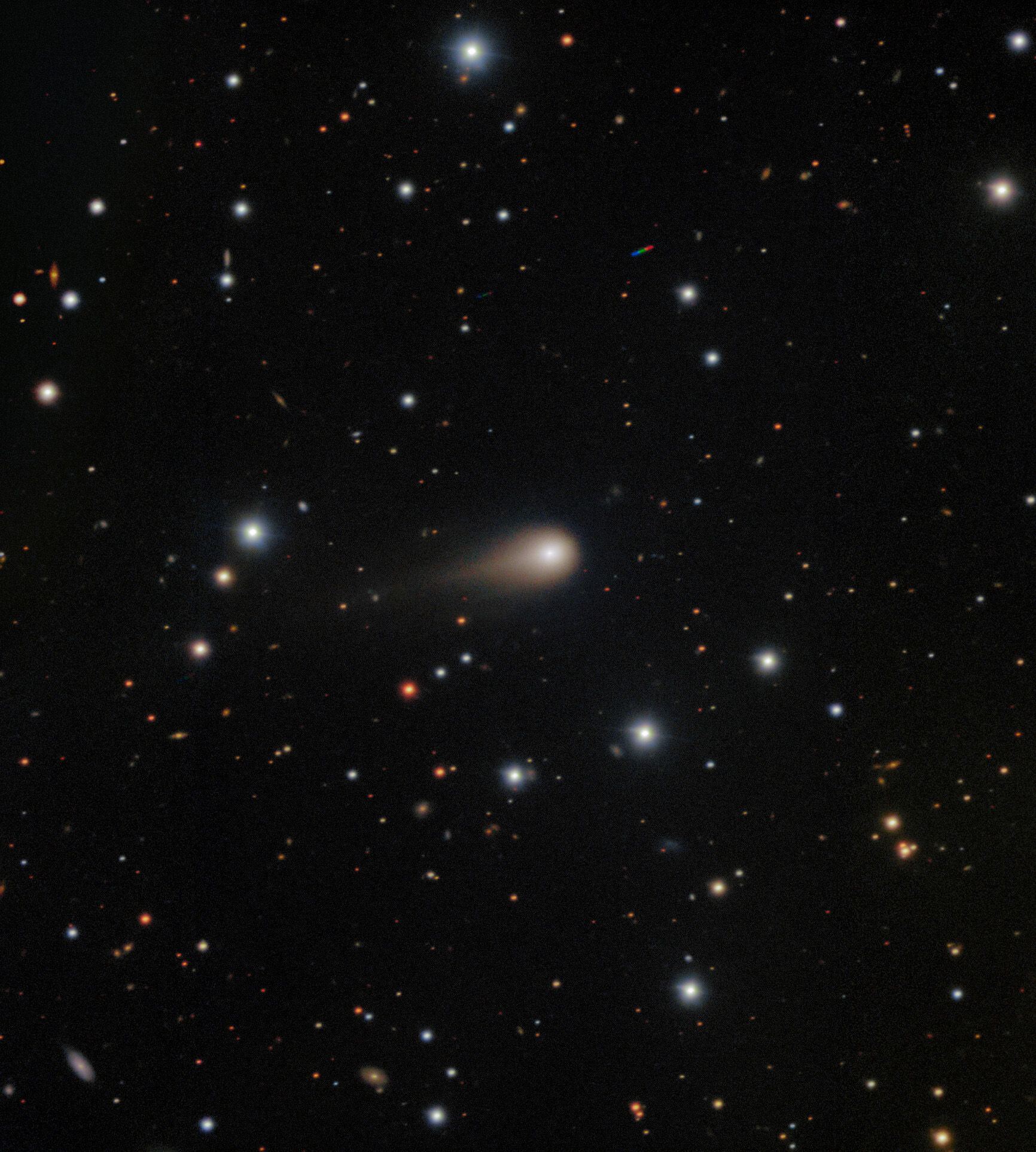
That tracking kept the comet sharp, allowing astronomers to isolate features in the coma. The resulting image freezes a brief moment in the comet’s evolution as it moved away from the Sun. The Gemini North image was taken after the comet passed perihelion on October 29, 2025. Many comets lose activity rapidly once they move away from the Sun. 3I/ATLAS behaved differently. The image shows a well-defined coma with strong gas emission. That indicates continued sublimation of volatile material from the nucleus. The comet retained internal heat long enough to sustain chemical reactions even as solar intensity declined.
Earlier observations from Gemini South showed a different color balance in the coma. The shift seen in the Gemini North image suggests a change in dominant gas species. Such evolution is expected as temperature gradients inside the nucleus change.
The source of the green glow
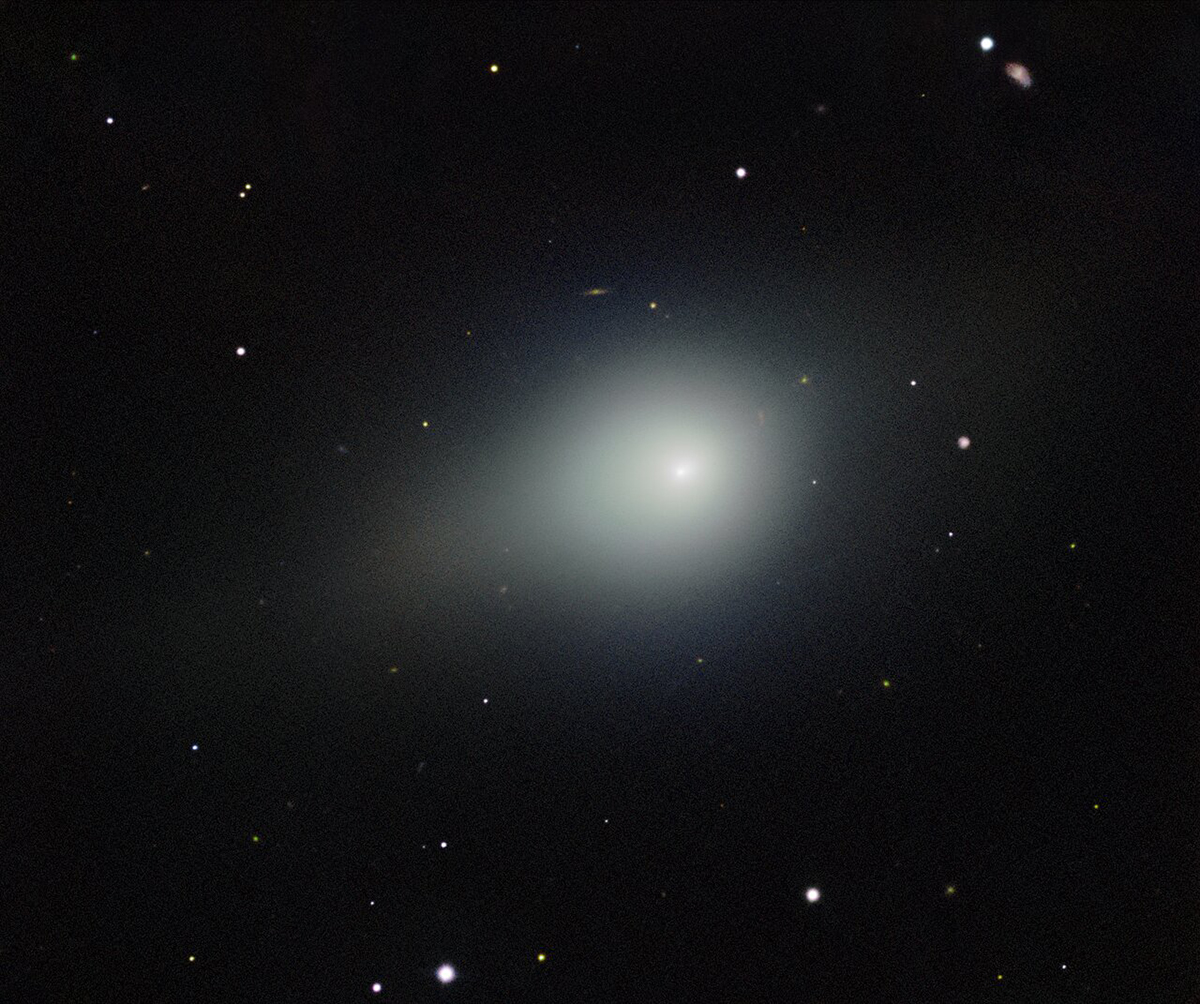
The most noticeable feature in the image is the green glow surrounding the nucleus. This color comes from diatomic carbon, known as C₂. The molecule forms when sunlight breaks down more complex carbon-rich compounds released from the comet’s ice. Once formed, diatomic carbon fluoresces under solar radiation. It emits strongly at visible wavelengths, especially in green. Large telescopes can detect this emission even when the comet is far from Earth.
This process is well understood in solar system comets. Seeing it in an interstellar object is scientifically important. It shows that carbon-based chemistry common in our solar system also exists elsewhere in the galaxy. The image confirms that 3I/ATLAS carries organic precursor molecules. These compounds likely formed in a protoplanetary disk around another star. Their survival through interstellar travel suggests that such chemistry is robust.
Structure within the coma
Beyond color, the image reveals structural detail. The coma appears slightly asymmetric. That suggests localized active regions on the nucleus. As the comet rotates, these regions receive sunlight unevenly and release gas at different rates. Dust appears less dominant than gas in this image. That may indicate declining dust production after perihelion. Gas release often persists longer than dust emission as deeper volatile layers continue to sublimate.
This balance affects how the comet evolves dynamically. Gas jets can alter rotation. Dust influences brightness and tail formation. Observing both components helps constrain physical models of the nucleus. Capturing this image required precise timing. After perihelion, 3I/ATLAS became better positioned for northern observatories. At the same time, it was moving farther from both the Sun and Earth.
The comet was already hundreds of millions of kilometers away when Gemini North recorded the data. Detecting color structure at that distance required long exposures and stable atmospheric conditions. This observation may represent the final phase when the comet remained bright enough for detailed color imaging from the ground. As it continues outward, its activity will fade. Future observations will rely on larger apertures or space-based instruments.
Further reading
Right from the discovery of the interstellar comet 3I/ATLAS, DIYP has published several articles on its photographs and features. Here is the list of articles:
- A New Visitor from the Stars: Comet 3I/ATLAS
- Gemini North Photographs the Interstellar Comet 3I/ATLAS
- Hubble’s Sharpest Portrait of a Visitor from the Stars: Comet 3I/ATLAS
- JWST Reveals the Secrets of Interstellar Comet 3I/ATLAS in New Images
- SPHEREx Maps the Carbon Dioxide Breath of Interstellar Comet 3I/ATLAS
- Gemini South Photographs Anti-Solar Tail of 3I/ATLAS
- Interstellar Comet 3I/ATLAS: Gemini South Images Reveal a Growing Tail
- Interstellar Comet 3I/ATLAS through Many Eyes: All Images so Far
- A Faint Smudge from Mars: Did Perseverance Really Capture Interstellar Comet 3I/ATLAS?
- ESA’s Mars Orbiter Capture “Closest Yet” View of Interstellar Comet 3I/ATLAS
- Comet 3I/ATLAS Returns: Astronomer Photographs it after Perihelion
- Tianwen-1’s Surprise Close-Up: China’s Mars Orbiter Images Interstellar Comet 3I/ATLAS
- Interstellar Comet 3I/ATLAS Returns to View with a Growing Ion Tail
- NASA Shares Eight New Images of Interstellar Comet 3I/ATLAS
- Hubble Space Telescope Revisits Interstellar Comet 3I/ATLAS
- ESA’s JUICE captures a detailed image of Interstellar Comet 3I/ATLAS
- X-Ray Images of 3I/ATLAS: XRISM and XMM-Newton Captures Interstellar Comet
Clear skies!
See more from DIYPhotography.net on Google
Add DIYPhotography.net as a trusted source. This makes
our stories more likely to appear in your Google Search results.
 Add as a preferred source on Google

Soumyadeep Mukherjee
Soumyadeep Mukherjee is an award-winning astrophotographer from India. He has a doctorate degree in Linguistics. His work extends to the sub-genres of nightscape, deep sky, solar, lunar and optical phenomenon photography. He is also a photography educator and has conducted numerous workshops. His works have appeared in over 40 books & magazines including Astronomy, BBC Sky at Night, Sky & Telescope among others, and in various websites including National Geographic, NASA, Forbes. He was the first Indian to win “Astronomy Photographer of the Year” award in a major category.


Join the Discussion
DIYP Comment Policy
Be nice, be on-topic, no personal information or flames.