






















JWST Reveals the Secrets of Interstellar Comet 3I/ATLAS in New Images
Aug 26, 2025
Soumyadeep Mukherjee
Soumyadeep Mukherjee is an award-winning astrophotographer from India. He has a doctorate degree in Linguistics. His work extends to the sub-genres of nightscape, deep sky, solar, lunar and optical phenomenon photography. He is also a photography educator and has conducted numerous workshops. His works have appeared in over 40 books & magazines including Astronomy, BBC Sky at Night, Sky & Telescope among others, and in various websites including National Geographic, NASA, Forbes. He was the first Indian to win “Astronomy Photographer of the Year” award in a major category.
Share:
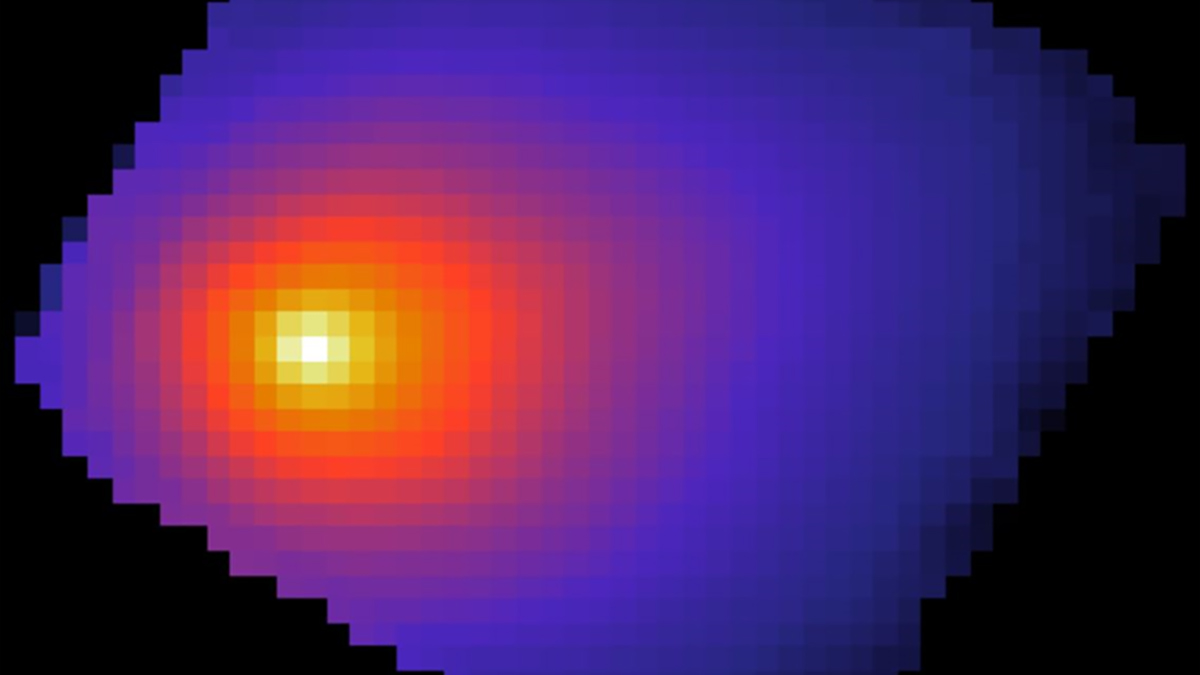
On July 1, 2025, astronomers using the ATLAS survey in Chile spotted a faint, moving object. Within days, orbital calculations confirmed something remarkable. The discovery, catalogued as 3I/ATLAS, was not bound to the Sun. Its hyperbolic orbit made it clear: this was only the third confirmed interstellar object ever seen passing through our solar system. The two earlier cases, 1I/ʻOumuamua in 2017 and 2I/Borisov in 2019, taught astronomers that objects from other star systems could and did wander into ours. 3I/ATLAS extends that list. It quickly became the subject of an international observing campaign, drawing in some of the most powerful telescopes in space. By August, it was clear that NASA’s James Webb Space Telescope (JWST) would give us the most detailed look yet at the comet’s chemical composition. Its findings turned out to be unlike anything astronomers had seen in comets closer to home.
JWST’s Infrared Look
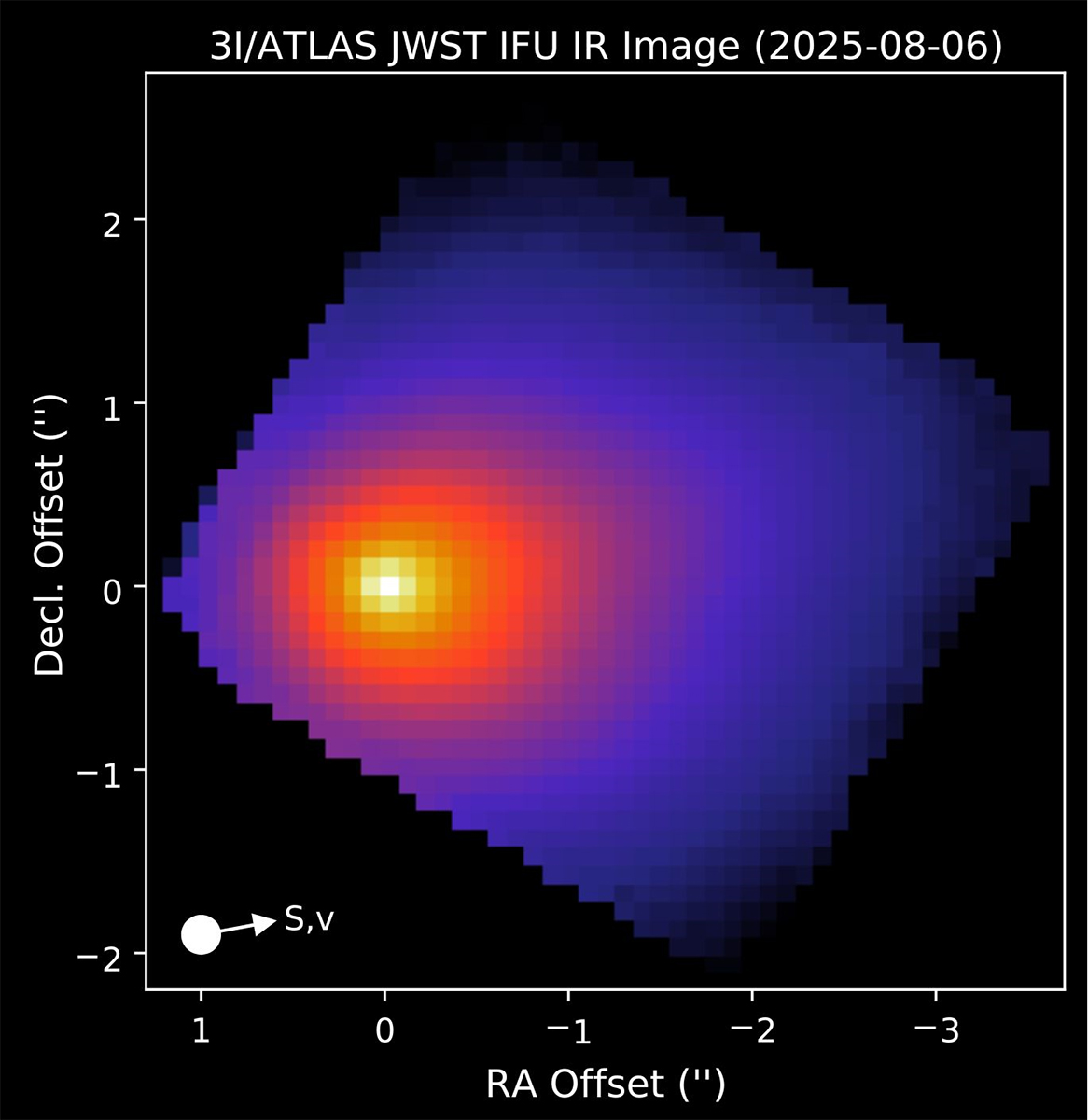
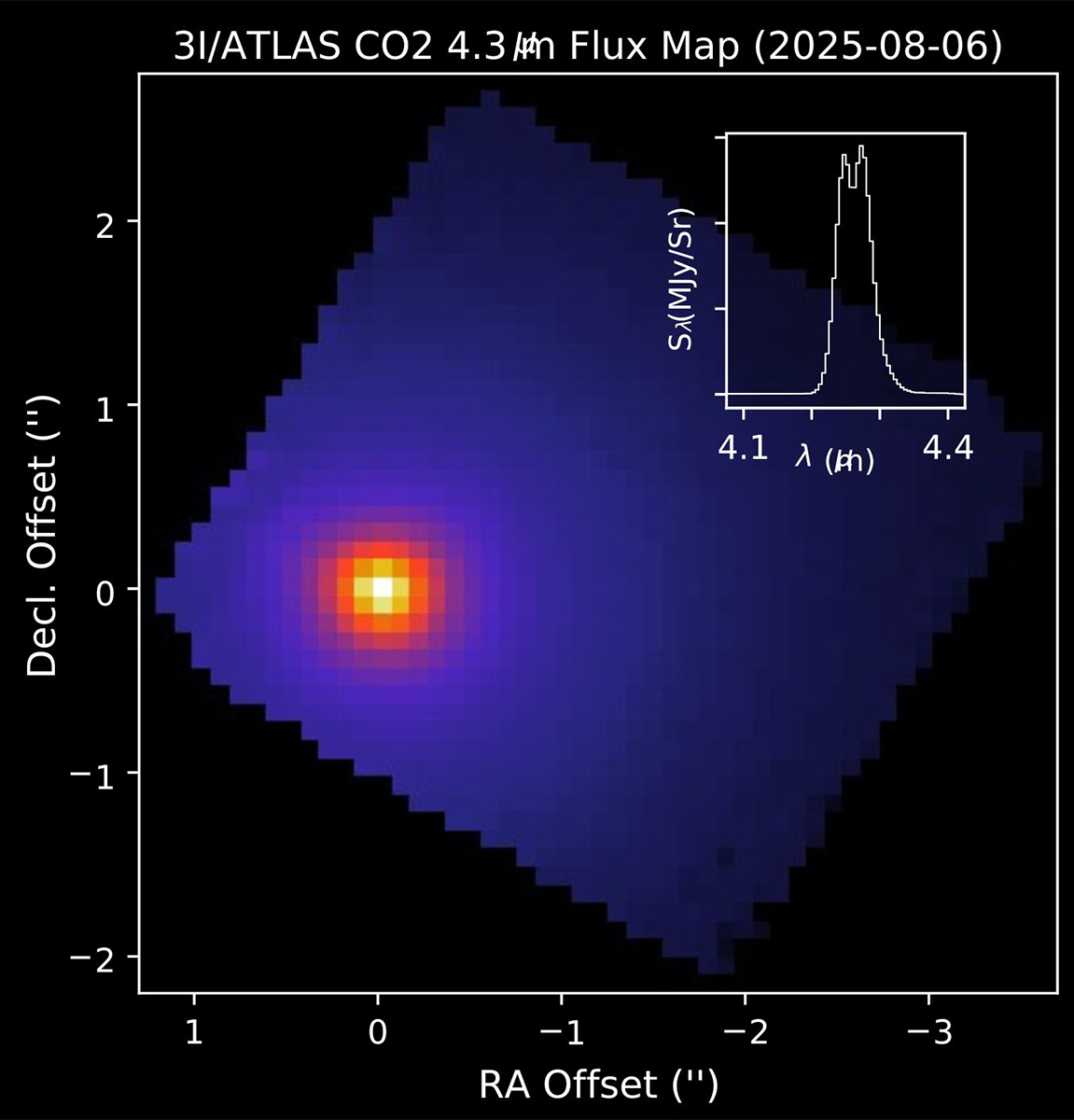
On August 6, 2025, Webb pointed its Near-Infrared Spectrograph (NIRSpec) toward 3I/ATLAS. NIRSpec can separate incoming light into its component wavelengths, allowing scientists to identify molecules in a comet’s coma, the cloud of gas and dust surrounding the nucleus. The spectra revealed a stunning result. The coma of 3I/ATLAS is dominated not by water vapor, which usually drives cometary activity, but by carbon dioxide (CO2). Alongside it, Webb detected smaller amounts of water vapor, carbon monoxide (CO), carbonyl sulfide (OCS), water ice grains, and dust.
When scientists calculated the mixing ratio, they found the comet’s CO2-to-water abundance was about 8 to 1. That number is far higher than typical for comets native to our solar system. For most comets, water sublimates as they warm near the Sun and dominates the outgassing. For 3I/ATLAS, CO2 appears to be the major driver. This single measurement already marks 3I/ATLAS as a different kind of comet, one formed under conditions unlike those of the Kuiper Belt or Oort Cloud.
Confirmations from Hubble and Swift
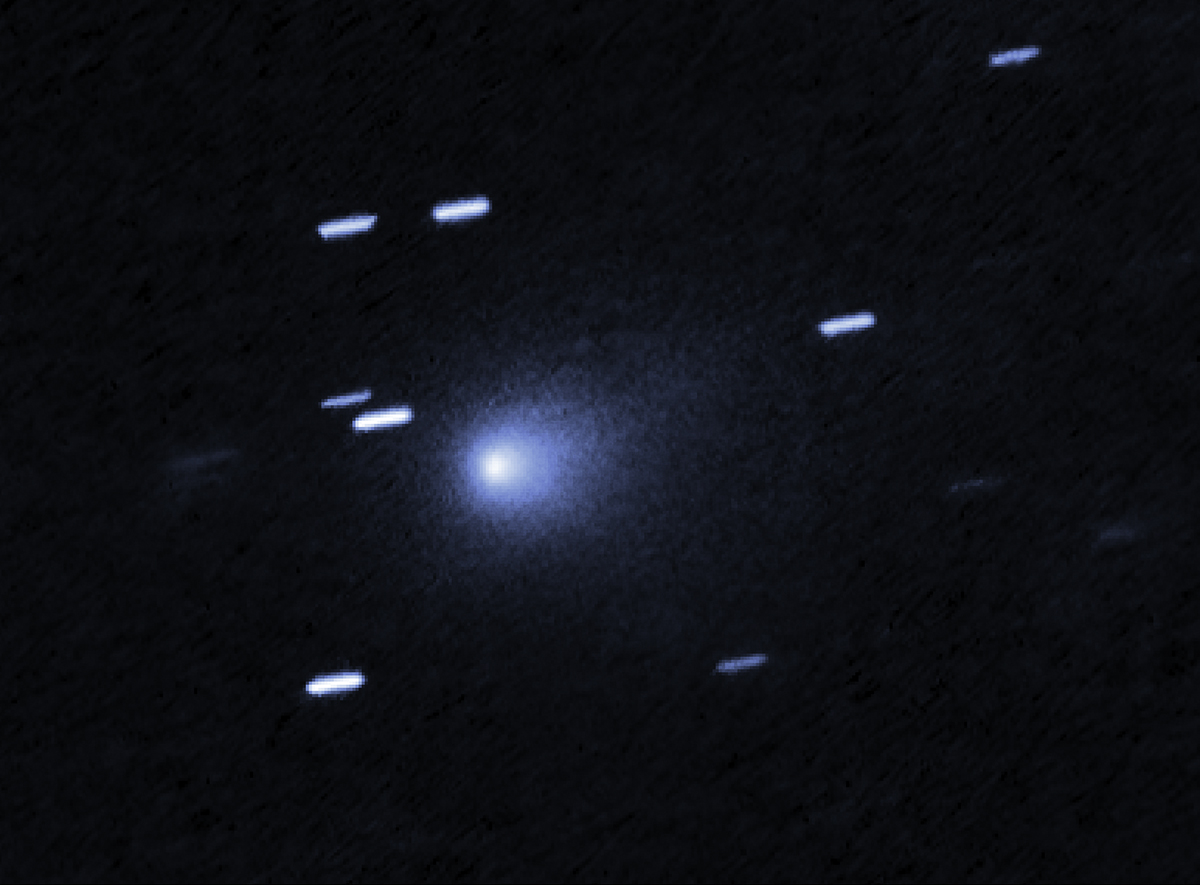
On July 21, 2025, the Hubble Space Telescope imaged the comet at a distance of around 277 million miles. The images revealed a teardrop-shaped cocoon of dust streaming off the hidden nucleus. From this, astronomers estimated that the solid body at the core measures somewhere between 320 meters and 5.6 kilometers across. The wide range reflects the difficulty of measuring a nucleus cloaked by dust, but it still gives useful boundaries for its size.
At the same time, NASA’s Swift Observatory contributed ultraviolet measurements. By detecting OH emission, a by-product of water molecules broken apart by sunlight, Swift confirmed that some water vapor is present, though at relatively low levels. Swift’s data suggested a water production rate of roughly 1.35 × 10²⁷ molecules per second, equivalent to around 40 kilograms of water escaping every second.
Measuring activity and mass loss
Spectral analysis also gave scientists a chance to estimate the comet’s mass loss rates. JWST’s data indicated a release of around 130 kilograms of CO2 every second, compared to only 6 to 7 kilograms of water per second, and about 14 kilograms of CO per second. These numbers confirm that carbon dioxide, not water, is powering most of the comet’s visible activity.
While JWST and its partners provide unprecedented data, many details remain uncertain. The size of the nucleus is still not firmly pinned down. Hubble’s range of 0.32 to 5.6 kilometers is wide because the coma overwhelms direct light from the nucleus. Some speculative analyses propose that the nucleus could be larger, but mainstream estimates remain cautious.
3I/ATLAS will continue its journey through the solar system for only a short time. It will reach its closest approach to the Sun, about 1.35 astronomical units, in late October 2025, before heading back into interstellar space. Its closest approach to Earth will still be a safe distance of roughly 1.8 AU.
Clear skies!
See more from DIYPhotography.net on Google
Add DIYPhotography.net as a trusted source. This makes
our stories more likely to appear in your Google Search results.
 Add as a preferred source on Google

Soumyadeep Mukherjee
Soumyadeep Mukherjee is an award-winning astrophotographer from India. He has a doctorate degree in Linguistics. His work extends to the sub-genres of nightscape, deep sky, solar, lunar and optical phenomenon photography. He is also a photography educator and has conducted numerous workshops. His works have appeared in over 40 books & magazines including Astronomy, BBC Sky at Night, Sky & Telescope among others, and in various websites including National Geographic, NASA, Forbes. He was the first Indian to win “Astronomy Photographer of the Year” award in a major category.



Join the Discussion
DIYP Comment Policy
Be nice, be on-topic, no personal information or flames.