























SPHEREx Maps the Carbon Dioxide Breath of Interstellar Comet 3I/ATLAS
Aug 27, 2025
Soumyadeep Mukherjee
Soumyadeep Mukherjee is an award-winning astrophotographer from India. He has a doctorate degree in Linguistics. His work extends to the sub-genres of nightscape, deep sky, solar, lunar and optical phenomenon photography. He is also a photography educator and has conducted numerous workshops. His works have appeared in over 40 books & magazines including Astronomy, BBC Sky at Night, Sky & Telescope among others, and in various websites including National Geographic, NASA, Forbes. He was the first Indian to win “Astronomy Photographer of the Year” award in a major category.
Share:

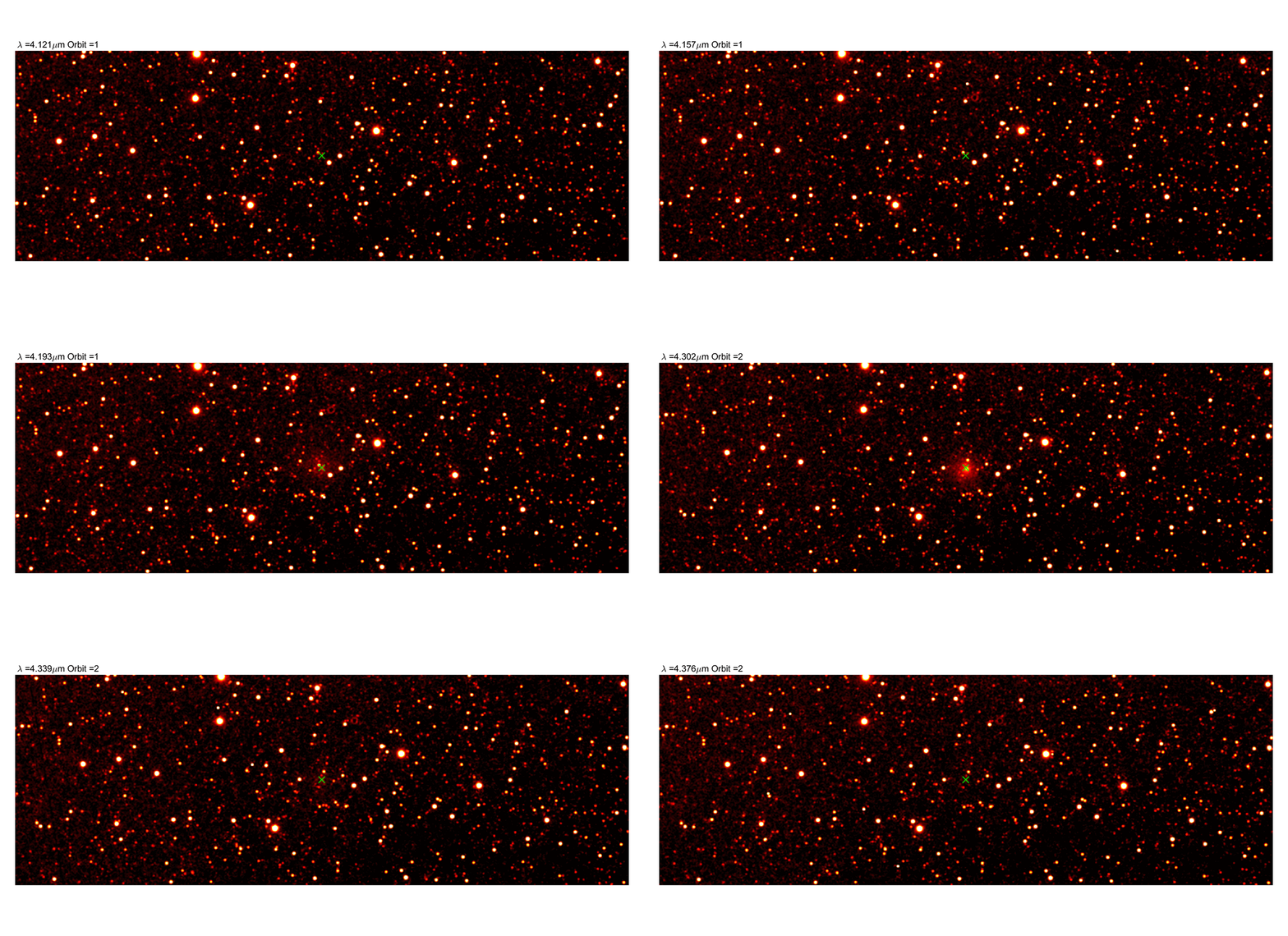
On July 1, 2025, astronomers in Chile spotted a faint object racing through the outer reaches of our solar system. The comet, named 3I/ATLAS, is only the third confirmed visitor from another star system, following ʻOumuamua (2017) and Borisov (2019). Its discovery triggered a global effort to study it before it slips back into interstellar darkness. At distances of around 290 million miles from the Sun, nearly 470 million kilometers, SPHEREx swung into action. The new mission captured an infrared portrait of 3I/ATLAS between August 8 and 12, 2025, offering a unique, detailed look at its composition.
SPHEREx reveals a CO2-rich coma
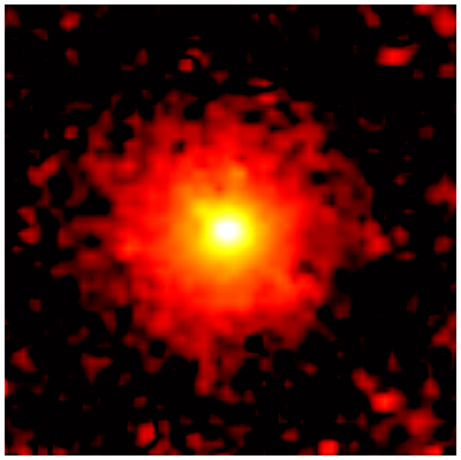
SPHEREx, with its wide field of view and multi-spectral sensitivity, revealed something striking: a bright, extended cloud of carbon dioxide gas surrounding the comet. That coma stretches out to at least 348,000 kilometers, a rare sight for a comet passing through our system. The mission spotted water in the comet’s nucleus, even while water vapor in the coma remained undetected. The strong CO2 signal clearly outshone any H₂O or CO emissions in the region it could observe.
Carbon Dioxide dominates the outgassing
The comet’s CO2-dominated coma raises immediate questions. Most solar system comets release water vapor when warmed by the Sun, but not 3I/ATLAS. Instead, carbon dioxide is in charge. The data show ice loss and gas release are strongly linked to CO2, not water. This suggests the comet’s icy makeup differs fundamentally from our backyard comets. It may have formed in a colder region of its home system, perhaps near a CO2 frost line where that gas freezes more easily than at the temperatures where we expect water ice to dominate.
Such scenarios hint at a dramatically different early environment, one where CO2 binds more readily on the surface. Alternatively, long exposure to cosmic radiation in deep space may strip away water, leaving a CO₂-rich layer exposed when the comet finally entered our neighborhood. Both explanations offer insight into how materials around other stars may evolve.
A glimpse at the nucleus and activity
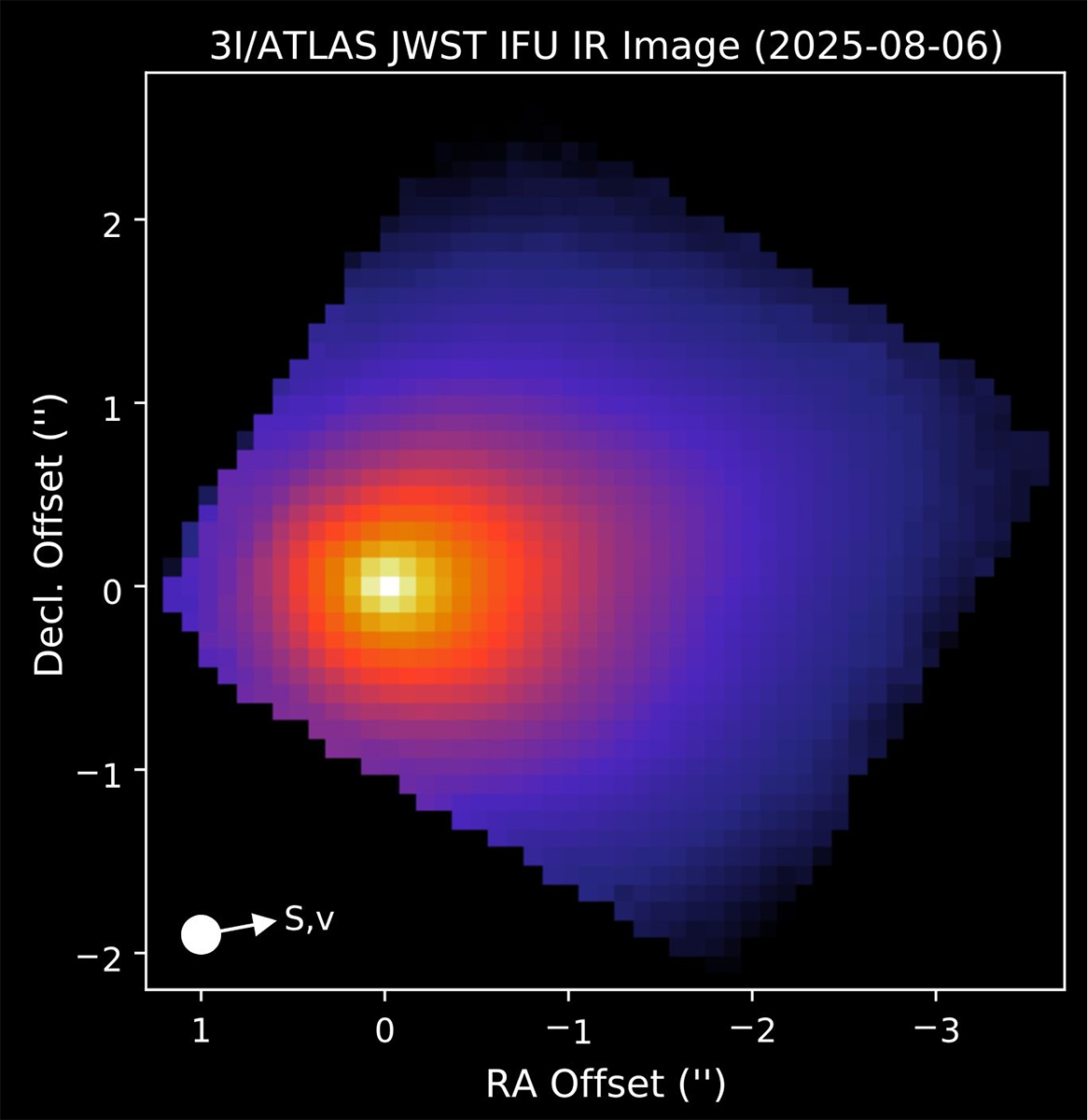
Although SPHEREx focused on the coma, its observations also shed light on the nucleus indirectly. A simple estimate assuming all light observed, especially around 1 micron, came from a reflective nucleus suggests a radius up to 23 kilometers. But that’s misleading: over 99% of the light comes from coma dust rather than the nucleus itself.
Still, that dusty glow speaks to active gas and ice release. H₂O ice exists in the nucleus, even though water vapor remained elusive in SPHEREx’s range. That mismatch between icy material and gas output tells us that the comet isn’t behaving like typical icy bodies from our solar system. Together, these observations frame 3I/ATLAS as both alien and familiar. It carries ice and gas like most comets, but in a chemical configuration that reflects a foreign formation and history.
Importance of SPHEREx’s observation
SPHEREx was designed to map the universe’s deep history and to hunt for water and ice across the cosmos. It wasn’t meant to study comets. Yet it did just that, turning its capabilities toward 3I/ATLAS and capturing a snapshot few telescopes could provide.
Understanding 3I/ATLAS helps astronomers sample the chemistry of other star systems. Each interstellar visitor, a third now on record, offers a unique glimpse into planetary formation beyond our Sun. SPHEREx shows that comet composition can vary. It may challenge assumptions drawn from our relatively familiar solar system and force us to rethink the chemistry of planetary building blocks.
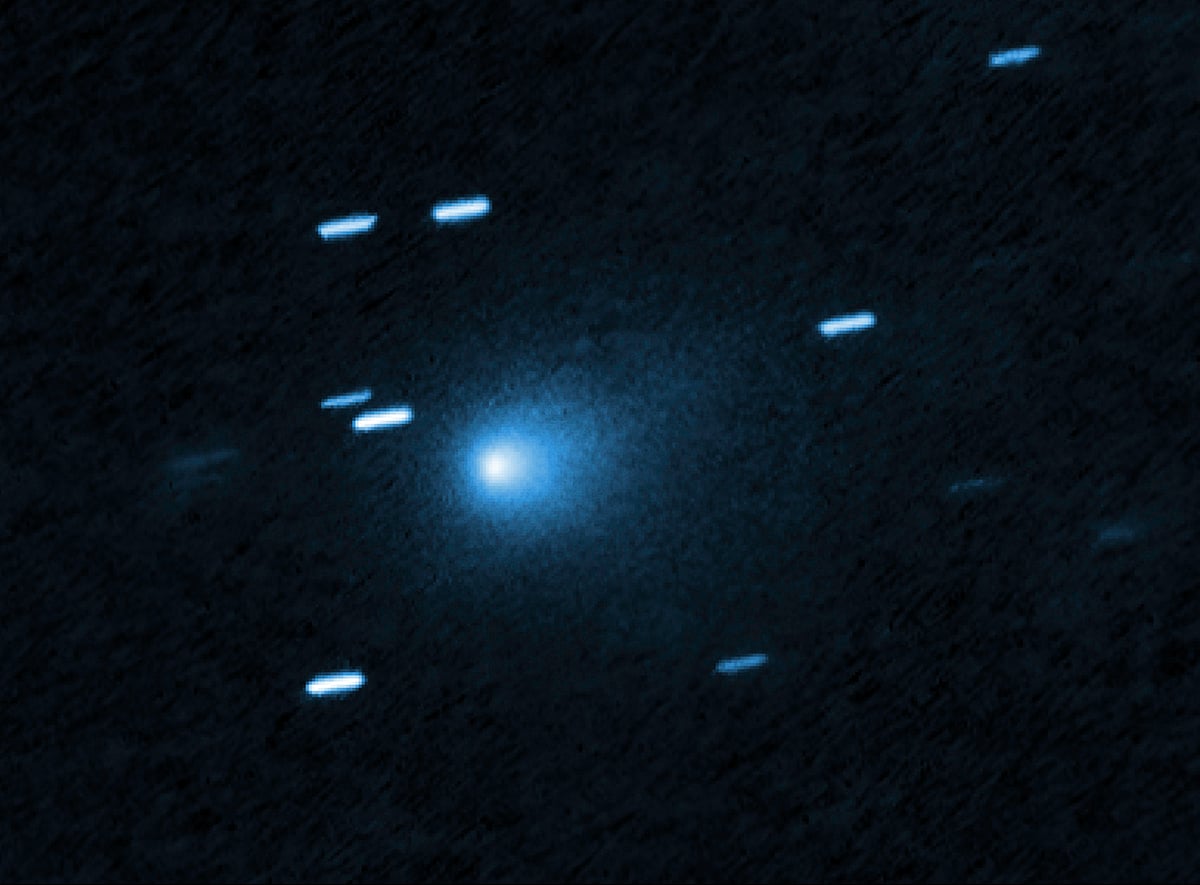
Just like ʻOumuamua and Borisov did before, 3I/ATLAS brings another rare opportunity: to study direct samples of other worlds. SPHEREx’s data reveal that, in at least one case, the handed-down idea of water-dominated comets falls short. As 3I/ATLAS moves on, NASA and global teams will keep chasing its trail until solar radiation dims its output or it slips behind the Sun.
Clear skies!
See more from DIYPhotography.net on Google
Add DIYPhotography.net as a trusted source. This makes
our stories more likely to appear in your Google Search results.
 Add as a preferred source on Google

Soumyadeep Mukherjee
Soumyadeep Mukherjee is an award-winning astrophotographer from India. He has a doctorate degree in Linguistics. His work extends to the sub-genres of nightscape, deep sky, solar, lunar and optical phenomenon photography. He is also a photography educator and has conducted numerous workshops. His works have appeared in over 40 books & magazines including Astronomy, BBC Sky at Night, Sky & Telescope among others, and in various websites including National Geographic, NASA, Forbes. He was the first Indian to win “Astronomy Photographer of the Year” award in a major category.


Join the Discussion
DIYP Comment Policy
Be nice, be on-topic, no personal information or flames.