





















Interstellar Comet 3I/ATLAS: Gemini South Images Reveal a Growing Tail
Sep 5, 2025
Soumyadeep Mukherjee
Soumyadeep Mukherjee is an award-winning astrophotographer from India. He has a doctorate degree in Linguistics. His work extends to the sub-genres of nightscape, deep sky, solar, lunar and optical phenomenon photography. He is also a photography educator and has conducted numerous workshops. His works have appeared in over 40 books & magazines including Astronomy, BBC Sky at Night, Sky & Telescope among others, and in various websites including National Geographic, NASA, Forbes. He was the first Indian to win “Astronomy Photographer of the Year” award in a major category.
Share:

When a comet from another star system enters our skies, astronomers pay close attention. The newly discovered interstellar comet 3I/ATLAS has become one of the most closely studied cosmic visitors of recent years. Now, deep images from the Gemini South telescope in Chile show the comet developing a longer and brighter tail as it approaches the Sun.
Discovery of interstellar comet 3I/ATLAS
3I/ATLAS was first detected on July 1, 2025, by the ATLAS survey. Its unusual, hyperbolic orbit immediately stood out. Unlike ordinary comets that circle the Sun on elliptical paths, this one was clearly coming from interstellar space. Once that became clear, observatories around the world quickly began follow-up observations.
This is only the third confirmed interstellar object. The first was ʻOumuamua in 2017, which had a puzzling, elongated shape and unusual motion. The second, 2I/Borisov in 2019, looked more like a typical comet, with a distinct coma and tail. Early findings on 3I/ATLAS suggest it may share features with both of its predecessors, making it a unique research target.
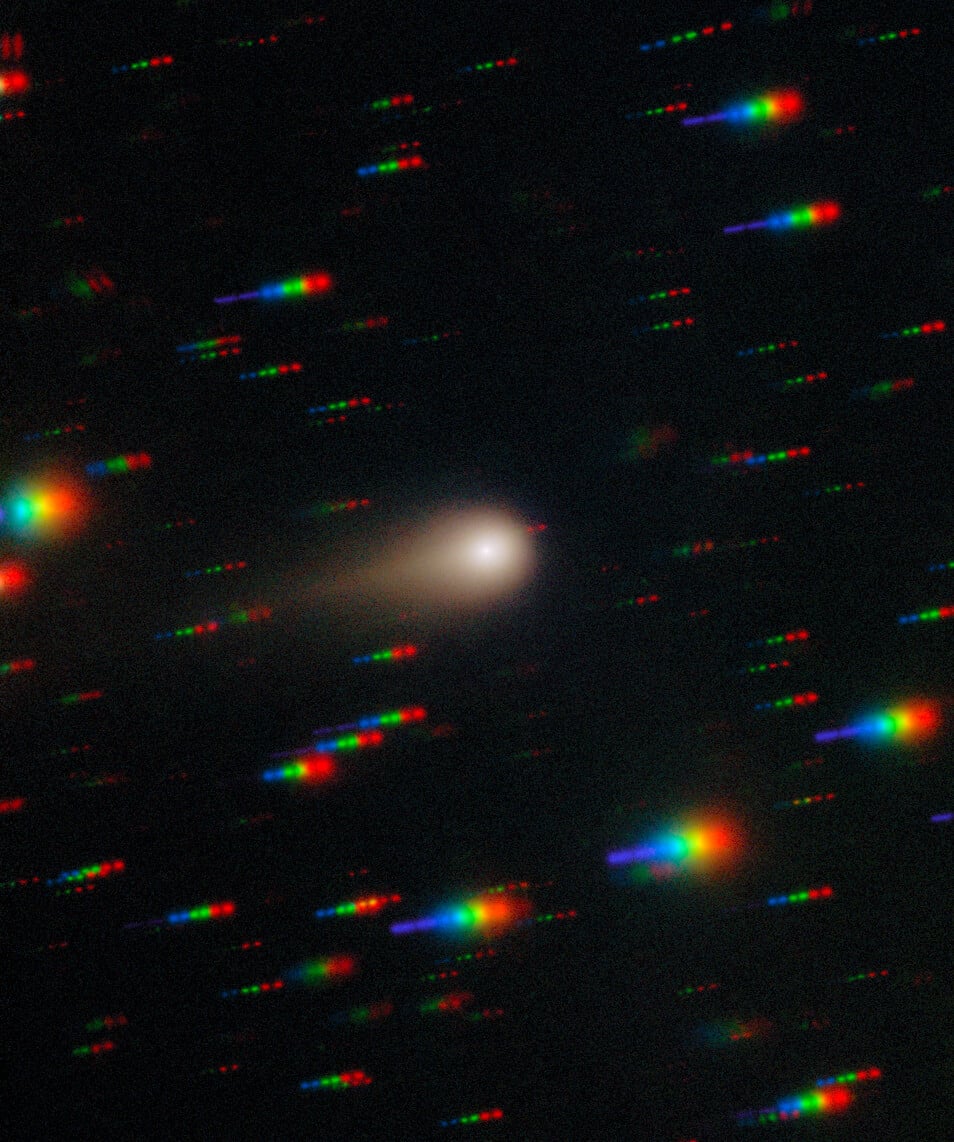
Gemini South telescope images of 3I/ATLAS
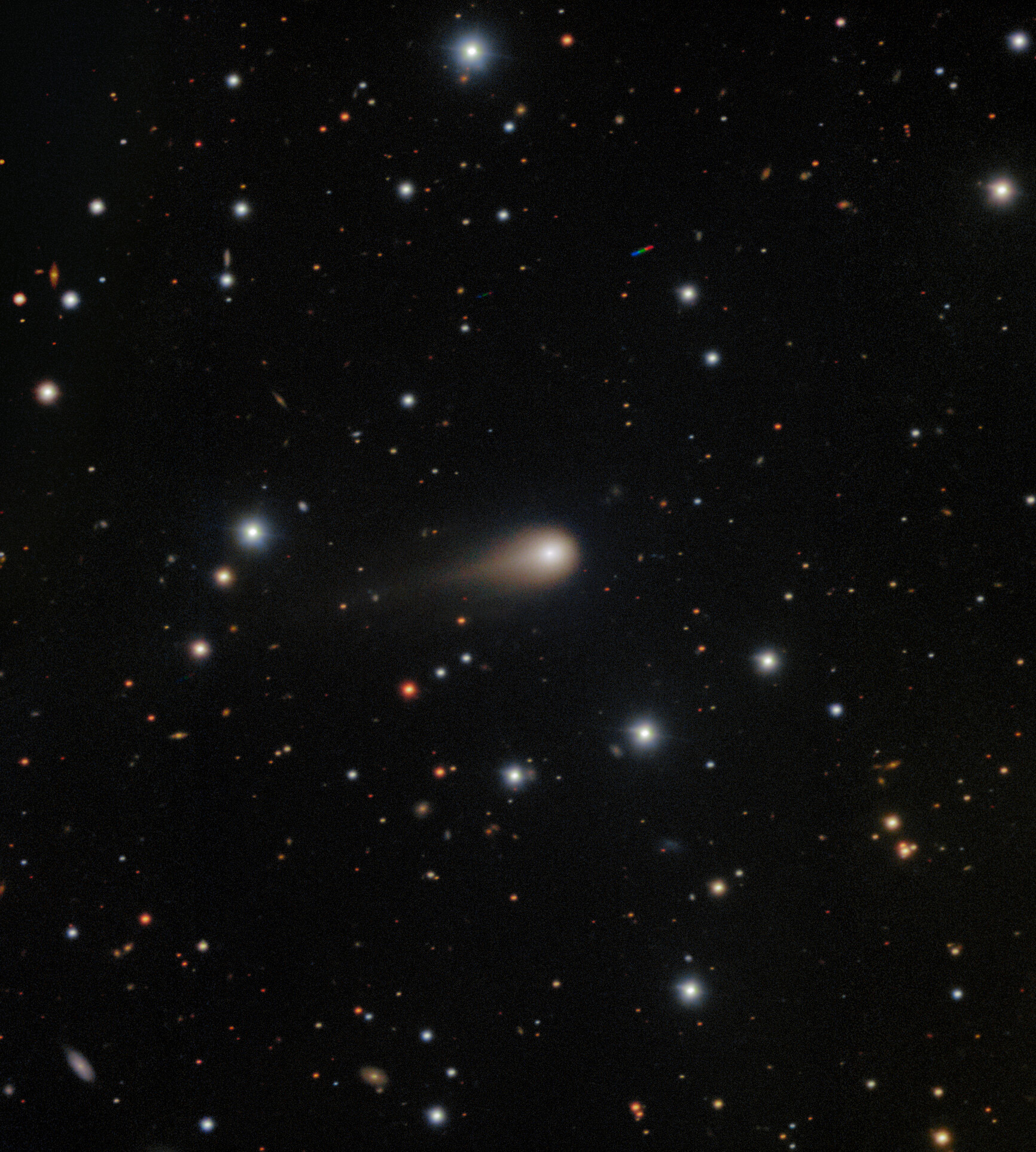
The Gemini South Observatory in Chile used its GMOS-S instrument to capture detailed views of 3I/ATLAS. The images show the comet traveling across a rich star field, with a clear dust tail stretching out behind it. This tail has grown as the comet nears the Sun, where increasing heat causes its ices to sublimate and release dust. Its brightness and structure reveal the comet’s composition and dust properties. Because 3I/ATLAS formed around another star, its tail offers direct evidence of conditions in a different planetary system.
Hubble and JWST add a closer look
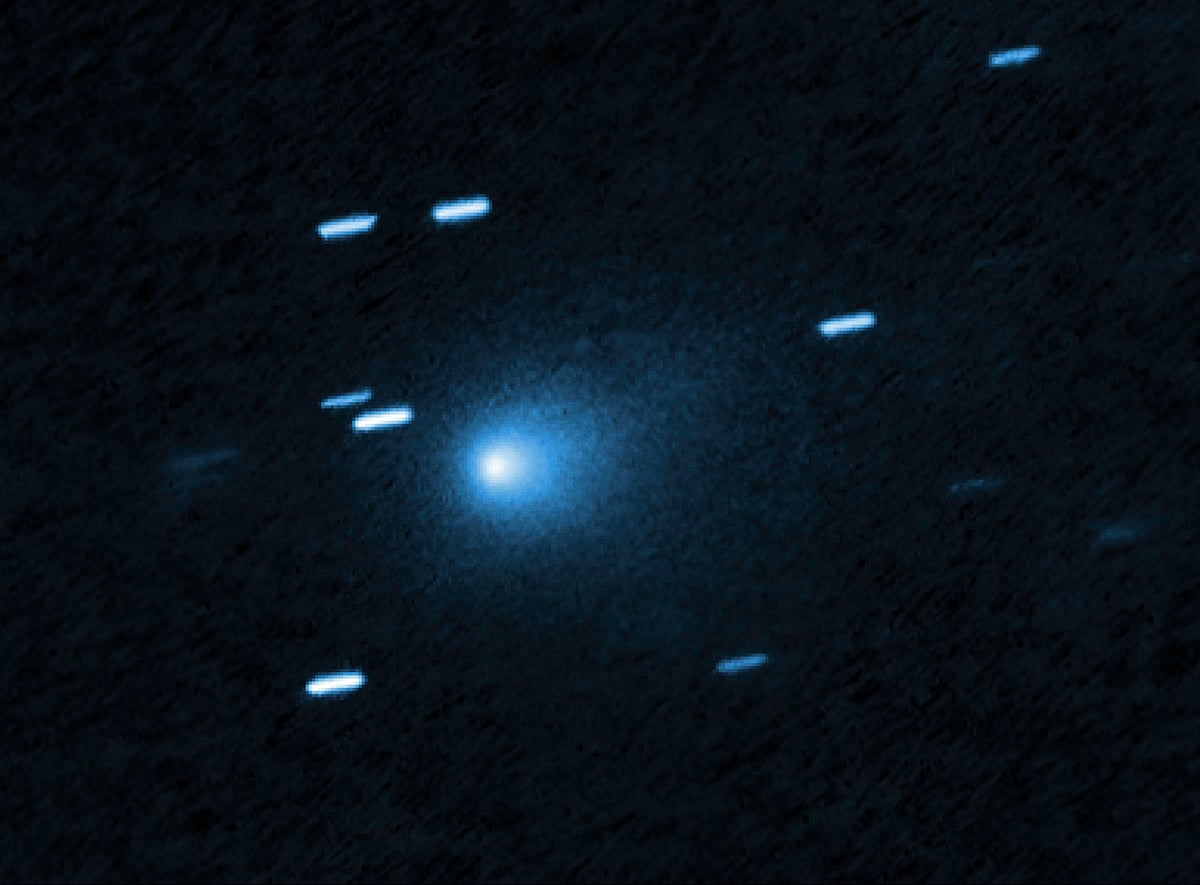
Gemini South is part of a much larger observing campaign. In July 2025, the Hubble Space Telescope captured high-resolution images of 3I/ATLAS. These data narrowed estimates of the nucleus size and showed fine details close to the comet’s head.
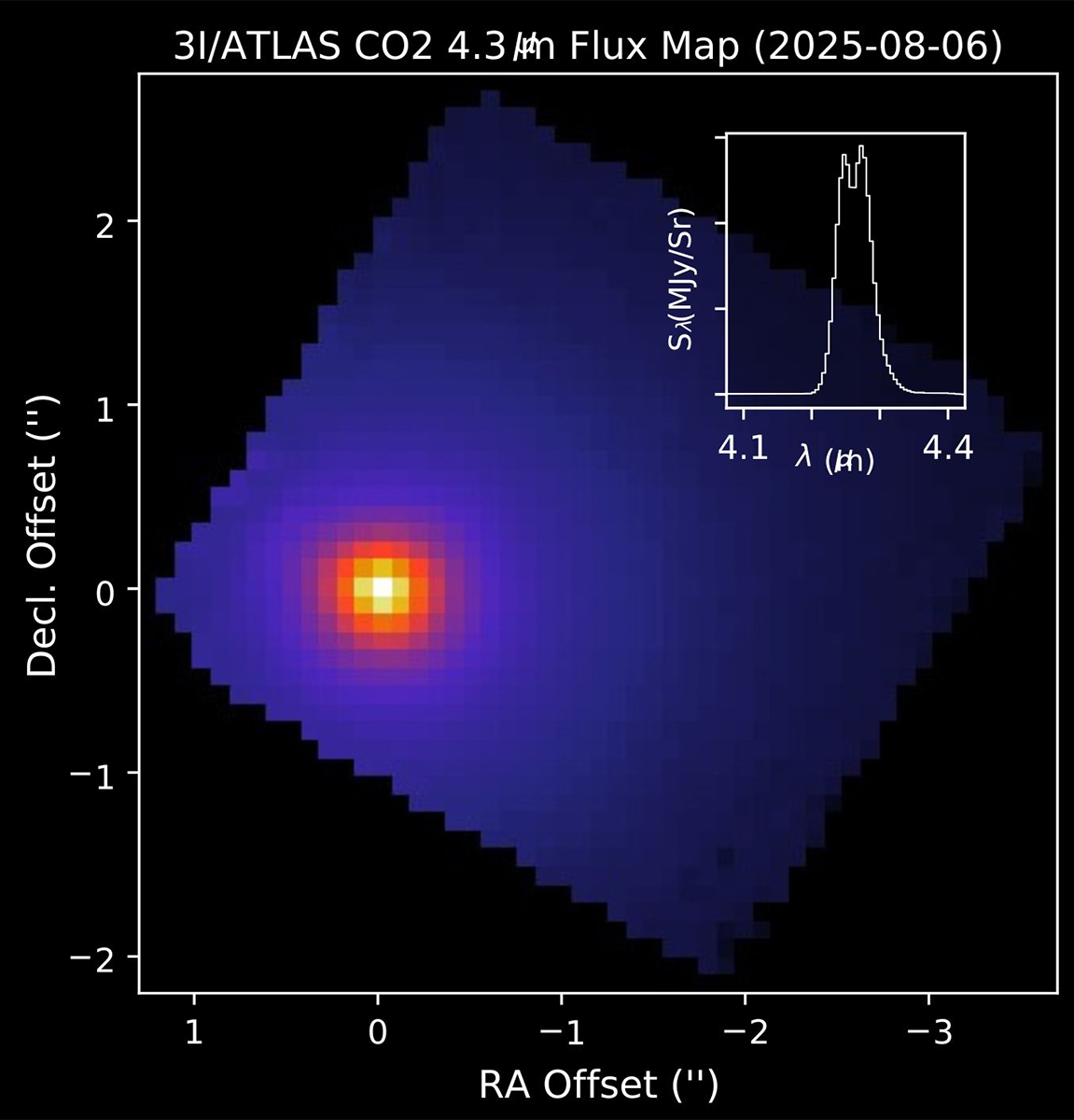
The James Webb Space Telescope (JWST) is also studying the comet in the infrared. JWST’s instruments can measure faint heat signatures and analyze the gases being released. Combining Gemini’s wide-field views with Hubble’s sharp imaging and Webb’s infrared data gives researchers the most complete picture possible of this rare object.
3I/ATLAS orbit and approach
Current orbital calculations show that 3I/ATLAS will reach perihelion (closest to the Sun) on October 30, 2025, at about 1.4 AU, or 130 million miles from the Sun. Its closest approach to Earth will be about 1.8 AU, or 170 million miles. This means it poses no danger to our planet.
Although it will never become bright enough to see with the naked eye, the comet remains an excellent target for telescopes. Observatories are timing their studies to take advantage of the period when it is most active.
As the comet approaches its closest point to the Sun in late October, observatories will continue to collect data. Gemini, Hubble, Webb, and many ground-based telescopes will watch its activity closely. Scientists want to see how the comet changes as it warms, and whether its activity continues after perihelion. Interstellar comets like 3I/ATLAS are rare opportunities. They allow us to study material from another planetary system without leaving our own. Each new observation adds to our understanding of how stars, planets, and comets form across the galaxy.
Clear skies!
See more from DIYPhotography.net on Google
Add DIYPhotography.net as a trusted source. This makes
our stories more likely to appear in your Google Search results.
 Add as a preferred source on Google

Soumyadeep Mukherjee
Soumyadeep Mukherjee is an award-winning astrophotographer from India. He has a doctorate degree in Linguistics. His work extends to the sub-genres of nightscape, deep sky, solar, lunar and optical phenomenon photography. He is also a photography educator and has conducted numerous workshops. His works have appeared in over 40 books & magazines including Astronomy, BBC Sky at Night, Sky & Telescope among others, and in various websites including National Geographic, NASA, Forbes. He was the first Indian to win “Astronomy Photographer of the Year” award in a major category.



Join the Discussion
DIYP Comment Policy
Be nice, be on-topic, no personal information or flames.
2 responses to “Interstellar Comet 3I/ATLAS: Gemini South Images Reveal a Growing Tail”
And what is the DIY element of this story?
Hi Arthur. Not everything we cover are DIY related. For example, we cover gear introduction and reviews, space photography news, and many more. This is one of the most discussed space photography news (in the last few months). If you are looking for DIY stuff, please feel free to check out our selection of DIY articles here: https://www.diyphotography.net/category/diy/