






















Mars Express Captures the Dramatic Structure of an Ancient Martian Volcano
Nov 19, 2026
Soumyadeep Mukherjee
Soumyadeep Mukherjee is an award-winning astrophotographer from India. He has a doctorate degree in Linguistics. His work extends to the sub-genres of nightscape, deep sky, solar, lunar and optical phenomenon photography. He is also a photography educator and has conducted numerous workshops. His works have appeared in over 40 books & magazines including Astronomy, BBC Sky at Night, Sky & Telescope among others, and in various websites including National Geographic, NASA, Forbes. He was the first Indian to win “Astronomy Photographer of the Year” award in a major category.
Share:
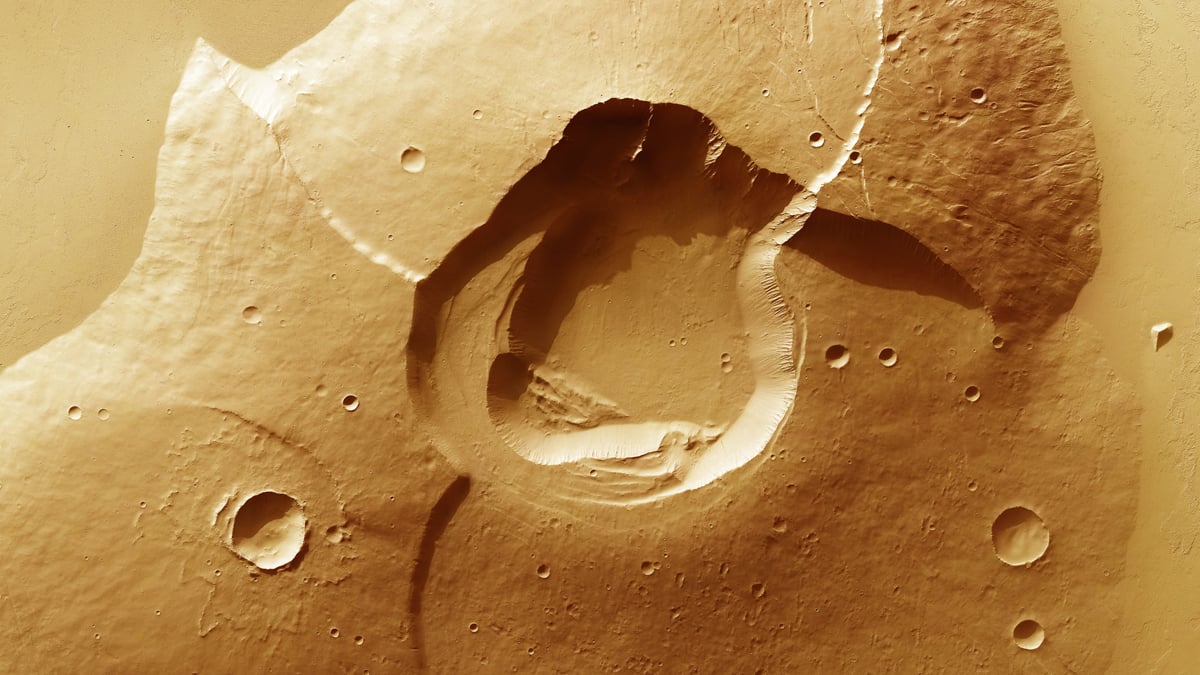
Mars has several volcanoes that rise far above anything on Earth. Olympus Mons is the largest, reaching almost 22 kilometers above the surrounding plains. Yet the smaller volcanoes across the planet can be just as interesting to geologists. An example of this is Tharsis Tholus, an ancient volcanic mountain with two enormous depressions at its summit.
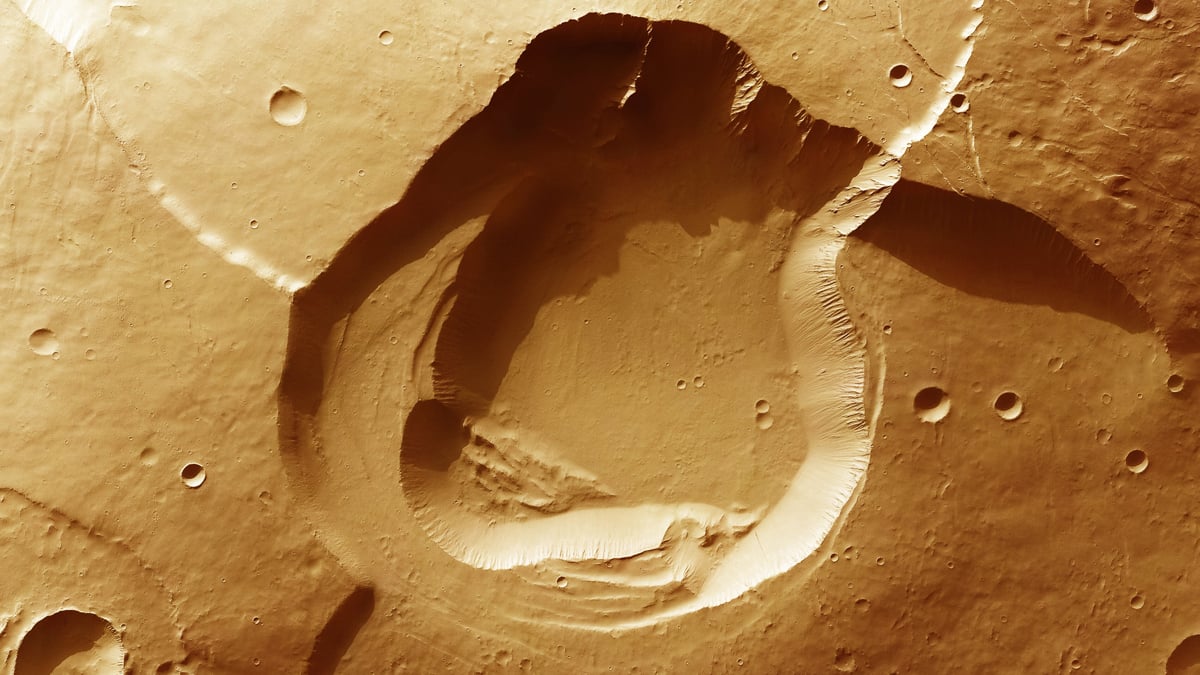
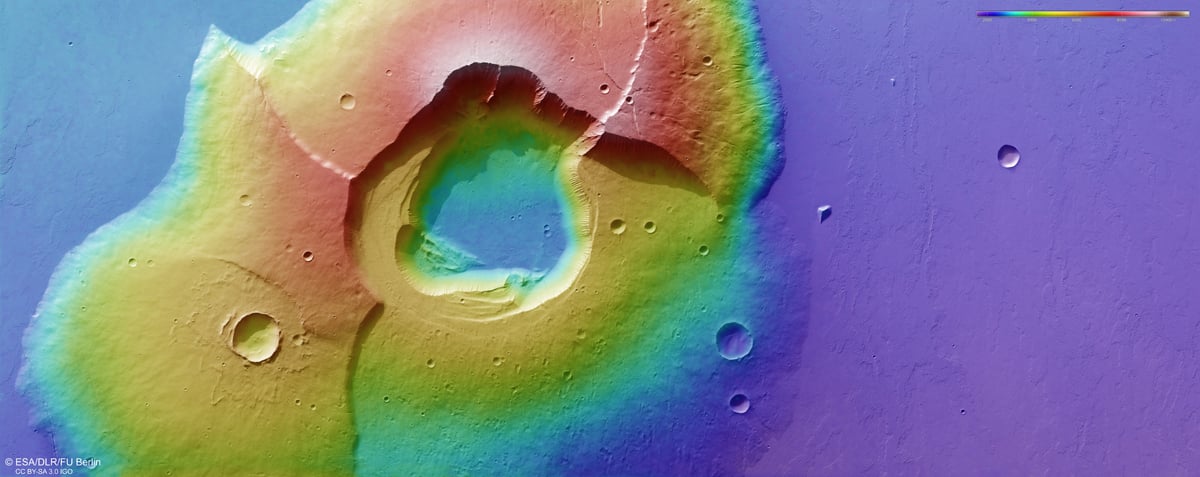
A new image from the European Space Agency (ESA) brings this volcano into our view. Captured by the Mars Express spacecraft, the images show its collapsed summit, steep flanks, and numerous fractures. The volcano stands around 8 kilometers tall, but its summit caldera reaches nearly 3 kilometers deep.
A volcano with two enormous depressions
Tharsis Tholus sits within the Tharsis volcanic province, a vast region in the Martian western hemisphere. Olympus Mons lies around 2,500 kilometers to its west. The same region also contains Arsia Mons, Pavonis Mons and Ascraeus Mons. All three rise higher than any mountain on Earth.
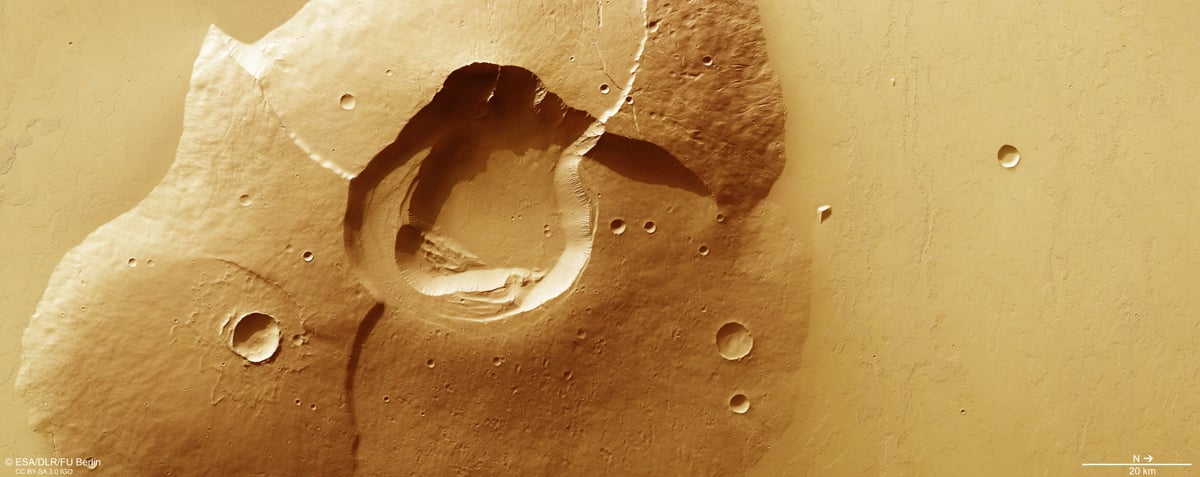
A large caldera occupies the top of the mountain. It formed when the volcano’s summit collapsed after magma drained from an underground reservoir. During an eruption, magma can escape through vents and reach the surface. As the reservoir loses material, the rock above it can no longer support its own weight. The summit then sinks, leaving a broad depression.
Tharsis Tholus appears to have undergone at least two such collapses. The first created the outer caldera. A later collapse formed another depression within it. Both structures reach depths of nearly 3 kilometers. Their size is remarkable when compared with the overall dimensions of the volcano.
Ancient lava flows and landslides
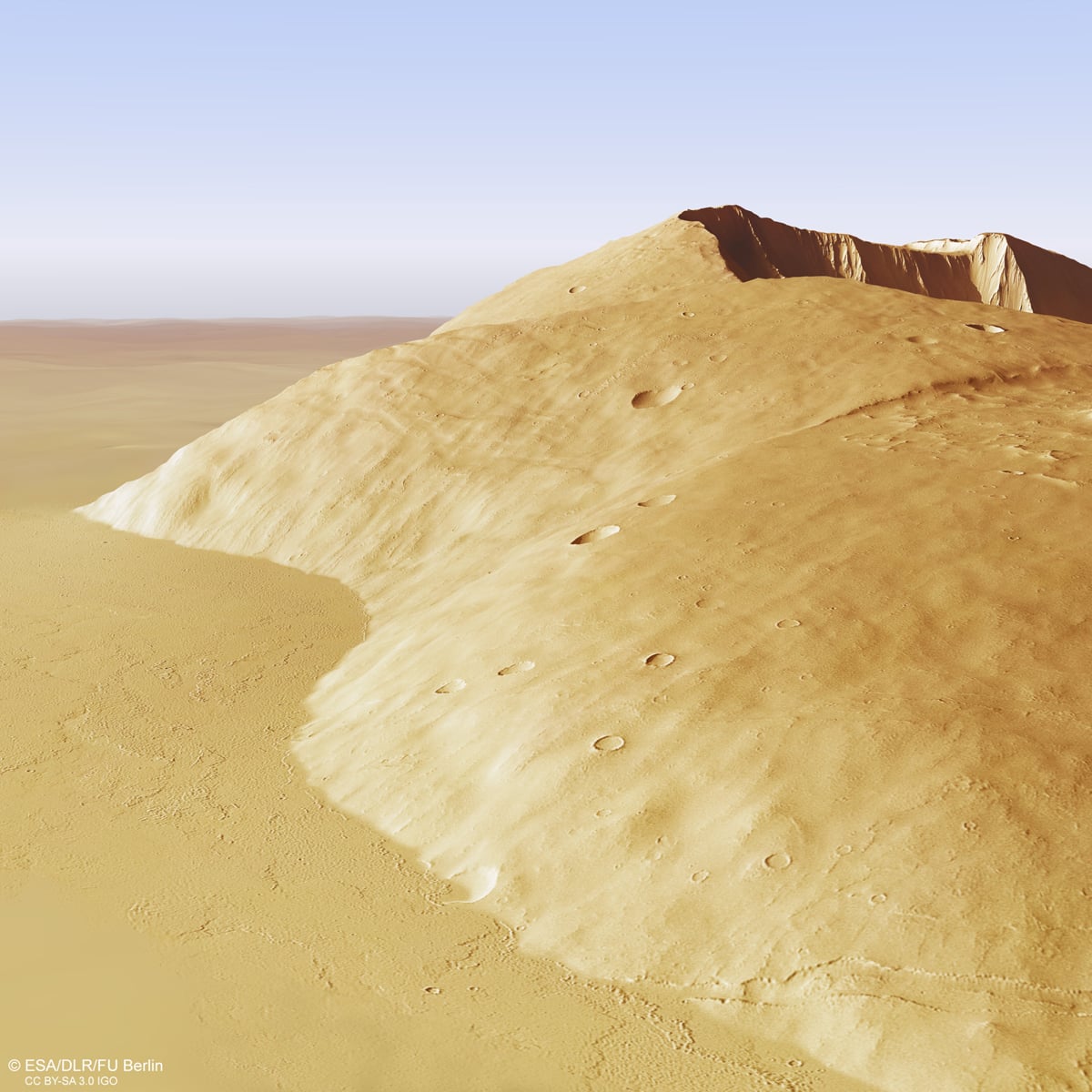
Tharsis Tholus has steep flanks that preserve evidence of several geological processes. Lava flows built up the volcanic slopes over time. Meteorite impacts later scattered craters across the surface, while movements within the Martian crust altered the mountain’s original shape.
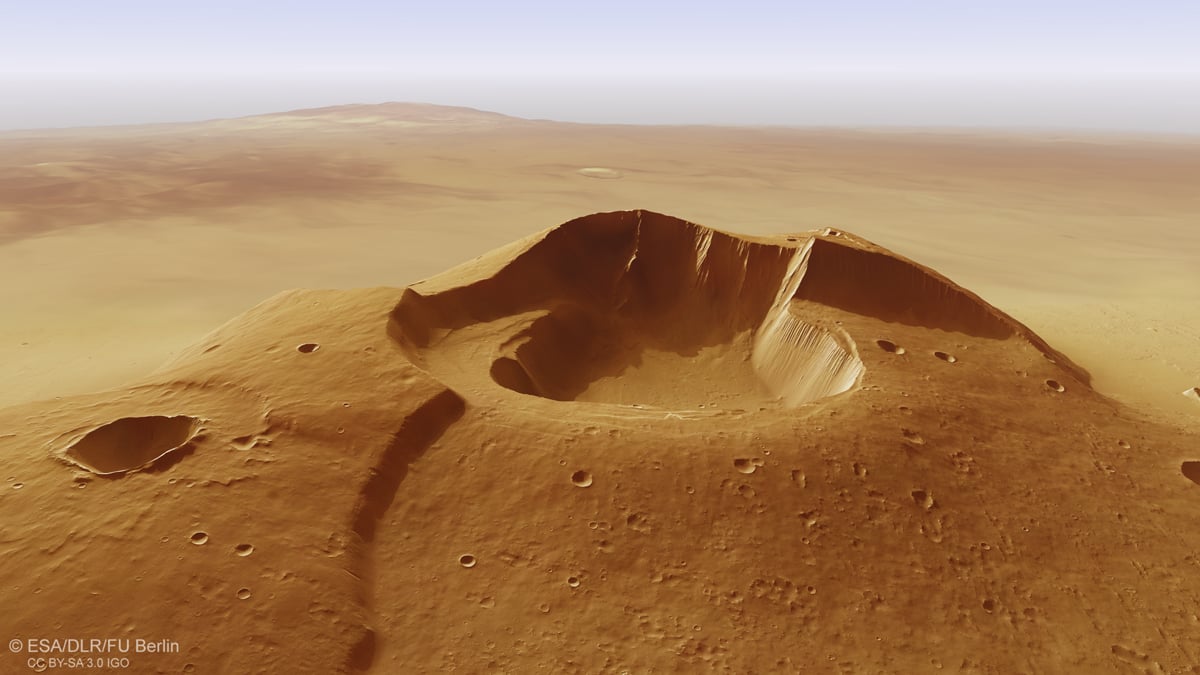
Several steep cliffs, known as scarps, cut across the volcano. ESA suggests that the mountain’s immense weight may have pushed down on softer layers beneath the surface. This deformation could have warped the structure and produced the cliffs seen today.
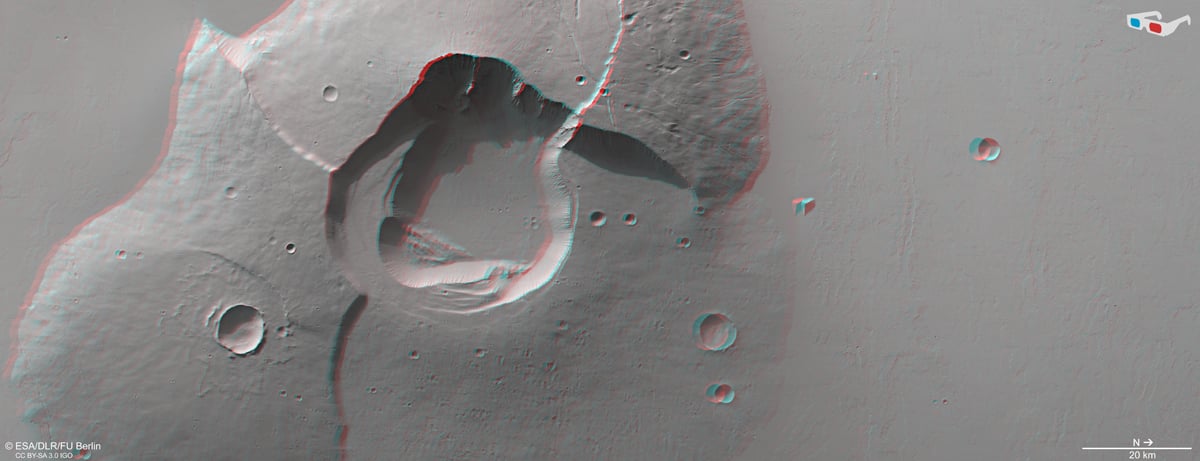
Other markings include faults and grabens. Faults form when the crust breaks along fractures after stretching or other movements. Grabens develop when a block of ground sinks between two parallel faults. They often appear as long, narrow depressions in the landscape.
Why Martian volcanoes grow so tall
The size of Martian volcanoes has much to do with the planet’s gravity and geological history. Mars has only about 38 percent of Earth’s surface gravity. A volcanic structure can consequently grow taller before its own weight becomes a major limiting factor.
The absence of active global plate tectonics is also a reason. Earth’s crust consists of moving plates. As a plate travels over a mantle hotspot, volcanic activity can create a chain of mountains. Older volcanoes gradually move away from the source of magma, while new ones form above it.
Mars does not have an active global plate system like Earth. Its volcanic regions could remain above their magma sources for much longer. Repeated eruptions then added successive layers of lava to the same structures.
Erosion also plays a part. Earth’s volcanoes face rain, rivers, glaciers, and other powerful forces that gradually wear down their slopes. Mars has wind erosion and other surface processes, but many of its ancient volcanic structures have retained their original forms for billions of years.
Clear skies!
See more from DIYPhotography.net on Google
Add DIYPhotography.net as a trusted source. This makes
our stories more likely to appear in your Google Search results.
 Add as a preferred source on Google

Soumyadeep Mukherjee
Soumyadeep Mukherjee is an award-winning astrophotographer from India. He has a doctorate degree in Linguistics. His work extends to the sub-genres of nightscape, deep sky, solar, lunar and optical phenomenon photography. He is also a photography educator and has conducted numerous workshops. His works have appeared in over 40 books & magazines including Astronomy, BBC Sky at Night, Sky & Telescope among others, and in various websites including National Geographic, NASA, Forbes. He was the first Indian to win “Astronomy Photographer of the Year” award in a major category.



Join the Discussion
DIYP Comment Policy
Be nice, be on-topic, no personal information or flames.